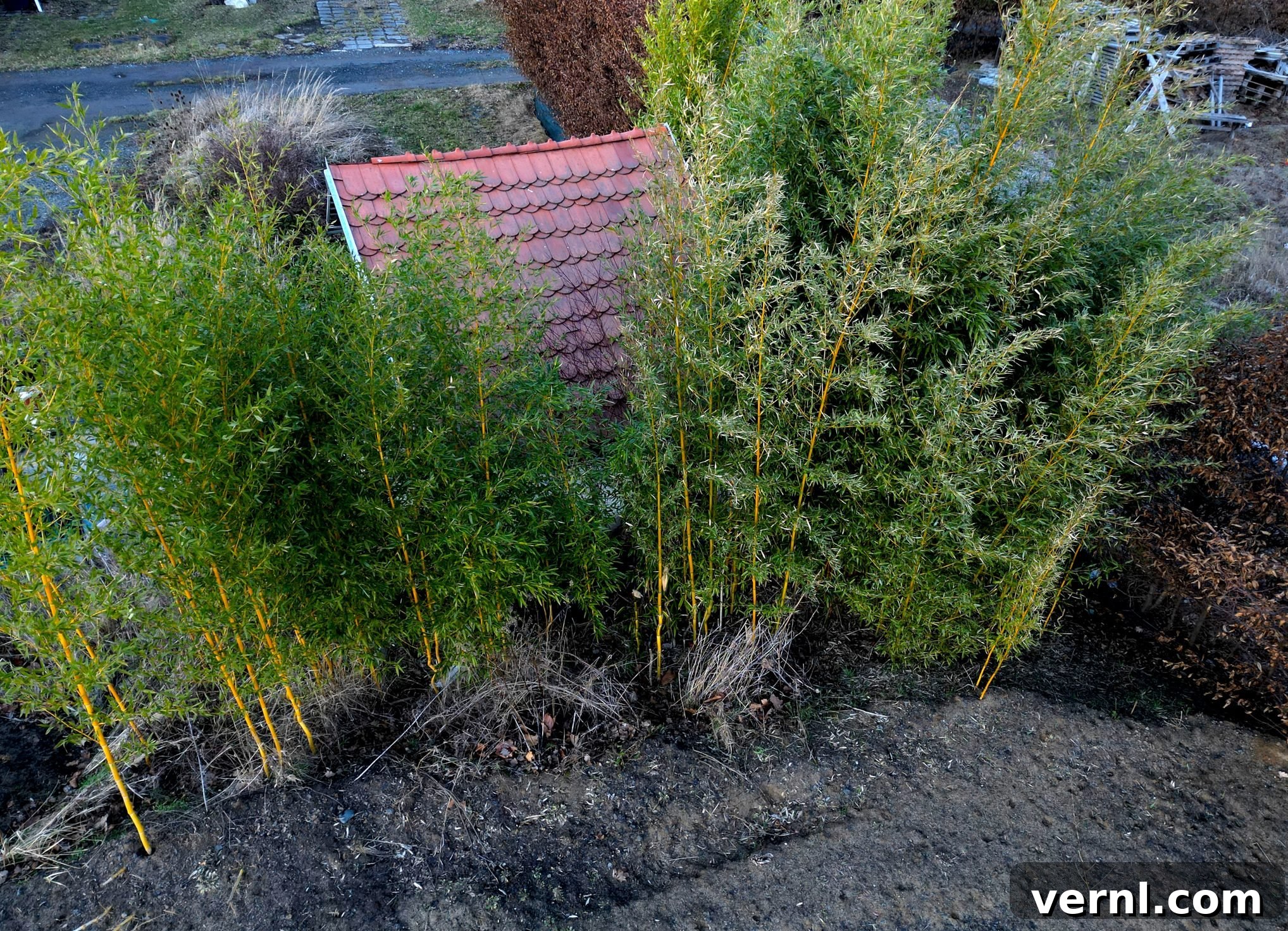
The Ultimate Guide to Growing Bamboo for Privacy: Understanding the Risks and Rewards
When considering fast-growing privacy screens for your garden, bamboo frequently comes to mind. Its ability to quickly reach impressive heights of 15 to 30 feet, coupled with its dense, attractive foliage, makes it an appealing choice for creating a secluded oasis. Indeed, the allure of bamboo’s rapid growth and lush greenery can be tempting for any homeowner seeking an instant privacy solution. However, beneath its charming exterior lies a significant challenge: the potential for rapid and aggressive spread, which can transform a beautiful screen into an invasive nightmare.
This comprehensive guide delves deep into the world of bamboo, helping you make an informed decision about whether it’s the right plant for your yard. We’ll explore its characteristics, discuss the critical differences between its main types, and provide expert advice on managing its growth and even removing it if necessary. Our insights come from two seasoned gardening professionals: Joyce Corbett from Classic Courtyards and Spencer Campbell from The Morton Arboretum, whose decades of experience offer invaluable perspectives on cultivating this unique plant.
What to Know Before Planting Bamboo: A Gardener’s Primer
Bamboo is a distinctive woody-stemmed plant, characterized by its individual canes (or culms) that sprout branches and leaves. Renowned for its remarkable growth rate, some species of bamboo are among the fastest-growing plants on Earth, capable of extending up to a foot a day until they reach maturity. This incredible vigor is precisely what makes it so attractive for quick privacy, yet also the source of its potential problems.
With over 1,400 species identified globally, bamboo diversity is vast. However, all these species can be broadly categorized into two fundamental types: clumping bamboo and running bamboo. Understanding the distinction between these two categories is paramount for anyone considering planting bamboo, as their growth habits dictate their suitability for various landscapes and the level of maintenance they require.
Running Bamboo: The Aggressive Spreader
Running bamboo species are famous, or infamous, for their incredibly rapid growth, often achieving heights of fifteen to 30 feet within a single growing season. What truly defines running bamboo, however, is its method of spread: through an extensive network of fast-growing, aggressive, and incredibly hardy underground rhizomes. These rhizomes can extend horizontally at an alarming rate, sometimes spreading 15 to 20 feet in a single year. Spencer Campbell emphasizes this point, stating, “It’s not just fast-growing, it’s relentless.” This relentless spreading habit is what gives running bamboo its notorious reputation.
Examples of common running bamboo species include members of the genus Phyllostachys, such as Golden Bamboo (Phyllostachys aurea) and Black Bamboo (Phyllostachys nigra). While beautiful, these species require extreme caution and containment if planted outside of pots.
Clumping Bamboo: The Well-Behaved Alternative
In stark contrast, clumping bamboo varieties exhibit a much slower, more contained growth pattern. Their rhizomes grow in a compact, U-shaped manner, staying close to the main plant and expanding outwards gradually, rather than aggressively spreading horizontally. While generally not reaching the towering heights of some running bamboo species, clumping bamboos still offer excellent density and height for privacy screens, typically growing 10 to 20 feet tall depending on the species and growing conditions.
Clumping bamboo is considerably less aggressive than its running counterpart, making it a more manageable option for most home gardens. Popular clumping species belong to the genus Fargesia, including varieties like Fargesia robusta, Fargesia murielae, and Fargesia nitida. These types are often recommended for their non-invasive nature and graceful appearance, making them a much safer choice for gardeners who want to enjoy bamboo without the worry of it taking over their yard.
Is Bamboo an Invasive Species? A Deeper Look into its Ecological Impact
Running bamboo is widely considered an invasive species in many regions, posing significant ecological and practical challenges. Its aggressive rhizome system allows it to quickly colonize new areas, displacing native plant species and disrupting local ecosystems. This rapid takeover can lead to a reduction in biodiversity, as essential food sources and habitats for local wildlife are destroyed.
Beyond natural environments, the rhizomes of running bamboo are so tenacious and powerful that they can spread underneath various man-made structures. They have been known to exploit cracks and weaknesses to grow beneath sidewalks, driveways, and even major roadways like interstates, emerging on the other side and continuing their relentless expansion. This can cause considerable damage to infrastructure, leading to costly repairs and maintenance.
Joyce Corbett experienced the invasive nature of running bamboo firsthand. “It was in my yard when I bought the place, and I worked for years to get it under control,” she recounts. Her struggle underscores the plant’s tenacity: “It just takes over everything in its path.” This personal account highlights the profound commitment required to manage or eradicate an established running bamboo patch, serving as a cautionary tale for prospective planters.
Before planting, it’s crucial to research local regulations regarding bamboo cultivation, as some municipalities and homeowners’ associations have implemented restrictions or outright bans on certain invasive species, including running bamboo, to protect local environments and property values. Choosing the right type of bamboo and implementing proper containment measures is not just good gardening practice; it’s an act of environmental responsibility.
How to Stop Bamboo from Spreading: Proactive Containment Strategies
If the allure of bamboo’s unique aesthetic and rapid growth still tempts you, it is absolutely essential to implement robust strategies to manage its spread. Without proper containment, even clumping varieties can become more expansive than desired, and running bamboo will inevitably escape, causing headaches for you and potentially your neighbors. Here are several proven methods to keep bamboo in check:
Choose Slow-Growing Clumping Bamboo Varieties
The first and most critical step in preventing bamboo from spreading is selecting the right type. Clumping bamboo varieties are inherently easier to contain due to their less aggressive rhizome structure. Their rhizomes are shorter and grow more slowly, forming a compact root ball rather than an expansive network. Spencer Campbell confidently states, “I would feel comfortable planting a clumping bamboo in my yard.” He specifically recommends growing Fargesia, a genus of clumping bamboo known for its graceful appearance and its tendency to “stay in one place and not spread aggressively.” Opting for clumping species like Fargesia robusta ‘Green Screen’ or Fargesia nitida ensures you get the beauty of bamboo without the widespread invasion.
Plant in a Container or Raised Bed for Easy Management
For gardeners with limited space or those who want maximum control, planting bamboo in a raised bed or a large container is an excellent solution. This method effectively contains the rhizomes, preventing them from penetrating the surrounding soil. When selecting a container, choose one made from durable materials like thick plastic, metal, or concrete, and ensure it has adequate drainage holes. For clumping bamboo, this method is highly effective. However, for running bamboo, extreme caution is still advised. Running bamboo rhizomes are notoriously persistent and can often find their way through drainage holes and into the underlying soil, where they can quickly establish. If using containers for running bamboo, periodic inspection and root pruning will be essential, and even then, success is not guaranteed without additional barriers.
If planting in a raised bed, ensure the sides extend deep enough and are made of strong material to prevent rhizomes from growing underneath or through the sides. Regular inspection around the edges of containers and raised beds is crucial to catch any escape attempts early.
Install Robust Underground Barriers
For bamboo planted directly in the ground, installing a specialized underground barrier is perhaps the most effective containment method. These barriers are typically made from thick, high-density polyethylene (HDPE) plastic or metal, designed specifically to redirect and contain rhizome growth. When installing, you’ll want to go at least two to three feet deep, as bamboo rhizomes can penetrate surprising depths. Campbell advises, “You’ll want to go at least two feet deep with a plastic barrier,” emphasizing the need for a closed loop around the plant to ensure no escape routes. Overlap the ends of the barrier by at least six inches and secure them with strong adhesive or fasteners to create an impenetrable seal.
It’s also important to ensure that the barrier extends an inch or two above the soil line. This helps prevent rhizomes from growing over the top, which they can sometimes do if not properly managed. While effective for both types, this method is most critical and effective for clumping varieties, as running bamboo’s sheer force and growth rate can still sometimes breach even well-installed barriers over time, requiring vigilant monitoring.
Regular Pruning and Meticulous Rhizome Management
Even with containers and underground barriers, ongoing vigilance and maintenance are indispensable for controlling bamboo spread. Rhizomes, particularly those of running bamboo, are relentless. Therefore, regular inspection and management are paramount. Periodically, especially during the active growing season (spring through fall), check the areas around your bamboo for any emerging rhizomes or shoots outside your desired containment area. Dig them up promptly using a sturdy shovel or a root saw.
It is critically important to dispose of these rhizomes properly. Never put bamboo rhizomes or culm fragments in a compost pile, as even a small piece can sprout into a new plant. “Even a small piece will grow into a new plant,” warns Spencer Campbell. Instead, bag them securely and dispose of them with household trash, or burn them if local regulations permit. This diligent, consistent effort is key to preventing bamboo from establishing itself beyond its intended bounds, reinforcing the fact that bamboo is not a ‘plant-it-and-forget-it’ option.
How to Get Rid of Bamboo in Your Yard: Eradication Methods
If bamboo has already become an unwelcome guest in your garden, removing it can be a challenging but achievable task. The method and intensity of removal largely depend on the type of bamboo and how established it has become.
Removing Clumping Bamboo
Clumping bamboo, being less aggressive, is considerably easier to remove than its running counterpart. The primary method involves manually digging up the entire root system. Begin by cutting down all the canes to ground level. Then, using a sturdy shovel or pickaxe, dig around the base of the plant, unearthing the entire root ball, including all rhizomes. Clumping bamboo’s root system is generally compact, allowing for a more focused excavation. Once the main root ball is removed, consider treating the remaining soil with boiling water to scald any small rhizome pieces that may have been left behind. Alternatively, a non-selective herbicide specifically designed for root systems can be applied to ensure complete eradication, though manual removal is often sufficient for clumping varieties.
Eradicating Running Bamboo: A Test of Persistence
Removing running bamboo is a significantly more challenging and time-consuming endeavor, often requiring years of diligent effort. “Persistence is the defining characteristic to any success in removing running bamboo,” Campbell states, underscoring the long-term commitment required. Here are the most effective strategies:
Method 1: Cut and Dig (Mechanical Removal)
This method relies on depleting the plant’s energy reserves. Start by cutting all bamboo canes to the ground. This deprives the plant of its ability to photosynthesize. After cutting, diligently dig out as many underground rhizomes as you can. Any new shoots that emerge must be immediately cut down and dug out. This process must be repeated consistently throughout the growing season, year after year. The goal is to prevent any new growth from photosynthesizing, thereby starving the rhizome system. This can take several years but is an effective non-chemical approach.
Method 2: Herbicide Application
Herbicides, particularly those containing glyphosate, can be highly effective against running bamboo, especially when applied correctly. Campbell recommends a specific approach: “After cutting it down, let it grow back until it’s four to six inches tall, so it is actively photosynthesizing,” then apply the herbicide. This timing is crucial because the plant is actively drawing nutrients down to its root system, allowing the herbicide to be translocated to the rhizomes for maximum impact. Multiple applications over several months or even years may be necessary to completely eradicate the extensive rhizome network.
Joyce Corbett found a particularly successful method, albeit one requiring extreme vigilance: “It took years of vigilance bordering on obsession, but it did eventually pay off.” Her approach involved cutting each cane four to five inches from the ground, then immediately pouring a glyphosate-based product (like Round-Up) directly into the hollow cane. This delivers the herbicide directly to the root system. Additionally, she sprayed any new shoots as they emerged. This dual-pronged chemical attack, coupled with relentless monitoring, proved effective in her struggle.
When using herbicides, always follow the manufacturer’s instructions carefully, wear appropriate personal protective equipment, and be mindful of environmental impact, especially near water sources or desirable plants. Professional landscapers with experience in invasive plant removal may be a worthwhile investment for particularly stubborn or large infestations of running bamboo.
Frequently Asked Questions About Bamboo
Does bamboo ever stop growing?
Each individual stalk (culm) of bamboo has a finite growth period, typically stopping after about 60 days when it reaches its mature height and diameter for that season. However, this does not mean the bamboo plant as a whole stops growing. The underground rhizome system continues to expand horizontally, sending up new culms year after year. So, while individual stalks reach a maximum size, the overall bamboo patch will continue to spread and produce new growth indefinitely if not contained.
How quickly does bamboo grow, and how tall can it get?
Bamboo is renowned for its astonishing growth rate. Some species, particularly running bamboos, can grow up to a foot (30 cm) per day under optimal conditions until they reach their mature height. Clumping bamboos grow slower, but still faster than most other plants. The height bamboo can achieve varies greatly by species. Running bamboos can often reach 30 to 50 feet (9-15 meters) or more, while clumping bamboos typically grow between 10 to 20 feet (3-6 meters) tall, making them still quite effective for privacy screens.
Can bamboo damage foundations, pipes, or other structures?
Yes, running bamboo, in particular, poses a significant threat to nearby structures. Its powerful and persistent rhizomes are strong enough to exploit weaknesses in concrete foundations, sidewalks, driveways, retaining walls, and even underground pipes (like drainpipes or sewer lines). While they won’t typically “break” solid concrete, they can find and enlarge existing cracks, leading to structural damage over time. This destructive potential is a major reason why careful containment is critical, and why many experts advise against planting running bamboo near any permanent structures.
What are some non-invasive alternatives for privacy screens?
If the risks associated with bamboo seem too daunting, many other excellent, non-invasive plants can provide effective privacy screens. Consider fast-growing evergreens like Leyland Cypress (though it can also get very large), Thuja ‘Green Giant’, or various Holly species (e.g., ‘Nellie R. Stevens’ Holly). Deciduous options include Skip Laurel, Viburnum, or certain ornamental grasses that grow tall and dense but don’t spread aggressively. These alternatives offer beauty and seclusion without the intensive management requirements of running bamboo.
Meet Our Gardening Experts
- Spencer Campbell is the Plant Clinic Manager at The Morton Arboretum in Lisle, Illinois, situated 25 miles west of Chicago. With his extensive knowledge of plant health and invasive species, Spencer provides crucial guidance on managing challenging plants like bamboo.
- Joyce Corbett is the accomplished owner of Classic Courtyards, a landscaping design and installation firm based in West Springfield, Massachusetts. Boasting over forty years of hands-on experience in the landscaping industry, Joyce offers invaluable practical advice born from decades of working with diverse plant materials, including her personal battle with invasive bamboo.
Conclusion: Making an Informed Decision About Bamboo
Bamboo offers undeniable aesthetic appeal and an unmatched growth rate for those seeking immediate privacy. Its lush, evergreen foliage can transform a yard into a serene retreat. However, the decision to plant bamboo, especially running varieties, should not be taken lightly. As we’ve explored, the potential for aggressive spread and invasive behavior necessitates a deep understanding of its characteristics and a commitment to rigorous management strategies.
By prioritizing clumping bamboo species, utilizing robust containment methods like root barriers and containers, and committing to regular maintenance, you can enjoy the beauty of bamboo responsibly. But for those who are unwilling or unable to dedicate the significant time and effort required, exploring non-invasive alternatives is a wise and stress-free path to achieving your garden privacy goals. Ultimately, an informed choice ensures that your landscape remains a source of joy, not a battleground against an unruly plant.