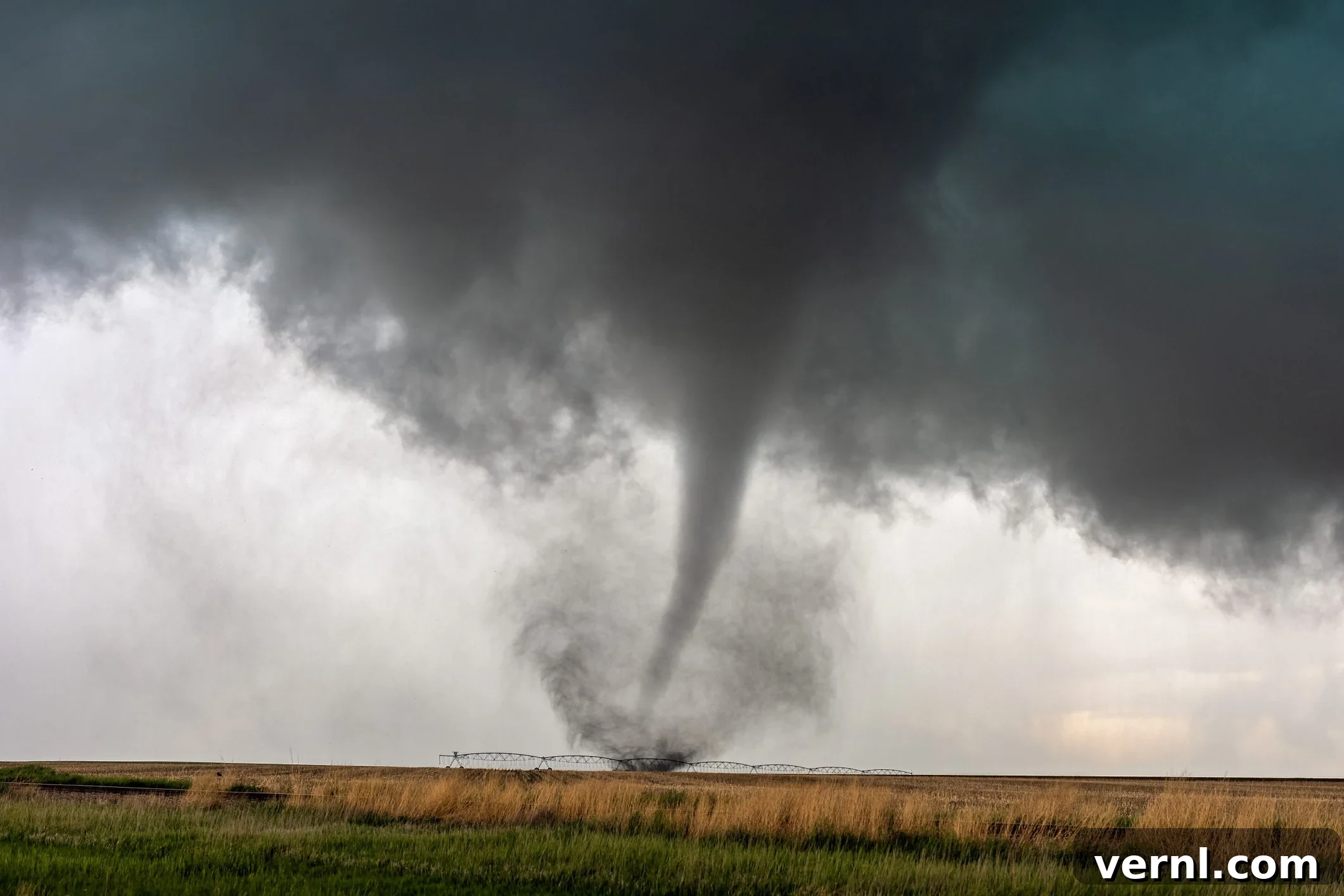
Understanding Tornado Season: A Comprehensive Guide to Timing and Preparedness
For those who have never experienced the visceral intensity of a spring evening glued to the television, watching wall-to-wall tornado coverage, you’ve likely never spent a spring in Oklahoma. In such times, the immediate instruction to seek a storm shelter or take immediate cover if a tornado is closing in becomes an urgent reality. These powerful atmospheric phenomena strike with breathtaking speed, with the most formidable tornadoes unleashing winds exceeding 300 miles per hour, capable of utterly devastating communities and requiring years, sometimes even decades, for full recovery.
Oklahoma’s history with tornadoes is profound, having recorded more than 4,000 tornadoes since 1950, the inaugural year for National Weather Service (NWS) tracking data. Yet, the reach of these storms extends far beyond the traditional “Tornado Alley.” It’s a little-known fact that every U.S. state, from Florida to Alaska, has experienced the touch of a tornado. This universal risk underscores a critical need for awareness: no matter where you reside, understanding when you are most susceptible to tornado activity is paramount for your safety and preparedness.
To shed light on this complex topic, we’ve enlisted the expertise of Bill Bunting, a distinguished storm expert, who will guide us through the intricacies of tornado season timing, formation, and the vital importance of year-round vigilance.
Meet Our Expert: Bill Bunting, a Leading Voice in Storm Prediction
Bill Bunting serves as the deputy director of the National Oceanographic and Atmospheric Administration (NOAA) and the National Weather Service (NWS) Storm Prediction Center (SPC). His extensive experience and deep understanding of atmospheric science make him an invaluable resource for comprehending the dynamics of severe weather, including the unpredictable nature of tornadoes. The SPC is the epicenter of tornado forecasting, responsible for issuing watches and outlooks that provide critical lead time for communities across the nation.
The Science Behind Tornado Formation: How These Destructive Forces Emerge
At its core, a tornado is born from a thunderstorm. NOAA’s National Severe Storms Laboratory defines a tornado as a “violently rotating column of air that extends from a thunderstorm to the ground.” But what specific conditions transform a regular thunderstorm into a tornadic powerhouse?
The Essential Ingredients for a Tornado
According to Bill Bunting, the genesis of a tornado requires a precise atmospheric recipe. First and foremost, “the atmosphere must be unstable, and with sufficient moisture, to allow a developing thunderstorm updraft to rise vertically.” This instability typically arises when a layer of warm, moist air is trapped beneath a cooler, drier layer, creating an environment where warm air can rapidly ascend once a trigger is present. The ample moisture acts as the fuel, providing the latent heat necessary to sustain these powerful updrafts.
Next, Bunting explains, you need a source of “lift.” This lift acts as the initial catalyst, forcing the unstable air upwards. Common sources of lift include cold fronts, which act like a plow, pushing warm air ahead of them, or dry lines, boundaries where dry air meets moist air, leading to a convergence that forces the air to rise. As this air rises and cools, it reaches its dew point, leading to condensation, which manifests as clouds, rainfall, and sometimes even hail – often an early indicator of severe storm potential. Following these developments, we typically observe lightning and thunder, signifying a fully developed thunderstorm.
The final, crucial ingredient for a tornado is the presence of significant wind shear. Bunting elaborates that if the “wind direction and speed throughout the lower portion of the atmosphere” are favorable, rotation will follow. Wind shear refers to the change in wind speed or direction over a short distance. When winds at different altitudes blow from different directions or at different speeds, it creates a rotating column of air horizontally. A strong updraft within a thunderstorm can then tilt this horizontal rotation vertically, initiating the process of a mesocyclone.
At this stage, Bunting identifies the rotating storm as a “supercell.” Supercells are highly organized thunderstorms characterized by a persistent rotating updraft. These storms are responsible for nearly all powerful, long-track tornadoes and a significant portion of all severe weather. Under the right conditions, Bunting explains, “that rotation can concentrate into a tornado and accelerate wind speeds to damaging levels.” As the mesocyclone tightens and stretches vertically, the conservation of angular momentum causes the wind speeds to dramatically increase, eventually forming the visible funnel cloud of a tornado that reaches the ground.
When is Tornado Season? Dispelling Seasonal Myths
While most people associate tornadoes with a specific “season,” the reality is far more nuanced. Traditionally, tornadoes are observed most frequently between late March and June. However, Bunting emphasizes the importance of not fixating too rigidly on a particular season or time of year. He states unequivocally that tornadoes have been documented in every single month of the year, touching down in winter and fall just as they do in spring.
The “Typical” Tornado Season: Spring’s Peak Activity
Historically, spring and early summer have provided the most consistent atmospheric conditions conducive to tornado formation across large swathes of the United States. This period is characterized by the clash of warm, moist air from the Gulf of Mexico with cooler, drier air masses from the west and north, often fueled by an active jet stream. According to SPC 25-year averages, May stands out as the month with the highest incidence of tornadoes in the U.S., averaging approximately 275 touchdowns annually. June follows with about 196 tornadoes, and April comes in third with an average of 192. These figures, however, represent national averages and should not be misinterpreted as uniform across all regions.
Regional Variations in Peak Tornado Activity
The timing of peak tornado activity shifts significantly depending on geographic location. For instance, the southeastern U.S., often referred to as “Dixie Alley,” typically experiences its highest tornado frequency earlier in the spring, often in March and April. In contrast, the Upper Midwest and Plains states often see their peak later in the season, extending into May and June. This geographical migration of peak activity is closely tied to the seasonal movement of the jet stream. Bunting explains, “The peak tornado season tends to move north during the year… as the jet stream moves north from winter through spring and summer.” This dynamic is vividly illustrated by this loop available on the SPC webpage, showcasing the northward progression of tornado probabilities.
While “Tornado Alley” traditionally encompasses parts of Texas, Oklahoma, Kansas, Nebraska, and South Dakota, Bunting reminds us that “Every U.S. state has observed tornadoes.” He clarifies that “areas most at risk typically extend from Texas north through the central U.S. and also across the Ohio and Tennessee Valley region and the Southeastern U.S.” This description highlights a vast expanse of the country where residents must remain vigilant. Recent research also suggests a potential eastward shift in tornado activity, impacting states further east than previously observed.
Tornadoes Aren’t Just a Spring Phenomenon: A Year-Round Threat
Ignoring the possibility of tornadoes outside the traditional spring window can lead to dangerous complacency. Hurricanes and tropical storms, which frequently make landfall outside of the “typical” tornado season, are notorious for generating associated inland tornadoes. These “tropical tornadoes” can pose a significant threat, often developing rapidly and with little warning, sometimes hundreds of miles from the storm’s center.
Bunting powerfully summarizes the reality: “In short, whenever conditions are favorable in the atmosphere the risk for tornadoes will exist.” He underscores this point by referencing the devastating tornado outbreak that occurred on December 10-11, 2021. This event marked the deadliest December for tornadoes on record, claiming 89 lives and causing billions of dollars in damage across multiple states, from Arkansas to Kentucky.
The December 2021 outbreak serves as a stark reminder of the unpredictable nature of tornadoes. Bunting highlights the extreme rarity of such an event in mid-December, particularly in regions like Kentucky. “If you look at the chances Kentucky would ever have a tornado in the second week of December,” he explains, “the tornado probability is very close to zero.” Yet, a single tornado during that outbreak remained on the ground for an astonishing 166 miles, leaving a trail of destruction that Bunting ranks as one of the most devastating tornadoes in recent American history.
This variability, as Bunting notes, “makes it a challenge to get too geographically specific about peak times of the year.” While historical data provides useful averages, individual events can defy these norms, emphasizing the need for constant awareness rather than reliance on calendar dates.
Beyond the Calendar: Understanding Annual Variability and Climate Influence
Why Every Year is Different
While favorable tornado conditions — unstable air, thunderstorms, and the potential for rotation — generally arise each year during spring and early summer, there is considerable variation from one year to the next. The specific configuration of jet streams, the timing and strength of cold fronts, and the availability of moisture can all fluctuate, leading to different tornado patterns annually. This variability means that relying solely on historical averages or generalized seasonal outlooks can be misleading. Bunting stresses the importance of residents paying close attention to local forecasts, which provide the most current and accurate information tailored to their specific area.
The Role of Climate Change
The impact of a changing climate on tornado activity is an area of ongoing scientific research. While direct linkages between climate change and specific tornado events are complex and difficult to establish, scientists are investigating how warming temperatures might influence the frequency, intensity, and geographical distribution of severe thunderstorms that produce tornadoes. Some studies suggest a potential increase in the number of days with favorable conditions for severe weather, particularly in certain regions, and a possible eastward shift in “Tornado Alley.” Understanding these potential long-term trends is crucial for future preparedness strategies and infrastructure planning.
Staying Safe: Essential Tornado Preparedness Tips
Given the unpredictable nature of tornadoes, especially their ability to occur year-round and defy geographical norms, preparedness is not just important—it’s absolutely critical for saving lives and minimizing damage.
Recognizing the Signs of a Tornado
Awareness of your surroundings and recognizing key indicators can provide precious extra minutes. Look for a dark, often greenish sky, which may indicate the presence of hail. A rotating wall cloud, which is a localized lowering of the cloud base, is a strong visual clue. The sound of a loud roar, often compared to a freight train, is commonly heard as a tornado approaches. Finally, debris falling from the sky, even if the funnel cloud isn’t visible, is an unmistakable sign of a nearby tornado.
Developing a Family Safety Plan
Every household should have a well-rehearsed tornado safety plan. This includes identifying a designated safe room, which could be a purpose-built storm shelter, a basement, or an interior room on the lowest floor of your home, away from windows. Practice tornado drills regularly so that every family member knows exactly what to do and where to go during a warning. Assemble an emergency kit containing essential items such as non-perishable food, water, a first-aid kit, flashlights, extra batteries, and a NOAA weather radio that can provide alerts even if power is out or cell service is down.
Staying Informed
The best defense against a tornado is timely information. Invest in a NOAA Weather Radio, which provides continuous weather broadcasts directly from the nearest NWS office. Utilize smartphone alerts and local news broadcasts for real-time updates. It’s vital to understand the difference between a “tornado watch” (meaning conditions are favorable for tornadoes to develop in or near your area) and a “tornado warning” (meaning a tornado has been sighted or indicated by radar, and there is an imminent threat to life and property). Heed warnings immediately and take protective action without delay. Do not wait for visual confirmation of a tornado before seeking shelter, especially at night or when visibility is poor.
Conclusion
Tornadoes are complex, powerful, and often unpredictable natural phenomena that pose a significant threat across the United States throughout the entire year, not just during a defined “season.” While specific months like May may see a national peak, and regions have their own typical high-risk periods, events like the devastating December 2021 outbreak serve as stark reminders that complacency based on seasonality or geography can be fatal.
The insights provided by experts like Bill Bunting underscore the importance of understanding the science behind tornado formation, appreciating the regional and annual variability, and, most crucially, embracing a proactive approach to preparedness. Staying informed through reliable weather sources, recognizing the signs of an impending storm, and having a well-practiced family safety plan are not merely recommendations; they are paramount necessities for ensuring safety and resilience in the face of these formidable natural forces. Ultimately, awareness and preparedness are your best allies, regardless of the calendar or your location.