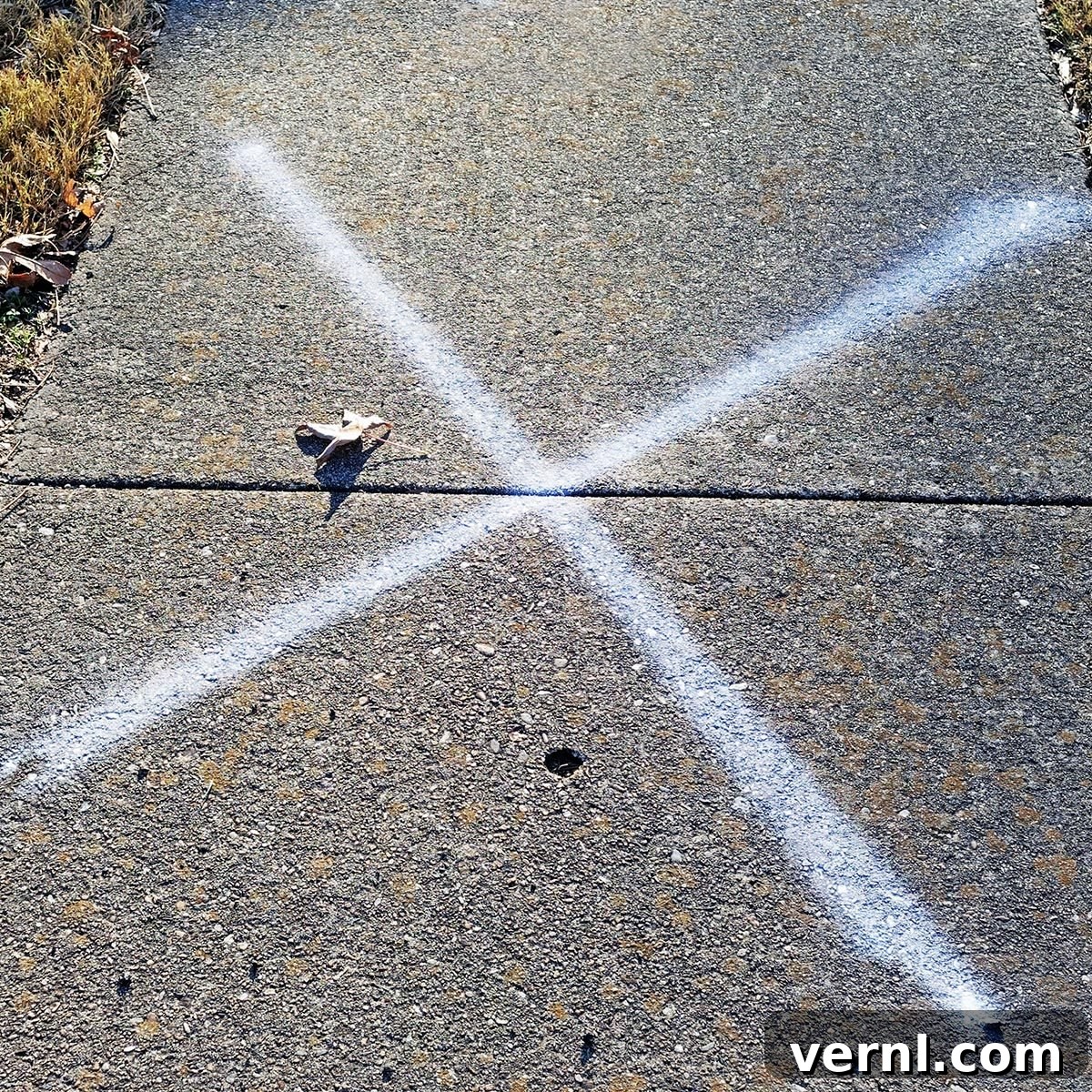
Unmasking the Mystery: Are Sidewalk Chalk Marks Secret Burglar Codes?
Every now and then, as we stroll through our neighborhoods, we might encounter a seemingly innocent piece of sidewalk art: a child’s hopscotch grid, a playful smiley face, or perhaps a random squiggle. These whimsical doodles often blend into the urban landscape, easily dismissed as harmless expressions of creativity. But what if that innocuous “X,” that peculiar triangle, or that series of strange lines near your property carries a far more sinister meaning?
The unsettling truth emerging in communities worldwide suggests that some of these chalk markings might not be so innocent after all. What appears to be random street art could, in fact, be a secret language—a covert communication system used by burglars and criminals to tag and target homes for future break-ins. This revelation transforms a simple chalk mark from a childhood memory into a potential warning sign, urging homeowners to pay closer attention to their surroundings.
Chalk Symbols: A Subtle Tool for Burglary Reconnaissance
The concept of criminals using cryptic symbols to communicate isn’t entirely new, but its application to everyday sidewalk chalk has become a cause for concern among law enforcement and residents alike. In recent years, police departments in various regions, including San Marino, California, have issued stern warnings to their communities about this cunning tactic. The method is deceptively simple yet highly effective: one member of a criminal network scopes out potential targets, leaving behind coded messages in chalk for accomplices to interpret and act upon.
Imagine it as a crude, low-tech version of a Yelp review, but instead of star ratings and glowing comments, these symbols convey critical intelligence for a crime. An “X” might signal, “This house is an easy target,” or “Good for a quick score.” A simple box or circle could mean, “Skip this one; it has a dog or a robust security system.” Other reported symbols include specific markings for “vacant during the day,” “elderly resident,” “alarm present but easy to bypass,” or even “nothing worth stealing.” This systematic approach allows burglars to operate more efficiently, minimizing risks and maximizing their potential gains by focusing only on the most promising properties.
This method of “pre-marking” or “criminal reconnaissance” allows different members of a burglary crew to play distinct roles. One individual, often blending in as a casual passerby, can assess a home’s vulnerabilities—observing routines, checking for visible security measures, and identifying potential entry points. This information is then distilled into a concise chalk symbol, a silent instruction for those who will later execute the break-in. It sounds like something plucked from the pages of a spy novel, but police departments from the sunny coasts of California to the historical towns of the UK have documented similar markings directly linked to actual property crimes and organized break-ins. The effectiveness lies in its discreet nature; chalk marks are temporary, easily erased, and often go unnoticed by homeowners until it’s too late.
The “Da Pinchi Code” and Other Suspected Symbols
The unofficial name given to this alleged criminal language, “The Da Pinchi Code,” playfully alludes to its cryptic nature. While specific meanings can vary and are often based on anecdotal reports, common interpretations suggest a sophisticated system. For example, a single vertical line might indicate “good target,” while two parallel lines could signify “house is being watched.” A triangle might denote “vulnerable person lives here,” perhaps an elderly resident or someone with limited mobility, making the property an easier mark. Circles, squares, or arrows might point to specific entry points, timings, or even the presence of cash or valuables. The very existence of such a code highlights a disturbing level of planning and coordination among criminal groups, transforming a seemingly innocent mark into a chilling precursor to a home invasion.
Alternative Explanations: Separating Fact from Urban Legend
While the notion of secret chalk codes is alarming, it’s essential to approach the topic with a balanced perspective. The debate over whether these symbols are a widespread criminal tactic or an exaggerated urban legend continues to spark discussion among experts and the public alike. Some law enforcement agencies and security professionals affirm the existence and use of such codes, citing genuine cases where these markings appeared before burglaries. They argue that criminals are constantly evolving their methods, and low-tech, inconspicuous communication tools are well within their repertoire.
However, a significant portion of experts, including some police forces, remain skeptical about the prevalence and organization of the “Da Pinchi Code” as a universal criminal language. They suggest that many reported instances could be misinterpreted or coincidental. There are several alternative, far more innocuous explanations for chalk markings commonly found on sidewalks and near driveways:
- Utility Company Markers: One of the most common reasons for colored chalk or paint marks on pavements is utility work. Gas, water, electricity, and telecommunications companies often use specific codes and colors to mark underground lines before excavation, maintenance, or new installations. These marks are essential for preventing accidental damage and ensuring worker safety.
- Construction and Surveying: Similarly, construction crews and surveyors use chalk to delineate property lines, mark out areas for work, or indicate the placement of future structures. These markings are temporary but crucial for project accuracy.
- Children’s Play: Perhaps the most innocent explanation, children frequently use chalk for drawing games like hopscotch, tic-tac-toe, or simply for artistic expression. Random squiggles, faces, and even abstract symbols can easily be created during playtime.
- Delivery and Service Notes: Occasionally, delivery drivers or service personnel might use chalk for temporary notes, such as indicating a successful delivery, a package left in a specific spot, or a message to a colleague.
- Road and Pavement Maintenance: Local councils or road maintenance teams may use chalk to mark potholes, cracks, or areas needing repair on sidewalks and roads.
The challenge lies in distinguishing between legitimate markings and potentially sinister ones. While skepticism is healthy, dismissing all strange markings entirely could lead to complacency. The key is vigilance and an informed response rather than panic. Even if a particular mark turns out to be harmless, the act of noticing and questioning it reinforces a proactive approach to home security.
Fortifying Your Home: Essential Burglary Prevention Strategies

Regardless of whether a chalk mark is a criminal’s secret message or a child’s fleeting artwork, the discussion around these symbols serves as a valuable reminder of the importance of robust home security. Taking proactive steps to fortify your home is always a wise investment, offering peace of mind and significantly reducing your vulnerability to break-ins. Here are comprehensive strategies to protect your property and loved ones:
Invest in Visible Home Security Systems
One of the most powerful deterrents against burglars is a visible and well-maintained home security system. Modern systems offer a range of features, from simple alarms to sophisticated smart home integration. Visible cameras, alarm panels, and yard signs not only alert you and authorities to intrusions but also send a clear message to potential criminals that your home is not an easy target. Consider systems that offer:
- Professional Monitoring: For 24/7 surveillance and immediate dispatch of emergency services.
- DIY Options: Many user-friendly systems can be installed without professional help, offering cost-effective protection.
- Smart Features: Integration with smart locks, video doorbells, motion sensors, and remote access via smartphone apps for enhanced control and awareness.
- Video Surveillance: High-definition cameras, especially those with night vision and motion detection, can record evidence and allow for live monitoring.
Illuminate Your Property Effectively
Darkness provides cover for criminals. Strategic lighting can dramatically reduce hiding spots and make your property less appealing. Install motion-activated flood lights around all entry points, garages, and secluded areas. Beyond floodlights, consider:
- Timer Lights: Set indoor lights to turn on and off at varying times, giving the impression that someone is home, even when you’re away.
- Smart Lighting: Control outdoor and indoor lights remotely or schedule them to respond to changing conditions.
- Landscape Lighting: Use low-voltage lighting to illuminate pathways and key features, eliminating shadows where intruders could lurk.
Secure All Entry Points
This is fundamental. Ensure all doors and windows are securely locked, including those on upper floors, in basements, and in garages. Don’t overlook less obvious entry points like pet doors or skylights. Consider these enhancements:
- Strong Deadbolts: Install high-quality deadbolt locks on all exterior doors.
- Window Locks and Security Film: Reinforce windows with additional locks and consider applying security film to prevent shattering.
- Reinforced Door Frames: Strengthen door frames with longer screws and metal plates to resist forced entry.
- Garage Security: Ensure garage doors are sturdy and have reliable locking mechanisms. Consider a smart garage door opener that alerts you if it’s left open.
Manage Valuables and Maintain Privacy
Avoid leaving valuable items—electronics, jewelry, cash—in plain view from outside your home. Drawn curtains or blinds can prevent potential burglars from casing your home and identifying tempting targets. For highly valuable items, consider:
- Home Safes: Invest in a fire-resistant and bolt-down safe for important documents and small valuables.
- Inventory and Photography: Keep a detailed inventory of your possessions, complete with serial numbers and photographs, for insurance purposes.
Exercise Caution on Social Media
In our hyper-connected world, oversharing on social media can be a significant security risk. Advertising a vacation or extended absence—complete with real-time updates and geo-tags—essentially broadcasts an open invitation to criminals. Always:
- Adjust Privacy Settings: Keep your profiles private and limit who can see your posts.
- Delay Travel Posts: Share your travel photos and updates *after* you’ve returned home.
- Be Mindful of Geo-tagging: Disable location services for social media apps when posting from home or on vacation.
Foster Community Vigilance and Report Suspicious Activity
A watchful community is one of the most effective deterrents against crime. Get to know your neighbors and consider joining or forming a neighborhood watch program. If something feels off, trust your gut instinct. If you notice any strange markings, unfamiliar vehicles repeatedly cruising your street, or individuals lingering suspiciously, don’t hesitate to:
- Document: Snap a picture of the marking or suspicious person/vehicle (if safe to do so). Note the time, date, and any distinguishing features.
- Clean It Off: If it’s a chalk mark on your property, clean it off immediately.
- Report to Police: Provide your local police department with all details. Even if it turns out to be harmless, your report contributes to a larger intelligence picture and helps law enforcement track potential patterns.
Maintain an Occupied Appearance
When you’re away, make your home look lived-in. Arrange for mail and newspaper deliveries to be stopped or collected by a trusted neighbor. Have someone mow your lawn or shovel snow. These small actions can make a big difference in deterring potential burglars who prefer vacant properties.
Staying safe in an unpredictable world requires a blend of awareness, skepticism, and proactive measures. While not every chalk mark signals impending danger, treating unusual symbols as potential warnings empowers you to take control of your home’s security. By enhancing your physical defenses, practicing digital caution, and fostering strong community ties, you build a formidable barrier against criminal intentions.
So, the next time you see an unfamiliar mark near your home, don’t just dismiss it. Snap a picture, clean it away, and give your local police a heads-up. Worst case, it was just a kid with a wild imagination. Best case, you might have thwarted a crime before it even began. Stay vigilant, stay informed, and always prioritize the safety of your home and family. And perhaps, keep some chalk handy to draw a friendly smiley face right back, asserting your positive presence.