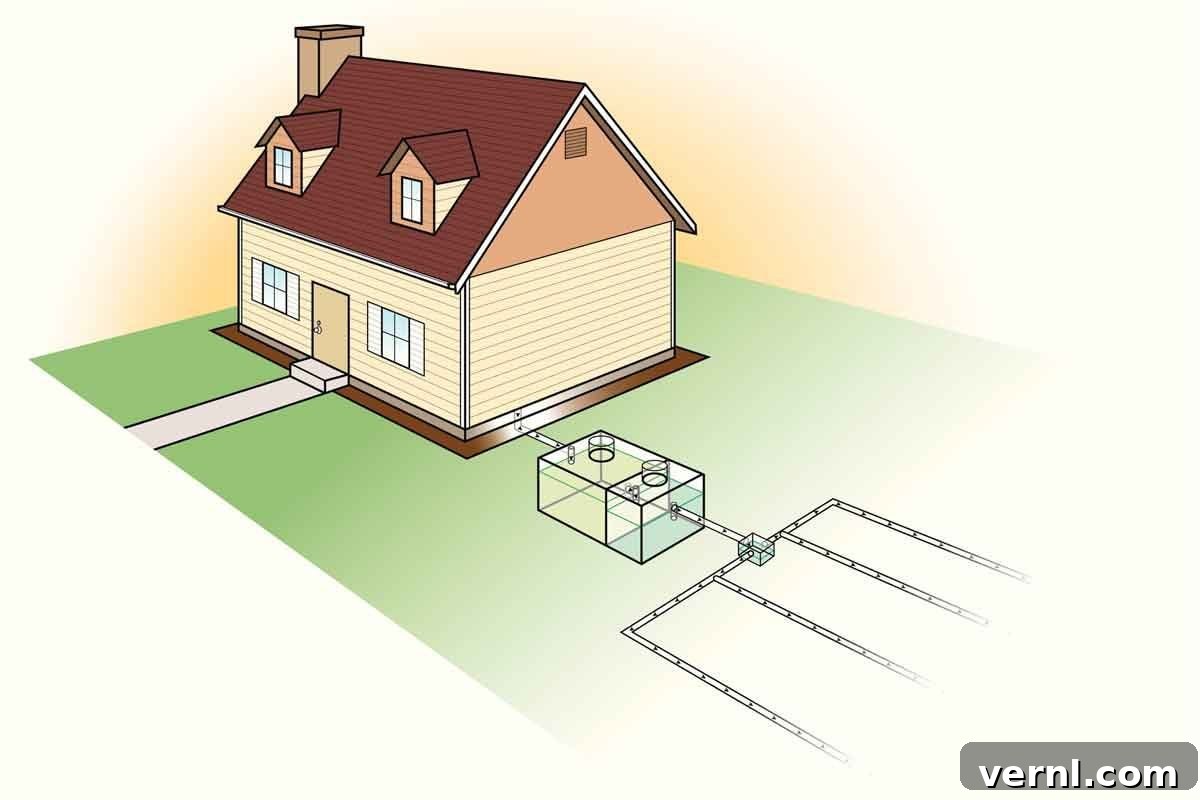
A properly designed, meticulously installed, and diligently maintained septic system is a cornerstone of many modern homes, particularly in areas not served by municipal sewage systems. These sophisticated underground wastewater treatment facilities are engineered for longevity, often providing decades of reliable service when treated with the care they deserve. However, their silent efficiency often leads homeowners to overlook their critical importance until a problem arises. Understanding the intricate workings of your septic system is not merely an exercise in curiosity; it is a fundamental step towards proactive maintenance and the prevention of potentially catastrophic and incredibly costly failures. Investing a small amount in regular care can save tens of thousands in excavation and replacement expenses. As the timeless adage suggests, “an ounce of prevention is worth a pound of cure” – and nowhere is this more true than with your home’s septic system.
Effective septic system maintenance begins with a comprehensive understanding of the different types available, the biological and mechanical processes that allow them to function, and the common pitfalls that can lead to their demise. This guide will take you on a journey beneath the surface, revealing the fascinating mechanisms that transform household wastewater into environmentally safe liquid. Following this exploration, we will delve into the reasons why these systems sometimes falter and equip you with invaluable pointers for keeping your septic system in optimal condition for years to come.
What Are the Primary Types of Septic Systems?
Septic systems are vital for treating and disposing of household sewage and greywater, serving as essential infrastructure for countless properties. While they all share the fundamental goal of wastewater treatment, the specific design and operation can vary significantly depending on environmental conditions, soil characteristics, and local regulations. Generally, three primary types of septic systems dominate the landscape, each tailored to specific site requirements and offering distinct advantages.
- Conventional Septic Systems: Often referred to as gravity septic systems, these represent the most traditional and widespread solution. Their design is elegantly simple yet highly effective. The system primarily consists of a watertight septic tank, typically made of concrete or fiberglass, where all household wastewater initially collects. Inside this tank, solids settle to the bottom, forming a sludge layer, while lighter materials like fats, oils, and grease float to the top, creating a scum layer. The clarified liquid, known as effluent, then flows by gravity from the tank into a network of perforated pipes laid within a gravel-filled trench in the drain field (also known as a leach field or absorption field). Here, the effluent slowly seeps into the surrounding soil, where beneficial aerobic bacteria further break down contaminants. Conventional systems are best suited for properties with excellent soil permeability, sufficient land area for the drain field, and proper natural drainage conditions, allowing gravity to do most of the work.
- Pressure Distribution Septic Systems: These systems build upon the conventional design but incorporate a pump chamber and a sophisticated distribution network. They are specifically engineered for sites with challenging characteristics, such as less-than-ideal soil conditions, uneven terrain, or shallow bedrock. After primary treatment in the septic tank, the effluent flows into a separate pump chamber. A pump then evenly distributes the effluent through a series of small-diameter pipes, ensuring uniform dispersal across the entire drain field. This pressurized distribution prevents oversaturation in one area and maximizes the soil’s treatment capacity, leading to more efficient and consistent wastewater purification. Pressure distribution systems offer increased flexibility in site selection and are a versatile option for properties where a conventional gravity-fed system would struggle to function effectively.
- Aerobic Treatment Units (ATUs): When conventional and pressure distribution systems are impractical due to severely poor soil conditions (e.g., clayey soils, high water tables, or limited absorption capabilities), Aerobic Treatment Units (ATUs) provide an advanced solution. Unlike conventional systems that rely on anaerobic (oxygen-deprived) bacterial processes in the septic tank, ATUs introduce oxygen into the wastewater, fostering a much more robust and efficient aerobic bacterial community. These systems typically consist of multiple compartments: a pretreatment compartment (similar to a septic tank), an aeration chamber where air is actively pumped into the wastewater, and a clarifier compartment where treated solids settle out. The highly treated effluent then moves to a final dispersal method, which might be a small drain field, drip irrigation, or even surface discharge (with proper permitting and disinfection). ATUs are considerably more complex and expensive to install and maintain than conventional systems but offer superior treatment quality, making them an indispensable choice for challenging environments.
The Fascinating Journey: How Septic Systems Work
At its core, a septic system is a decentralized wastewater treatment plant powered by nature’s smallest workers: bacteria. These microscopic organisms are the unsung heroes, diligently breaking down organic waste and rendering the water clean enough to safely return to the earth. The entire intricate design of a septic system is dedicated to cultivating and maintaining a thriving bacterial ecosystem, with different types of bacteria performing specialized roles both within the tank and, crucially, in the drain field.
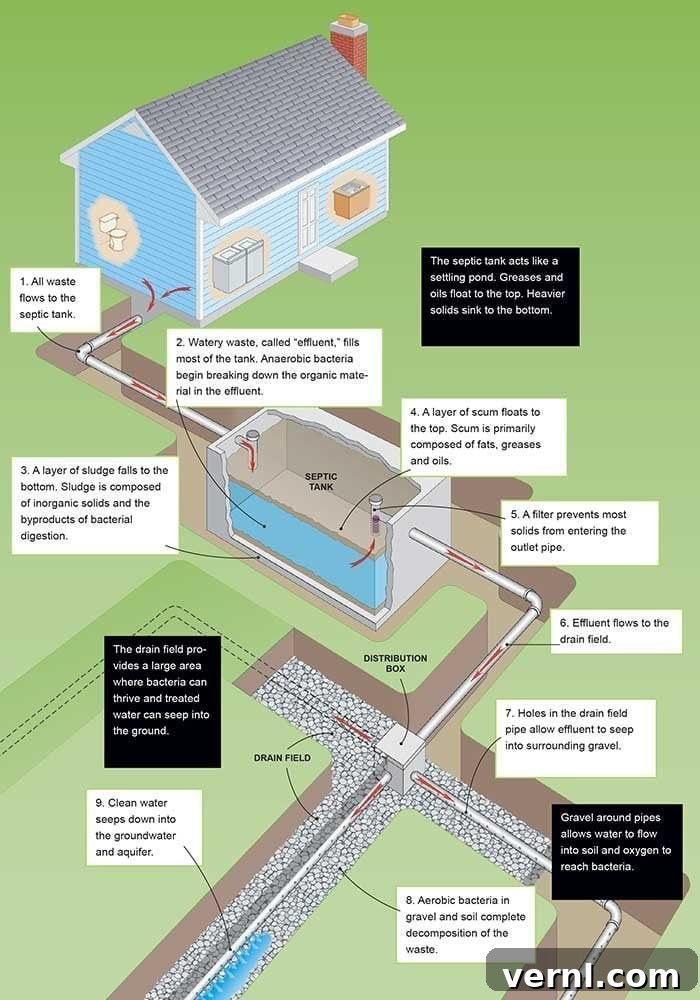
- Initial Collection in the Septic Tank: Every drop of wastewater generated in your home—from sinks, showers, toilets, and laundry—flows through a single main drainpipe and collects in the large, watertight septic tank. This is where the initial separation and anaerobic digestion begin.
- Effluent Formation and Anaerobic Digestion: Within the septic tank, the wastewater separates into three distinct layers. The vast majority of the tank’s volume is filled with the middle layer, known as “effluent.” This watery waste contains dissolved and suspended organic matter. Anaerobic bacteria, which thrive in oxygen-free environments, immediately begin their crucial work of breaking down these organic materials, a process called anaerobic digestion.
- Sludge Accumulation: As bacteria break down waste and inorganic solids enter the tank, heavier particles settle to the bottom, forming a dense layer called “sludge.” This sludge is composed of inorganic solids, undigested organic matter, and the byproducts of bacterial digestion. Regular pumping is essential to remove this accumulated sludge and prevent it from overflowing into the drain field.
- Scum Layer Formation: Conversely, lighter materials such as fats, greases, oils, and other buoyant solids float to the top of the effluent, forming a “scum” layer. This layer acts as a protective barrier, helping to maintain the anaerobic conditions necessary for the bacteria below and preventing floating solids from exiting the tank prematurely.
- The Role of the Effluent Filter: Before the effluent can leave the septic tank, it often passes through an effluent filter. This critical component acts as a final safeguard, preventing any remaining suspended solids or larger particles from escaping the tank and entering the delicate drain field. Keeping this filter clean is vital for the long-term health of the entire system.
- Flow to the Drain Field: Once treated in the tank and filtered, the clarified effluent flows out of the septic tank and into the drain field (also known as a leach field or absorption field). This extensive network of trenches and perforated pipes is the heart of the secondary treatment process, providing a vast surface area where beneficial aerobic bacteria can thrive, and the treated water can gradually seep into the ground.
- Seepage into Gravel and Soil: The perforated pipes in the drain field allow the effluent to seep out into the surrounding bed of gravel. This gravel serves multiple purposes: it helps distribute the effluent evenly, prevents the pipes from becoming clogged with soil, and most importantly, provides ample interstitial spaces for oxygen to reach the aerobic bacteria that live on the gravel and in the surrounding soil.
- Aerobic Decomposition in the Soil: As the effluent trickles through the gravel and into the unsaturated layers of soil, it encounters a new community of bacteria – aerobic bacteria. These oxygen-loving microbes are incredibly efficient at further breaking down any remaining pathogens and contaminants in the wastewater. The soil itself acts as a natural biological filter, adsorbing nutrients and physically filtering out microscopic particles.
- Return to Groundwater: The final stage sees the thoroughly treated and purified water slowly percolate down through the soil layers. Once it has reached a safe level of purity, it safely recharges the local groundwater and aquifers, completing the natural water cycle.
Crucial Septic Tank Inspections
While a septic system’s operation may appear straightforward, assessing its overall health and predicting potential issues truly demands the expertise of a trained professional. We strongly advocate for engaging a contractor who possesses formal training and certification in the science of septic systems. Many states have implemented rigorous certification programs for septic contractors, ensuring they meet specific standards of knowledge and practice. It is highly advisable to check with your Secretary of State’s office or local health department to ascertain if such programs exist in your region and to verify a contractor’s credentials.
A professional septic tank inspection is a worthwhile investment, typically ranging from $200 to $900, depending on your location and the complexity of your system. This initial assessment will not only provide a detailed overview of your system’s current condition but will also enable your professional to offer tailored recommendations regarding inspection frequency and explain the nuances of how your specific septic tank operates. They can provide a crucial understanding that goes beyond a basic explanation.
A comprehensive inspection goes far beyond a cursory glance. It will meticulously determine whether your system adheres to current local codes and regulations (many older systems may not), thoroughly evaluate the structural integrity and functional health of both the septic tank and the drain field. A reputable inspector will also be able to ascertain if your current tank capacity is adequate for your household’s size and water usage patterns, and provide an estimate of the maximum volume of wastewater your system can effectively process daily. This information is invaluable for managing your household’s water consumption and preventing overload.
For systems that could benefit from an extra boost of microbial activity, your professional might suggest adding a commercial septic system treatment product, such as RID-X. These treatments typically introduce beneficial bacteria and enzymes designed to enhance the natural decomposition process within the septic tank, particularly in systems that may be struggling with sluggish breakdown. Your inspector can advise whether your specific system would genuinely benefit from such an additive, helping you make informed decisions about supplementary care to keep your system running in tip-top shape.
Essential Septic Tank Pumping
Septic tank pumping is an absolutely critical, non-negotiable aspect of septic system maintenance. Its primary purpose is to remove the accumulated layers of sludge and scum that naturally build up within the tank over time. If left unchecked, these layers will progressively reduce the liquid capacity of the tank and, more importantly, slow down or even inhibit the bacterial action that is fundamental to the system’s function. When sludge and scum levels become too high, they can overflow into the drain field, leading to severe and often irreparable damage.
The frequency with which your tank requires pumping can vary significantly. While some households may need annual pumping, others might comfortably go two or three years between services. This variability depends on several key factors: the size of your septic tank (larger tanks can accommodate more waste), the number of occupants in your household, and the volume of wastewater you generate daily. Furthermore, the presence of a garbage disposal, which introduces a greater load of solids into the tank, will typically necessitate more frequent pumping.
It is imperative to ask your septic inspector to provide a rough recommendation for how often your specific tank should be pumped. This professional assessment, based on their inspection findings and an understanding of your household’s habits, will be the most reliable guide. Adhering to this recommended schedule for regular inspections and pumping is not just good practice; it is critical for ensuring the longevity and efficient operation of your entire septic system maintenance regimen.
For homeowners who are not squeamish and wish to take a more hands-on approach, you can periodically check the sludge level in your tank yourself using a specialized device known as The Sludge Judge. This tool allows you to accurately measure the depth of the sludge layer at the bottom of your tank. Once you determine that your tank’s sludge layer occupies approximately one-third of its total liquid depth, it’s a clear indication that it’s time to call a qualified contractor to schedule a pumping service. Proactive monitoring helps you manage pumping intervals effectively and prevents the costly repercussions of an overflowing septic tank.
Addressing Clogged Septic Systems
One of the most common and frustrating problems homeowners encounter with their septic systems is clogging. If you find your septic system is frequently backing up or its effluent filter requires semi-annual or even more frequent cleaning, your first instinct might be to remove the filter altogether. However, resisting this temptation is paramount. The effluent filter is an indispensable component of your septic system, designed to protect the drain field from solids.
As discussed, septic tanks function by allowing waste to naturally stratify into three distinct layers: the heavy solids (sludge) at the bottom, the clarified liquid (effluent) in the middle, and the lighter fats, oils, and greases (scum) floating on top. Microorganisms in the sludge layer work to decompose organic matter. The middle layer of effluent, which is relatively free of large solids, is what exits the tank. This liquid then travels through a network of underground perforated pipes into the drainage field. Within the drain field, the surrounding gravel and soil layers act as sophisticated biological and physical filters, purifying the wastewater as it gradually percolates into the ground (refer to the illustration above for a visual explanation). Have you ever considered the benefits of diverting non-toilet wastewater to grey water systems to reduce the load on your septic tank?
Many states and local jurisdictions legally mandate the inclusion of an effluent filter in septic system designs precisely because of its critical protective function. Removing this filter, while seemingly a quick fix for frequent clogs, could inadvertently lead to a far more severe and exponentially expensive problem. Without the filter, larger waste particles and excessive scum can easily pass into the delicate perforated pipes of the drain field. Over time, these particles will accumulate, completely clogging the pipe perforations and eventually rendering the entire drain field ineffective. Repairing such a clog typically necessitates extensive and costly excavation to clean, repair, or even replace sections of the drain field, transforming a minor inconvenience into a major financial burden.
It’s important to note that your effluent filter should generally not require semi-annual cleaning under normal operating conditions. Most filters are designed to function efficiently between septic tank pumpings, which typically occur every two to five years. If your filter is clogging more frequently, it’s a strong indicator that you are likely introducing filter-clogging materials down your drains. Common culprits include excessive amounts of grease, cooking fats, oils, and food scraps, especially if you heavily rely on a garbage disposal. Being mindful of what goes down your drains is the first line of defense against frequent filter clogs and costly septic system issues.
Innovative Alternatives to a New Drain Field
Discovering that your septic system’s drain field is compromised—whether through a routine inspection or the alarming revelation of a sewage backup—can be a homeowner’s worst nightmare. While the ultimate and often most definitive solution is indeed a complete drain field replacement, the associated costs can be astronomical. Therefore, it’s highly advisable to thoroughly discuss alternative, potentially less invasive, and more affordable options with a trusted and experienced septic contractor before committing to a full replacement.
- High-Pressure Jetting of Pipes: One effective remedial measure is to have a contractor meticulously clean the drain field pipes using a high-pressure rotary washer, a process commonly known as “jetting.” This specialized equipment forces water through the pipes at extremely high pressure, dislodging and clearing blockages caused by accumulated sludge, scum, biological growth, and even minor root intrusions. Jetting can significantly improve the flow and absorption capabilities of a partially clogged drain field and usually costs a few hundred dollars, making it a much more economical option than excavation. However, it’s important to understand that jetting is most effective for minor to moderate clogs and might not be a permanent solution for severely damaged or collapsed pipes.
- Chemical Treatment for System Revitalization: In certain scenarios, treating the ailing septic system with specialized commercial chemical products can provide relief. These products are often formulated to increase the amount of oxygen in the drain field, which stimulates the activity of beneficial aerobic bacteria that break down organic matter more efficiently. Other treatments may contain enzymes or bacterial strains designed to accelerate decomposition or break down specific types of clogs. It is absolutely crucial to consult your contractor and use only commercially approved septic-safe products; never attempt to use homemade remedies or harsh chemicals not specifically designed for septic systems, as these can kill the beneficial bacteria vital for your system’s function and cause further damage.
- Terra-Lifting for Soil Compaction: For drain fields suffering from severe soil compaction, particularly in older systems or areas subjected to vehicle traffic, a technique called “terra-lifting” may offer a viable solution. This advanced process involves injecting high-pressure air into numerous strategic locations around the drain field. The compressed air effectively fractures the compacted soil, creating new pathways and channels for effluent to seep into the ground. This process significantly improves soil porosity and aeration, restoring the drain field’s ability to absorb and treat wastewater and rejuvenating the microbial ecosystem. However, the legality and suitability of terra-lifting vary by state and soil type, so always confirm with your contractor and local authorities. While these alternatives can extend the life of a struggling drain field, it’s important to recognize that they may offer temporary relief, and a full replacement might eventually be necessary for long-term reliability.
Indispensable Tips to Prevent Septic Tank Problems
Maintaining a healthy and trouble-free septic system requires more than just reactive repairs; it demands proactive strategies and a conscious effort to manage what goes down your drains. Understanding the impact of everyday habits and household chemicals on your septic tank’s delicate ecosystem is paramount to preventing costly and inconvenient problems down the road. By adopting these responsible practices, you can significantly extend the life and efficiency of your septic system.
- Be Mindful of What You Flush: The golden rule for septic systems is: if it’s not human waste or toilet paper, don’t flush it. Items that decompose slowly or not at all are major culprits for clogs and system overload. This includes “flushable” wipes (which often aren’t truly flushable), feminine hygiene products, dental floss, cotton swabs, paper towels, cat litter, coffee grounds, cigarette butts, and condoms. These items can accumulate in the tank, clog the effluent filter, or worse, block the drain field pipes.
- Limit Garbage Disposal Use: While convenient, heavy reliance on garbage disposals can overwhelm your septic system. Disposals introduce a significant amount of extra solids, fats, and greases into the septic tank, which take longer to break down and accelerate sludge and scum buildup. This necessitates more frequent septic tank pumping and places additional strain on the system’s microbial balance. Consider composting food scraps instead or minimizing disposal use.
- Beware of Synthetic Fibers (Lint): Lint from synthetic fabrics (like polyester, nylon, and acrylic) shed during washing machine cycles poses a silent threat. Unlike natural fibers, these synthetic microfibers do not readily break down in the septic tank or drain field. They can accumulate in the tank, clog the effluent filter, and contribute to biomat formation in the drain field, reducing its absorption capacity. Installing a specialized lint filter on your washing machine can significantly reduce this problem.
- Go Easy on Household Chemicals: Many common household cleaning products, particularly disinfecting cleaners, antibacterial soaps, bleach, and harsh drain cleaners, contain chemicals that are toxic to the beneficial bacteria in your septic system. While light, infrequent use of some products might be manageable, excessive use can decimate the bacterial population, severely impairing the system’s ability to break down waste. Opt for eco-friendly, biodegradable, and septic-safe cleaning alternatives whenever possible.
- Manage Water Usage (Prevent Overload): Too much wastewater entering the septic tank over a short period can “hydraulic overload” the system. This rapid influx of water doesn’t allow enough time for solids to settle and for bacteria to properly digest waste, essentially flushing untreated solids and scum into the drain field. This can lead to drain field saturation and premature failure. Practice water conservation by fixing leaky faucets, installing low-flow fixtures, and spacing out water-intensive activities like laundry loads and long showers throughout the week.
- Regularly Pump to Prevent Sludge & Scum Issues: An excessive buildup of sludge and scum in the septic tank is a leading cause of system failure. Too much sludge reduces the effective volume of the tank, hindering bacterial action. Critically, if sludge or scum levels become too high, they can overflow into the drain field, physically plugging the soil and gravel, preventing effluent absorption, and causing sewage backups. Regular pumping, as recommended by your inspector, is the only way to manage these layers effectively.
- Protect Against Pipe Plugs: Beyond filter issues, foreign objects, excessive solids, and even hardened scum can directly plug the perforations in the drain field pipes, obstructing effluent flow. Adhering to proper flushing habits and ensuring your effluent filter is intact and maintained will help prevent these blockages.
- Guard Against Root Intrusion: Roots from nearby trees and shrubs are naturally drawn to the water and nutrients in a drain field. They can penetrate, clog, and even crush drain field pipes, causing severe damage. When landscaping, choose smaller, shallow-rooted plants for areas near your septic system and keep larger trees a safe distance away. Consider installing root barriers if necessary.
- Prevent Soil Compaction: The soil in your drain field relies on its porous structure to absorb effluent and allow oxygen to reach the aerobic bacteria. Driving or parking heavy vehicles (cars, trucks, recreational vehicles) on or near the drain field can severely compact the soil and crush pipes, effectively blocking seepage and depriving the crucial bacteria of oxygen. Always keep vehicles and heavy equipment off your drain field area.
By diligently following these preventative tips and adhering to a schedule of professional inspections and pumping, you can significantly extend the lifespan of your septic system, avoid expensive repairs, and ensure it continues to operate efficiently and safely for your home and the environment.