
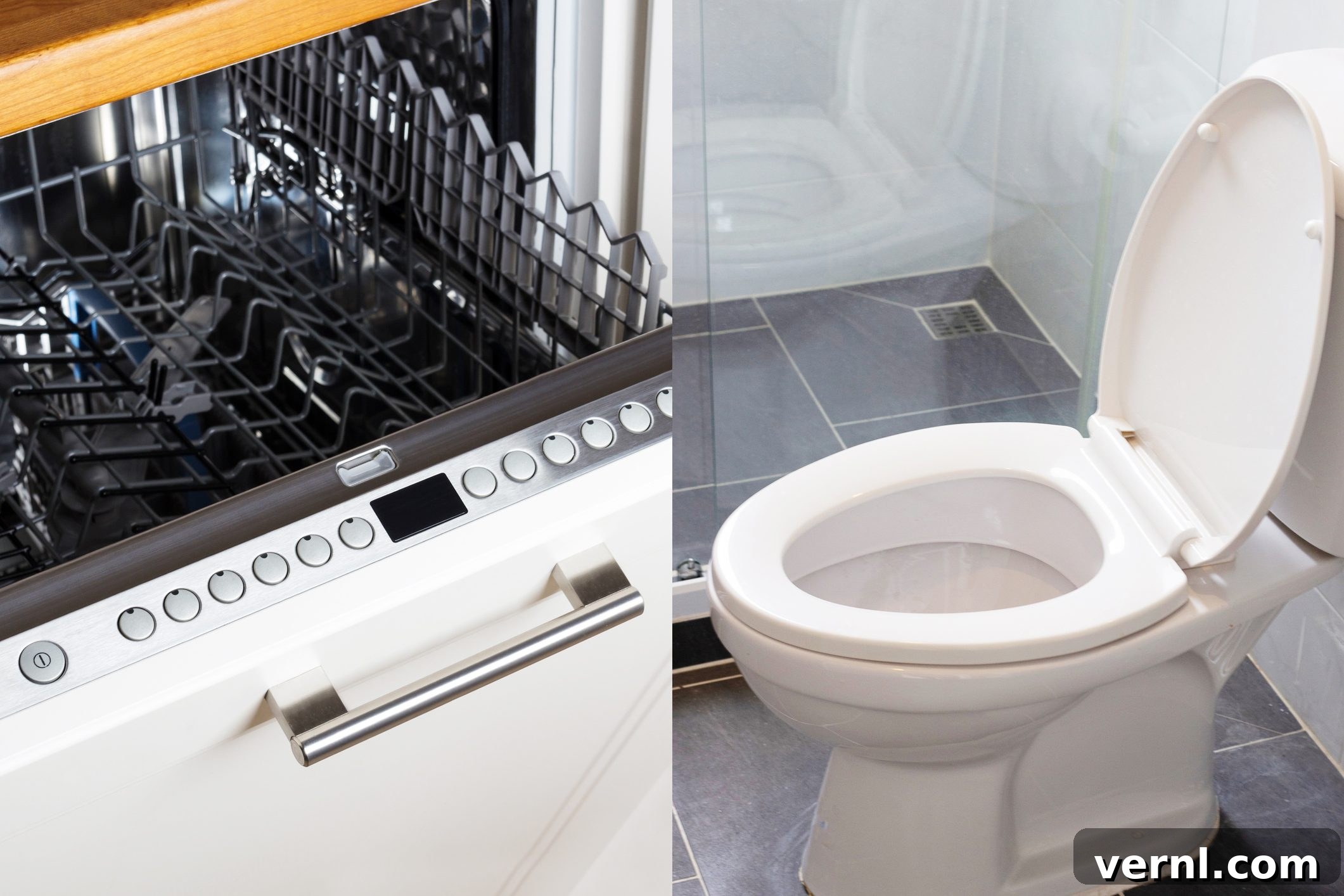
Some internet cleaning hacks promise revolutionary simplicity, sparking moments of “Why didn’t I think of that?” We’ve all seen clever ideas, like the ingenious pillowcase method for dusting a ceiling fan, that genuinely make household chores easier and more efficient. Such clever shortcuts can transform dreaded tasks into manageable ones, truly living up to the “hack” moniker.
However, the digital landscape is also rife with dubious advice, and sometimes, a viral sensation crosses the line from innovative to downright dangerous. A prime example of this questionable content is the persistent suggestion to clean your toilet seat in the dishwasher. This particular “hack” isn’t new; it first surfaced on platforms like Reddit’s AITA forum four years ago, immediately drawing criticism for its unsettling nature. Despite its initial widespread condemnation, social media algorithms have recently resurrected this appalling trend, forcing a renewed discussion on its safety and efficacy.
As a responsible guide to home maintenance and hygiene, we felt it imperative to address this resurgence. While we often enjoy testing and reviewing trending household tips, some ideas are so fundamentally flawed and hygienically risky that they warrant immediate dismissal. The “toilet seat in dishwasher” concept is unequivocally one such instance. To provide a definitive answer and safeguard public health, we consulted with Dr. Brian Mangum, an associate professor of medicine and epidemiologist at the University of Health Sciences Antigua, and Melissa Homer, Chief Cleaning Officer at MaidPro.com. Their expert insights firmly debunk this disturbing practice and highlight the serious health implications involved.
The Anatomy of a Bad Idea: How the Toilet Seat Dishwasher Hack Works (in Theory)
The premise of this viral cleaning hack is alarmingly simple, yet deeply flawed. The idea, as demonstrated in various online videos – which we strongly advise against replicating – involves removing your toilet seat and placing it inside your household dishwasher. Proponents suggest running it on heavy-duty cycles such as “pots and pans” or the “sanitize” setting, believing this will effectively clean and disinfect the seat.
The process often begins with the removal of the toilet seat. For those fortunate enough to have quick-release seat attachments, this might take mere seconds. However, the vast majority of toilet seats are bolted down, requiring tools and a minor disassembling process. This initial step immediately negates any perceived time-saving benefit, as unscrewing and reattaching a toilet seat adds significant time to the “cleaning” routine, even before the dishwasher cycle begins. Already, the promise of a swift, effortless clean starts to unravel.
Once removed, the toilet seat is typically placed on the bottom dishwasher rack, alongside where your dinner plates, glasses, and cutlery would usually sit. The accompanying instructions advocate for the highest temperature and most aggressive cleaning cycles. After the cycle completes, which can take several hours, the (theoretically) clean seat is then reattached to the toilet. The glaring omission in these viral demonstrations is any discussion of what happens to the toilet itself, or the cumulative time investment this entire process demands. What about the rest of the toilet bowl and base? Does the entire bathroom magically become clean?
The logic behind such a hack appears to be rooted in a misunderstanding of both dishwasher functionality and basic hygiene principles. A dishwasher’s primary role is to clean food residues from kitchenware. Introducing an item from one of the most germ-laden areas of the home into an appliance designed for food contact items presents an immediate and profound risk of cross-contamination. While the visual of a “spotless” toilet seat emerging from a dishwasher might appear appealing on screen, the unseen dangers far outweigh any superficial cleanliness. Other TikTokers have shared their thoughts on this dubious practice, most echoing concerns over hygiene.
@mechanicallyincleyend 😲 Are you still cleaning your TOILET by ✋️ @spaceystacey4 #handyman #plumbing #viral #diy #cleantok ♬ Sneaky Snitch – Kevin MacLeod
The Hard Truth: Why Experts Firmly Reject This Cleaning Method
Understanding Sterilization vs. Sanitization: A Crucial Distinction
The core misunderstanding behind the toilet seat dishwasher hack often revolves around the terms “sterilize” and “sanitize.” Many assume that a dishwasher, especially on a “sanitize” cycle, can eliminate all germs. However, as Dr. Brian Mangum, a leading epidemiologist, clarifies, this is far from the truth. “Sterilize means to eliminate all bacteria on a surface,” Dr. Mangum explains. “Dishwashers just don’t get that hot.” While dishwasher sanitize cycles utilize higher temperatures (typically around 150°F to 160°F or 65°C to 71°C) and extended wash times, they are designed to reduce bacteria to a safe level, not to sterilize a surface completely. Medical sterilization, for instance, requires much higher temperatures or specific chemical treatments to guarantee the elimination of all microorganisms, including spores and viruses.
Therefore, even if a toilet seat endures a full “sanitize” cycle, there’s no guarantee that every single pathogen has been eradicated. Given the inherent bacterial load of a toilet seat, relying on a dishwasher for complete decontamination is not only misguided but dangerous.
The Grave Risk of Cross-Contamination
Dr. Mangum emphasizes what he calls “the bigger issue”: cross-contamination. “Consider the fact that your toilet seat is already full of germs, and you have now potentially transferred those germs to the same dishwasher where you will wash your children’s plates after pizza night,” he stresses. This statement succinctly highlights the most alarming aspect of the hack. Toilet seats are notorious breeding grounds for various bacteria, including fecal coliforms like E. coli, Staphylococcus aureus, and other potentially harmful pathogens. Introducing these microorganisms into an environment where food contact surfaces are cleaned creates a direct pathway for illness.
Even if the dishwasher’s hot water and detergent remove visible grime, microscopic particles and bacteria can adhere to the interior surfaces, spray arms, and even the filter. Subsequent washes of dishes, cutlery, and glassware could then potentially expose your family to these transferred contaminants, leading to gastrointestinal illnesses or other infections. The thought of ingesting even trace amounts of fecal bacteria from a dinner plate is enough to underscore the severity of this risk.
While it’s true that many items in our homes are dirtier than toilet seats in terms of sheer bacterial count (e.g., kitchen sponges, cutting boards), these items are typically cleaned separately or with methods appropriate to their contamination level, and crucially, not in direct proximity to food preparation surfaces. As Dr. Mangum pertinently asks, “Would you eat pizza off the toilet seat, even if you had cleaned it first? Probably not.” This simple thought experiment perfectly illustrates the deeply ingrained aversion we have to mixing bodily waste with food, and for good reason.
Energy, Water, and Appliance Limitations
Beyond the critical hygiene concerns, the practicalities of using a dishwasher for a toilet seat also make no sense. Dishwasher “sanitize” settings are designed to be energy and water-intensive. They can add an hour and a half or more to an already lengthy cycle, which can easily exceed two hours on its own. This translates to significant increases in energy and water consumption for a cleaning task that is not only ineffective but actively hazardous. Why waste precious resources on a method that fails on multiple fronts?
Furthermore, dishwashers are engineered to handle specific types of materials and resist certain types of contaminants. Prolonged exposure to the chemicals and high temperatures inside a dishwasher could potentially degrade the material of your toilet seat, especially those made from plastics or composite materials, leading to discoloration, warping, or cracking over time. This could necessitate premature replacement, adding another unnecessary cost to an already ill-advised “hack.”
Clean Your Toilet the Right Way: Effective and Safe Strategies
Having established why the dishwasher method is a definite no-go, let’s pivot to what truly works. Achieving a hygienically clean toilet, free from bacteria and grime, is straightforward and doesn’t require dismantling your bathroom fixtures or risking cross-contamination in your kitchen. The key lies in using the right products and techniques specifically designed for bathroom environments.
(Video placeholder: For demonstration purposes, this might link to a helpful cleaning video.)
Expert-Approved Cleaning Methods
Both Dr. Mangum and Melissa Homer, our cleaning experts, advocate for conventional, tried-and-true methods. “You would be much better off just using bleach or other commercial products designed to kill germs, such as Lysol,” advises Dr. Mangum. These products are formulated with active ingredients (like hypochlorite in bleach or quaternary ammonium compounds in disinfectants) that are proven to effectively eliminate a broad spectrum of bacteria, viruses, and fungi commonly found in bathrooms.
Melissa Homer, with her extensive professional cleaning experience, provides a detailed, step-by-step guide for cleaning your toilet like a pro:
- Prepare and Spray: Begin by spraying the entire exterior of the toilet with a high-quality disinfecting cleaner. This includes the tank, the sides, the lid, and crucially, both the top and underside of the toilet seat. Don’t forget to spray under the bowl where dust and splashes can accumulate. Allow the disinfectant to sit for the recommended dwell time specified on the product label (usually 5-10 minutes) to ensure proper germ killing.
- Address the Rim: Next, coat the underside of the toilet rim with a specialized gel toilet bowl cleaner. These cleaners are formulated to cling to the porcelain surface, providing extended contact time to dissolve mineral deposits, hard water stains, and kill germs in this often-overlooked area. Always ensure that any cleaners you use are compatible and won’t combine to create toxic fumes. Read labels carefully!
- Wipe and Clean: Work systematically from top to bottom and outside to inside. Using a clean microfiber cloth dampened with your disinfecting cleaner, wipe down all the sprayed exterior surfaces. Starting from the top prevents drips from re-contaminating areas you’ve already cleaned. Ensure you thoroughly wipe both sides of the seat. Microfiber is excellent for trapping dirt and germs.
- Scrub the Bowl: Once the exterior is clean, use a dedicated toilet brush to scrub the inside of the bowl. Work in overlapping strokes, paying special attention to under the rim where bacteria and stains often hide. The gel cleaner applied earlier will assist in this process.
- Flush and Rinse: Flush the toilet once to clear the bowl and rinse away the cleaner and loosened debris. Then, flush again while holding the toilet brush under the flowing water to clean the brush thoroughly. After cleaning, spritz the brush with bleach water or another disinfectant before storing it to prevent bacterial growth.
Tackling Stubborn Stains and Hard Water Deposits
For homes with hard water, rust, or mineral stains, additional steps might be necessary. Homer highly recommends Bar Keeper’s Friend, a versatile cleanser known for its effectiveness against rust and mineral deposits on porcelain. For extremely stubborn mineral buildup, a porcelain-friendly pumice stone like a Pumie can safely remove deposits without scratching the surface. Always test in an inconspicuous area first.
Essential Cleaning Habits and Tools
Beyond the toilet itself, general bathroom hygiene practices are crucial. A simple yet highly effective pro tip is to color-code your cleaning tools. Designate specific sponges, scrubbers, and microfiber cloths for the bathroom, ensuring they are distinctly different in color from those used in the kitchen or other areas of the home. This prevents any accidental cross-contamination. Imagine inadvertently using a toilet cleaning sponge on your kitchen counter – a scenario easily avoided with a clear color-coding system. While you’re optimizing your cleaning routine, remember there are legitimate, safe cleaning hacks that genuinely help, like adding aluminum foil to your dishwasher for shining silverware, which is a far cry from introducing biohazards.
The Definitive Bottom Line: Prioritizing Health Over Hype
Let’s be unequivocally clear: Under no circumstances should you ever place your toilet seat in the dishwasher. This “hack” is not only ineffective for true sanitization but poses a significant and avoidable public health risk due to severe cross-contamination. It represents a fundamental misunderstanding of hygiene, appliance function, and basic common sense.
A true cleaning hack should either solve a problem more efficiently or make a task considerably easier and safer. Does removing a dirty toilet seat, loading it into your dishwasher, waiting for a prolonged, energy-intensive cycle, and then reattaching it achieve any of these goals? Absolutely not. This process is time-consuming, wastes water and energy, and, critically, leaves you with a potentially contaminated appliance while the rest of your toilet remains untouched. Why undertake such a convoluted and dangerous process when simply cleaning the toilet in situ, with appropriate disinfectants, is infinitely more effective, faster, and safer?
Furthermore, it’s vital to engage with viral content critically. In an age where digital virality can equate to financial gain, the line between helpful advice and outright fabrication often blur. The original TikTok video creator, when pressed with “facts or caps” (TikTok slang for “fact or fiction”), openly admitted it was “cap, for sure,” accompanied by a laughing emoji. This confession confirms what health experts and logical thinkers already suspected: this entire concept was designed as a gag, a piece of entertainment to generate views and engagement, potentially at the expense of unsuspecting viewers who might take such advice seriously. These creators are literally profiting from the virality of their content, regardless of its safety or veracity, as explored by sources documenting how much TikTokers make.
Therefore, let this serve as a cautionary tale: always verify cleaning advice, especially when it seems too good (or too bizarre) to be true. When it comes to maintaining a hygienic home, trust in expert guidance and proven methods. Protect your family’s health and your peace of mind by sticking to common sense and leaving dangerous viral trends where they belong – in the realm of fiction. Your kitchen and your family deserve better than misplaced toilet germs.
[cf]skyword_tracking_tag[/cf]