Protecting Your Home: The Essential Guide to Gutter Cleaning
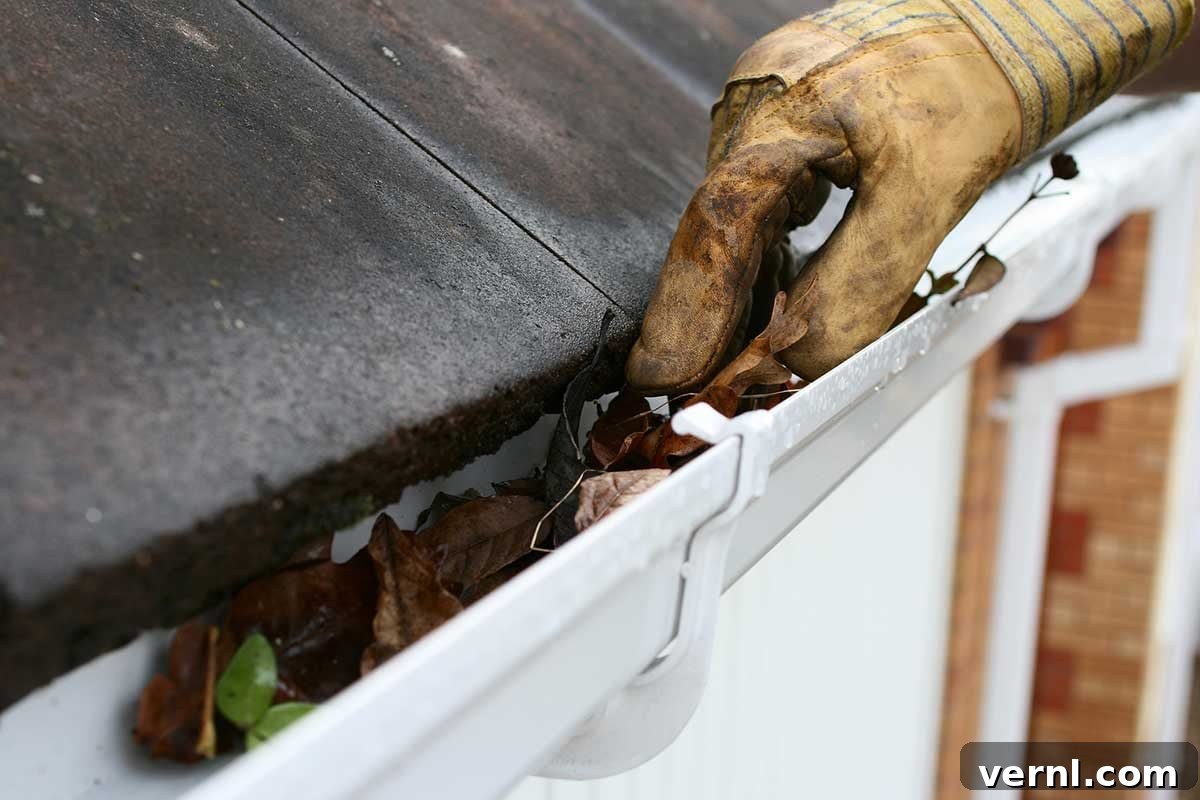
Gutters play a critical role in safeguarding your home’s structural integrity. Designed to capture rainwater and channel it efficiently away from your home’s foundation, they prevent a cascade of costly and often frustrating issues. When gutters become clogged with leaves, twigs, shingle grit, and other debris, water can no longer flow freely. Instead, it overflows, seeping into vulnerable areas of your home’s exterior, such as fascia boards, soffits, and even behind siding. This uncontrolled water flow can saturate the soil directly around your foundation, leading to serious problems ranging from a leaky roof to a wet basement, structural damage, and even severe mold growth.
To ensure your gutter system performs its vital function effectively, it must remain clear of obstructions. This fundamental home maintenance task is non-negotiable for homeowners. The question then becomes: should you tackle this messy but essential job yourself, or is it a task best left to professional gutter cleaning services? This comprehensive guide will help you weigh the pros and cons of both options, providing insights into costs, safety considerations, necessary tools, and ultimately empowering you to make the best decision for your home and lifestyle.
Understanding the Investment: How Much Does Gutter Cleaning Cost?
Hiring a Professional Gutter Cleaning Service
Engaging a professional for gutter cleaning offers numerous advantages, particularly for homeowners who lack the time, the necessary equipment, or the comfort level with heights. Professional services bring expertise, specialized tools, and often insurance, providing peace of mind. The cost of hiring a pro can vary significantly, as each contractor estimates jobs based on their unique pricing models and regional factors. However, you can use general guidelines to anticipate expenses.
As a common rule of thumb, expect to pay approximately $1.00 to $1.50 per linear foot for single-story homes. For a two-story residence, the rate typically increases to $1.50 to $2.50 per linear foot, reflecting the added difficulty and safety considerations of working at greater heights. If your home features a third floor, or particularly challenging access points, costs can escalate to $3.00 or more per linear foot. These figures are averages, and actual prices will depend on several variables.
To illustrate, consider a hypothetical 2,500 sq. ft. two-story house with a straightforward rectangular footprint (e.g., 20 ft. by 62.5 ft.) and a standard gable roof. Such a property might have roughly 170 linear feet of gutters. Based on our guidelines, the professional cleaning cost could range from $250 to $350. Naturally, if your home’s footprint or gutter layout is more complex, this figure would be adjusted. For instance, a two-story house with a hip roof, which typically features gutters on all four sides, could incur costs closer to $330 to $450, due to increased linear footage and potentially more intricate corners.
Several other critical factors can influence the final price quoted by a professional gutter cleaning service. These include:
- Degree of Clogging: Heavily clogged gutters and downspouts that require extensive effort to clear, possibly involving disassembly, will command a higher price.
- Accessibility Challenges: Obstacles such as steep roof pitches, uneven ground, extensive landscaping, or close-proximity power lines can make ladder placement difficult and increase labor time, thus raising the cost.
- Gutter Condition: If your gutters are damaged, loose, or need re-attaching, some cleaners may offer minor repair services for an additional fee. It’s crucial to clarify whether a prospective cleaner performs repairs before scheduling service, as not all companies do.
- Additional Services: Some professionals offer gutter guard installation, pressure washing of the home exterior, or roof debris removal, which would be separate charges.
- Location and Season: Prices can fluctuate based on your geographical location and the time of year. Peak seasons, like late fall, might see slightly higher rates due to demand.
When you decide to hire a professional, it’s always prudent to conduct due diligence. Always check their references and review online testimonials. Crucially, clarify your expectations regarding the scope of work: Will they clean up any gutter debris that falls onto your yard or landscaping? What is their policy on incidental damage? Furthermore, confirm that they carry adequate liability insurance to protect both their workers and your property in case of an accident. Your neighbors can be an excellent resource for referrals, as they can provide firsthand accounts of local services. If you observe a gutter cleaning crew working in your area, don’t hesitate to ask for a quick estimate once they’ve finished their current job. Many contractors even offer discounts for multiple homes on the same block that schedule services concurrently, making it a potential cost-saving opportunity for your community.
DIY Gutter Cleaning: Saving Money and Gaining Control

For many homeowners, the appeal of DIY gutter cleaning lies in the significant cost savings and the satisfaction of maintaining their own property. It’s often one of the most affordable home maintenance projects you can undertake, requiring only a few basic tools, many of which you might already own. Beyond the financial benefit, tackling the job yourself allows you to inspect your gutters and roofline closely, potentially catching minor issues before they escalate into major problems. Here’s a comprehensive list of essential and optional tools to get you started:
- A Sturdy Ladder: This is arguably the most critical piece of equipment. For single-story homes, a stable stepladder of appropriate height (e.g., 6-8 ft.) will often suffice. Most two-story homes, however, will necessitate an extension ladder, typically 24 ft. or longer, to safely reach the gutters. Always ensure your ladder is rated for your weight plus the weight of any tools you’ll be carrying.
- Durable Work Gloves: Protect your hands from sharp edges, grime, and potential cuts. Look for gloves that offer good grip, are water-resistant, and ideally provide some level of cut protection, especially if you have aluminum gutters which can have sharp flashing.
- A Small Trowel or Gutter Scoop: While not strictly necessary if you don’t mind getting your hands dirty (with gloves on!), a dedicated leaf scooper or a small garden trowel can make the task much easier and more efficient, allowing you to quickly transfer debris from the gutter into your waste receptacle.
- A Screwdriver: Useful for disassembling downspouts if they are clogged, or for prying out stubborn, hard-to-reach debris that has become lodged.
- A Trash Receptacle: A large bucket or a durable plastic trash can is essential for collecting the removed debris. If the gutters are holding water, a plastic can will prevent rust stains on your driveway or lawn.
- A Garden Hose with a Nozzle: After removing the bulk of the debris, a garden hose is indispensable for flushing out the remaining gunk and ensuring the downspouts are clear. A nozzle that provides a strong, focused stream is ideal.
Optional (but highly recommended) Tools:
- Drain Snake or Auger: Invaluable for addressing deeply clogged downspouts that a simple hose flush cannot clear. A flexible drain snake can break through stubborn blockages.
- Leaf Blower with Gutter Attachments: For those who prefer to minimize ladder time, a leaf blower equipped with specialized gutter attachments allows you to clear dry debris from the ground. This method is effective for light, dry blockages but less so for wet, compacted leaves.
- Pressure Washer with Gutter Cleaning Attachments: Similar to leaf blowers, pressure washers can be fitted with curved wands that allow you to blast debris out of gutters from the ground. Use with caution, as high-pressure water can damage gutters if not used correctly.
- Safety Glasses: Protect your eyes from falling debris, dust, or splashes, especially when using a hose or blower.
- Long Sleeves and Pants: Protect your skin from scrapes, irritants, and insect bites.
As you can see, for most DIYers, the primary cost associated with gutter cleaning isn’t the tools, but rather the time and effort involved. It’s a hands-on project that requires dedication and attention to safety.
Gutter Cleaning: Factors Influencing Your Time Commitment
The amount of time you’ll dedicate to cleaning your gutters can fluctuate significantly, primarily influenced by three key factors: the total linear footage of your gutters and downspouts, the ease of access to your gutter system, and the frequency and type of blockage your gutters typically experience.
For example, the gutters on a modest 900 sq. ft. ranch-style house, with its single story and relatively accessible roofline, might take an hour or less for a diligent DIYer to clean. In contrast, a sprawling two-story home with a more complex roof design and extensive gutter runs could easily require a half-day or even longer to complete. This difference is not just about length but also the additional time spent safely repositioning ladders, navigating corners, and dealing with higher vantage points.
However, the initial size and type of home don’t tell the whole story. If that seemingly easy-to-clean ranch house is surrounded by several mature shade trees that constantly shed leaves, needles, and seeds, it might require cleaning every week or two during peak seasons. In such a scenario, despite its smaller size, the cumulative time commitment over a year could actually surpass that of a larger home cleaned just twice annually. Similarly, homes in areas prone to heavy winds or frequent storms might accumulate debris faster, necessitating more frequent attention.
Consider also the nature of the debris. Dry leaves are relatively easy to scoop or blow out. Wet, compacted leaves, especially those mixed with shingle grit and mud, are much heavier and stickier, requiring more effort and time to remove. Clogged downspouts, particularly, can add significant time to the job, requiring disassembling sections or using specialized tools like a drain snake.
Therefore, when assessing your time commitment, think beyond just the square footage and stories. Evaluate the surrounding environment, the typical debris accumulation, and your personal efficiency in tackling such tasks.
Prioritizing Safety and Navigating Accessibility Challenges

Gutter cleaning safety revolves predominantly around the proper use of a ladder and maintaining a stable base. For most homes, the process involves a repetitive cycle of climbing up, clearing a section of gutter, climbing down, repositioning the ladder, and repeating the steps. It’s easy to become complacent or impatient during this process, leading to the temptation to overreach just “a little further” to avoid moving the ladder. This seemingly minor shortcut is a significant cause of ladder-related accidents and is never worth the risk of a fall that could result in serious injury or a trip to the emergency room.
Always adhere to ladder safety guidelines: ensure the ladder is placed on a firm, level surface; maintain three points of contact (two hands and one foot, or two feet and one hand) at all times while ascending or descending; never work on the top two steps of a stepladder or the top few feet of an extension ladder; and if possible, have a spotter hold the base of the ladder, especially on uneven terrain. Consider using ladder stabilizers or stand-offs that brace against the roof, providing more stability and keeping the ladder off the gutter itself.
A secondary but equally important safety concern is the potential for cuts and scrapes. Gutters can conceal sharp metal flanges, exposed screws, and jagged edges, particularly older or damaged systems. Therefore, always use gloves with cut protection. Beyond sharp objects, gutter gunk itself can be unsanitary, harboring bacteria, mold, and even animal droppings. If you do sustain a cut or scrape, clean and treat it immediately to prevent infection.
Accessibility is another crucial factor. Some homes are ideally suited for DIY gutter cleaning due to their straightforward design. The ground surrounding them is level and sturdy, offering ample space for ladder placement, and there are minimal obstacles like dense bushes or low-hanging branches to navigate. Other homeowners aren’t so fortunate. The process of simply setting up a ladder can become a tedious and challenging endeavor, involving careful maneuvering around delicate flower beds, pushing aside thorny shrubs, or contending with mature trees that obstruct access.
Depending on your temperament and physical capabilities, these accessibility headaches might be a compelling reason to hire a professional. You might decide that dealing with difficult terrain, steep roof pitches, or precarious ladder setups isn’t worth your time or risk. Conversely, some homeowners may not trust a stranger to avoid damage to their carefully cultivated gardens or worry about the quality of work performed by an unknown contractor.
For DIYers determined to avoid ladders entirely, innovative solutions exist. Attachments for standard garden hoses and powerful leaf blowers allow you to clear debris from gutters while keeping your feet safely on the ground. These specialized wands and nozzles extend your reach, enabling you to blast or vacuum leaves and small debris from the gutter troughs. While highly convenient, these ground-level methods are generally most effective for light, dry debris and might not fully clear compacted sludge or heavily clogged downspouts, potentially still requiring occasional ladder access for thorough cleaning.
The Verdict: Professional Service or DIY Effort?
When all factors are considered, the decision between tackling gutter cleaning yourself and hiring a professional ultimately boils down to a personal assessment of your specific circumstances, comfort levels, and priorities. There isn’t a universally “right” answer; what’s best for one homeowner might not be ideal for another.
Consider Going Pro if:
- Ladder Aversion or Discomfort: If you are genuinely uncomfortable with heights, lack confidence in using ladders safely, or have physical limitations that make ladder work risky, professional service is highly recommended. Your safety should always be the top priority. (As an alternative, explore methods on how to clean gutters without a ladder if you are committed to DIY but not heights).
- Difficult Access: Your gutters are exceptionally difficult to reach due to a very steep roof, uneven or hazardous ground around your home, extensive landscaping obstacles, or the presence of overhead power lines. Professionals have specialized equipment and training for these challenging scenarios.
- Time Constraints: You have a demanding schedule, and simply cannot allocate the necessary time for regular gutter maintenance. Hiring a professional frees up your valuable weekends and ensures the job gets done.
- Budget Allows: The cost of professional service fits comfortably within your household budget. Viewing it as an investment in your home’s long-term protection and your personal safety can make the expense worthwhile.
- Lack of Tools or Storage: You don’t own the necessary tools (especially a suitable ladder) and don’t wish to purchase or store them for infrequent use.
Opt for DIY if:
- Easy Accessibility: Your gutters are relatively easy to access with a standard ladder, and the ground around your home is flat and clear of obstructions.
- Enjoy the Work: You genuinely enjoy hands-on home maintenance projects, find satisfaction in completing tasks yourself, and view gutter cleaning as a manageable chore.
- Cost Savings are a Priority: You are actively looking to save money on home maintenance expenses, and the time commitment aligns with your financial goals.
- Physical Capability and Safety Comfort: You are in good physical condition, comfortable working on a ladder, and confident in your ability to follow all safety protocols diligently.
- Tools are Readily Available: You already own most of the necessary tools, or the cost of acquiring them is a small, one-time investment.
Like most decisions concerning home care, there isn’t a clear-cut winner or loser. The optimal choice is deeply personal and depends on a dynamic interplay of factors. Before settling on your decision, consider your personal lifestyle, your physical health and comfort with the task, the current state of your budget, the specific characteristics of your home’s gutter system, and your overall willingness to undertake the work. Regardless of your choice, ensuring your gutters are regularly cleaned is a vital component of responsible homeownership, protecting your property from water damage and preserving its value for years to come.