
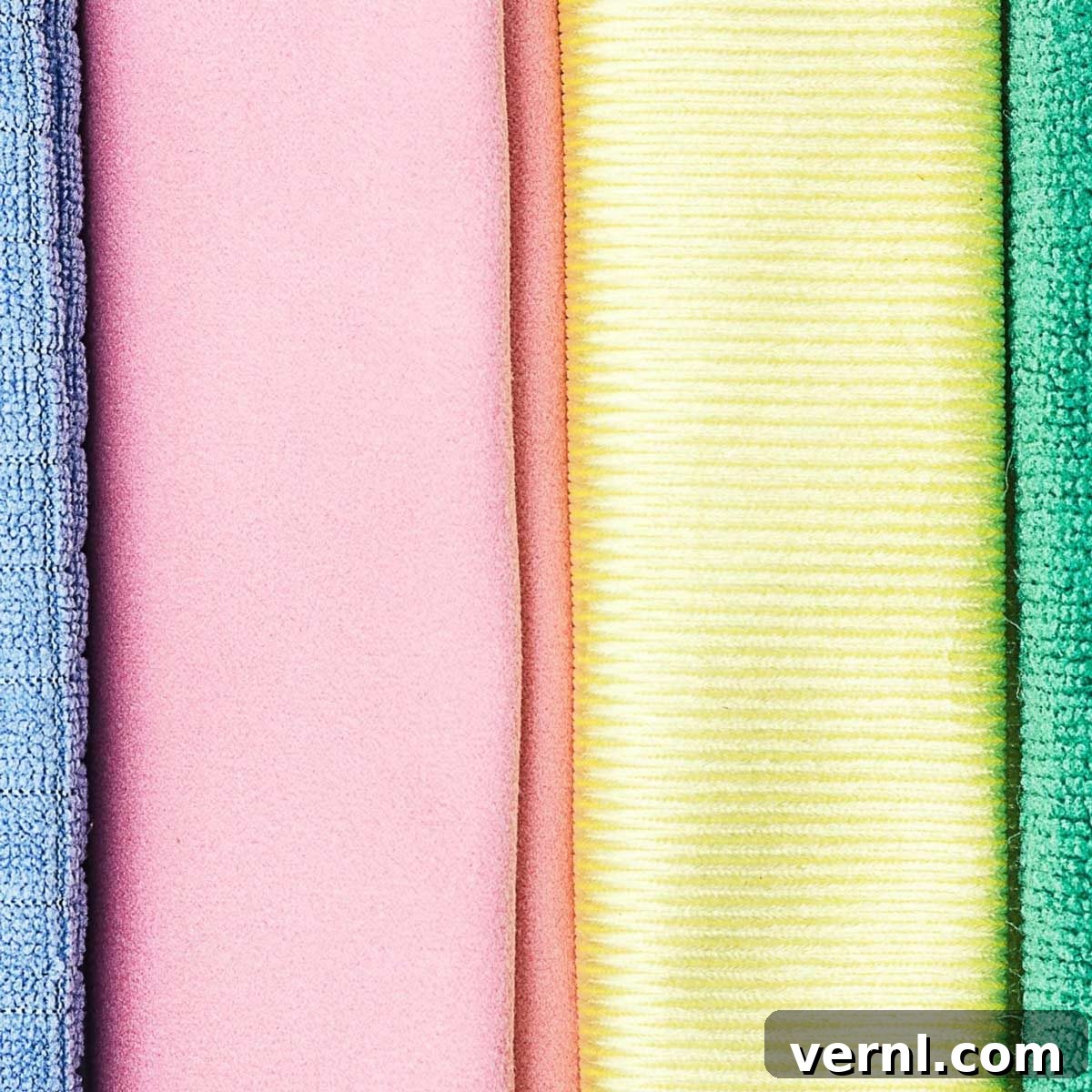
Once you experience the unparalleled cleaning power of microfiber cloths, there’s truly no turning back to conventional cleaning methods. Their efficiency, versatility, and ability to achieve a streak-free shine make them an indispensable tool in any household. While these revolutionary cleaning items are generally affordable, understanding how to properly care for them is paramount to extending their lifespan and maintaining their peak performance. One of the most crucial aspects of their care involves mindful washing and, perhaps most importantly, avoiding high-heat drying. Giving your microfiber cloths a little extra attention ensures they continue to deliver exceptional results for years to come. Explore the myriad of items you should always clean with microfiber cloths to fully appreciate their utility.
The Science Behind Microfiber: How These Revolutionary Cloths Work
To truly grasp why proper care, especially regarding drying, is essential for your microfiber cloths, one must first understand the ingenious mechanism by which they operate. It’s not magic, but rather a sophisticated combination of material science and design that allows these cloths to effortlessly capture dirt, dust, and liquids from virtually any surface. The fundamental principle that makes microfiber cloth cleaning so effective is akin to the adage, “many hands make light work.”
Unlike traditional cleaning cloths made from cotton or nylon, which are characterized by their larger, coarser fibers, microfiber cloths are engineered with thousands upon thousands of exceptionally tiny fibers. To put this into perspective, a single square inch of a high-quality microfiber cloth can contain an astonishing 200,000 individual fibers. These microscopic strands are typically composed of a blend of polyester and polyamide (nylon), meticulously split during the manufacturing process to create wedge-shaped filaments with vast surface areas.
When you wipe a surface with a microfiber cloth, these myriad tiny fibers act like an army of microscopic scrubbers, digging into crevices and lifting particles that larger fibers would simply push around. This mechanical action, often enhanced by capillary effect within the split fibers, allows the cloth to pick up and hold dirt, dust, grime, and even liquid with remarkable efficiency. This is why microfiber cloths are celebrated for their ability to clean effectively with just water, reducing the need for harsh chemical cleaners.
Beyond their impressive mechanical capabilities, another key factor contributing to the superior absorbency and cleaning power of these cloths is their electrostatic charge. The fibers in a microfiber cloth are typically positively charged. Conversely, the dirt, dust, and many common contaminants found on household surfaces carry a negative charge. This fundamental principle of attraction means that messes are naturally drawn to the cloth, much like a magnet attracts metal. The unique structure and positive charge enable the microfibers to securely trap and hold onto these negatively charged particles, preventing them from being redeposited on the cleaned surface. This powerful bond ensures that dust and dirt remain locked within the cloth until they are thoroughly rinsed out, leaving surfaces impeccably clean and streak-free.
If you’re exploring more options for powerful cleaning, discover why you should consider using microfiber towels for various cleaning tasks around your home.
The Dryer Dilemma: Why High Heat Is the Enemy of Microfiber Cloths
Understanding the delicate composition of microfiber cloths makes it clear why conventional drying methods, particularly those involving high heat, are detrimental to their performance and longevity. Placing even your best microfiber cloths in a dryer set to a high-heat cycle can have immediate and irreversible consequences. The intense heat causes the fine, synthetic fibers (polyester and polyamide) to melt and fuse together. When these fibers melt, they lose their crucial split ends and much of their vast surface area, which are essential for their unique mechanical scrubbing and dirt-trapping abilities. The result is a cloth that feels rougher, absorbs less effectively, and simply pushes dirt around rather than picking it up, rendering it largely ineffective for cleaning.
Beyond the structural damage, drying microfiber cloths with other laundry items poses another significant problem: lint. Microfiber, by its very design, is engineered to grab and hold onto even the smallest particles. When tumbled with lint-producing fabrics like cotton towels, clothes, or even socks, your microfiber cloths will eagerly collect any stray lint left behind in the dryer from previous loads. This lint then becomes embedded within the microfiber, clogging its delicate structure and significantly impairing its electrostatic charge and absorption capabilities. Not only does this make the cloth less effective for cleaning, but it can also lead to streaks and leave unwanted residue on surfaces you’re trying to polish.
Therefore, to preserve the integrity, absorbency, and electrostatic properties that make microfiber cloths so exceptional, it is crucial to avoid high heat and separate them from lint-producing items during the drying process. Proper drying is just as important as proper washing in maintaining their cleaning prowess.
Mastering the Wash: A Comprehensive Guide to Cleaning Microfiber Cloths
Properly cleaning your microfiber cloths is key to ensuring they remain effective and last for years. Jennifer Druckamiller, director of product experience at the renowned microfiber company Norwex, offers invaluable advice on extending the life of these essential cleaning tools. She suggests reusing your microfiber cloths a few times between full laundering sessions. For light use, simply rinsing them thoroughly under warm water and then hanging them to air dry is often sufficient to refresh them for their next task.
When it is time for a more thorough wash, whether by hand or machine, specific guidelines should be followed to protect the delicate fibers and maintain their superior cleaning capabilities. “When it’s time to launder, wash microfiber cloths separately or with other lint-free items,” advises Druckamiller. This is a critical step because, as previously mentioned, microfiber is specifically designed to grab and hold onto lint and other particles. Washing them with linty fabrics will embed those particles into your microfiber cloths, reducing their effectiveness and potentially leaving lint behind on surfaces you clean.
The choice of detergent also plays a significant role. Druckamiller stresses, “Prevent the fibers from being coated in your washing machine by using a detergent that is free of fillers and additives.” Many conventional detergents contain fabric softeners, dyes, perfumes, or other additives that can clog the microscopic fibers of microfiber cloths. These coatings can drastically diminish their absorbency and electrostatic charge, essentially rendering them less effective. Opt for a mild, liquid laundry detergent that is free from these extra ingredients. Powdered detergents can also be problematic as they may not fully dissolve and can leave residue in the fibers.
Regarding water temperature, always use cold or warm water in the washing machine – never hot water. While hot water might seem more effective for cleaning, it can damage the delicate synthetic fibers over time and can also set certain stains, making them harder to remove. More importantly, hot water can reduce the cloth’s crucial electrostatic charge. By using cold or warm water, you effectively remove dirt and grime while preserving the integrity of the fibers and maintaining their all-important charge, which is vital for attracting and trapping dust.
Perhaps two of the most critical prohibitions when washing microfiber cloths are the use of bleach and fabric softener. Bleach is a harsh chemical that can break down the polyester and polyamide fibers, weakening the cloth and reducing its lifespan. Fabric softener, whether added directly or present in your detergent, is an absolute no-go. It works by coating fabric fibers to make them feel softer and reduce static cling. While this is great for your clothes, it directly counteracts the mechanism of microfiber. The softener coats the microscopic fibers, filling in the crucial gaps and eliminating their ability to absorb liquids and attract dirt electrostatically. This renders the cloth virtually useless for its intended purpose.
By adhering to these simple yet crucial washing instructions – washing separately with a gentle, additive-free detergent in cold or warm water, and strictly avoiding bleach and fabric softener – you can significantly prolong the life and maximize the cleaning performance of your valuable microfiber cloths. This diligent care ensures they remain a powerful, efficient, and eco-friendly cleaning asset in your home.
Optimal Drying Practices for Microfiber Cloths: A Matter of Caution and Care
While proper washing techniques are fundamental, the drying process for microfiber cloths requires equally careful consideration to maintain their unique structure and effectiveness. Air drying is unequivocally the gold standard for microfiber cloths. After washing, simply hang them to air dry on a line, a drying rack, or even draped over a shower rod. This method completely eliminates the risk of heat damage and lint contamination, ensuring the fibers remain intact, fluffy, and ready for their next cleaning task. Air drying also has the added benefit of being energy-efficient and environmentally friendly.
However, for those times when speed is of the essence and immediate reuse is necessary, machine drying can be an option, but it must be approached with extreme caution. If you are in a rush and absolutely need your microfiber cloths dried quickly, you can – very cautiously – put them in the dryer on a low-heat, no-heat, or air-only cycle. The key here is to use the lowest possible temperature setting to avoid melting the delicate fibers. It’s also vital to ensure the dryer is clean and free of lint from previous loads.
It’s worth noting that some high-quality microfiber brands, such as Norwex, specifically design their cloths to withstand slightly higher temperatures during machine drying, sometimes up to 140°F (60°C). Jennifer Druckamiller from Norwex further explains that, for their cloths, a low-heat tumble dry can actually help maximize their electrostatic charge. This enhanced charge further improves their ability to attract and trap dirt and dust, making them even more effective. However, this specific instruction often applies to premium, high-quality brands that have been tested for such conditions, and is not a universal recommendation for all microfiber cloths.
Regardless of the brand or specific instructions, there is one absolute rule for machine drying microfiber: never use dryer sheets. Just like fabric softeners, dryer sheets work by coating fabrics with chemical lubricants to reduce static and add scent. This coating will clog the microscopic fibers of your microfiber cloths, rendering them less absorbent and virtually stripping them of their electrostatic cleaning power. The fibers become coated and damaged, significantly reducing the cloth’s efficacy.
Before washing and drying any brand of microfiber cloths, always make it a habit to check their specific care tag or the manufacturer’s website for proper cleaning instructions. Different blends and weaves may have slightly varied requirements. Finally, and crucially, never put other clothes or lint-producing fabrics in the dryer with your microfiber cloths. As microfiber is designed to grab and hold, it will inevitably pick up lint and fibers from other materials, diminishing its own performance. By adhering to these careful drying practices, you ensure your microfiber cloths remain in optimal condition, continuing to provide superior, streak-free cleaning for countless tasks.