
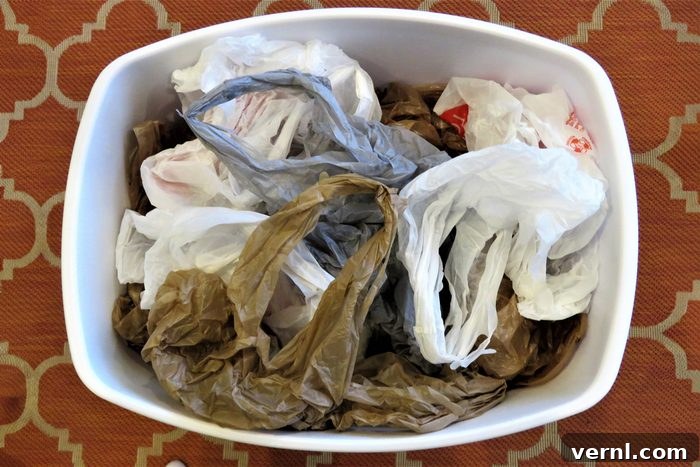
Every trip to the grocery store, local pharmacy, or your favorite takeout restaurant inevitably brings home a new collection of plastic bags. While these bags seem to multiply and escape from cabinets, creating a chaotic mess, they also represent a valuable resource for future use. The good news is, you don’t have to surrender your kitchen or pantry to plastic bag pandemonium. By implementing smart, simple, and often DIY organization strategies, you can transform that overflowing jumble into neatly stored, easily accessible bags. Say goodbye to the maddening barrage of bags and hello to organized efficiency with these ingenious plastic bag organizer ideas.
From quick fixes to creative repurposing projects, we’ve compiled a comprehensive guide to help you manage your plastic bag collection effectively. These methods not only declutter your space but also encourage sustainable reuse, giving these everyday items a second life. Dive in to discover the perfect solution that fits your home and lifestyle.
The Classic “Bag-Within-a-Bag” Method: Simple & Effective Plastic Bag Storage
One of the most straightforward and time-honored methods for consolidating your plastic bags is remarkably simple: designate one larger plastic bag to serve as a container for all the others. This “mother bag” acts as a central repository, keeping your entire collection contained and manageable. Its effectiveness is particularly noticeable when you have a dedicated storage closet or pantry. You can easily hang this plastic bag “organizer” on an inside doorknob or a utility hook, keeping it out of sight but always within arm’s reach for when you need a bag for trash, pet waste, or packing.
This method requires minimal effort and no special tools, making it an instant solution for immediate clutter relief. For optimal organization and to prevent tangling, consider neatly folding or loosely rolling the individual bags before placing them inside the designated carrier bag. This not only maximizes space within the “mother bag” but also ensures a smoother retrieval process, eliminating frustrating searches for a single bag amidst a chaotic pile. This method is a testament to how simple solutions can often be the most effective for household organization.
Repurposing Baby Wipe Containers: A Smart Plastic Bag Dispenser DIY
Baby wipe containers are unsung heroes of household organization, offering fantastic storage solutions for everything from craft supplies to batteries. Their design, particularly the convenient dispensing lid, makes them exceptionally well-suited as plastic bag organizers. Both cylindrical and box-shaped containers can be effectively repurposed for this task, transforming them into convenient bag dispensers that offer one-at-a-time access, much like the original product.
To create your own DIY plastic bag dispenser using an empty baby wipe container, follow these simple steps for the “rolling method”:
- Prepare Your First Bag: Lay out one plastic grocery bag flat and fold it neatly in half lengthwise.
- Start the Bag Chain: Take a second plastic bag, flatten it completely, and place its handle end over the bottom (folded) end of the first bag. The handles should extend slightly beyond the folded edge of the previous bag.
- Continue Building the Chain: Repeat this process, creating a continuous chain of interconnected bags. Ensure the handles of each subsequent bag consistently overlap the folded end of the previous one. This interlocking design is key to the smooth dispensing mechanism.
- Roll ‘Em Up Tight: Once your chain is complete and you’ve used all the bags you wish to store, tightly roll the entire length of bags, starting from the end without a handle. Crucially, leave the handle of the very first bag in your chain sticking out from the roll – this will be your pull-tab. If you’re a visual learner, a photo tutorial can greatly assist in perfecting this rolling technique.
- Load the Container: Carefully place your tightly rolled chain of bags inside the baby wipe container, ensuring the exposed handle is positioned near the lid opening.
- Thread and Dispense: Pull the visible handle of the first bag through the opening in the lid, exactly where the baby wipes would normally emerge. Now, when you pull one bag out, the handle of the next bag will automatically pop up, ready for easy retrieval, preventing any more bag avalanches.
- Personalize (Optional): If aesthetics are important, decorate your container with paint, contact paper, or fabric to match your home decor, making it a functional yet stylish addition to your kitchen or utility room.
For those who prefer a ready-made, sleek solution, there are many excellent products available. For example, this popular plastic bag dispenser on Amazon offers a durable, wall-mountable design that keeps bags neatly organized and accessible.
Transforming Tissue Boxes: Clever Hidden Plastic Bag Clutter Solutions
Don’t toss that empty tissue box! It can be ingeniously repurposed to keep your cabinets free of plastic bag clutter. Its convenient opening provides a perfect access point for stuffing and retrieving grocery bags. For the simplest, quickest approach, just loosely stuff your flattened or balled-up bags into the box. This instant method provides immediate relief from overflowing drawers or cabinets.
However, for a smoother, more controlled dispensing experience, similar to the baby wipe container, you can also employ the detailed roll method described above. Simply thread the first bag’s handle through the tissue box opening, creating a pull-one-out system. This ensures that each bag is easily accessible without disturbing the others.
To keep this practical organizer out of sight and maximize cabinet space, simply attach a strong Command strip or similar adhesive hook to the back of the tissue box and adhere it securely to the inside of a cabinet door, such as under the kitchen sink or in the pantry. This provides quick access while maintaining a perfectly tidy and uncluttered appearance. While our focus here is on plastic, it’s also worth noting how versatile these DIY ideas are; you can adapt similar strategies to organize and store paper bags too, often by using larger, sturdier boxes or bins.
The Rustic Charm of Jars: A No-Fuss DIY Plastic Bag Organizer
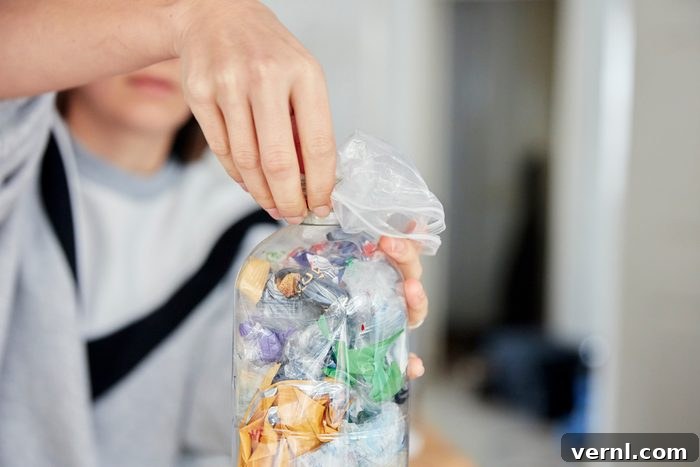
Are you searching for an absolutely no-fuss, instantly gratifying DIY plastic bag organizer that doesn’t require any cutting or complex assembly? Look no further than a simple glass jar. Mason jars, old cookie jars, large pickle jars, or any wide-mouthed glass container can be transformed into a functional and surprisingly aesthetic storage solution. The inherent beauty of this method lies in its remarkable simplicity: just ball up your plastic bags and neatly tuck them into the jar. When you need a bag, simply open the lid and grab one, or, for even quicker access and a more casual look, leave the lid off entirely.
This method offers a significant upgrade from haphazardly shoving bags into a cabinet or another plastic bag, which often leads to an unwieldy, overflowing mess that tumbles out every time you open the door. A clear glass jar also provides the added benefit of allowing you to easily see your current bag supply, prompting you to replenish or declutter as needed before space runs out. This simple yet effective solution brings a touch of rustic charm to your pantry, utility area, or laundry room, making plastic bag organization feel less like a chore and more like a conscious choice for a tidier, more visually pleasing home. If you prefer a dedicated, purpose-built product for organized bag storage, this plastic bag organizer offers similar convenience with a sleek, compact design.
Creative Upcycling with Juice Jugs: A Gravity-Fed Plastic Bag Dispenser
Transforming an empty plastic juice jug into a gravity-fed plastic bag organizer is a clever and remarkably eco-friendly DIY project that puts common household waste to excellent use. This method cleverly capitalizes on the jug’s existing design, particularly its spout, to create an efficient and easily accessible dispenser. To begin, carefully cut off the entire bottom section of the jug, creating a wide opening. Then, flatten or loosely roll your plastic bags and begin stuffing them into the jug from this newly created wide opening. The bags will settle at the bottom, compactly stacked and ready to be pulled through the jug’s original spout.
For even greater convenience and to free up counter or cabinet space, you can easily create a simple hanging mechanism. Carefully use a utility knife to cut a small hole or slit into the side of the jug near the top (the original neck of the jug), allowing you to hang it securely from a hook inside a pantry, under a kitchen sink, or on a utility room wall. Alternatively, a sturdy Command strip or adhesive hook can secure it neatly to the inside of a cabinet door, keeping it discreetly out of sight. This creative upcycling method is not only highly practical and effective for managing plastic bag clutter but also puts a common household item to good use, preventing it from prematurely ending up in a landfill. If DIY isn’t your preference or you’re looking for an immediate solution, alternatives like this two-pack of mesh bag holders offer a similar hanging storage functionality with a streamlined design.
The Versatility of Coffee Cans: Sturdy & Customizable Plastic Bag Storage
Many households instinctively hold onto their empty coffee cans, recognizing their inherent potential for storing a variety of small items, loose change, or workshop bits and bobs. These sturdy metal or plastic tins are also perfectly suited for transformation into an effective and robust plastic bag organizer. Their durable construction and convenient cylindrical shape make them ideal for containing a significant number of bags in a compact footprint, preventing them from scattering throughout your cabinets.
To utilize a coffee can for plastic bag storage, simply place your flattened or loosely folded plastic bags inside. You have options here: you can either use the highly organized roll method (as detailed for the baby wipe container) for neat, pull-one-out dispensing, or simply ball them up and stuff them in for quick, no-fuss storage, depending on your preference for speed versus neatness. To create a dispenser function, carefully cut a small, neat hole or slit into the center of the plastic lid and pull the handle of the first bag through. This allows for convenient, accessible bag retrieval whenever you need one. Coffee cans also present a fantastic opportunity for personalization: they are very easy to decorate with paint, decorative paper, contact paper, or fabric, allowing you to seamlessly integrate them into your kitchen or utility room decor, transforming a purely functional item into something aesthetically pleasing as well.
The Multi-Functional Plastic Jug with Handle: Towel Rack & Bag Dispenser
This ingenious plastic bag organizer goes a step further by offering a clever double-duty solution: not only does it efficiently store your plastic bags, but it also serves as a handy dish towel holder. To create this all-in-one organizer, you’ll need a large plastic jug with a sturdy handle, such as a laundry detergent jug, a large vinegar container, or a water bottle with an integrated handle. Begin by carefully cutting off the entire top section of the jug, ensuring that the handle remains intact and attached to the bottom, larger portion of the jug.
To mount your new organizer, attach a strong Command strip or equivalent adhesive hook to the back of the cut jug. Then, hang it upside down on a wall, the side of your refrigerator, or on the inside or outside of a cabinet door – wherever it’s most convenient and discreet. Stuff your flattened plastic grocery bags through the wide opening at the top (which is now facing upwards). When you need a bag, pull it through the original spout (which is now at the bottom). The sturdy handle, now at the base of your inverted jug, becomes a perfect spot to hang a dish towel, maximizing both space and utility in your kitchen or laundry area. This resourceful project not only helps organize your bags but also strongly supports the ethos of Plastic Free July by extending the life of existing plastics and reducing the demand for new single-use items.
For those seeking a more discreet and permanent storage solution that doesn’t involve DIY, consider a purpose-built plastic bag organizer specifically designed to hang neatly over cabinet doors, keeping clutter entirely out of sight and maintaining a clean aesthetic.
Compact Organization with Pringles Cans: Ideal for Smaller Plastic Bag Collections
Pringles cans, with their distinct cylindrical shape and convenient plastic lid, are surprisingly effective for organizing a reasonable quantity of plastic bags, especially if you don’t accumulate a massive stash. Their compact size and sturdy construction make them perfect for tucking away in smaller cabinets, drawers, or even in your car’s console or glove compartment, ensuring bags are always on hand when needed.
To optimize space and ease of access within a Pringles can, the rolled method (as described earlier for baby wipe containers) is highly recommended. Roll your chain of plastic bags tightly and neatly insert the entire roll into the can. Then, use a utility knife to carefully cut a small slit or circular hole into the center of the plastic lid, allowing the first bag’s handle to poke through for easy, controlled dispensing. If your Pringles can organizer won’t be hidden away inside a cabinet or closet, seize the opportunity to unleash your creativity! Cover the can with decorative paper, paint, fabric, or even yarn to transform it into a stylish, custom-made organizer that not only serves a practical purpose but also complements your home decor.
Economical Storage with Soda Can Boxes: A Free & Functional Plastic Bag Solution
An empty soda can box offers an incredibly simple, free, and readily available solution for organizing your plastic grocery bags. This method ingeniously leverages the existing structure of the cardboard box, particularly the dispensing hole, to create an instant and highly functional bag holder. Simply flatten your plastic bags, fold them neatly, and then shove them one by one into the hole where the soda cans would normally be removed. The bags will settle compactly at the bottom, and you can easily pull them out one by one as needed, much like pulling a tissue from a box.
To enhance the durability and aesthetics of this budget-friendly organizer, consider wrapping the entire box in heavy-duty wrapping paper, decorative contact paper, or even fabric. This not only makes the box significantly sturdier and more resistant to wear and tear but also allows you to personalize its appearance to better suit your kitchen, pantry, or utility room decor. This practical and eco-conscious approach not only keeps your plastic bags tidy and contained but also promotes the thoughtful reuse of everyday packaging, reducing waste. Understanding the broader context of plastic waste is also important; learning whether plastic bags are recyclable in your local area can further inform your habits and contribute to more effective waste management.
Beyond Storage: Creative Ways to Reuse Plastic Bags Around the Home
Now that you’ve mastered the art of organizing and storing your unused plastic bags, let’s explore their myriad practical applications. Giving these bags a second (or third!) life is a fantastic way to minimize waste and maximize utility before finally considering recycling. These ideas showcase their versatility and help you get the most out of every bag:
- Leftover Containers for Guests: When hosting dinner guests, proactively offer clean plastic bags for packing up any delicious leftovers they wish to take home. It’s a convenient, hygienic, and much-appreciated gesture.
- Small Trash Can Liners: Plastic grocery bags are perfectly sized for lining small waste bins in bathrooms, bedrooms, home offices, or craft rooms. They fit snugly and keep your smaller cans clean and fresh.
- Pet Waste Collection: An absolute essential for pet owners. Keep a stash of bags by the door, in your car, or attached to your leash for easy and hygienic cleanup during walks.
- Travel Laundry Bags: Planning a trip without immediate access to a laundry machine? Pack a couple of plastic bags to neatly separate and store dirty laundry, preventing odors and grime from spreading to clean clothes in your suitcase.
- Car Trash Receptacles: Keep a few bags stashed in your car’s glove compartment, console, or door pocket to serve as impromptu trash cans. This simple habit helps keep your vehicle tidy and free of wrappers, tissues, and other small debris while on the go.
- Protective Packing Material: When moving, shipping items, or storing delicate objects, balled-up plastic bags make excellent, lightweight cushioning material, offering effective protection against bumps, scratches, and shifting during transit.
- Shoe Protectors: Place muddy, wet, or sandy shoes in a plastic bag before putting them in a suitcase, gym bag, or storage bin to protect other items from dirt and moisture.
- Craft Projects (“Plarn”): For the creative and environmentally conscious, shredded plastic bags can be cut into strips and crocheted or knitted into “plarn” (plastic yarn) for unique and incredibly durable crafts like mats, baskets, or even sturdy tote bags.
- Garden Cleanup: Use plastic bags to collect weeds, garden clippings, or small amounts of soil. Their waterproof nature makes them ideal for temporary containment.
Frequently Asked Questions (FAQ) About Plastic Bag Management
Why is it important to organize plastic bags in my home?
Organizing plastic bags is crucial for several reasons: it prevents household clutter and unsightly messes, makes them incredibly easy to find and access precisely when needed, and most importantly, it actively encourages their reuse. This systematic approach saves valuable space, reduces daily frustration, and inherently supports more sustainable habits by extending the life cycle of each bag before it’s discarded.
What are the primary benefits of reusing plastic bags instead of discarding them immediately?
Reusing plastic bags offers significant environmental benefits. It directly reduces the volume of waste sent to landfills, conserves precious natural resources (like oil and natural gas used in their production), and lessens pollution associated with manufacturing and disposal. Furthermore, it saves you money on buying small trash can liners or dog waste bags. It’s a simple, everyday action that collectively contributes to environmental protection and minimizes your individual carbon footprint.
Can I recycle plastic bags in my curbside recycling bin?
Recycling plastic bags can be complex and varies significantly by location. In most areas, plastic bags are unfortunately NOT accepted in curbside recycling bins. This is because they can easily tangle in and jam the machinery at recycling facilities, causing costly damage and operational delays. However, many major grocery stores, supermarkets, and retail chains offer dedicated drop-off bins specifically for plastic bags, film, and other plastic wraps. Always check with your local municipal recycling facility or your nearest participating store for specific guidelines on plastic bag recycling in your area to ensure proper disposal.
Are there truly eco-friendly alternatives to single-use plastic bags?
Absolutely! The most effective and eco-friendly alternative is to consistently bring your own reusable shopping bags made from durable materials like cloth (cotton, canvas), jute, hemp, or recycled plastics. Other excellent options include using reusable mesh produce bags for fruits and vegetables (eliminating the small plastic produce bags), choosing products with minimal or no packaging, or opting for paper bags where available and reusable. Some innovative companies also offer bags made from biodegradable or compostable materials, though their disposal requirements can be specific.
How can I effectively reduce my overall plastic bag consumption in my daily life?
The most impactful way to reduce your plastic bag consumption is to make bringing and using reusable bags a firm habit for all your shopping needs, not just groceries. Keep several reusable bags conveniently stored by your front door, in your car, or folded compactly in your purse or backpack so you’re always prepared. Make a conscious effort to decline plastic bags when making small purchases, even if only buying one or two items. Additionally, consider purchasing items in bulk or opting for products with less packaging to begin with. Supporting businesses that actively offer plastic-free alternatives and incentives also helps drive broader systemic change towards a more sustainable future.
By implementing these smart storage solutions and embracing creative reuse, you can transform your plastic bag dilemma into an organized success story. Not only will your home be tidier and more efficient, but you’ll also be actively contributing to a more sustainable and environmentally conscious lifestyle. Start organizing today and take control of your plastic bag clutter, one clever solution at a time!