
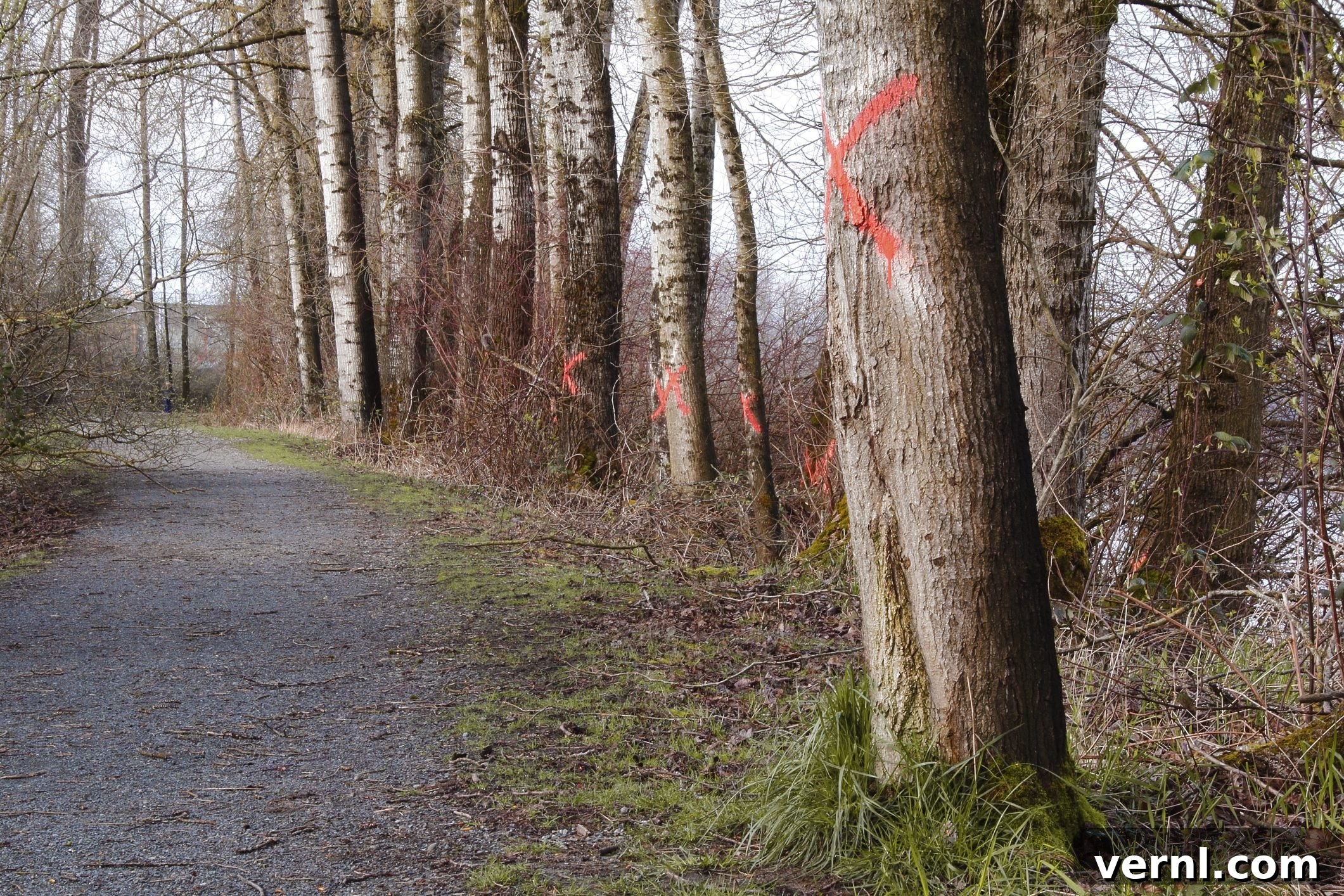
Whether you’re strolling through a vibrant city park or embarking on an adventurous hike deep within a serene forest, you might occasionally encounter curious paint marks adorning tree trunks. Far from being random graffiti, these seemingly simple marks are, in fact, sophisticated codes utilized by skilled forestry workers, arborists, and contractors. They serve as a crucial communication system, conveying a wide array of vital messages—from identifying which trees require removal to pinpointing those in urgent need of treatment for disease or structural remediation. Understanding these markings unlocks a deeper appreciation for the intricate science and dedicated effort behind maintaining both our urban green spaces and wild ecosystems.
Decoding Urban Tree Markings: A City’s Silent Language
Every city, in its commitment to preserving and managing its urban canopy, establishes specific codes for marking trees. These local regulations ensure clarity and efficiency in tree care operations. Let’s delve into the practices of Boulder, Colorado, as a prime example to illustrate the practical application of these urban forestry markings.
In Boulder, a small paint dot strategically placed at the base of a tree trunk often signals a critical health concern. This marking indicates that the tree requires immediate treatment for prevalent urban pests like the destructive emerald ash borer, the pervasive elm scale, or the unsightly drippy blight. These infestations, if left unaddressed, can severely compromise tree health and potentially lead to widespread ecological and economic damage.
Conversely, paint dots positioned at head height usually denote a different type of intervention: the tree is slated for pruning. Pruning is a fundamental aspect of urban tree care, essential for maintaining structural integrity, promoting healthy growth, and mitigating safety risks to pedestrians and property. These markings guide crews to perform targeted trimming, removing dead, diseased, or hazardous branches.
Ken Fisher, assistant forester for the Boulder Parks and Recreation Department, highlights the discreet yet effective nature of these markings. “Basically, it marks the tree in an inconspicuous way,” Fisher explains. “A lot of people don’t even notice it, but it alerts our contractor that this is the tree we’re talking about. We’ve been using paint dots for 25 years or so now, so some trees have several paint dots on them, indicating a history of care.” This long-standing practice underscores the ongoing commitment to tree health and the dynamic nature of urban forestry management, where trees often require multiple interventions over their lifespan.
Beyond guiding forestry crews, these pruning and treatment dots also serve as an invaluable heads-up for property owners whose land borders these public trees. When the city dispatches notifications regarding upcoming pruning or pest treatment schedules, these visible markings empower residents to easily identify precisely which trees will be affected. This transparency fosters community engagement and ensures residents are informed participants in the stewardship of their local environment.
The role of urban tree markings extends beyond mere logistics; they are integral to a holistic urban forestry strategy. Healthy city trees contribute significantly to environmental quality, enhancing air purification, providing natural cooling, managing stormwater runoff, and boosting aesthetic appeal. By efficiently identifying trees in need of specific care, these markings enable urban forestry departments to proactively maintain a robust and resilient urban canopy, directly impacting the well-being of city residents.
Unraveling Forest Tree Markings: Signals in the Wilderness
In the vast expanse of forests, paint markings typically relate to timber management, forest health, and resource conservation. These symbols are critical tools for foresters, guiding sustainable harvesting practices and protecting vital ecological assets. The marks are not arbitrary but are carefully chosen to communicate complex instructions in a clear, unambiguous manner to logging crews and land managers.
Circles, Xs, and various colored dots are commonly employed to identify trees designated for cutting as part of a timber sale, distinguish hazardous trees that pose a risk to safety or forest health, or indicate trees that must be left undisturbed for ecological reasons. These markings also delineate property boundaries for land management and highlight areas of environmental concern, such as protected habitats or sensitive ecological zones.
“In some places, trees with nests of rare or endangered species are marked to ensure their protection,” notes Christopher Evans, extension forestry and research specialist at the University of Illinois Urbana-Champaign. He cites the federally endangered red-cockaded woodpecker in the Southern United States as a prime example. “Their tree nests are generally marked with a distinctive white paint ring,” he explains, serving as a clear warning to avoid disturbance and preserve these critical habitats.
In Western states, a different type of paint ring might signify a tree severely affected by devastating pests like the mountain pine beetle. These markings are crucial for managing outbreaks, guiding efforts to remove infested trees before the beetles spread to healthy populations, thus safeguarding the broader forest ecosystem. Beyond specific tree-related directives, a splotch of head-high color might also function as a practical trail marker, providing essential guidance for hikers, mountain bikers, and other recreational users navigating forest paths, ensuring they stay on designated routes.
Forest markings are vital for ensuring sustainable forestry practices. By precisely identifying which trees to harvest, foresters can implement selective cutting strategies that promote forest regeneration, maintain biodiversity, and ensure the long-term health and productivity of timber resources. This meticulous approach prevents over-harvesting and supports ecological balance.
Are Tree Markings Standardized Across Forests?
The notion of universal standardization for marking paint in forestry is largely a myth. “Basically, there aren’t any hard and fast standardizations for the use of marking paint in forestry,” Evans states. This lack of a single, overarching system can certainly lead to confusion when attempting to generalize the meaning of different symbols and colors across various regions or land ownerships.
However, despite the absence of rigid universality, certain generalities do emerge within forestry markings. An ‘X’ symbol, for instance, frequently signifies a hazard tree or one designated for removal due to disease, instability, or obstruction. Circles and dots often indicate trees either to be harvested or, conversely, to be left standing, depending on the specific silvicultural prescription of that particular area. Numbers painted on trees are typically used for inventory purposes, enabling foresters to tally and track trees before a timber harvest operation commences.
A notable exception to the lack of standardization is the “No Trespassing” marker. In many states across the U.S., purple paint is a universally recognized sign of a property boundary, explicitly prohibiting unauthorized entry. This simple yet effective symbol provides clear legal demarcation for private landowners.
The U.S. Forest Service (USFS), as a major federal land manager, does implement its own set of standardized marking protocols to ensure consistent management across its vast holdings. According to Donna Nemeth, USFS regional press officer, red paint typically designates the boundary of USFS land. Orange or yellow paints are commonly employed for harvest boundaries, outlining areas where timber operations are permitted. Within these harvest zones, trees slated for removal or preservation are marked with blue, orange, green, or yellow paint, with the specific color dictating their fate. A black paint mark serves a unique function as an “eraser,” used to correct or override a previous marking mistake, ensuring accuracy in forest management decisions.
The regional variations in forestry markings stem from diverse ecological conditions, land ownership patterns (private, state, federal), specific management objectives (conservation, timber production, recreation), and local regulations. While a lack of global standardization exists, understanding these general patterns and agency-specific codes allows for effective interpretation of these vital forest communications.
Are Tree Markings Standardized Across Cities?
Just as with forest markings, a complete standardization of tree markings across all cities is largely absent. Each municipal forestry department often develops its own system, tailored to local needs, common pest issues, and specific operational procedures. This localized approach allows for greater flexibility and responsiveness to unique urban challenges.
Returning to our example of Boulder, Colorado, their city forestry department employs a pragmatic system of rotating marking colors annually. “There’s only really like half a dozen colors that stand out on the tree, bright colors like blue, red, yellow and orange,” explains Ken Fisher. “We’ve reused those colors over and over. This year’s pruning events are red, and I’ve gone to trees that have a red paint dot from this year and also one from years ago.” This annual rotation helps distinguish current work orders from historical markings, preventing confusion and ensuring that crews address the most recent maintenance directives. It underscores the dynamic nature of urban tree care, where trees receive ongoing attention throughout their life cycles.
The choice of colors and symbols in urban environments is often influenced by factors like visibility against tree bark, longevity of the paint, and ease of application. While not standardized nationally, these local codes are meticulously documented and understood by city forestry staff and contractors, ensuring efficient and effective management of the urban tree inventory. This adaptability allows cities to fine-tune their tree care strategies based on evolving environmental conditions and public safety requirements.
The Purpose Behind White-Painted Tree Trunks
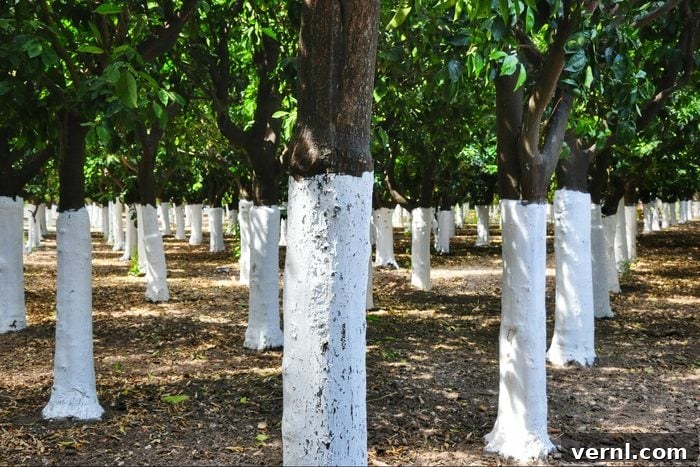
When you encounter a tree with its entire lower trunk painted white, it’s typically a deliberate horticultural practice aimed at preventing sunscald. Sunscald is a common and damaging physiological disorder that primarily affects young, thin-barked trees, especially during the winter months. It occurs when dramatic temperature fluctuations—specifically, intense direct sunlight warming the bark during cold winter days, followed by freezing temperatures at night—cause the bark to crack and split. This damage not only disfigures the tree but also creates vulnerable entry points for pests, diseases, and pathogens, compromising the tree’s overall health and longevity.
“This type of painting is typically done on thin-barked residential trees or orchards,” notes Christopher Evans. These environments often feature trees that are more exposed to direct sunlight and lack the protective canopy of a dense forest. “Painting the trunks white is said to moderate the daytime heating of the bark and lessen the chances of sunscald injury,” he elaborates. The white color reflects sunlight, much like white clothing in hot weather, thereby reducing the extreme temperature swings within the bark tissue. This protective measure is particularly important for newly planted trees or those recently transplanted, as their vascular systems are still developing and more susceptible to environmental stressors.
While white paint is an effective solution, other methods for sunscald prevention exist, such as using specific tree wraps or ensuring proper site selection and planting depth. However, white paint is often preferred for its ease of application, cost-effectiveness, and durability, especially in orchards where hundreds of trees may require protection. This simple act of painting represents a proactive approach to tree care, safeguarding vulnerable trees from environmental damage and ensuring their healthy establishment and long-term vitality.
Markings for Emerald Ash Borer Treatment: A Localized Battle
The emerald ash borer (EAB) represents one of the most destructive invasive forest pests ever introduced to North America, causing the death of tens of millions of ash trees. Consequently, identifying trees slated for EAB treatment is a critical task for urban forestry departments, and the specific paint marking systems vary significantly from town to town, reflecting localized management strategies.
In Boulder, Colorado, their methodical approach to combating EAB involves a multi-year treatment rotation. Fisher explains, “we’re on a three-year rotation with treatments. We do one-third of our treated trees each year, which is just over 1,000 per year.” To manage this extensive program, Boulder uses three distinct colors of dots near the base of a tree to signify its inclusion in the EAB treatment schedule. Each color corresponds to a specific year in the three-year cycle, ensuring that every designated ash tree receives its necessary treatment for emerald ash borer at the correct interval. This system not only streamlines operations for treatment crews but also helps track the efficacy and progress of the city’s overall EAB management plan.
The choice of a localized marking system allows cities to adapt to the unique epidemiology of EAB in their region, specific budget constraints, and available resources. It also ensures that treatments, which often involve systemic insecticides, are applied responsibly and effectively, targeting only the trees that genuinely require intervention. This ongoing battle against EAB highlights the continuous need for innovative and adaptable urban forestry practices, where tree markings play a pivotal role in large-scale pest management efforts.
The Controversy: Using Paint on Tree Wounds to Deter Pests
The practice of painting tree wounds or cut surfaces, particularly after pruning, with the intention of deterring pests or sealing the wound, is a topic of considerable debate among arborists and forestry professionals. While some individuals, often guided by traditional but outdated practices, still engage in this method, current scientific consensus largely advises against it.
“Some people do paint wounds or cut surfaces, such as after pruning, as a way of deterring pests,” acknowledges Christopher Evans. “But it is generally not recommended as the paint over the wound impedes the tree’s ability to seal over the wound and it traps moisture which can enhance rot.” This crucial insight underscores the biological mechanisms of tree healing. Trees do not heal in the same way animals do; instead of regenerating tissue, they “compartmentalize” injuries, forming a protective barrier of callus tissue (wound wood) around the damaged area. Applying paint, tar, or other sealants can inadvertently hinder this natural process.
By creating an impermeable layer, wound paints can prevent the wound from drying out naturally, trapping moisture underneath. This moist, anaerobic environment becomes an ideal breeding ground for fungal pathogens and bacterial infections, ironically increasing the risk of rot and decay rather than preventing it. Furthermore, the paint can interfere with the formation of healthy callus tissue, delaying the tree’s natural defense response and leaving it vulnerable for longer.
Modern arboricultural practices emphasize clean cuts and allowing the tree’s natural defense mechanisms to work unimpeded. For most pruning cuts, no dressing or sealant is required. The best practice is to make proper cuts that minimize damage and allow the tree to compartmentalize effectively on its own. While there are some very specific, rare exceptions where certain wound dressings might be used under professional guidance (e.g., for certain canker diseases in specific climates), these are not general recommendations for the average homeowner or gardener.
Seeking Local Knowledge: Where to Find More Information About Tree Markings in Your Area
Given the localized nature of tree marking codes, particularly in urban settings, the best source for understanding specific symbols in your town or region is always your local forestry department or public works department responsible for tree care. These departments are typically well-versed in their specific coding systems and often maintain detailed records and explanations of their practices.
Many municipal forestry departments recognize the public’s interest and need for this information. They frequently provide resources on their official websites, which might include comprehensive guides, FAQs, or even interactive maps. For instance, Boulder, Colorado, as highlighted earlier, offers a user-friendly tree mapping link on its website. This innovative tool allows residents to zoom in on their property and view an aerial image displaying all nearby public trees and their species, potentially alongside details of any ongoing or planned maintenance activities indicated by markings. Such online resources are invaluable for community members who wish to stay informed about the health and management of their local urban forest.
Additionally, local university extension services, horticultural societies, or certified arborists can also be excellent sources of information. They often have knowledge of regional practices and can provide context on why certain markings are used in specific areas. Engaging with these resources not only helps demystify tree markings but also fosters a greater understanding of the vital work involved in maintaining our shared green infrastructure, ensuring the health and longevity of trees for generations to come.