
There’s nothing quite as magical as a beautifully decorated real Christmas tree standing proudly in your home, filling the air with its festive aroma. It’s the quintessential centerpiece of holiday celebrations, bringing warmth, joy, and a touch of natural beauty indoors. However, the enchantment can quickly wane if your tree begins to shed needles prematurely, loses its vibrant green hue, or simply doesn’t last through the entire holiday season. Most real trees typically maintain their freshness indoors for about a month leading up to Christmas and often for another two weeks after the big day, but this lifespan isn’t a guarantee. The actual duration hinges on a multitude of factors, ranging from the moment it was cut to the daily care it receives in your living room.
Ensuring your Christmas tree remains fresh, fragrant, and festive from early December until well into the New Year is entirely achievable with the right knowledge and a bit of consistent effort. A healthy, long-lasting tree not only enhances the aesthetic appeal of your home but also prevents the disappointment and mess of early needle drop, allowing you to fully savor the holiday spirit. We’ve gathered invaluable insights and practical advice from seasoned Christmas tree experts to help you maximize the longevity of your beloved holiday centerpiece this season. Follow these essential tips to keep your tree looking its absolute best, making your festive memories even brighter and longer-lasting.
Choose Your Christmas Tree Wisely: Starting with a Reputable Vendor
The journey to a long-lasting Christmas tree begins long before it even reaches your home – it starts with its origin. Where and how a Christmas tree is cultivated, harvested, and sold profoundly impacts its overall health and ability to endure throughout the holiday season. To give your tree the best possible start, prioritize purchasing from a reputable business known for its commitment to quality trees and ethical practices. This initial step sets the foundation for your tree’s freshness and resilience.
Industry experts, like Greg Walsh of Greg’s Trees in New York City, emphasize the importance of sourcing directly from growers. Walsh personally visits all the farms that supply his trees, ensuring they meet his stringent standards for quality and sustainability. “It’s crucial to be wary of secondary markets,” he advises, “because you often lack transparency regarding how fresh the trees truly are or precisely when they were cut.” Trees that have been sitting in transit or storage for extended periods will already be stressed and dehydrated, significantly shortening their indoor lifespan. He further recommends dealing with local, specialized tree lots or farms rather than large big-box stores, which frequently cut their trees as early as October to accommodate vast distribution networks. Such early harvesting means the tree has been off its roots for a substantial time before it even reaches the consumer, making it inherently less fresh.
Beyond freshness, consider the growing practices. Walsh also seeks out the ‘greenest growers’ who prioritize environmentally friendly methods and avoid the use of harsh pesticides. This commitment to sustainable farming not only benefits the environment but often results in healthier, more robust trees. Don’t hesitate to engage with your tree seller. Ask pertinent questions about where the trees originated, when they were harvested, and what care regimen they recommend. A knowledgeable and transparent vendor is a strong indicator of a quality product and a reliable source for your festive centerpiece, ensuring you bring home a tree that’s truly ready to thrive.
Selecting the Ideal Species for Enduring Beauty
Just as different types of flowers have varying vase lives, the species of Christmas tree you select plays a significant role in how long it will maintain its freshness and needle retention indoors. Making an informed choice about the tree species can be a game-changer for its longevity and overall enjoyment throughout the festive period.
Fraser Firs: The Gold Standard for Longevity
According to experts like Greg Walsh, Fraser firs are often hailed as the champions of longevity among popular Christmas tree varieties. Some Fraser firs have been known to stay fresh and vibrant for up to two months when properly cared for. This exceptional needle retention makes them an excellent choice for those who wish to set up their tree early in the season and keep it well past Christmas. Beyond their impressive longevity, Fraser firs boast several other desirable qualities. They possess a delightful, classic Christmas tree scent that beautifully permeates your home, creating an authentic festive atmosphere. Moreover, their strong, stiff branches are perfectly suited to support a wide array of ornaments, from delicate baubles to heavier family heirlooms, without sagging. Their characteristic upward-turning needles also give them a full, dense appearance, making them visually stunning.
Other Excellent Choices: Douglas Firs and Balsam Firs
Douglas firs and balsam firs also offer excellent longevity and are popular choices for their attractive appearance and robust characteristics. Douglas firs are known for their soft, shiny, dark green needles and a sweet, pleasant fragrance that can fill a room. Balsam firs, on the other hand, are celebrated for their strong, traditional pine scent and classic pyramidal shape, making them a festive favorite for many families. Both species offer good needle retention, though perhaps not quite matching the Fraser fir’s exceptional endurance. They are generally more readily available in various regions and provide a reliable, beautiful option for the holiday season.
Species to Consider with Caution for Longevity
While beautiful, certain tree species tend to shed their needles more rapidly, potentially shortening your tree’s fresh appearance and creating more clean-up. White pine trees, with their long, soft needles, and Scotch pine trees, known for their stiff needles and strong branches, are examples of varieties that may not offer the same extended freshness as the firs. These trees might begin dropping needles sooner, especially if not consistently watered or if exposed to dry indoor conditions. If longevity is your absolute top priority and you want minimal shedding, it’s generally advisable to lean towards Fraser, Douglas, or Balsam firs to ensure your tree remains vibrant and lush throughout the entire holiday season, minimizing maintenance and maximizing enjoyment.
The Freshest Tree is the Longest Lasting Tree
The ultimate secret to a long-lasting Christmas tree lies intrinsically in its freshness at the time of purchase. Simply put, the less time a tree has been cut from its roots, the better its chances of thriving indoors and maintaining its festive appeal. Going directly to the source is, without a doubt, the best way to guarantee you bring home the freshest possible tree, as it significantly reduces the time between harvest and hydration.
The “Choose and Cut” Experience: Unbeatable Freshness
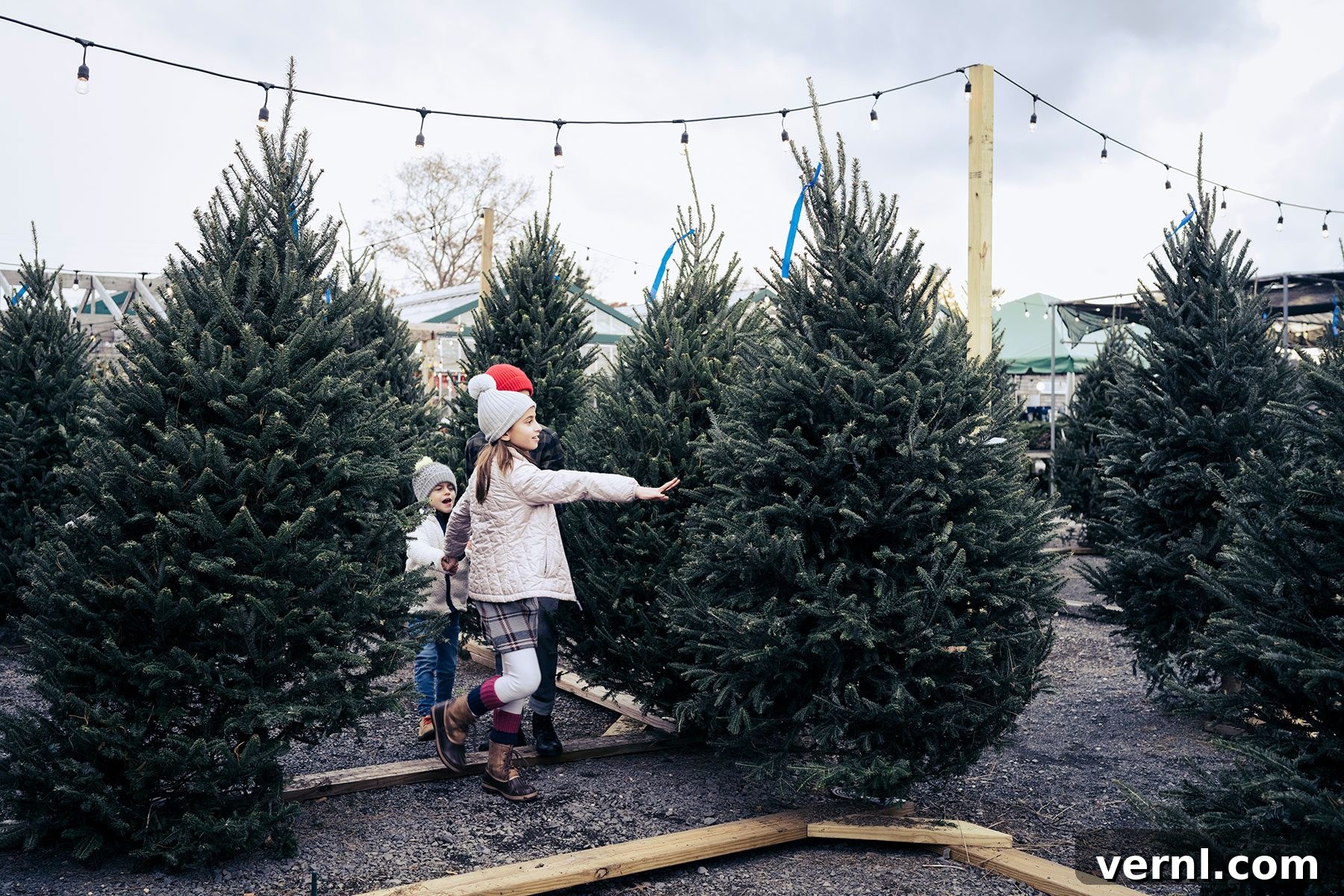
Jesse Jimerson of Piper Mountain Christmas Tree Farm in Maine enthusiastically advocates for the farm experience, and for good reason. “If you have the ability to go visit a local Christmas tree farm, that will hands down be the freshest tree possible because you cut it yourself that day,” he explains. Farms like Piper Mountain offer families the unique and cherished tradition of wandering through expansive fields, saw in hand, to find and harvest their very own perfect tree. This direct-from-the-field approach ensures minimal time between cutting and placement in your home, often mere hours, which is crucial for maximizing its inherent freshness and subsequent longevity. It’s an experience that guarantees peak hydration when the tree enters your care.
Checking for Freshness at a Tree Lot: Key Indicators
Even if you purchase your tree from a retail lot, where the trees have already been cut, you can still perform several simple yet effective tests to ascertain its freshness. Being a discerning shopper will greatly increase your chances of taking home a resilient tree:
- The Needle Test: Run your hand gently over the branches, from the base of the branch towards the tip. Fresh needles should feel flexible and remain firmly attached to the branch. If many needles fall off with a gentle touch or shake, the tree is likely too dry and has been cut for too long. Additionally, observe the color: fresh needles are typically a vibrant, rich dark green, whereas pale, dull, or olive-colored needles can indicate dehydration and an aging tree.
- The Snap Test: For firs, a common method is to gently bend a single needle between your fingers. A fresh needle will bend without breaking; a dry needle, lacking moisture, will snap cleanly and crisply.
- The Weight Test: Carefully lift the tree a few inches off the ground. A fresh tree, still retaining a significant amount of moisture, will feel surprisingly heavy for its size. If it feels unusually light, almost hollow, it may already be significantly dried out and will likely not last long. Karen Musgrave of Hicks Nurseries in Westbury, New York, echoes this advice, noting that a light tree is a red flag for dryness.
- The Stump Test: Examine the cut end of the tree’s trunk (the stump). A freshly cut tree will have a lighter, clean-looking, sometimes slightly sticky stump. Conversely, a dark, black, or heavily discolored stump is a strong indicator that the tree was cut a long time ago and has begun to dry out and seal itself with hardened sap, making it exceedingly difficult for it to absorb water once placed in a stand.
- The Scent Test: A truly fresh tree should emit a strong, pleasant, characteristic pine or fir fragrance when you gently brush its needles. If the scent is faint or nonexistent, it could suggest the tree is past its prime and losing its essential oils along with its moisture.
Transporting Your Tree Safely Home
After carefully selecting the perfect fresh tree, the journey home can be surprisingly critical to its longevity. Any damage sustained during transport, especially exposure to harsh elements, can stress the tree and prematurely reduce its lifespan. Protecting your tree from environmental factors during the ride home is a vital, often underestimated, step in preserving its initial freshness.
Joseph Demkovich, Sr., a certified tree safety expert and director of franchise operations and safety at Monster Tree Service, warns specifically against exposing your tree to heavy wind. “When transporting the tree, try not to expose it to heavy wind, like on the roof of a car or in the back of a pickup truck,” he advises. The continuous blast of air, particularly at highway speeds, acts like a giant hair dryer, rapidly accelerating the drying process of the needles and branches. This intense wind can cause significant moisture loss, leading to “windburn” and potentially even breaking delicate tips and branches, all of which are detrimental to the tree’s health even before it reaches your home.
If placing the tree on your car roof or in the bed of a pickup truck is unavoidable, it’s absolutely essential to provide adequate protection. Wrap the entire tree securely with a tarp, an old blanket, or a specialized tree bag. This covering serves multiple purposes: it shields the needles from drying winds, protects them from road debris and exhaust fumes, and helps to lock in vital moisture. Ensure the wrapping is tightly secured with ropes or bungee cords to prevent it from flapping, coming loose, or causing further damage during transit. Drive carefully and avoid excessive speeds or abrupt maneuvers to further minimize stress and physical damage to your newly acquired centerpiece. Taking these precautions ensures your tree arrives home in the same pristine condition it was in when you selected it.
Proper Preparation for Optimal Hydration
Once you’ve brought your fresh, carefully transported tree home, proper preparation is key to ensuring it can effectively absorb water and remain hydrated throughout the season. This often overlooked step is foundational for its longevity and significantly impacts its ability to stay fresh and green.
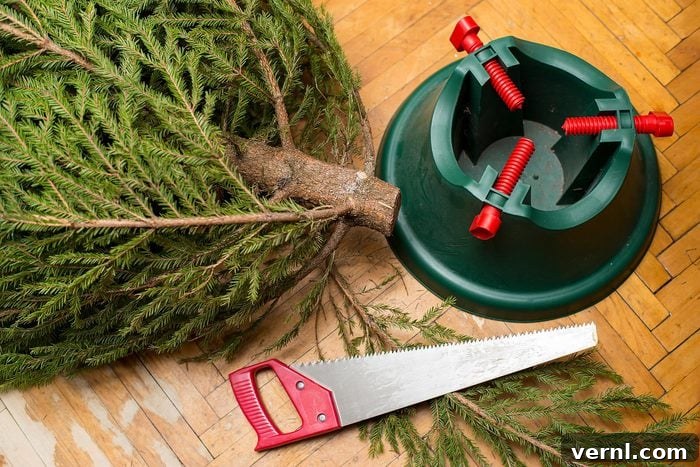
The most crucial preparation step is to make a fresh cut at the base of the trunk. After being cut at the farm, the tree’s trunk naturally forms a seal of sap (resin) over the cut surface. This resinous seal prevents the tree from absorbing water, much like a scab forming over a wound that prevents further bleeding or absorption. Therefore, upon arrival at your home, you must cut one to two inches off the bottom of the trunk. This fresh cut re-opens the tree’s water-conducting vessels (xylem), allowing it to “drink” properly and efficiently. Use a sharp saw to make a straight, clean cut; an angled or jagged cut can make it difficult for the tree stand to hold it securely and can reduce the surface area available for optimal water absorption.
Additionally, trim away any stray lower branches that might interfere with placing the tree in its stand or block the water reservoir. Remove enough to ensure the trunk fits comfortably into the stand and, critically, that the fresh-cut surface is fully submerged in water. This ensures unobstructed water uptake.
If you’re unable to set up and decorate your tree immediately, it’s vital to keep it hydrated in the interim. Karen Musgrave advises, “If you’re not able to put the tree up right away, leave it in a cool, shaded area outdoors in a bucket of water.” This is a crucial holding step. Treat your live Christmas tree exactly like a bouquet of cut flowers – they need continuous access to water to survive and thrive. Placing the fresh-cut trunk into a bucket filled with fresh water will prevent it from drying out and re-sealing before it even gets into its permanent stand. Keep it out of direct sunlight and away from harsh winds during this waiting period to minimize any further moisture loss.
Strategic Placement for Enhanced Freshness
Where you decide to place your Christmas tree inside your home can dramatically affect how long it retains its freshness and vibrancy. Thoughtful and strategic placement can make a significant difference in its overall longevity, preventing premature drying and needle loss.
The most critical rule for tree placement is to avoid all heat sources. Setting up your tree near a fireplace, a heating vent, a radiator, a space heater, or even in direct sunlight streaming through a window will rapidly accelerate the drying process. These heat sources will cause the tree to lose moisture at an alarming rate, leading to premature needle drop, browning, and a significantly diminished appearance. Position your tree in the coolest part of the room, away from any direct heat and drafts, which can also contribute to dehydration. Consider locations that receive indirect light or are generally cooler.
For those living in particularly dry climates, or during periods when your home’s heating system is running constantly, Jesse Jimerson suggests an extra measure: running a humidifier near your tree. Indoor heating systems, especially during the dry winter months, can drastically reduce ambient humidity. Low humidity levels actively draw moisture out of your tree. A humidifier helps maintain higher humidity levels around the tree, slowing down its dehydration and keeping its needles pliable and green for longer, creating a more favorable microclimate for its survival.
Equally important is the tree stand itself. “Make sure your Christmas tree is properly installed in a sturdy stand that can hold plenty of water,” emphasizes Karen Musgrave. A stable stand prevents accidental tipping, which could lead to spills, damage to the tree, or even injuries. More importantly, a stand with a large water reservoir is crucial. Many smaller stands require constant, sometimes multiple, refills daily, increasing the risk of the water level dropping below the trunk, which can cause the tree to reseal itself and cease absorbing water. Choose a stand that can comfortably hold at least a gallon of water for a medium-sized tree, ensuring the trunk is fully immersed in the water.
While a window might seem like an ideal spot for displaying your festive tree to the outside world, it can actually be detrimental to its health. Besides potentially blocking natural light and heat from entering your home, exposure to fluctuating temperatures and direct sunlight through a window can cause your tree to dry out prematurely. The sun’s rays can warm the needles and branches, increasing evaporation, while cold drafts from outside can also stress the tree. Opt for an interior wall, ensuring there’s ample space around the tree for good air circulation and easy access for watering, without it being too close to foot traffic or other potential hazards.
The Undeniable Importance of Consistent Watering
Of all the tips for prolonging your Christmas tree’s life, consistent and adequate watering stands paramount. A real Christmas tree is essentially a giant cut flower, and like any cut flower, it cannot survive or maintain its freshness, fragrance, and vibrant appearance without a constant, uninterrupted supply of water. This is arguably the single most important factor for maximizing its longevity and ensuring it remains a beautiful centerpiece throughout the entire holiday season.
Immediately after you bring your tree home and make that crucial fresh cut at its base, place it into a sturdy tree stand with a large water capacity and fill it with water without delay. The tree will be incredibly thirsty, especially during the first day or two after setup. During this initial period, it can absorb a surprising amount of water as it re-hydrates its tissues and recovers from being cut from its roots. “The tree drinks a lot of water during the first day or two,” confirms Greg Walsh. It’s not uncommon for a six-foot tree to consume an entire gallon of water within 24 hours, and then roughly a gallon every other day thereafter, depending on its size, species, and the environmental conditions (like humidity and temperature) in your home.
Proper hydration is absolutely vital for maintaining needle moisture, preserving the tree’s vibrant green color, keeping its branches pliable, and ensuring that delightful pine scent continues to fill your home. The moment the water level drops below the fresh-cut end of the trunk, the tree’s natural defense mechanism will kick in, and its sap will begin to form a new seal over the exposed cut. This effectively prevents it from absorbing water, even if you refill the stand later. “If you forget about the water, it will dry up and the tree will close off,” Walsh warns. Once the trunk has re-sealed, it becomes exceedingly difficult, if not impossible, for the tree to take up water again, leading to rapid drying, brittle branches, and inevitable needle drop. This irreversible process makes consistent watering non-negotiable.
Therefore, make checking the water level a daily ritual. Be diligent about refilling it, ensuring the cut surface of the trunk is always submerged. A long-spout watering can be a helpful tool for reaching the reservoir without disturbing the decorations. While plain tap water is usually sufficient and highly effective, some people choose to use Christmas Tree Preserver products. Walsh mentioned a product that turns the water into a gel, designed to provide slow, steady hydration for about a month, which can be beneficial if daily watering is a concern. However, consistent replenishment with fresh water remains the most straightforward and reliable method for most households.
Decorate With Care and Consideration
Even your decorating choices and methods can impact the longevity and overall health of your Christmas tree. While the excitement to adorn your tree with twinkling lights and cherished ornaments is completely understandable, a little patience and careful consideration during this stage can contribute significantly to a healthier, longer-lasting display throughout the entire holiday season.
One common mistake is decorating the tree too quickly after it has been set up. Greg Walsh strongly advises against this: “Once the tree is in the stand,” he says, “leave it alone for a day and let it settle before decorating because the lights can pull on the branches if decorated too early.” This settling period, typically 12 to 24 hours, allows the branches to relax, expand, and droop naturally into their final resting positions. Decorating immediately can lead to strained branches, unnecessary needle loss, or even broken tips if they are forced into positions they haven’t yet settled into. Giving the tree time to adjust to its new environment reduces stress and ensures a more stable foundation for your decorations.
When it comes to lights, making a smart and safe choice is crucial. It’s imperative to decorate the tree with lights specifically rated for indoor use and, more importantly, those that don’t generate excessive heat. Traditional incandescent bulbs, while charming, can emit a surprising amount of heat. This warmth not only further contributes to the tree’s dehydration and premature drying but also increases the risk of fire, especially as the tree begins to dry out. LED Christmas lights are by far the superior choice for real trees. They are significantly more energy-efficient, generate very little heat (reducing dehydration), and have a much longer lifespan, making them safer for your tree, your home, and your electricity bill. Always inspect all your light strands for any frayed wires, exposed connections, or damaged bulbs before use, ensuring electrical safety.
Finally, consider the weight and distribution of your ornaments. If you have a collection of particularly heavy ornaments, choose a tree species known for its sturdy and robust branches, such as a Fraser fir, which can better support the load. Distribute heavy ornaments evenly across the strongest parts of the branches, typically closer to the trunk, to prevent branches from sagging, bending, or even breaking. Overloading a single branch or an entire section with too many heavy decorations can cause stress to the tree, compromise its overall structure, and lead to breakage. Delicate ornaments should be placed on lighter, more flexible tips. By decorating with care, you’ll ensure your tree remains beautiful and structurally sound for weeks to come.
By diligently following these comprehensive tips – from careful selection and safe transport to proper preparation, strategic placement, consistent watering, and thoughtful decoration – you can ensure your real Christmas tree remains a beautiful, fragrant, and vibrant centerpiece throughout the entire festive season and well beyond. Enjoy the magic, knowing you’ve given your tree the best possible care, making your holiday memories even more special and lasting!
And when the season inevitably comes to a close, you’ll know exactly when to take down a Christmas tree, ready to responsibly dispose of it and perhaps even recycle it for future use, leaving you with lasting memories of a perfectly preserved and cherished holiday.