
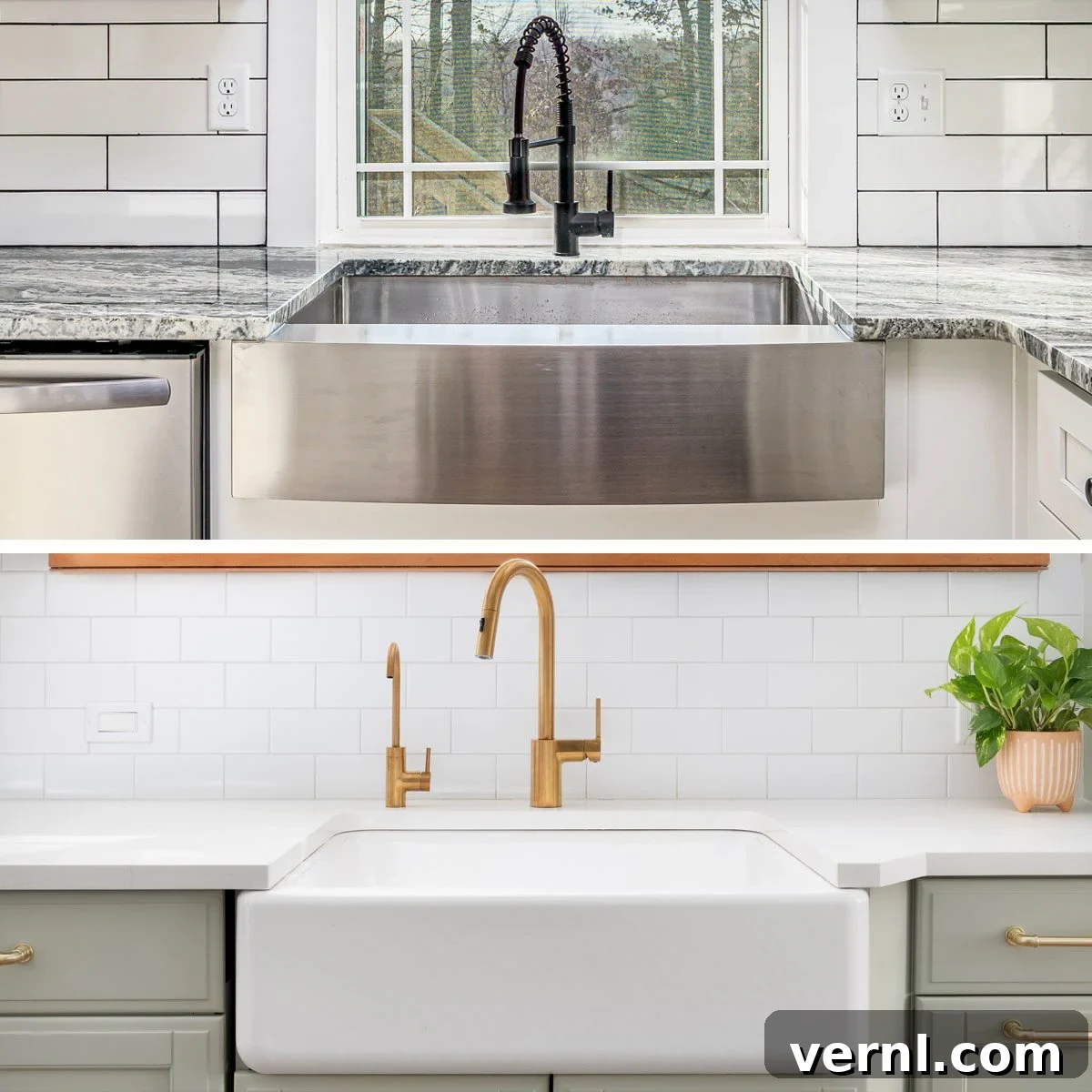
Choosing the perfect sink is a pivotal decision in any kitchen design plan. Beyond its fundamental role in daily tasks, a sink serves as a central focal point, profoundly influencing both the aesthetics and functionality of your culinary space. It must seamlessly align with your desired design style, accommodate your household's lifestyle needs, and often dictates crucial surrounding elements like cabinet and countertop selections. When embarking on a kitchen renovation, the quest for a sink that masterfully blends practicality with striking visual appeal often leads many homeowners to two distinct yet frequently conflated styles: apron and farmhouse sinks.
These captivating sink designs instantly elevate a kitchen's character, transforming it into a hub of activity while exuding timeless charm. Their prominent fronts and generous basins are built to withstand the rigorous demands of a busy kitchen, making them both attractive and exceptionally robust. While the terms "apron sink" and "farmhouse sink" are often used interchangeably by many, there are nuanced differences that are well worth exploring to ensure you make an informed choice for your home. To meticulously break down these distinctions and guide you through the intricacies of each style, we've enlisted the expertise of two seasoned kitchen design professionals: Annika Cooper from RK Miles and Kevin McIver from Cape Cod Lumber's Homescapes Design Center and Showroom.
What Exactly Is a Farmhouse Sink?
At its core, a farmhouse sink represents a timeless and traditional style, instantly recognizable by its characteristic finished, visible front and a generously proportioned, deep basin. Its historical roots trace back to the bustling kitchens of old farmhouses, where it served as an indispensable, multi-purpose workstation. These original sinks were ingeniously designed to handle an array of demanding tasks, from washing sizable pots and pans and bathing infants to laundering clothes – all within the same expansive space. The distinctive apron front, extending beyond the cabinetry, was a functional innovation; it effectively increased the sink's working area, significantly reduced water spillage onto the floor, and, crucially, minimized back strain for users during prolonged use. This thoughtful design addressed the practical needs of agrarian life.
Today's farmhouse sinks proudly carry forward the iconic aesthetic and resilient workhorse reputation of their predecessors. They typically feature the hallmark rounded edges that defined the originals, contributing to their classic, softer appearance. While the modern farmhouse sink often manifests as an oversized single-basin design, emphasizing expansive utility, contemporary variations can also incorporate convenient features such as a built-in drainboard or an integrated backsplash, further enhancing their versatility and appeal in contemporary homes.
Common Materials for Farmhouse Sinks
The choice of material significantly impacts a farmhouse sink's durability, appearance, and maintenance requirements. While various options exist, some materials are particularly iconic for this sink style:
- Enameled Cast Iron: This is arguably the most classic material, renowned for its incredible durability, hefty feel, and glossy, chip-resistant finish. It provides excellent heat retention and a traditional look.
- Fireclay: A popular choice for its resemblance to traditional ceramic and its exceptional resistance to scratches, chips, and acids. Fireclay sinks are fired at extremely high temperatures, creating a dense, non-porous surface.
- Porcelain: Offering a smooth, bright white finish, porcelain provides a clean and crisp aesthetic. While beautiful, it can be more prone to chipping than fireclay if heavy objects are dropped into it.
- Stainless Steel: Less traditional but gaining popularity for its modern appeal, durability, and ease of cleaning. Stainless steel farmhouse sinks offer a sleek alternative while retaining the deep basin and apron front design.
Investment: How Much Does a Farmhouse Sink Cost?
When budgeting for a farmhouse sink, homeowners should anticipate a range from approximately $600 to $1,800, or even more, depending on several factors. As kitchen design expert Annika Cooper advises, it's generally prudent to steer clear of the cheapest models available on the market. Instead, she strongly recommends investing in a higher-quality sink. These superior models typically feature a thicker, more durable enamel layer, which is far more resistant to the everyday wear and tear that can lead to scratches, chipping, and stubborn staining. The initial higher cost of a quality sink is often offset by its longevity, reduced maintenance, and sustained aesthetic appeal over many years.
Farmhouse Sink: Weighing the Pros and Cons
The Advantages (Pros)
One of the most compelling benefits of a farmhouse sink is its generously deep and wide basin. This expansive design makes cleaning oversized items, such as large roasting pans, baking sheets, or even gardening tools, remarkably easier and less cumbersome. Furthermore, the apron front design brings the basin closer to the user, creating a more comfortable and ergonomic experience by significantly reducing the need to stoop or reach into the sink, thus alleviating back strain during prolonged use.
Beyond its exceptional functionality, a farmhouse sink serves as a captivating aesthetic centerpiece in any kitchen. Its inherent charm and classic lines make it an aesthetically pleasing focal point. Many designs boast beautifully detailed apron fronts, featuring elegant fluted patterns, gentle curves, or intricate embossed details that add character and sophistication. In the ongoing debate between apron sinks vs. farmhouse sinks, the latter often holds an edge with its traditional offerings of integrated features, such as built-in backsplashes and convenient drain board options, which are highly valued for both their utility and cohesive design.
The Disadvantages (Cons)
While the ample size of a farmhouse sink is a major draw for many, it can present certain challenges. The sheer volume of the basin inevitably consumes a significant amount of valuable counter space and, critically, reduces the available storage within the under-cabinet area. This can be particularly problematic in smaller kitchens, where every inch of space is precious. Additionally, the large basin requires a considerable volume of water to fill, meaning it also takes a longer time to drain. Annika Cooper highlights a practical concern: "You may find yourself using a lot more water to wash just a few dishes," which can impact water consumption.
The classic enameled cast iron material, while durable, demands diligent care to maintain its pristine condition. Metal pans, grates, or even cutlery left in the sink can quickly lead to unsightly rust stains or cause scratches in the enamel. These imperfections not only mar the sink's appearance but also create tiny crevices where dirt and grime can become trapped, making cleaning significantly more challenging over time. Furthermore, cast iron sinks are exceptionally heavy. Their substantial weight necessitates precise and robust installation. If not properly supported and installed by experienced professionals, the immense weight, especially when filled with water, can potentially lead to cracking or structural damage. "These really should be installed by someone with experience," Cooper emphasizes, noting that this specialized installation requirement contributes to higher overall costs, representing another key drawback of this sink style.
What Defines an Apron Sink?
An apron sink can be accurately described as a contemporary evolution of the more traditional farmhouse sink, reimagined for modern sensibilities. While retaining the distinctive exposed front, apron sinks are characterized by their sleek, often squared edges and simpler, cleaner lines. This design philosophy lends them a more contemporary and refined aesthetic, enabling them to seamlessly integrate into a diverse array of home styles, from minimalist to industrial. They embody a balance between classic utility and modern design elegance, making them a versatile choice for homeowners seeking a sophisticated yet functional kitchen centerpiece.
Although apron sinks generally share the generous dimensions of their farmhouse counterparts, offering ample workspace, there is often a broader range of sizes available within the apron sink category. This means you might find options with slightly smaller dimensions or more varied configurations, providing greater flexibility to suit different kitchen layouts and personal preferences without compromising on the iconic exposed front feature.
Investment: How Much Does an Apron Sink Cost?
Similar to farmhouse sinks, apron sinks represent a significant investment compared to standard undermount or drop-in sinks. "A lot more expensive than an average sink," Annika Cooper points out. Homeowners can expect costs to begin around $600, potentially escalating to $1,500, $1,800, or even higher for sinks crafted from premium materials or featuring intricate designs. The material choice plays a crucial role in the final price. For instance, Cooper specifically highlights that "Copper apron sinks can be very costly," due to the inherent value of the metal and the specialized craftsmanship involved in their production. This higher price range reflects the quality, durability, and distinctive aesthetic appeal these sinks bring to a kitchen.
Common Materials for Apron Sinks
Apron sinks embrace a wider variety of materials, reflecting their modern versatility. They are typically available in four primary material types, each offering distinct characteristics:
- Granite Composite: Known for its exceptional durability, resistance to scratches, chips, and heat, and a wide range of color options. It offers a modern, often matte finish.
- Stainless Steel: A perennially popular choice for its sleek, modern aesthetic, hygienic properties, and robustness. Stainless steel apron sinks are generally lighter and easier to maintain.
- Copper: Offers a unique, living finish that develops a rich patina over time, adding warmth and character. Copper is naturally antimicrobial but requires specific care to prevent tarnishing or changing its finish.
- Soapstone: A natural stone known for its soft, satiny feel and elegant, often dark, appearance. Soapstone is non-porous and highly resistant to stains and heat, though it can scratch more easily than other materials.
Apron Sink: Weighing the Pros and Cons
The Advantages (Pros)
One of the most significant advantages of apron sinks is their remarkable versatility in styling. Thanks to their cleaner lines and often squared edges, they effortlessly complement a broad spectrum of modern kitchen aesthetics. They look exceptionally good in transitional, contemporary, industrial, and modern-style kitchens, offering a chic, updated focal point. Kevin McIver notes, "There are a lot of different sink designs to choose from," emphasizing the wide array of finishes, configurations, and styles available, which allows homeowners greater freedom in customizing their kitchen's look.
When comparing apron sinks vs. farmhouse sinks, apron sinks can sometimes offer an advantage in terms of installation ease, particularly for lighter models made of stainless steel. Annika Cooper explains, "These are easier and can cost less to install." The reduced weight and often simpler fabrication of stainless steel versions can simplify the installation process, potentially leading to lower labor costs compared to the heavier, more complex installation requirements of traditional cast iron or fireclay farmhouse sinks.
The Disadvantages (Cons)
Despite their aesthetic appeal, apron sinks often pose integration challenges, making them generally better suited for new construction projects or extensive kitchen remodels. Kevin McIver highlights this issue: "They're difficult to integrate into a typical sink base, and usually require one meant for apron front sinks." Standard sink bases are not constructed to accommodate the extended front of an apron sink or to adequately support its specific weight distribution. Attempting to force an apron sink into an unsuitable cabinet can lead to structural compromises or aesthetic gaps. For this reason, professional installation is highly recommended to prevent potential cabinet damage during the setup process, adding to the overall project cost.
Another practical consideration for apron sinks revolves around water management. Annika Cooper points out, "One con of an apron sink is it gets your belly wet at the sink [due to the exposed apron front]." The forward projection of the sink can indeed mean that splashes are more likely to reach the user. McIver further elaborates on a related water spillage problem: "If water splashes up over the sink, it drips onto the cabinet below." This constant exposure to moisture can be detrimental, as "water is a cabinet's worst enemy," potentially causing swelling, warping, or finish damage over time. While careful use and immediate cleanup can mitigate this, some manufacturers have addressed this concern by incorporating a subtle drip edge on the underside of the apron, designed to redirect water and protect the underlying cabinetry.
Apron Sink vs. Farmhouse Sink: Which Is the Right Choice for You?
Ultimately, the decision between an apron sink and a farmhouse sink largely boils down to personal preference and how well each style harmonizes with your home's existing aesthetic and your functional requirements. As Annika Cooper concisely puts it, "it really comes down to which look do you prefer."
If your home embraces a modern, minimalist, or contemporary aesthetic, an apron sink, particularly one crafted from sleek stainless steel or a refined granite composite, would likely be the ideal choice. Its clean lines, squared edges, and often understated design perfectly complement an updated, sophisticated kitchen environment. Conversely, if your preference leans towards a more traditional, rustic, country, or even transitional design, then a classic farmhouse sink is undoubtedly the way to go. Its iconic rounded edges, deeper basin, and timeless appeal evoke a sense of heritage and warmth, making it a natural fit for kitchens that celebrate comfort and enduring style.
Beyond aesthetics, consider practical aspects: Do you frequently wash large items? A farmhouse sink's depth is superior. Is cabinet space at a premium in your kitchen? Be mindful of the space these sinks occupy. What's your budget not just for the sink, but also for installation? Do you prefer the easy maintenance of stainless steel, or are you prepared for the specific care required by materials like enameled cast iron or copper? By carefully weighing these factors, alongside your desired visual appeal, you can confidently select the sink that will serve as the perfect heart of your kitchen for years to come.
About the Esteemed Experts
Annika Cooper is a highly respected kitchen and bath designer who brings over fifteen years of invaluable industry experience to her role at RK Miles in Barre, Vermont. Her extensive background provides her with a deep understanding of functional layouts, material selections, and aesthetic trends.
Kevin McIver is a seasoned kitchen designer with an impressive career spanning over 40 years. He currently lends his expertise to Cape Cod Lumber's Homescapes Design Center and Showroom, located in Abington, Massachusetts. His decades of experience offer unparalleled insight into kitchen design, functionality, and installation challenges.