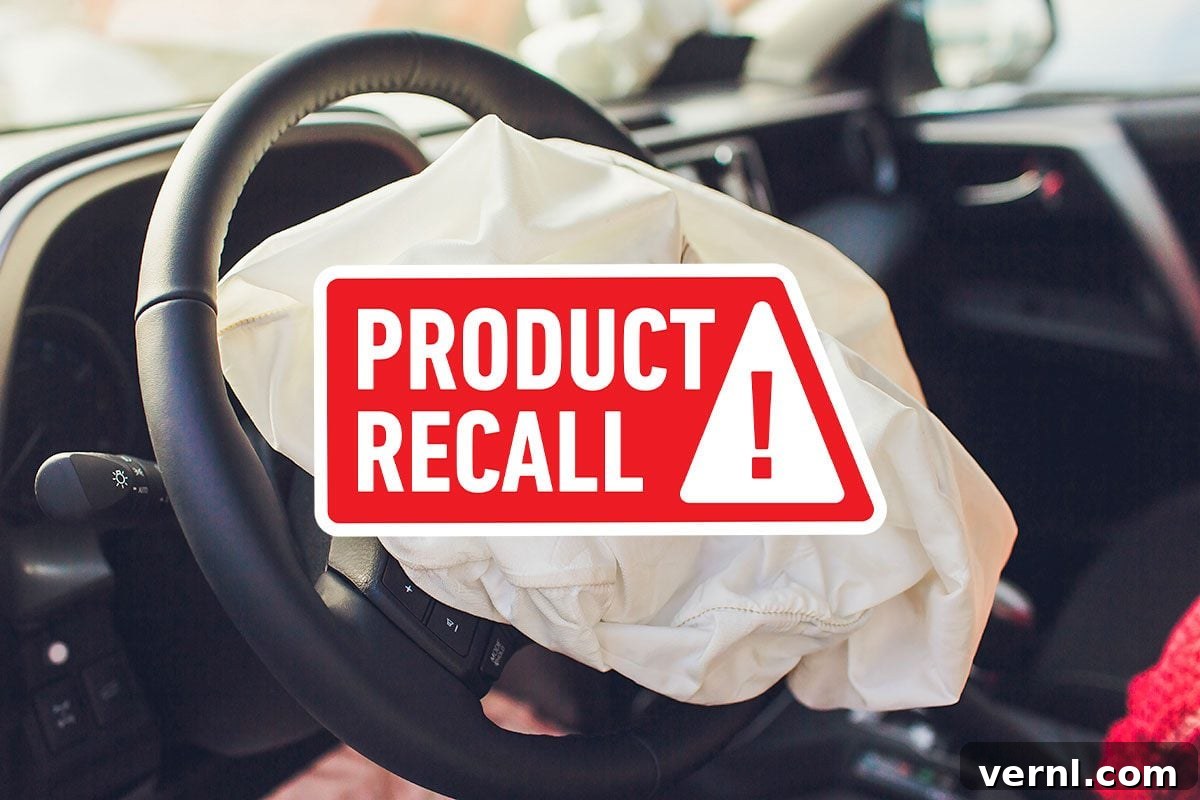
If you haven’t already, now is a good time to become familiar with your vehicle’s components and the manufacturers behind them. The National Highway Traffic Safety Administration (NHTSA) has issued another major Takata air bag recall. Tens of millions of vehicles are included under a Do Not Drive warning because their driver-side air bag inflators may not deploy as intended. If your vehicle is affected, get it repaired immediately—continuing to drive could put you at serious risk of injury or death.
Why Is There a Takata Air Bag Recall?
According to the NHTSA announcement, the problem is tied to prolonged exposure to certain environmental conditions. Long-term exposure to high heat and humidity can cause some Takata driver inflators to rupture when the air bag deploys. These ruptures can propel metal fragments into the passenger compartment, and past incidents have resulted in injuries and fatalities.
This recall focuses on a specific subset of Takata driver inflators. The NHTSA stresses that, unlike earlier large Takata recalls that involved azide-based propellants, this action concerns non-azide driver inflators. That distinction means some vehicles previously inspected or repaired under earlier Takata recalls may still be at risk and should be rechecked. When in doubt, verify your vehicle’s status rather than assuming it’s safe.
Which Vehicles Are Affected?
The Do Not Drive warning covers a wide range of makes and model years. Owners of the following vehicles should check their VIN immediately through the NHTSA recalls lookup and follow any required instructions without delay:
- 2002–2003 Acura 3.2 TL
- 2003 Acura 3.2CL
- 2000–2006 BMW 3 Series (E46), including M3
- 2000–2003 BMW 5 Series (E39), including M5
- 2000–2004 BMW X5 (E53)
- 2007–2009 Chrysler Aspen
- 2005–2015 Chrysler 300
- 2005–2011 Dodge Dakota
- 2005–2010 Dodge Magnum
- 2005–2015 Dodge Charger
- 2005–2014 Dodge Challenger
- 2004–2009 Dodge Durango
- 2003–2010 Dodge Ram
- 2003 Dodge Ram 1500
- 2004–2011 Ford Ranger
- 2005–2006 Ford GT
- 2005–2014 Ford Mustang
- 2006–2012 Ford Fusion
- 2006–2012 Lincoln MKZ/Zephyr
- 2006–2012 Mercury Milan
- 2007–2010 Ford Edge
- 2007–2010 Lincoln MKX
- 2001–2002 Honda Accord
- 2001–2002 Honda Civic
- 2002 Honda CR-V
- 2002 Honda Odyssey
- 2003 Honda Pilot
- 2002–2003 Infiniti QX4
- 2007–2016 Jeep Wrangler
- 2004–2009 Mazda B-Series
- 2003–2013 Mazda6
- 2006–2007 MazdaSpeed6
- 2004–2011 Mazda RX-8
- 2004–2006 Mazda MPV
- 2007–2012 Mazda CX-7
- 2007–2015 Mazda CX-9
- 2006–2009 Mitsubishi Raider
- 2002–2006 Nissan Sentra
- 2002–2004 Nissan Pathfinder
- 2003–2004 Pontiac Vibe
- 2004–2005 Toyota RAV4
- 2003–2004 Toyota Corolla, including Matrix
This list is broad but not exhaustive. Vehicle owners should not assume safety based on memory or prior repairs—use the official lookup to confirm.
How Can You Check and Fix the Problem?
The NHTSA provides a Recalls Lookup where you can enter your vehicle identification number (VIN) to determine whether a Do Not Drive warning or an open recall applies to your vehicle. If the lookup shows your vehicle is affected, contact your vehicle dealer or authorized service center immediately to schedule the free repair. The agency indicates replacement parts for the listed vehicles are available, and dealers will perform the repair at no charge.
If you see a Do Not Drive designation, do not delay. Until the inflator is replaced or repaired, avoid driving the vehicle. Arrange a tow to the dealer if necessary, and follow any additional guidance provided by the manufacturer or NHTSA.
Additional Notes
This recall underscores the importance of keeping vehicle contact information up to date with manufacturers and responding promptly to recall notices. Air bag defects can be life-threatening, and timely repairs are essential for occupant safety. If you are unsure whether your vehicle has been checked for this specific Takata inflator issue, run the VIN through the NHTSA recall lookup and contact your dealer for confirmation and scheduling.
Sources
Takata Recall Spotlight, National Highway Traffic Safety Administration, 2026.
Critical Do Not Drive Warning for Certain Vehicles with Takata Air Bags, National Highway Traffic Safety Administration, 2026.