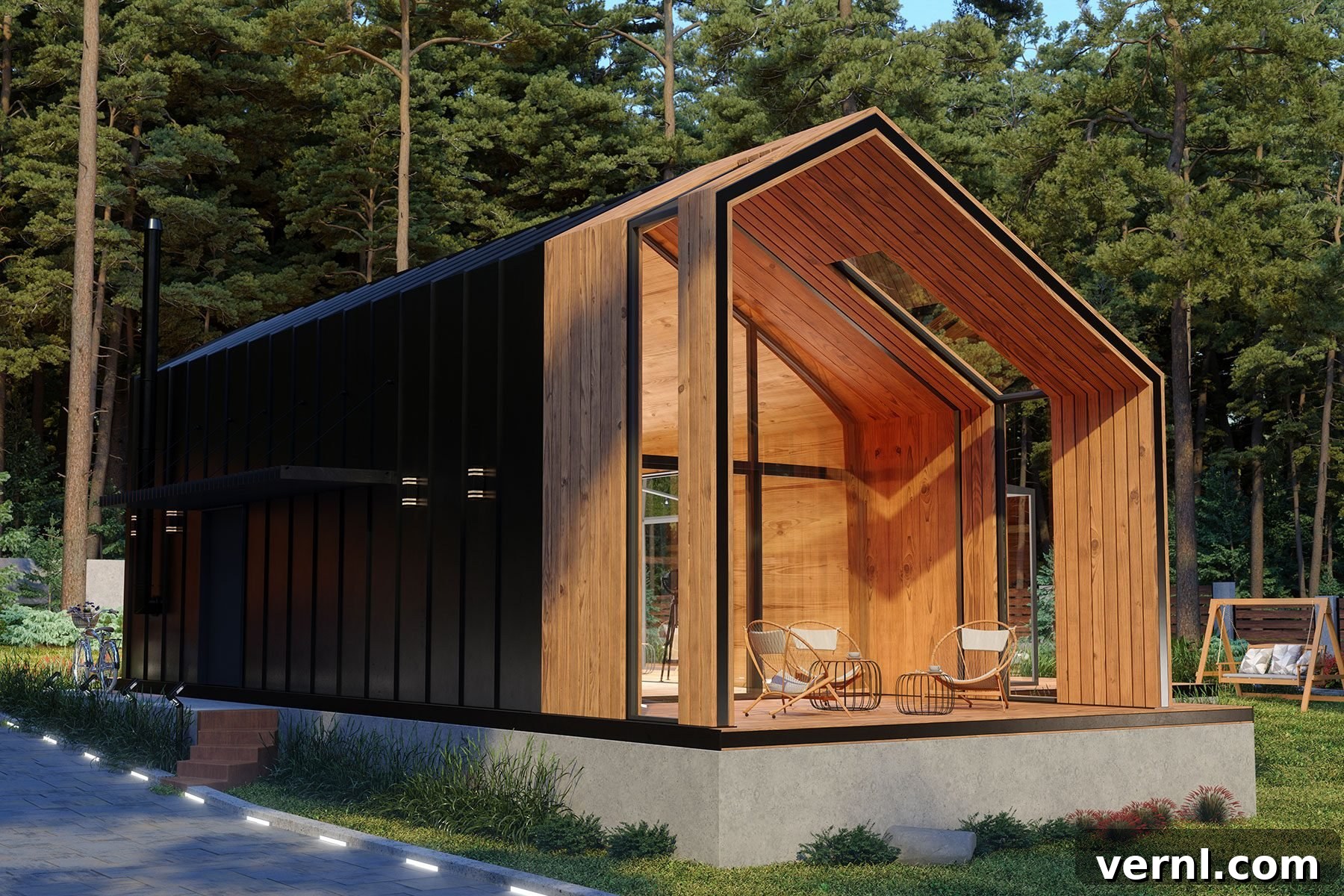
The allure of a minimalist lifestyle, a debt-free existence, and a personal sanctuary away from the hustle and bustle has captivated many. I, too, confess to spending considerable time exploring listings for plots of land, envisioning a charming, artistically designed tiny house, free from excessive clutter and, most importantly, free from the burden of a mortgage. This dream, it turns out, is a shared one, as the market for mail-order luxury tiny homes has surged dramatically over recent years. For many, these compact dwellings represent an accessible solution to the escalating real estate costs, offering the convenience of a potential home purchase with just a few clicks.
“The appeal of luxury tiny homes is particularly strong for individuals seeking a minimalist lifestyle or a rapid, off-the-grid living solution,” explains Whitney Hill, co-founder of SnapADU, a leading ADU design-build firm. “However, the idyllic vision often encounters a more complex reality once factors such as local zoning regulations, essential utility connections, and the specific requirements for placement come into play.”
If you’ve been contemplating a luxury tiny home as a viable answer to your housing needs, a potential path to financial freedom, or even a straightforward method to generate rental income, it’s crucial to delve into the details. This comprehensive guide will outline the critical considerations before you take the exciting, yet often intricate, plunge into tiny home ownership.
What Defines a Luxury Tiny Home?
A luxury tiny home transcends the basic concept of a small dwelling by incorporating high-end features, superior craftsmanship, and sophisticated design elements. While their size typically ranges under 600 square feet, with 200 to 400 square feet being the most prevalent, it’s the quality and attention to detail that truly set them apart. These homes boast upgraded, often energy-efficient appliances, custom-designed cabinetry, premium finishes like quartz countertops or hardwood flooring, and intriguing modern architectural designs that maximize both aesthetics and functionality.
The construction of luxury tiny homes varies significantly. Some are custom-built on-site by local contractors, allowing for highly personalized designs and adherence to specific local building codes from the outset. Others are purchased as pre-fabricated units online, ranging from ingeniously repurposed metal shipping containers to elegantly crafted structures featuring wood siding or fiberglass shells. A growing number of these mail-order models also incorporate innovative fold-out or expandable designs, simplifying both delivery and on-site setup while potentially offering more living space when deployed.
While mass-manufactured mail-order models often present a more cost-effective entry point compared to traditional custom construction, it’s imperative to scrutinize the materials used. To achieve lower prices and lighter weights for transport, some manufacturers might opt for less durable, cheaper materials. This can lead to increased wear and tear over time, potentially higher maintenance costs, and diminished long-term value. Therefore, balancing initial cost savings with material quality is a critical consideration for prospective buyers.
“Many companies entice buyers with incredibly low prices, which unfortunately can sometimes lead to fraudulent or low-quality outcomes,” warns Jared Amzallag, co-founder of Minimal Living Concepts, a Phoenix-based builder of modern guest homes. “We frequently encounter clients who initially sought cheaper options online but ultimately turn to us for a higher-end, custom build due to disappointment with the quality or legitimacy of their initial purchase. The quality and authenticity of the unit you acquire will fluctuate drastically depending on your chosen supplier or builder.”
Navigating the Placement of Your Tiny Home: Where Can It Go?
The seemingly straightforward act of placing a tiny home on a piece of land is often the most complex hurdle. The feasibility of placement is almost entirely dependent on a labyrinth of local, county, and state regulations, which vary dramatically from one jurisdiction to another. In some less densely populated or rural areas, placing a tiny home on your private land might indeed be a relatively simple process with minimal bureaucratic red tape. Furthermore, certain mobile home communities and RV parks are specifically zoned to accommodate tiny homes, offering a pre-approved solution.
However, in many urban and suburban environments, the process becomes significantly more intricate. Prospective tiny home owners must contend with a multitude of factors, including:
- Zoning and HOA Covenants: Many areas have specific zoning ordinances or Homeowners Association (HOA) rules that either explicitly regulate tiny homes or, more commonly, mandate minimum square footage requirements for all dwellings, effectively precluding tiny homes.
- Accessory Dwelling Unit (ADU) Permitting: If you plan to place a tiny home in your backyard as an ADU, it will likely be subject to specific ADU permitting requirements, which can be rigorous and time-consuming. These often include setback rules, size limitations, and design review processes.
- Foundation Requirements: Whether your tiny home needs to be on a permanent foundation or can be on wheels (like an RV) greatly impacts permitting and classification, which in turn affects financing and insurance.
- Building Codes: All structures must comply with local building codes, encompassing aspects like R-rating for insulation, structural integrity against snow load and wind speed, fire safety, and accessibility. Meeting these codes might necessitate substantial retrofitting for mass-produced tiny homes, adding unexpected costs and delays.
- Utility Connections: Access to essential utilities—water, sewer/septic, electricity, and sometimes gas—is paramount. This often involves significant site work to extend lines from existing infrastructure, which can be both expensive and require additional permits.
- Environmental and Health Regulations: Depending on the location, there might be regulations related to waste management, water sourcing, and environmental impact that need to be addressed.
Regardless of your chosen location or local zoning regulations, it is absolutely essential to budget for significant site preparation costs. This includes expenses for grading and leveling the land, laying a suitable foundation (which can range from simple pier foundations to full concrete slabs), and installing the necessary utility hookups. These often overlooked costs can easily add tens of thousands of dollars to your overall project budget.
“If your goal is to connect to existing local utility grids, you must allocate funds for trenching, connection fees, and potentially upgrading current utility lines,” states Whitney Hill. “This process is very similar to what you’d encounter when building a traditional ADU. Alternatively, off-grid systems utilizing solar panels for electricity or composting toilets for waste management can be viable in very rural areas, but these solutions are typically not permitted for full-time residency in more urban or suburban locations due to public health and safety regulations.”
The Scales of Decision: Luxury Tiny Home Pros and Cons
Deciding on a luxury tiny home involves weighing numerous advantages against a set of unique challenges. A thorough understanding of these aspects is crucial for making an informed choice.
Pros of Luxury Tiny Homes
- Enhanced Affordability: Compared to conventional homes, even luxury tiny homes represent a significantly lower initial investment, offering a more accessible entry point into homeownership. This can also lead to long-term savings on property taxes, insurance, and utility bills due to their smaller footprint.
- Expedited Delivery and Construction: Mail-order and pre-fabricated luxury tiny homes often boast quick manufacturing and delivery times. Some models are designed for straightforward, DIY assembly, further reducing construction timelines and labor costs.
- Architectural Innovation and Aesthetics: Luxury tiny homes frequently feature modern, attractive architectural designs, custom finishes, and smart space-saving solutions, appealing to those who prioritize style and unique living environments.
- Sustainable and Eco-Friendly Living: Their smaller size inherently means a reduced environmental footprint. When built with quality, sustainable materials and equipped with energy-efficient systems, they offer a genuinely eco-conscious living option, often incorporating features like rainwater harvesting or advanced insulation.
- Relocation Potential: Many tiny homes are designed to be mobile, offering the flexibility to move to new locations. This appeals to those with nomadic lifestyles, individuals needing temporary housing, or those looking for seasonal changes.
- Off-Grid Living Potential: In areas with minimal zoning restrictions or abundant rural land, tiny homes offer an excellent platform for achieving complete self-sufficiency through off-grid systems like solar power, water catchment, and composting waste solutions.
- Potential for Rental Income: A luxury tiny home can serve as an excellent income-generating asset, either as a short-term rental on platforms like Airbnb or as a long-term Accessory Dwelling Unit (ADU), providing supplementary income or housing for family members.
- Promotes Minimalism and Decluttering: Living in a tiny home naturally encourages a minimalist lifestyle, forcing residents to thoughtfully curate their possessions and focus on experiences over material accumulation.
Cons of Luxury Tiny Homes
- Potential Durability and Longevity Concerns: As Jared Amzallag highlighted, some mass-produced tiny homes may utilize lighter, less durable materials, leading to faster wear and tear and potentially higher repair costs over their lifespan compared to conventionally built homes.
- Vulnerability to Extreme Weather: Depending on construction quality and design, certain tiny homes may be less resistant to severe weather conditions, such as high winds, heavy snow loads, or intense storms, raising safety and insurance concerns.
- Significant Zoning and Permitting Hurdles: Navigating the complex web of local zoning laws, building codes, and permitting requirements is often the greatest challenge. Many areas lack specific regulations for tiny homes, or their existing rules effectively prohibit them.
- Expensive Site Work and Utility Hookups: Even if the home itself is affordable, the costs associated with preparing the site, laying a proper foundation, and connecting to utilities (water, sewer, electricity) can be substantial and frequently underestimated.
- High Costs for Off-Grid Systems: While appealing, establishing robust off-grid systems (solar panels, battery storage, water filtration, advanced composting systems) where utilities are unavailable or undesirable can be a significant initial investment.
- Limited Impact on Property Value: Unlike a traditionally constructed ADU that often appreciates in value and enhances a property’s overall worth, a tiny home, particularly a mobile one, may not increase property value in the same way, and can even depreciate over time like a vehicle.
- Confined Living and Storage Space: The inherent compactness of tiny homes means limited living area and storage capacity. This requires a significant adjustment in lifestyle and meticulous organization, which can be challenging for some individuals or families.
- Potentially Higher Insurance Premiums: Due to their unique classification (sometimes as an RV, sometimes as a permanent dwelling), tiny homes can sometimes be more challenging and costly to insure compared to standard homes.
- Land Acquisition Remains a Challenge: The cost of the tiny home itself is often only part of the equation; securing suitable land, whether through purchase or long-term rental, remains a fundamental and potentially expensive prerequisite.
- Financing Difficulties: Securing traditional mortgages for tiny homes can be problematic because many lenders have minimum loan amounts that exceed the price of even a luxury tiny home. “While tiny homes offer significant savings, especially in high-cost-of-living areas, most buyers resort to personal loans for financing,” notes Seamus Nally, CEO of TurboTenant, a home rental management software. Personal loans typically come with higher interest rates and shorter repayment terms, which can be a deterrent for many prospective buyers.
Is a Luxury Tiny Home the Right Choice for You?
The suitability of a luxury tiny home is highly individual and depends heavily on your lifestyle, financial situation, and tolerance for navigating regulatory complexities. These compact dwellings can be an excellent option for low-cost housing, particularly for retirees seeking to downsize, individuals in need of a temporary housing solution, or those genuinely committed to a minimalist lifestyle. Their appeal is especially strong if you reside in a rural area or a jurisdiction with flexible zoning and minimal building codes, where the path to placement is less arduous.
However, luxury tiny homes are generally not suitable for large families, those who require ample space, or individuals who are unprepared to manage potentially complex zoning, permitting, and utility connection issues. The transition to tiny living demands adaptability and a willingness to embrace a smaller footprint.
Furthermore, Jared Amzallag issues a significant caution against viewing mail-order tiny homes purely as an investment. While they offer short-term benefits in terms of cost and lifestyle, they are unlikely to appreciate in value or enhance your property’s worth in the same manner as a traditionally built ADU. Instead, many tiny homes, particularly those on wheels or not on a permanent foundation, may depreciate over time, much like a vehicle.
Amzallag frequently hears from buyers who express regret over their mail-order tiny home purchases. Common sources of remorse include encountering surprisingly low-quality materials, grappling with unexpected zoning hassles, failing to accurately account for the often-substantial costs of site preparation and code compliance, and ultimately struggling with the long-term realities and limitations of living in such a small space.
“Buyer beware, and do your comprehensive research,” he advises. “While the initial price point and perceived convenience can be incredibly attractive, it is absolutely crucial to meticulously consider every detail of what you are purchasing, from construction quality and materials to local regulations and long-term livability.”
Key Questions to Ask Yourself Before Buying:
- What are my local zoning laws and building codes regarding tiny homes?
- Do I own land, or will I need to purchase/rent a lot?
- What are the estimated costs for site preparation and utility hookups?
- How will I finance the tiny home and any associated land/site work?
- Am I genuinely prepared for a minimalist lifestyle and limited space?
- What are my long-term plans for this tiny home (permanent residence, rental, temporary)?
- Have I thoroughly vetted the manufacturer or builder for reputation, warranties, and customer reviews?
- What are the insurance options and costs for my specific tiny home model?
Frequently Asked Questions About Luxury Tiny Homes
Are tiny luxury homes sold furnished?
The furnishing status of luxury tiny homes varies considerably by manufacturer and model. Some manufacturers offer fully furnished homes as a premium option, often including custom-fitted furniture designed to maximize space. Others provide furnishings as an upgrade package, allowing buyers to select specific items. Many, however, deliver the home with essential appliances (kitchenette, bathroom fixtures) and fully functional electrical and plumbing systems, leaving the task of furnishing to the buyer. It’s always advisable to clarify what is included in the base price and what constitutes an upgrade or an additional purchase.
What if my tiny home arrives damaged?
The resolution process for a tiny home that arrives damaged is dictated by the terms and conditions outlined in your purchase agreement with the manufacturer. “It is absolutely vital to thoroughly check for robust warranties and clear return policies before making a purchase,” emphasizes Whitney Hill. “Damage during the delivery and transportation process is a recognized risk, so partnering with reputable sellers who offer comprehensive protection and clear procedures for handling such incidents is paramount. Always inspect the unit immediately upon arrival and document any damage with photographs and detailed notes.”
Can you insure tiny homes?
Yes, you can absolutely insure tiny homes, but the available insurance options can be more limited and often more expensive compared to traditional stick-built homes. The type of insurance you qualify for, as well as the cost, largely depends on how your tiny home is classified. Some tiny homes, particularly those on wheels, may be classified as Recreational Vehicles (RVs) or mobile homes, requiring specialized RV insurance policies. Others, especially those on permanent foundations, might be eligible for a form of homeowner’s insurance or a specialized tiny home insurance policy. Factors such as the home’s value, construction materials, location, and whether it’s on a permanent foundation or mobile will all influence coverage eligibility and premium costs.
What are the typical heating and cooling solutions for tiny homes?
Due to their small footprint and often superior insulation, tiny homes are relatively easy to heat and cool efficiently. Common solutions include mini-split heat pump systems, which provide both heating and air conditioning in one compact unit. Other options include propane heaters, electric space heaters, wood-burning stoves (ensure proper ventilation and safety codes), and radiant floor heating for luxury models. Passive design strategies, such as strategic window placement for cross-ventilation and optimized insulation, are also crucial for maintaining comfortable indoor temperatures with minimal energy consumption.
How is waste managed in a tiny home?
Waste management in a tiny home depends on its utility connections and classification. If connected to a municipal sewer system or a private septic tank, waste is managed conventionally. For off-grid or semi-off-grid tiny homes, composting toilets are a popular and environmentally friendly solution for human waste. Gray water (from sinks and showers) can sometimes be diverted for irrigation in certain jurisdictions, while solid waste is typically collected for recycling and regular trash pickup, much like in a traditional home, albeit in smaller quantities.
About the Experts
- Jared Amzallag is co-founder of Minimal Living Concepts, a Phoenix-based company that specializes in building minimal, modern guest homes and ADUs.
- Whitney Hill is co-founder and CEO of SnapADU, a leading Accessory Dwelling Unit (ADU) design-build firm based in San Diego, California.
- Seamus Nally is CEO of TurboTenant, a comprehensive home rental management software, and also an experienced landlord of various properties in New York and Colorado.