
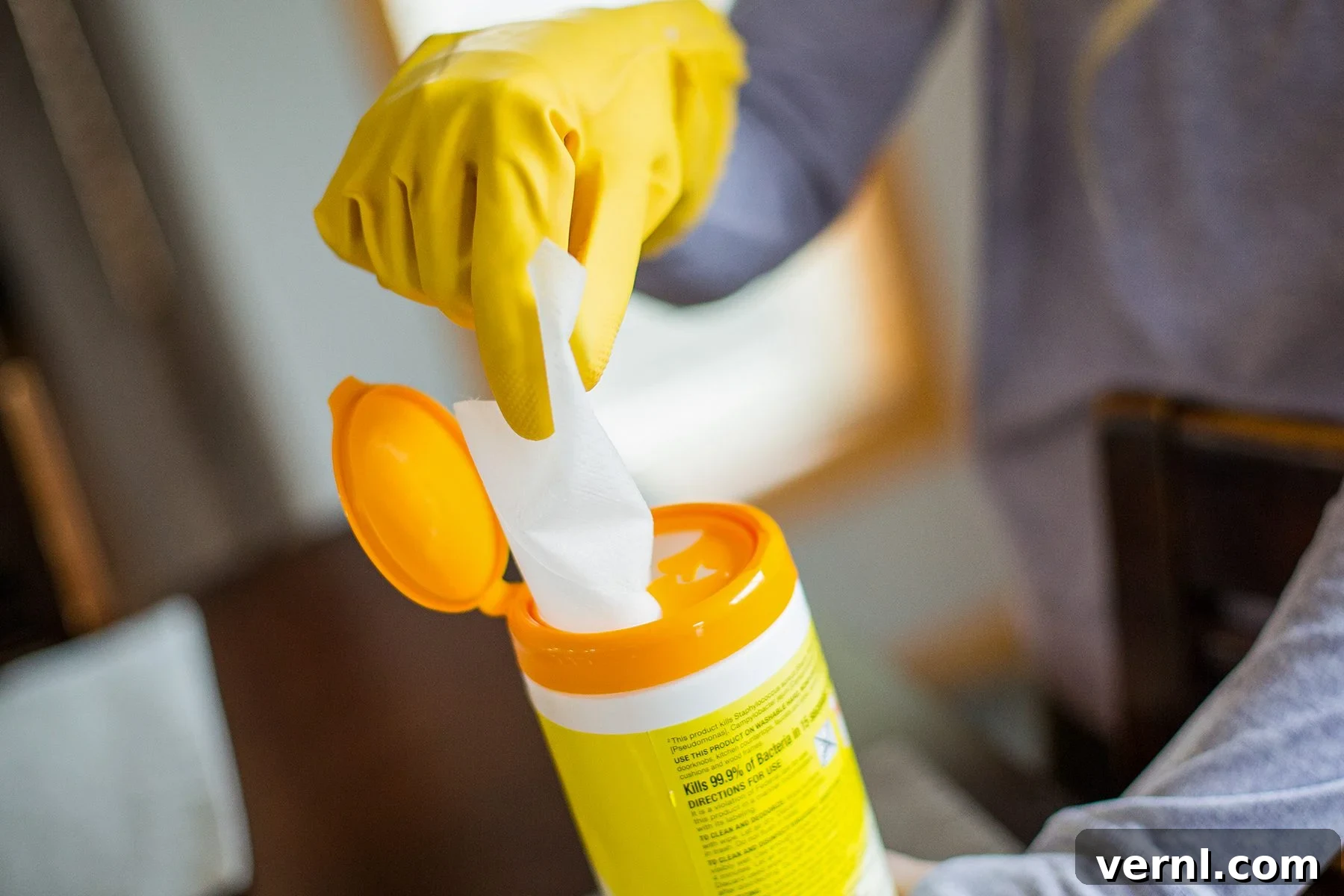
Disinfectant Wipes: A Deep Dive into Their Dangers, Efficacy, and Eco-Friendly Alternatives
The COVID-19 pandemic undoubtedly reshaped our daily routines and introduced a host of new habits, some beneficial, others less so. While I may still find myself warming up my cold cuts before a meal – a quirky habit I can’t seem to shake – I’ve noticed a far more prevalent and concerning habit: the widespread, often indiscriminate, use of disinfectant wipes for nearly every surface.
As a nurse with a Master’s in Public Health, the nuances of germ control and chemical safety are subjects I’m deeply familiar with. It often comes as a surprise to many that those convenient, pre-moistened wipes we’ve all come to rely on are, for the most part, not recommended for everyday cleaning. They are a specific tool for specific situations, and their overuse carries significant downsides.
This comprehensive guide will gently, yet factually, explore the often-overlooked dangers of disinfectant wipes, clarify when their use is genuinely appropriate, and outline the correct way to deploy them. Moreover, I’m thrilled to share insights from a trusted expert who offers a clever, budget-friendly, and public health nurse-approved method for tackling everyday messes effectively and safely.
Understanding Disinfectant Wipes: More Than Just a Cleaning Cloth
At their core, disinfectant wipes are single-use towels pre-saturated with chemical solutions designed to kill pathogens. When applied to a non-living surface and left to air dry for a specified “dwell time” (as indicated by the manufacturer), these chemicals get to work, eliminating bacteria and viruses. They’re essentially frontline warriors against germs on your countertops, doorknobs, and other hard surfaces.
The term “disinfectant” isn’t merely a marketing buzzword; it’s a specific designation granted by the Environmental Protection Agency (EPA) in the United States. This designation signifies that a product has met rigorous testing standards demonstrating its ability to kill a broad spectrum of bacteria and viruses on non-living surfaces. Manufacturers are legally obligated to list all the specific pathogens their product is effective against on its packaging, ensuring transparency and consumer safety.
Decoding Cleaning Product Labels: Cleaners, Sanitizers, and Disinfectants
Navigating the aisle of cleaning products can be confusing, with a multitude of terms like “cleaner,” “sanitizer,” and “disinfectant” often used interchangeably by consumers. However, these terms refer to distinct product types with different capabilities and regulatory oversight. Understanding these distinctions is crucial for making informed choices about household hygiene.
For Non-Living Surfaces (e.g., Countertops, Floors, Furniture)
- Cleaners: These products are designed primarily to remove dirt, grime, and some pathogens through mechanical action (wiping, scrubbing) and surfactants. They do not claim to kill a significant percentage of bacteria or viruses. Cleaners are not registered or regulated by the EPA. Think of them as your everyday dirt removers.
- Sanitizers: Sanitizers are formulated to kill a significant percentage (typically 99.9%) of bacteria, but generally not viruses, on non-living surfaces. They are registered with the EPA and are commonly used in food preparation areas to reduce bacterial levels to safe thresholds.
- Disinfectants: As discussed, disinfectants are potent agents capable of killing a wide range of bacteria and viruses on non-living surfaces. They are also registered with the EPA and are used for critical germ control, especially in healthcare settings or during outbreaks. For effective disinfection, strict adherence to contact times is essential.
For Living Surfaces (e.g., Your Skin)
- Hand Sanitizer: These alcohol-based gels or foams are intended for use on hands to reduce the number of germs when soap and water are not available. They are regulated by the FDA (Food and Drug Administration) but are typically not considered “antiseptics” in the same stringent sense.
- Antiseptics: Antiseptics are antimicrobial drugs applied to living tissue (skin, mucous membranes) to prevent or reduce the risk of infection. They are rigorously regulated by the FDA due to their direct contact with the body and their medicinal properties. Examples include rubbing alcohol or iodine solutions used for wound care.
The Hidden Costs of Over-Reliance on Disinfectant Wipes
While the convenience of disinfectant wipes is undeniable, their routine overuse comes with a significant array of downsides that impact our health, our planet, and our wallets. It’s time to weigh the perceived benefits against these very real consequences.
Health Risks: The Disinfectant’s Effect on Your Body
The primary concern with disinfectant wipes is the chemical cocktail they contain. These are not benign substances; they are designed to be biocidal, meaning they kill living organisms. While effective against germs, frequent and unprotected contact can have adverse effects on our bodies, particularly for vulnerable populations like children and those with existing respiratory conditions.
Many common disinfectant wipes contain powerful chemicals such as quaternary ammonium compounds (quats), chlorine bleach derivatives, or phenols. These compounds are known irritants. Direct skin contact can lead to dermatitis, dryness, and allergic reactions. More worryingly, inhaling the fumes released during and after use can exacerbate or even trigger respiratory issues like asthma, especially in young children whose developing lungs are more sensitive. Studies have linked regular exposure to disinfectants to increased rates of asthma among cleaning professionals and even in homes where these products are frequently used.
Beyond immediate irritation, there’s growing research into the long-term health implications. Some disinfectant ingredients or their byproducts are associated with endocrine disruption, potentially affecting reproductive health. Furthermore, a growing body of evidence suggests a correlation between exposure to certain disinfection by-products and an increased risk of specific types of cancers. The idea that we need to wear respirators, gloves, and goggles when using these products is often scoffed at, but it underscores the serious nature of the chemicals involved. How many of us truly take these precautions when doing a quick wipe-down?
Environmental Impact: The Disinfectant’s Effect on The Planet
The environmental footprint of disinfectant wipes extends far beyond the immediate act of cleaning. These single-use items contribute to a growing global problem of waste and pollution.
- Plastic Waste Burden: Disinfectant wipes almost exclusively come in plastic packaging—whether large tubs or flexible bags—and the wipes themselves are often made from non-biodegradable synthetic fibers. After a single use, they are discarded, contributing to overflowing landfills, where they can persist for hundreds of years. This perpetual cycle of production, consumption, and disposal of plastic is a major contributor to plastic pollution, impacting ecosystems and wildlife globally.
- Antimicrobial Resistance: Perhaps the most insidious environmental and public health threat is the contribution of widespread disinfectant use to antimicrobial resistance (AMR). This phenomenon occurs when germs (bacteria, viruses, fungi, parasites) develop the ability to survive exposure to drugs or chemicals designed to kill them. In the context of disinfectants, overusing these products in environments where they are not strictly necessary can lead to the selection and proliferation of “superbugs” – pathogens that become resistant to common antimicrobial agents. The rise of multi-drug resistant infections like MRSA (Methicillin-resistant Staphylococcus aureus) in healthcare settings is a stark reminder of this danger. These resistant pathogens are increasingly difficult and expensive to treat, leading to longer hospital stays, increased mortality rates, and a significant burden on public health systems. By reducing our unnecessary reliance on disinfectants, we can play a small but critical role in slowing the global spread of AMR.
- Wastewater Contamination: The chemicals in disinfectant wipes don’t simply disappear after use. They are often flushed down drains or end up in wastewater treatment systems. While treatment plants work to remove pollutants, some persistent chemicals can pass through, potentially contaminating waterways and affecting aquatic ecosystems.
Financial Burden: The Disinfectant’s Effect on Your Wallet
Beyond health and environmental concerns, there’s a practical consideration that often goes overlooked: the cost. From organic foods to sustainable alternatives, responsible choices sometimes come with a higher price tag. However, when it comes to cleaning, making the eco-friendly and health-conscious choice is often the most budget-friendly option too. Disinfectant wipes are surprisingly expensive on a per-use basis, especially when compared to reusable alternatives.
Think about the continuous expense of purchasing plastic tubs or bags of single-use wipes. Over a year, this can amount to a substantial sum. Investing in reusable cleaning cloths and making your own simple cleaning solutions at home can drastically cut down on these recurring costs. This is one of those rare win-win situations where choosing a more responsible, sustainable method also leads to significant savings. Don’t spend your hard-earned money on unnecessary, single-use, and potentially toxic chemicals when more effective, safer, and cheaper alternatives are readily available.
Embracing Safer, Smarter, and Sustainable Cleaning Alternatives
Given the downsides, it’s clear that finding effective alternatives to disinfectant wipes for routine cleaning is paramount. Fortunately, there are many excellent, eco-safe, and budget-friendly methods available. For expert insight, I turned to John O’Brien, owner of Green Maids Cleaning, a company renowned for its commitment to eco-safe and hypoallergenic cleaning services.
“Worried about the harsh chemicals in traditional disinfectant wipes or tired of the endless single-use waste they generate?” John asks. “Don’t sweat it—going green is easier than you think! One of our favorite and most effective methods for daily cleaning involves creating your own reusable disinfectant cloths. It’s incredibly simple, cost-effective, and environmentally responsible.”
John O’Brien’s DIY Reusable Cleaning Cloth Recipe:
“Start by cutting up old cotton fabric, like worn-out t-shirts, into convenient squares. These become your reusable wipes. Then, prepare a super simple, eco-friendly solution by combining:
- 1 cup of distilled water
- 1/2 cup of white vinegar (a natural disinfectant and deodorizer)
- 10 drops of lemon essential oil (for a fresh scent and added antimicrobial properties)
Once your solution is mixed, soak your cotton squares in it. Then, simply pop them into a sealed container. Now you’re ready to tackle everyday messes with a powerful, clean, and truly green wipe that you can wash and reuse again and again!”
This method not only avoids harsh chemicals and plastic waste but also leverages the natural cleaning and antimicrobial properties of vinegar and essential oils. For general cleaning, a simple microfiber cloth dampened with water is often sufficient to remove up to 99% of bacteria from surfaces, proving that sometimes, less truly is more.
When is it Truly Okay to Use a Disinfectant Wipe?
Despite all the reasons to avoid them for routine cleaning, there are indeed rare and very specific circumstances where a disinfectant wipe might be the most practical or necessary option. In my own home, I reserve them for situations where I suspect a highly infectious pathogen has contaminated a frequently touched surface, and immediate, effective disinfection is critical, often coupled with time constraints.
Consider this scenario: my son’s friend, unfortunately, unleashes a rather “yucky sneeze” all over the kitchen countertop just moments before being picked up. Simultaneously, my Great Grandma, who is immunocompromised, is scheduled to visit in just 90 minutes. In the interim, we need to run a quick errand. In such a high-stakes situation, where a vulnerable individual will soon interact with a potentially contaminated surface, I might opt for a quick, targeted application of a disinfectant wipe.
The key here is “quick” and “targeted,” always adhering strictly to the manufacturer’s instructions for dwell time and proper ventilation. After the required dwell time has passed and we return from our errand, I would then thoroughly wipe down the counter again with plain water to remove any lingering chemical residue before anyone, especially Great Grandma, could touch the surface. This approach minimizes exposure while addressing an immediate, high-risk situation.
However, nearly every other circumstance—from spilled juice to everyday dust and grime—warrants a non-toxic cleaning choice, like the vinegar-based solution John described or simply a damp microfiber cloth. The goal is to move away from disinfection as a default and embrace it as a last resort, reserved for genuine threats.
By understanding the proper role of disinfectant wipes and embracing safer, more sustainable cleaning practices, we can protect our health, our environment, and our finances, all while maintaining a sparkling clean home.
About the Experts
John O’Brien is the esteemed owner of Green Maids Cleaning, LLC. Since its establishment in 2009, Green Maids Cleaning has been a leader in providing eco-safe, hypoallergenic cleaning services across Southern Maine, the picturesque Seacoast of New Hampshire, and the vibrant North Shore of Massachusetts. His expertise in sustainable cleaning solutions is invaluable.
Sources
- EPA: What’s the difference between products that disinfect, sanitize, and clean surfaces? (2024)
- StatPearls: Disinfectants (2022)
- CDC: Regulatory Framework for Disinfectants and Sterilants (2008)
- CDC: About Antimicrobial Resistance (2024)
- Ecotoxicology and Environmental Safety: Exposure to Disinfection By-products and Risk of Cancer: A Systemic Review and Dose-response Meta-analysis (2024)