
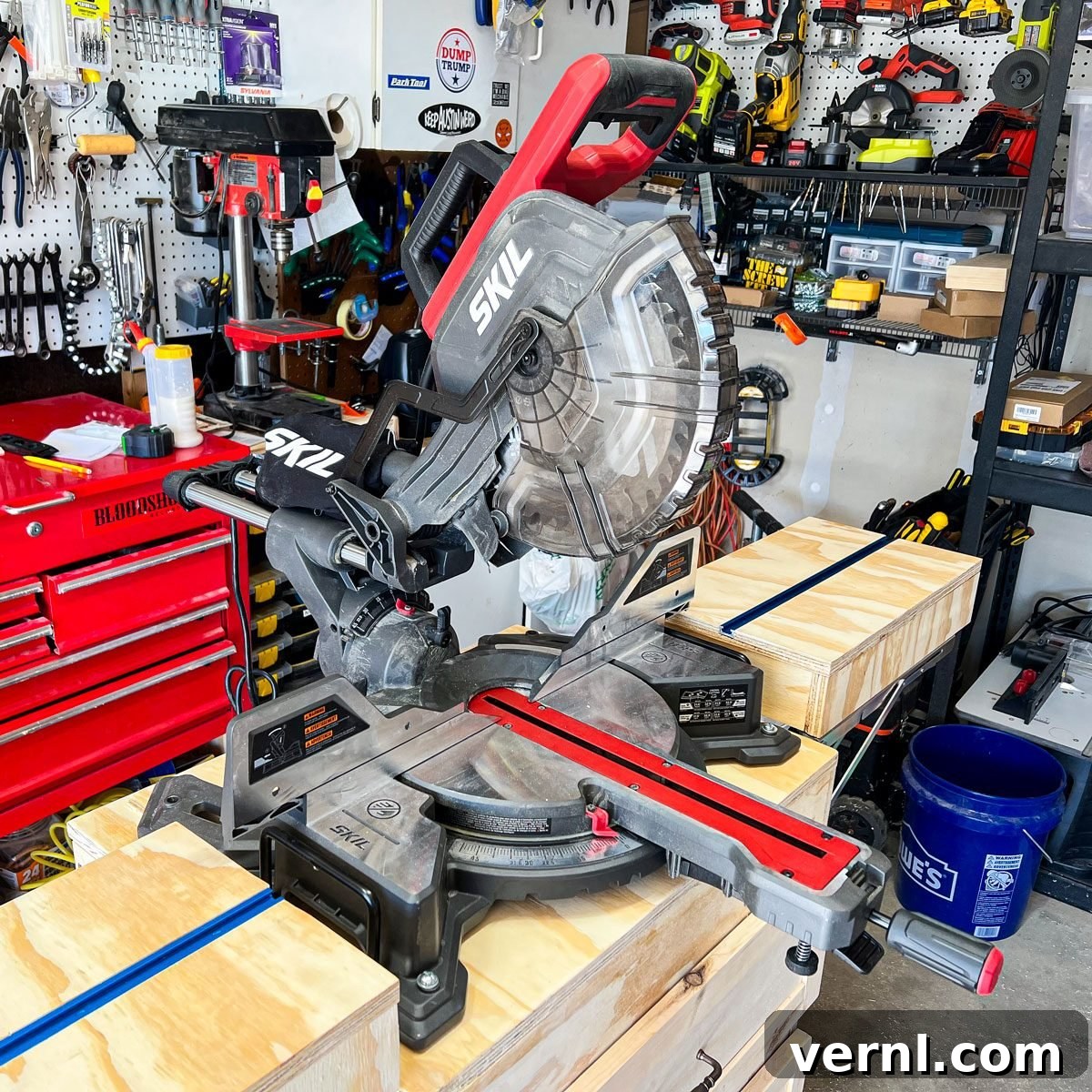
When the time came to upgrade my woodworking arsenal, my search for a reliable miter saw invariably led me back to the Skil 10-inch Dual-Bevel Sliding Compound Miter Saw. Having outgrown my old, inherited 7 1/2-inch miter saw, I needed a tool that offered greater versatility and robust power for more ambitious projects. The Skil model, notably, presented an exceptionally compelling proposition: all the advanced features I sought, yet at roughly half the cost of comparable miter saws from renowned competitors like DeWalt or Ridgid. This review delves into whether this affordable powerhouse lives up to its promise, making it an ideal choice for DIY enthusiasts and aspiring fine woodworkers.
My journey through DIY has evolved significantly over the past few years. What began as simple household repairs transformed into a passion for fine woodworking, requiring tools that delivered precision and consistent quality. A critical component for any aspiring woodworker is a miter saw that is not only powerful and versatile but also clean-cutting and highly accurate. The Skil miter saw, with its impressive specifications and value-oriented pricing, seemed like an ideal candidate to support my growing ambitions. Was it the perfect partner for achieving flawless cuts and intricate designs? I was eager to put it to the test, and its performance soon revealed why it’s a top contender in its class.
Skil Miter Saw: A Quick Overview
The Skil 10-inch Dual-Bevel Sliding Compound Miter Saw is a powerful, user-friendly tool engineered for precision and versatility. It stands out as a welcomed addition to any home workshop or garage, offering an excellent balance of advanced features and affordability. Designed to tackle a wide range of cutting tasks, from basic crosscuts to complex compound angles, it empowers DIYers and hobbyist woodworkers to achieve professional-quality results without a professional-grade price tag.
Shop Now:
- Shop on Walmart
- Shop on Amazon
- Shop on Lowe’s
- Shop on Ace Hardware
Understanding the Skil Miter Saw: Features and Functionality Explained
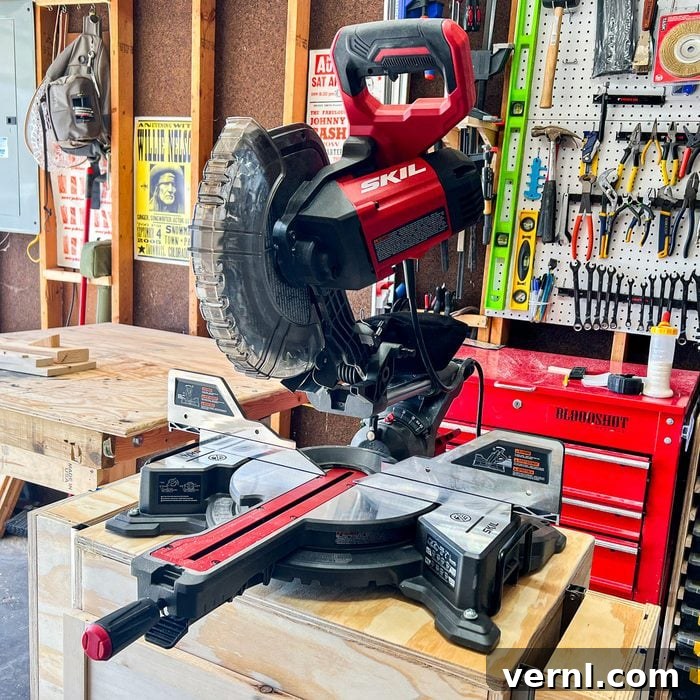
At its core, a miter saw is an indispensable tool for DIYers and professional carpenters, designed to make precise crosscuts and angled cuts through various materials, primarily wood and sometimes metal. The fundamental ability to adjust cutting angles is what truly differentiates a miter saw from a basic chop saw, offering unparalleled versatility for framing, trim work, and intricate joinery. The Skil MS6305-00 takes this versatility a step further by being a dual-bevel sliding compound miter saw. This means it can perform not only left and right mitered cuts but also bevel cuts from both the left and right sides, allowing for complex compound angles required in crown molding or picture frames. Additionally, its sliding mechanism allows for cutting much wider stock than a standard miter saw, significantly enhancing its utility for larger projects.
Upon unboxing the Skil MS6305-00, its surprisingly manageable weight, around 40 pounds, was immediately apparent. This makes it an excellent candidate for a portable jobsite saw, easy to transport and set up wherever your project takes you. While it incorporates a fair number of plastic components—a common characteristic at this accessible price point to keep costs down—the saw still felt remarkably sturdy and well-constructed. The strategic use of durable plastics ensures the saw remains lightweight without compromising its integrity. From the very first cut, it exuded a sense of power and reliability, tearing through material with confidence. Initial setup was incredibly straightforward, with minimal assembly required, allowing me to get started on projects almost instantly, a significant advantage for any eager woodworker looking to minimize downtime.
In-Depth Look at Skil Miter Saw Performance and Features
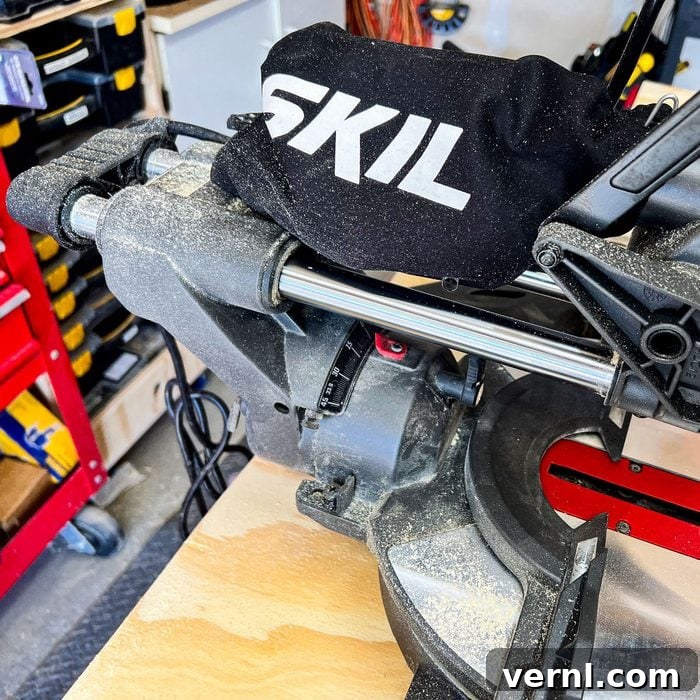
The Skil MS6305-00 is engineered for impressive cutting capabilities, driven by a robust 15-amp motor that propels its 40-tooth miter saw blade to a rapid 4,800 RPM. This powerful combination allowed the saw to effortlessly slice through every type of wood I tested, from soft pines and fir to dense hardwoods like oak and maple, without any noticeable strain or bogging down. The motor’s quick spin-up ensures immediate cutting power, and equally important for user safety, the blade came to a near-immediate stop once the safety lever was released. Out of the box, straight cuts were remarkably accurate and clean, demonstrating excellent factory calibration, which saves users time on initial adjustments and ensures project quality from the outset. The sliding function itself operated with exceptional smoothness, gliding effortlessly to accommodate wider materials.
Precision Cutting: Miters and Bevels with Ease
The saw’s miter capacity extends impressively up to 51 degrees in both left and right directions, providing ample range for various angled cuts, from simple 45-degree frames to more acute angles. A standout feature for enhancing workflow is the intuitive detent system, where the saw effortlessly slips and locks into common preset angle slots, making setup quick and exceptionally precise. There are 11 such detents in total: 0, 15, 22.5, 31.6, and 45 degrees on both the left and right, along with the central 0-degree position. This precise indexing simplifies repetitive cuts, ensures consistent angles across multiple pieces, and reduces the chance of errors.
Bevel cuts, while offering immense flexibility for creating compound angles vital for crown molding and intricate joinery, required a slightly more manual adjustment. Users need to loosen a knob located at the rear of the saw, carefully set the desired angle by referencing the clear scale, and then securely tighten the knob before making the cut. Unlike the miter detents, only the 90-degree/center position features a positive stop for bevel adjustments. This iterative process, though straightforward, means a bit more effort for frequent bevel changes compared to the quick miter adjustments. However, the dual-bevel capability means you can tilt the blade in both directions without having to flip your workpiece, saving time and improving safety, particularly with long boards.
Enhanced Capacity and Quality with Sliding Functionality
The sliding feature of the Skil MS6305-00 is a true game-changer, significantly expanding the saw’s cutting capacity and overall versatility. While it took a short period to familiarize myself with its operation, the smooth-gliding rails allowed for precise, full-depth cuts on much wider lumber—up to a true 10-inch crosscut capacity—than a fixed miter saw could ever handle. This functionality proved invaluable for cutting hardwood boards in multiple, shallower passes, a technique that prevents the blade from getting bogged down, minimizes tear-out, and results in exceptionally cleaner edges. This extended reach meant I could confidently tackle wider boards and cuts that previously would have necessitated moving to a larger, less portable table saw, streamlining my workflow considerably and making the Skil saw an even more central tool in my workshop.
Dust Collection and Other Practical Considerations
One area where the Skil miter saw, like many of its counterparts across different price points, falls short is dust collection. The integrated dust port, unfortunately, did not seamlessly connect with my existing shop vacuum attachment, requiring the purchase of an adapter to integrate with my Harbor Freight dust cyclone system. Even with a vacuum connected, during testing, it became evident just how much sawdust still escapes and becomes airborne, highlighting the need for a robust external dust extraction system and proper respiratory protection. While not a critical flaw that impairs performance, this is a common nuisance that users should be prepared to address, as effective dust management is crucial for a clean and safe working environment.
As an added layer of confidence and a testament to Skil’s commitment to product quality, the miter saw comes with a generous three-year limited warranty, provided the product is registered within 30 days of purchase. This extended warranty period offers significant peace of mind, assuring new owners of the tool’s durability and the company’s support.
Another minor point to note is the shadow line feature. While intended to assist with aligning cuts accurately, its visibility can be significantly reduced in bright, sunny outdoor conditions or very brightly lit workshops, making it less effective when precision cutting in such environments. Users may need to rely on alternative methods, such as marking the cut line with a pencil, for optimal accuracy in challenging lighting.
Putting the Skil Miter Saw to the Test: Real-World Applications
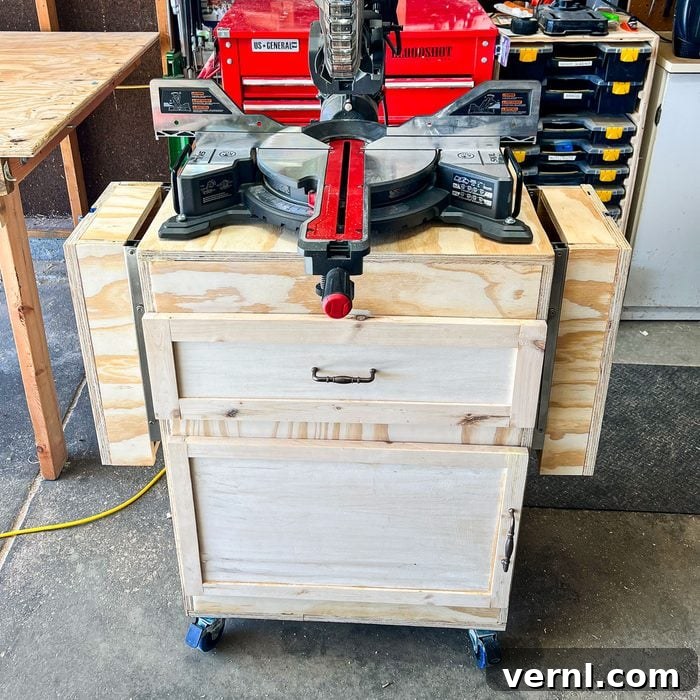
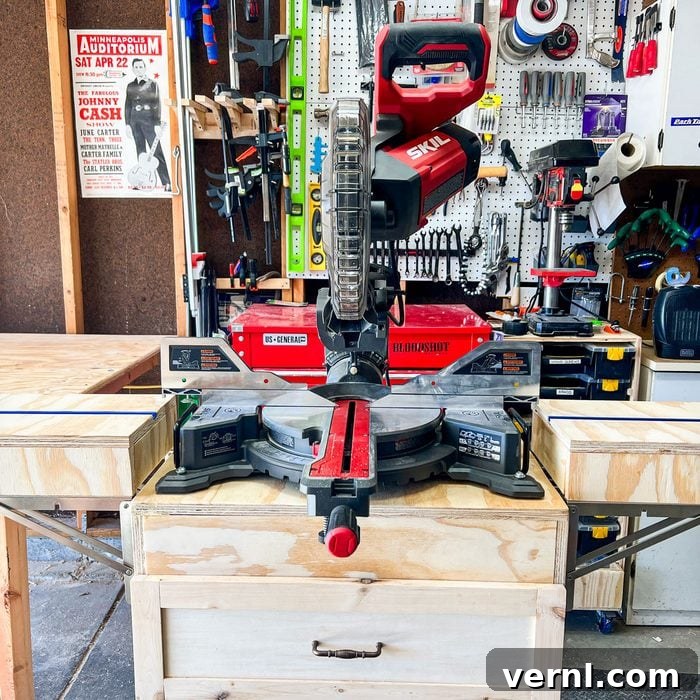
My inaugural project with the Skil miter saw was a practical and fitting one: constructing a custom mobile cart to house the saw itself. This immediate immersion allowed me to thoroughly assess its capabilities in a dynamic, working environment, evaluating its performance under various conditions encountered in a typical woodworking project. For those interested in building their own, highly functional workshop additions, similar convertible miter saw station plans are readily available and highly recommended for optimizing workshop space.
After efficiently breaking down the larger plywood sheets into manageable pieces using my trusted SawStop table saw, I transitioned to the Skil miter saw for the precise crosscuts and angled cuts required for the drawer components and expanding wings of the mobile station. This particular project demanded a variety of intricate cuts, including numerous mitered pieces for the cart’s framework and supports. I also took the opportunity to cut a series of pine strips, which I plan to assemble into picture frames – a task demanding absolute precision and flawlessly tight joints to achieve a professional finish.
The results were consistently impressive across all cuts. The mitered joints were perfectly flush, showing no discernible gaps, which is crucial for achieving professional-looking joinery and structural integrity. By utilizing a stop block, every cut maintained the exact same size, ensuring uniformity across all pieces, which is vital for assembly accuracy. Crucially, there was no evidence of burning on the edges of the wood or unwanted tear-out, even on delicate or softer pieces, underscoring the saw’s clean and accurate performance. This real-world application solidified my initial positive impressions of the Skil miter saw’s reliability, precision, and ease of use, confirming its capability to handle diverse woodworking challenges with confidence.
Advantages and Disadvantages of the Skil Miter Saw
To provide a balanced perspective and assist prospective buyers, here’s a comprehensive look at the notable pros and cons of the Skil 10-inch Dual-Bevel Sliding Compound Miter Saw (MS6305-00):
Pros
- Surprisingly Lightweight and Portable: Weighing approximately 40 pounds, this saw is exceptionally easy to move around and transport, making it an ideal choice for both dedicated workshop use and as a portable jobsite saw for contractors or DIYers working on multiple locations.
- Incredibly Easy to Use: From initial setup that requires minimal assembly to making complex cuts, the saw’s intuitive design, clearly marked scales, and simple controls ensure a user-friendly experience, even for those relatively new to miter saws.
- Clean and Accurate Cuts Right from the Box: The saw arrives with excellent factory calibration, consistently delivering precise, smooth, and clean cuts immediately, which saves time on initial adjustments and ensures high-quality project outcomes.
- Easy Miter and Bevel Setup: The positive detents for common miter angles allow for quick, repeatable, and highly accurate adjustments. While bevels require a manual knob, the process remains straightforward for achieving desired angles with confidence.
- Outstanding Value for its Feature Set: Offering robust dual-bevel and sliding capabilities—features typically found in much more expensive professional-grade models—the Skil miter saw delivers exceptional performance at a highly competitive and accessible price point.
- Three-Year Limited Warranty: Skil provides added peace of mind with a generous three-year limited warranty upon product registration within 30 days of purchase, indicating strong confidence in the tool’s durability and reliability.
- Powerful 15-Amp Motor: The high-performance 15-amp motor ensures ample power to handle a wide variety of wood types and thicknesses, from softwoods to hardwoods, without bogging down, ensuring efficient and effective cutting performance.
Cons
- Subpar Dust Collection: The integrated dust port’s efficiency is limited, and it may require an adapter to connect effectively with standard shop vacuums, leading to a noticeable amount of airborne sawdust in the workshop that necessitates additional cleanup and respiratory protection.
- Protruding Slider Bars: The sliding mechanism’s rails extend approximately 10 inches from the rear of the saw, which can be a significant spatial issue for placement against a wall or within pre-built, compact miter saw stations where space is at a premium.
- Weak Shadow Line Feature: The effectiveness of the shadow line for precise cut alignment is unfortunately diminished in bright lighting conditions, particularly outdoors in direct sunlight, making precision cuts more challenging without alternative visual guides.
- Predominantly Plastic Construction: While sturdy for its price point and contributing to its light weight, the prevalence of plastic components may raise long-term durability concerns for some users, especially when compared to heavier, all-metal saws built for continuous professional use.
- Bevel Adjustments are Manual: Unlike the quick detents for miter angles, bevel adjustments require manually loosening a knob, setting the angle, and then securely retightening, which can be slightly less convenient and slower for frequent bevel changes compared to more advanced systems.
What Other Woodworkers and DIYers Are Saying About the Skil Miter Saw
Beyond my personal experience, it’s always valuable to gauge the broader sentiment regarding a tool. The consensus among other users largely mirrors my findings, particularly highlighting the Skil miter saw’s exceptional value for money and common frustrations with its dust collection system.
On Amazon, reviewer Richard Albanese praised the saw, stating, “compared to my 20-year-old Delta miter saw, this saw is a dream. Compared to other saws with the same features, you can’t beat the price, especially with a respected brand such as Skil.” His primary critique, echoing my own observations, was about the dust collection, saying despite using a shop vac, the dust collection is “not that great. This guy can throw a lot of dust around,” indicating a common area for improvement.
Kristi Parella, another Amazon reviewer, lauded the Skil as “powerful enough for framing lumber, but also precise enough for trim work. Very accurate, smooth on the rails and bevel adjustments. If you are a homeowner/DIYer, this saw is an incredible value. It has all the features of products that are more expensive.” This reinforces the notion that the saw strikes an excellent balance between raw power for construction and fine precision for finishing work, making it suitable for a wide range of tasks encountered by homeowners and hobbyists.
Over at Lowe’s, recent verified purchaser Lazlo shared similar sentiments, noting, “Setup was straightforward and the blade came square out of the box,” which is a significant advantage as it eliminates the need for immediate calibration and allows users to start cutting right away. Lazlo also commended Skil’s “commitment to quality while remaining competitive with their pricing,” underscoring the brand’s reputation for delivering both performance and value.
Exploring online forums, such as Reddit, further confirmed these prevailing opinions, providing a broad user perspective. The discussions frequently highlighted the saw’s reasonably solid build and effective cutting capabilities, often with the caveat regarding dust extraction and the shadow line’s intensity. As one Reddit user concisely put it: “Dust extraction is very poor and the laser is a bit weak, but otherwise it’s reasonably solidly built and saws well.” These collective insights confirm that my observations are widely shared among the user community, solidifying the Skil MS6305-00’s reputation as a high-value tool with specific, manageable drawbacks.
Skil Miter Saw vs. Competitors: A Comparative Look
When considering alternatives to the Skil MS6305-00, two prominent models often come to mind from the higher end of the market: the DeWalt DWS779 12-inch Sliding Miter Saw and the Bosch GCM12SD 12-inch Dual-Bevel Axial-Glide Miter Saw. While both are excellent, top-tier tools, they cater to a slightly different market segment, primarily due to their significantly higher price points and specialized features.
The DeWalt DWS779, a popular choice among professionals and serious DIYers, shares many core features and the basic sliding design with the Skil. However, it typically offers a larger 12-inch blade, which translates to an increased cutting capacity for deeper and wider materials, and is generally known for more efficient dust collection—a common area of complaint with the Skil. For users prioritizing maximum dust control and a slightly larger cutting capacity for very heavy-duty, repetitive work, the DeWalt might justify its higher cost through improved efficiency and cleaner operation.
The Bosch GCM12SD stands out with its innovative Axial-Glide system. This unique design replaces the traditional sliding rails with articulated arms, drastically reducing the saw’s footprint and allowing it to be placed flush against a wall in a compact workshop. This space-saving feature is invaluable for those with limited shop real estate. However, this premium, cutting-edge design comes at a significant premium price, often more than double that of the Skil, making it an investment primarily for those who critically need its unique space-saving advantage.
Ultimately, while the DeWalt and Bosch models offer specific, compelling advantages—such as superior dust collection, larger cutting capacity, or an ingenious space-saving design—they do so at a considerable financial premium. For the vast majority of enthusiasts, dedicated DIYers, and weekend woodworkers, the Skil MS6305-00 provides an exceptional balance of power, precision, and versatility that can handle nearly any common task thrown at it, without breaking the bank. It represents remarkable value, making advanced miter saw capabilities accessible to a broader audience who might not require the absolute top-tier features or cannot justify the higher investment.
Final Verdict: A Cut Above for Value and Performance
After extensive testing and daily use across various woodworking projects, my overall impression of the Skil 10-inch Dual-Bevel Sliding Compound Miter Saw (MS6305-00) is overwhelmingly positive. While I noted a few minor criticisms, primarily concerning the dust collection’s efficiency and the limited visibility of the shadow line in bright conditions, these are easily overshadowed by its impressive power, practical utility, and consistent accuracy. The saw not only met but significantly exceeded my expectations for what an affordable miter saw could offer, proving that high performance doesn’t always come with a steep price tag.
The Skil MS6305-00 consistently delivers clean, precise cuts with remarkable ease, making it a reliable workhorse for a wide array of woodworking projects, from robust framing tasks to intricate trim work and detailed joinery. Its dual-bevel and sliding capabilities, combined with a robust 15-amp motor, provide a level of versatility and cutting capacity typically found only in much higher-priced, professional-grade models. For anyone looking to upgrade their workshop with a capable, accurate, and incredibly affordable miter saw, the Skil 10-inch Dual-Bevel Sliding Compound Miter Saw is an outstanding investment. It has certainly become an invaluable addition to my workshop, enabling me to tackle more ambitious projects, and I eagerly anticipate the many creations I’ll be bringing to life with it in the years to come.
Where to Buy the Skil Miter Saw
The Skil 10-inch Dual-Bevel Sliding Compound Miter Saw (Model MS6305-00) is widely available at major retailers, offering excellent accessibility for every DIYer and woodworker. While the retail price typically hovers around $280, it is often possible to find it on sale for $200 or even less during promotional periods, making it an even more attractive and budget-friendly purchase.
You can purchase the Skil Miter Saw from the following trusted retailers:
- Walmart
- Lowe’s
- Ace Hardware
- Amazon
Frequently Asked Questions (FAQ) About Skil Tools
What company owns Skil tools?
Skil tools are currently owned by Chervon, a major global power tool manufacturer with a strong presence in both professional and DIY markets. Chervon’s diverse portfolio also includes other well-known and respected brands such as Ego and Flex power tools, as well as the Devon and X-Tron brands, which have a significant footprint in the Chinese market and are gaining recognition internationally. This ownership places Skil within a larger ecosystem of quality tool development and innovation.
Did Skil invent the circular saw?
Skil holds a significant and pioneering place in the history of power tools. The company’s founders, Edmund Michel and Joseph Sullivan, were indeed instrumental in the development of the first electric circular saw, patenting their groundbreaking invention in 1921. They extensively tested their early prototypes with West Coast construction workers during a period of rapid building expansion, refining the design based on real-world feedback. Building upon this foundational design, Skil employee Art Emmons later developed the more robust and enduring Model E several years later, which became a commercial success. For many decades, Skil was a dominant force in the circular saw market, a legacy that contributes to why the company name remains widely associated with the product even today, often synonymously with “Skilsaw.”
How do I change the blade on a Skil miter saw?
Changing the blade on a Skil miter saw is a straightforward process, but safety is absolutely paramount. First, always ensure the saw is unplugged from its power source to prevent any accidental startup during the blade change. Next, carefully raise the blade guard to expose the blade fully. Locate and engage the spindle lock button, which will prevent the blade from spinning while you work. Using the provided or an appropriate wrench (typically a hex wrench), loosen and then completely remove the arbor bolt that secures the blade. Once the bolt is off, you can carefully remove the old blade, replace it with the new one (ensuring it’s oriented correctly, usually with the teeth pointing down towards the fence for cutting), and then tighten everything back up securely. Always double-check that the blade is properly seated against the flanges and the arbor bolt is tightened firmly before resuming operation. For specific model variations or additional safety tips unique to your saw, it’s always highly recommended to consult your saw’s user manual.
Why You Can Trust Our Expert Reviews
At The Family Handyman, our unwavering commitment is to provide readers with thoroughly tested, unbiased, and practical reviews of tools and products designed for home improvement, DIY projects, and woodworking. Our dedicated team of product experts possesses extensive hands-on experience across a wide range of worksite scenarios, rigorously evaluating each item to ensure it meets the real-world practical demands of DIY enthusiasts and professionals alike. To date, we have meticulously tested a diverse array of power tools, including various benchtop planers, powerful welders, advanced laser tape measures, precise brad nailers, and many other essential workshop tools. Our overarching goal is to equip you with the accurate and reliable information needed to make informed purchasing decisions, helping you select the right tools that empower you to complete your projects safely, efficiently, and with unwavering confidence.
This particular review of the Skil 10-inch Dual-Bevel Sliding Compound Miter Saw was expertly conducted by Robert Annis, a seasoned DIY enthusiast and prolific writer whose insightful work has been featured in reputable publications such as National Geographic, Outside, RV Magazine, and Popular Mechanics. Robert brings a wealth of practical experience, a deep understanding of tool functionality, and a keen eye for detail to his evaluations, ensuring that our reviews are not just technical assessments but also reflect real-world user experience and practical utility, offering guidance you can truly trust.