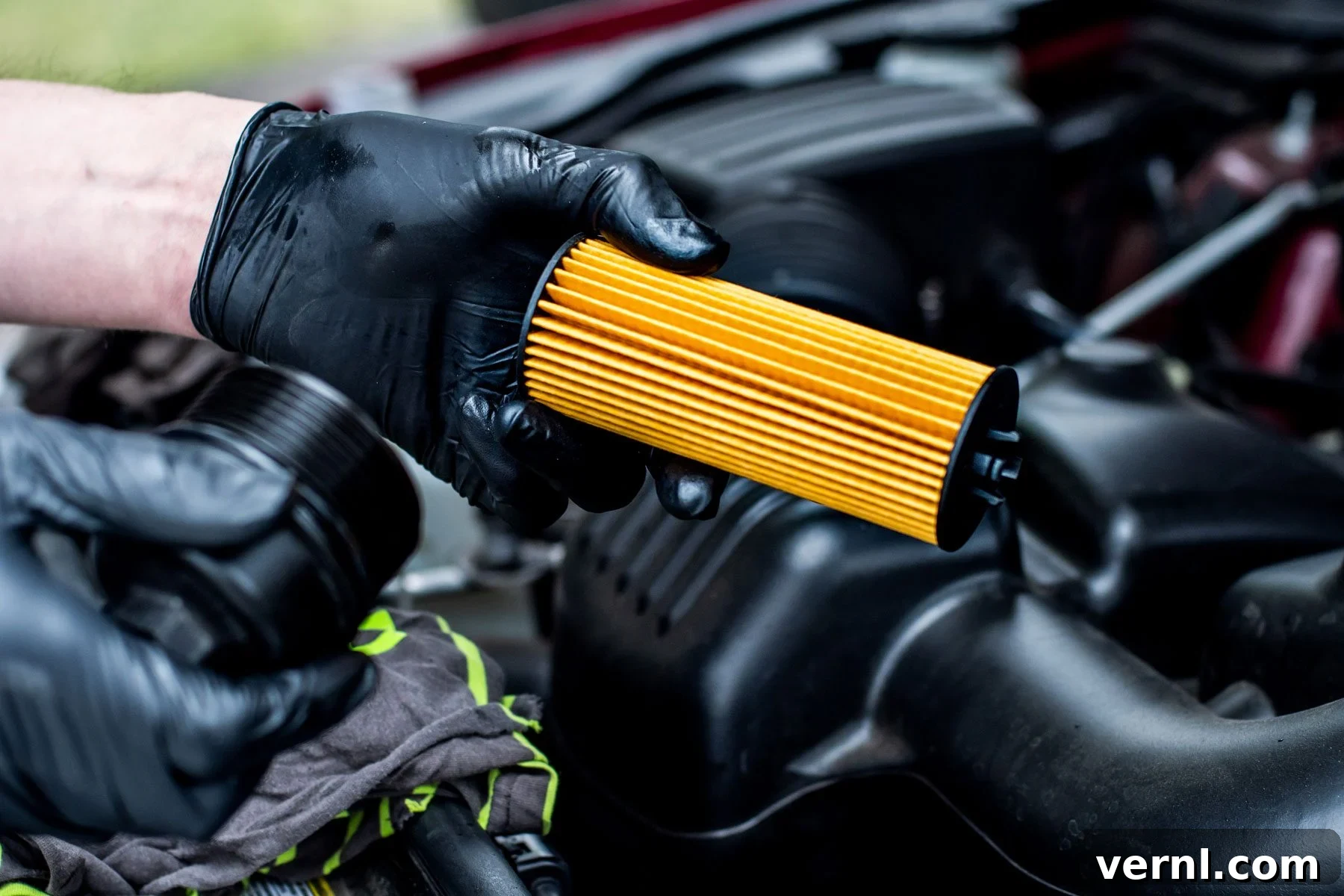
Navigating the vast array of oil filters at your local auto parts store can feel overwhelming. With countless options staring back at you, it’s natural to wonder, “What oil filter do I need?” The good news is that your vehicle typically accepts only one specific type and often just one size of filter. This narrows your choice down to selecting the optimal performance quality for your needs. Yet, this decision remains critically important for the health and longevity of your engine.
As automotive filtration expert Jeff Wang, Global Sales Director at VSARS Filters, emphasizes, the quality of the oil filter you select should not only align with the type of vehicle you drive but, more crucially, with your individual driving habits and conditions. A well-chosen oil filter is a cornerstone of effective engine protection, safeguarding against wear and ensuring smooth operation for thousands of miles.
For instance, a heavy-duty truck, constantly subjected to high temperatures, heavy loads, and the demanding rigors of a work vehicle, requires an oil filter engineered for extreme durability and exceptional filtration capacity. Such a filter must withstand intense pressure and heat while efficiently capturing a high volume of contaminants. Conversely, a modern compact car primarily used for light commuting or occasional trips to the grocery store typically doesn’t demand such a robust and expensive solution. For these less strenuous applications, a more affordable filter with a good flow rate will suffice, especially if oil changes are performed diligently at the manufacturer’s recommended intervals.
Beyond driving style, it’s also vital to confirm the specific type of engine oil your car requires, as this often dictates the overall maintenance schedule. While oil filters themselves are broadly compatible with different oil types, understanding your engine’s oil needs is a foundational step in comprehensive vehicle care.
What Oil Filter Do I Need for Optimal Engine Protection?
Determining the right oil filter for your vehicle hinges significantly on your driving profile. If you’re a casual driver, primarily engaging in short commutes or light highway driving, a standard or basic-quality oil filter will generally provide adequate protection for your engine. These filters are designed to meet the everyday demands of typical driving conditions.
However, if your driving habits fall into the category of “extreme,” such as frequent heavy towing, off-road adventures, consistent stop-and-go city traffic, or performance driving, then investing in a heavy-duty or premium oil filter is highly recommended. These filters are constructed with advanced media and components to withstand higher operating temperatures, greater pressure, and to filter a larger volume of contaminants, thereby offering superior engine protection under stress.
To pinpoint the exact oil filter your vehicle requires, your owner’s manual is the definitive source. It will provide the specific part number and specifications recommended by the original equipment manufacturer (OEM). If your manual isn’t readily available, a quick online search using your vehicle’s make, model, and year (or even its VIN) can yield the correct filter part number. Once you have this number, it can be easily cross-referenced across various filter brands, allowing you to compare options and find the appropriate filter with correct fitment and desired quality level from reputable manufacturers.
The Critical Role: What Does an Oil Filter Do?
At its core, an oil filter serves as the unsung hero of your engine, tirelessly protecting it from harmful particles that are an inevitable byproduct of normal engine wear and tear. These microscopic contaminants, often invisible to the naked eye, include minuscule metal shavings from moving engine parts, dirt and dust ingested through the air intake, carbon deposits from combustion, and sludge that can form as oil breaks down. While individually small, if these particles were allowed to accumulate and circulate freely through the engine’s intricate network of passages, they would act as abrasives. This abrasion would progressively wear down critical internal components like bearings, camshafts, piston rings, and cylinder walls, leading to increased friction, clogged oil passages, reduced lubrication efficiency, and ultimately, premature engine failure.
The oil filter acts as a barrier, trapping these contaminants before they can inflict damage. It ensures that clean, properly lubricated oil continuously circulates throughout the engine, minimizing friction and maximizing the lifespan of vital components. Without an effective oil filter, even the highest quality engine oil would quickly become contaminated, rendering its protective properties useless. Thus, the oil filter is not merely an accessory but a critical component for maintaining engine health and performance.
Understanding the Different Types of Oil Filters
Oil filters are primarily categorized by their operational design, with the two main types being primary (full-flow) and secondary (bypass) filters. However, within these categories, the physical construction and media also differ significantly.
Primary (Full-Flow) vs. Secondary (Bypass) Filters
- Primary Oil Filters (Full-Flow): These are the standard filters found on virtually all internal combustion engines. They are termed “full-flow” because all the engine oil is routed through this filter media before it circulates back to lubricate the engine’s components. Their main function is to capture larger contaminants efficiently, ensuring a constant supply of relatively clean oil. Most modern passenger vehicles rely solely on a full-flow filter.
- Secondary Oil Filters (Bypass/Partial Flow): While not standard on most passenger cars, a secondary oil filter can be added for extreme conditions or in heavy-duty and performance vehicles. Unlike full-flow filters, a bypass filter only filters a small percentage of the engine oil at any given time, typically about 5-10%. However, it does so to a much finer degree, often capturing particles down to micron sizes that full-flow filters miss. This provides an extra layer of filtration, helping to keep the oil exceptionally clean over longer periods and in demanding applications, though it doesn’t replace the full-flow filter.
Common Physical Designs: Spin-on and Cartridge Filters
Spin-on Filter
The spin-on filter is arguably the most common and recognizable primary oil filter type across a vast range of vehicles. Characterized by its enclosed metal canister design, spin-on filters come in various sizes but share fundamental features. They have internal threads that mate securely to a corresponding port on the engine block, facilitating a leak-proof connection. A built-in rubber gasket ensures a tight seal against the engine’s mounting surface. Inside the canister, a pleated filter media (often cellulose, synthetic, or a blend) captures contaminants. Spin-on filters also incorporate an anti-drain-back valve, which prevents oil from draining out of the filter when the engine is off, ensuring immediate lubrication upon startup. A bypass valve is also present, designed to open and allow unfiltered oil to circulate if the filter media becomes clogged or oil pressure is too high, preventing oil starvation. Spin-on filters are generally easy to change, typically requiring nothing more than a correctly sized oil filter wrench for removal and hand-tightening for installation.
Cartridge Filter
Many newer engine designs, particularly those focused on environmental considerations and packaging efficiency, have transitioned to cartridge filters. Unlike spin-on filters, cartridge filters consist solely of the filter media element, which is housed within a permanent, reusable housing directly on the engine. This design reduces waste as only the filter element needs to be replaced during an oil change. Cartridge filters often come with additional service parts, such as new O-rings for the housing and sometimes an anti-drain-back valve, all of which must be meticulously replaced during the oil change process. Their installation often requires specific tools and torque specifications for the housing cap to ensure a proper seal and prevent leaks, making them slightly more involved to service than traditional spin-on filters.
Do Different Types of Oil Require Different Types of Oil Filters?
In short, no. This is a common misconception, but the good news for vehicle owners is that all commercially available oil filters are designed to be universally compatible with any type of engine oil. Whether your vehicle uses conventional mineral oil, a synthetic blend, or a full synthetic oil, the standard oil filter will perform its function effectively.
The core difference between these oil types lies in their chemical composition and stability, which affects properties like viscosity, resistance to thermal breakdown, and longevity. However, these differences do not dictate a need for a specific filter media or design. Modern oil filters are engineered to effectively capture contaminants present in all oil formulations, maintaining optimal filtration efficiency regardless of the oil’s base stock. While synthetic oils typically allow for extended oil change intervals due to their superior durability, it’s the filter’s capacity and media quality that must match the extended interval, not the oil type itself.
How Often Should You Change Your Oil Filter?
A fundamental rule of vehicle maintenance is to change your oil filter every time you perform an oil change. For most conventional oils and many vehicles, this typically falls within the range of every 3,000 to 5,000 miles, or every 3 to 6 months, whichever comes first. This ensures that a fresh filter is always in place to protect your engine from accumulating contaminants, which are highest during the latter half of the oil’s service life.
However, the landscape of engine oils has evolved significantly. Many modern synthetic oils claim to offer extended mileage intervals, sometimes stretching to 7,500, 10,000, or even 15,000 miles between changes. While these claims can be true, especially for vehicles with advanced engine designs and specific driving habits, it’s crucial to understand the implications for your oil filter. As Jeff Wang wisely cautions, if you opt for extended drain intervals with synthetic oil, you must ensure that your chosen oil filter is explicitly designed and rated to handle such longer durations. A standard filter might become saturated and inefficient long before a high-quality synthetic oil reaches its degradation point, leading to unfiltered oil circulating and potentially damaging your engine. Look for premium, long-life, or extended-performance oil filters that feature more durable, higher-capacity filter media to match the longevity of synthetic oils.
How to Install an Oil Filter: Step-by-Step Guide
Changing your oil filter is a routine maintenance task that most DIY enthusiasts can accomplish with the right tools and knowledge. Always prioritize safety: ensure the engine is cool enough to handle, have appropriate oil drainage and disposal containers ready, and wear gloves to protect your hands.
Installing a Spin-on Filter
- Prepare the Area: After draining the old oil, carefully remove the old spin-on filter (usually with an oil filter wrench). Critically, clean the mating surface on the engine block thoroughly with some brake cleaner or a shop cloth. Ensure there is absolutely no residue from the old gasket remaining, as this can cause leaks with the new filter.
- Lubricate the Gasket: Dip your clean finger into a small amount of fresh, clean engine oil and apply a thin, even coat to the rubber gasket of the new oil filter. This lubrication is vital as it helps create a proper seal, prevents the gasket from tearing during installation, and makes future removal easier.
- Hand-Tighten the Filter: Carefully spin the new filter onto the engine’s mounting stud. Once the gasket makes initial contact with the engine’s mating surface, hand-tighten the filter firmly until you can no longer rotate it by hand.
- Final Tightening (Optional, but Recommended): For an extra measure of security and to ensure proper compression of the gasket, use a strap-style or cap-style oil filter wrench to give the filter an additional quarter to half a turn beyond hand-tight. Be extremely careful not to over-tighten, as this can damage the filter, the engine threads, or make future removal exceedingly difficult.
- Check for Leaks: After refilling the engine with fresh oil, start the car and let it run for a few minutes. Visually inspect around the new oil filter for any signs of leaks.
Installing a Cartridge Filter
- Access and Remove Old Filter: Locate the cartridge filter housing, typically a plastic or metal cap that holds the filter element. Use the appropriate wrench or socket to loosen and carefully remove the retaining nut or cap. As you remove it, note the exact location and orientation of any existing O-rings.
- Replace O-rings: Most new cartridge filters come with replacement O-rings. It is absolutely critical to replace all of these. Remove the old O-rings from the cap and housing (if present) and install the new ones in their identical positions. Some O-rings may have specific notches or grooves for alignment; ensure these are correctly seated. Failing to replace or incorrectly seating O-rings is a common cause of leaks.
- Install New Filter Element: Remove the old filter element from the housing. Clean the inside of the housing if necessary. Insert the new cartridge filter element into the housing, ensuring it seats properly.
- Lubricate O-rings: Lightly lubricate all new O-rings with a thin film of clean engine oil. This helps them seat correctly and prevents pinching or damage during tightening.
- Reinstall Cap with Torque Wrench: Carefully thread the cap back onto the housing. Crucially, use a torque wrench set to the manufacturer’s specified torque setting (usually found in your owner’s manual or on the filter packaging) to tighten the cap. Unlike spin-on filters, cartridge filter housings are very sensitive to correct torque; under-tightening can cause leaks, while over-tightening can crack the housing or strip threads.
- Check for Leaks: After refilling the engine with fresh oil, start the car and observe the filter housing for any oil leaks.
Follow Manufacturer’s Recommendations When Choosing an Oil Filter
When it comes to selecting an oil filter, resisting the urge to second-guess the original equipment manufacturer (OEM) is paramount. Oil filters are not generic, one-size-fits-all components; they are highly application-specific, designed and engineered to perfectly integrate with your vehicle’s unique engine characteristics and lubrication system. Choosing the correct filter is not just about fitment, but about ensuring the entire filtration system operates as intended by the vehicle’s engineers.
Do not be tempted to substitute a larger filter simply because it appears to fit the threads on your engine. The potential risks of using an incorrect oil filter far outweigh any perceived benefit. Here’s why adherence to OEM specifications (or high-quality aftermarket equivalents that explicitly state OEM compatibility) is crucial:
- Gasket Size and Material: An incorrect gasket size or material will lead to an improper seal, resulting in oil leaks and potentially significant oil loss, which can starve the engine.
- Filter Media and Efficiency: Different engines require specific filtration levels and flow rates. A filter with media that is too dense can restrict oil flow, leading to oil starvation, especially during cold starts or high RPMs. Conversely, a filter with media that is too porous will allow harmful particles to circulate through the engine, accelerating wear. The OEM filter is designed for the optimal balance of filtration efficiency and flow for your engine.
- Bypass Valve Calibration: Every oil filter incorporates a bypass valve designed to open and allow unfiltered oil to flow through if the filter media becomes clogged or if oil viscosity is too high (e.g., during cold starts). If this valve is calibrated incorrectly—opening too early, it allows dirty oil to bypass filtration; opening too late, it can lead to oil starvation. The OEM filter’s bypass valve is precisely calibrated for your engine’s oil pressure and flow dynamics.
- Anti-Drain-Back Valve: This valve prevents oil from draining out of the filter when the engine is shut off, ensuring that oil is immediately available to critical engine components upon startup. A faulty or poorly designed anti-drain-back valve can cause “dry starts,” significantly increasing engine wear over time.
- Impact on Oil Pressure: An improperly designed or fitted filter can directly affect the engine’s oil pressure, which is vital for proper lubrication. Incorrect pressure can lead to excessive wear or, in severe cases, engine damage.
Using the wrong oil filter can compromise oil pressure, allow sludge and contaminants to circulate freely, and ultimately lead to premature engine wear or even catastrophic engine failure. Always prioritize the manufacturer’s recommendations to ensure optimal engine performance, longevity, and to safeguard against costly repairs.
About the Experts
- Jeff Wang is a distinguished expert in automotive filtration technology, with a specialized focus on oil filters and fuel filters. As the Global Sales Director at VSARS Filter, he brings extensive knowledge and insights into developing and applying advanced filtration solutions for various vehicle types.
- Jay Cork boasts a lifelong passion for automotive mechanics, having honed his wrenching skills on cars for far longer than he has legally been able to drive them. His practical, hands-on experience provides invaluable real-world perspective on vehicle maintenance and component performance.