Fall brings a spectacular display of colors, but with those beautiful leaves comes the inevitable task of yard clean-up. While a traditional leaf rake has its place, it can often feel like an endless battle against nature. For homeowners seeking a more efficient, less strenuous way to manage their yard, investing in a high-quality leaf blower is a game-changer. These versatile outdoor power tools don’t just clear leaves; they can effectively tackle small sticks, dirt, grass clippings, and other garden debris, transforming tedious chores into quick and manageable tasks. Whether you’re aiming to reclaim your lawn from a carpet of autumn foliage or simply keep your pathways tidy, understanding the nuances of leaf blowers can help you make an informed decision and significantly reduce your lawn maintenance time.
This comprehensive guide will walk you through everything you need to know about selecting the best leaf blower for your specific needs, how to use it safely and effectively, and essential maintenance tips to ensure its longevity.
Choosing Your Ideal Leaf Blower: Key Considerations
Before diving into the myriad of models available, it’s crucial to assess your unique yard care situation. A thoughtful evaluation of these factors will steer you towards a leaf blower that perfectly aligns with your requirements and budget, making your fall clean up efforts more efficient and less frustrating.
- Yard Size: The scale of your property is perhaps the most significant determinant. A small urban garden will require a vastly different tool than a sprawling suburban lawn or a large rural estate.
- Volume of Debris: Consider the typical amount of leaves and other yard waste you need to clear annually. Properties with many trees will naturally demand more powerful equipment.
- Noise Sensitivity: Leaf blowers can be notoriously loud. Your personal tolerance for noise, as well as local noise ordinances and consideration for neighbors, should play a role in your decision.
- Budget: Leaf blowers range widely in price. Establishing a clear budget from the outset will help narrow down your options and focus on models that offer the best value for your investment.
- Physical Stamina: Some leaf blowers require more physical effort to operate than others. Consider your comfort level with carrying or maneuvering equipment for extended periods.
Once you have a clear picture of these aspects, you can begin to explore the different categories of leaf blowers, primarily defined by their form factor and power source.
Understanding Leaf Blower Types: Form Factors
Leaf blowers come in various designs, each offering distinct advantages for different tasks and property sizes. The primary form factors dictate how you physically operate and interact with the tool.
Handheld Leaf Blowers
The most common and accessible option for many homeowners, handheld leaf blowers are compact, self-contained units that are held and operated with one or two hands. They are characterized by their portability and ease of storage, making them an excellent choice for smaller yards and quick tidy-ups.
- Ideal Use: Perfect for clearing driveways, patios, small lawns, or grouping leaves for bagging. As Tom Perron from Boyden and Perron, an outdoor power equipment retailer, notes, “Electric handheld leaf blowers are best for smaller properties and for grouping leaves you plan to bag up and haul away.”
- Pros: Lightweight, highly maneuverable, generally the most affordable, and easy to store. Many models offer variable speed controls for delicate areas.
- Cons: Less powerful than other types, can cause arm fatigue during extended use, and may not be sufficient for very large piles of wet leaves or extensive properties.
Backpack Leaf Blowers
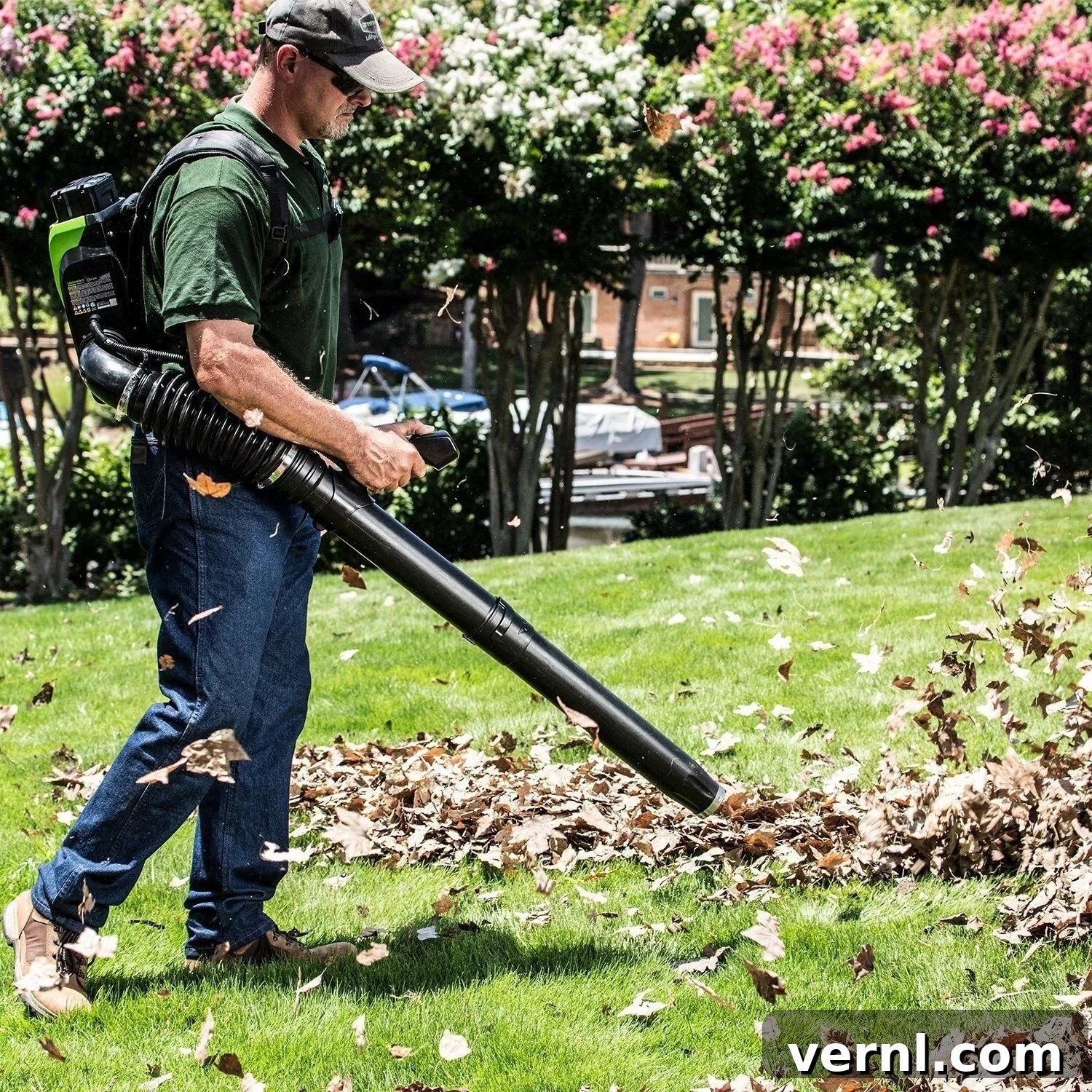
Designed for comfort during longer operating periods and for tackling larger areas, backpack leaf blowers distribute the weight of the motor across your shoulders and back, leaving the blower tube light and easy to maneuver in your hand. This design significantly reduces arm strain and fatigue, even with powerful motors.
- Ideal Use: Medium to large properties, extensive driveways, or situations requiring prolonged use. They are particularly effective for moving substantial volumes of dry leaves or light debris across wider areas.
- Pros: Significantly more powerful than handheld models, comfortable for extended operation thanks to ergonomic harnesses, and highly efficient for large-scale leaf removal.
- Cons: Heavier than handheld units, generally more expensive, and can be bulkier to store. While comfortable to wear, the initial donning and doffing can be a minor inconvenience.
Walk-Behind Leaf Blowers
Resembling miniature snow blowers, walk-behind blowers are the undisputed champions of power and efficiency among consumer-grade models. These units feature large, robust engines mounted on wheels, allowing you to push them across the property. They require minimal physical exertion during operation, making them suitable for virtually anyone capable of walking behind them.
- Ideal Use: Very large properties, commercial applications, properties with an exceptionally high volume of leaves, or those who prefer the least physically demanding option. They excel at clearing vast areas quickly.
- Pros: Unparalleled power for moving heavy, wet leaves and stubborn debris; significantly reduces physical strain; highly efficient for extensive acreage.
- Cons: Most expensive option, largest and heaviest, requires substantial storage space, and typically demands more maintenance than other types. As the original article noted, “the time needed to properly store and maintain walk-behind blowers may be too much for some homeowners.”
Once you’ve considered which physical configuration best suits your needs, the next step is to evaluate the power source options, each presenting its own set of benefits and drawbacks.
Powering Your Productivity: Gas vs. Electric vs. Cordless Leaf Blowers
The choice of power source profoundly impacts a leaf blower’s performance, range, maintenance requirements, and environmental footprint. Understanding these differences is key to selecting a tool that fits your lifestyle and yard care philosophy.
Gas Leaf Blowers
Gas-powered blowers have historically been the go-to for maximum power and unrestricted mobility, offering the muscle needed for the toughest leaf-clearing jobs. They are typically available in both handheld and backpack configurations.
- Power and Range: These are the most powerful tools available, capable of moving heavy, wet leaves and large piles of debris over vast distances. Their freedom from a power cord allows them to be used anywhere on your property, making them ideal for large, sprawling landscapes. Perron confirms, “For large properties where you plan to blow the leaves off the property into a wooded area, you’ll need a gas blower.”
- Maintenance: Gas blowers require more maintenance than electric models. This includes mixing fuel (for two-stroke engines), checking spark plugs, cleaning air filters, and regular engine tune-ups. They also require proper fuel storage.
- Noise and Emissions: Gas models are generally the loudest and produce exhaust fumes, making them less environmentally friendly than electric alternatives. Noise can be a significant concern for both the operator and neighbors.
Corded Electric Leaf Blowers
Plugging directly into a standard electrical outlet, corded electric blowers offer a lightweight, low-maintenance solution for smaller properties. They provide instant power without the need for fuel mixing or battery charging.
- Lightweight and Easy to Use: Without a heavy gas engine or battery pack, corded electric blowers are exceptionally light and easy to maneuver, reducing operator fatigue. They start instantly with the flick of a switch.
- Maintenance: These models require very little maintenance beyond keeping them clean and checking for dirt build-up around the air intake.
- Limitations: The primary drawback is the reliance on an electrical outlet and the limited range dictated by the length of the extension cord. This makes them best suited for compact yards, patios, and specific tasks like cleaning gutters where proximity to power is not an issue.
- Environmental Impact: They produce zero direct emissions during operation, making them a more environmentally conscious choice.
Cordless (Battery-Powered) Electric Leaf Blowers
Cordless electric blowers represent the best of both worlds for many homeowners, combining the freedom of gas models with the convenience and lower maintenance of electric units. Advances in battery technology have dramatically improved their power and run time.
- Freedom and Convenience: Offering complete mobility without the need for a cord or fuel, cordless blowers are highly convenient. They start instantly, are quieter than gas models, and produce no emissions.
- Improving Power: As Steve Mercer from Northampton Rental Center observes, “Battery-powered blowers are getting better and better, with a lot less headache than a gas powered model.” Newer models can rival low- to mid-range gas blowers in performance, making them suitable for many medium-sized yards.
- Battery Life and Weight: The main considerations are battery run time and the added weight of the battery pack. Larger yards may require multiple battery swap-outs or a higher capacity battery, adding to the initial cost. It is crucial to “know how long the battery lasts before you buy,” especially if you need to clear a large yard.
- Charging Time: Factor in the time required to recharge batteries between uses or if you need to swap them out during a longer task.
Essential Leaf Blower Features to Look For
Beyond the basic type and power source, several features can significantly enhance a leaf blower’s performance, comfort, and versatility. Paying attention to these details will help you select a tool that truly meets your specific yard care demands.
Understanding Air Output: CFM and MPH
Manufacturers typically highlight two key figures to describe a blower’s air output: Cubic Feet per Minute (CFM) and Miles Per Hour (MPH). While both indicate power, they measure different aspects of airflow:
- CFM (Cubic Feet Per Minute): This measures the volume of air the blower moves. A higher CFM indicates the blower can move more leaves at once, making it ideal for clearing large areas quickly. Think of it as the “width” of the clearing path.
- MPH (Miles Per Hour): This measures the speed at which the air exits the nozzle. A higher MPH signifies greater force, which is crucial for moving heavier debris like wet leaves, stubborn dirt, small pebbles, or matted piles. Think of it as the “punch” behind the air.
For most homeowners, a balance of both is desirable. If you often deal with vast quantities of dry leaves, prioritize higher CFM. If your main challenge is wet leaves or compacted debris, a higher MPH will be more effective. When in doubt, “opt for a model with a higher CFM,” as it generally indicates better overall clearing efficiency for typical leaf piles. Additionally, as Mercer advises, “You also want a strong, dependable motor made by a reputable manufacturer” to ensure consistent performance and reliability.
Ergonomics and User Comfort
Since you’ll be operating this tool for periods, comfort and ease of use are paramount. Look for features that minimize fatigue and make the blower feel like an extension of your arm:
- Balance and Weight Distribution: A well-balanced leaf blower feels lighter and less strenuous to operate. For handheld models, check how it feels in your hand. For backpack models, assess the padding and adjustability of the shoulder straps and hip belt.
- Controls: Functions like speed control, on/off switch, and any other settings should be intuitive and easy to reach, ideally allowing for one-handed operation. Variable speed triggers offer greater control, letting you adjust power for different tasks, from delicate flowerbeds to stubborn leaf piles.
- Anti-Vibration System: Especially important for gas-powered and powerful electric models, an effective anti-vibration system reduces hand and arm fatigue during prolonged use.
Nozzle Design and Versatility
The shape of the nozzle significantly influences how effectively a leaf blower performs different tasks:
- Wide Nozzles: These are excellent for moving large volumes of dry leaves across open areas. They provide a broader airflow, allowing you to sweep more debris with each pass, similar to the wide head of a rake.
- Round/Concentrator Nozzles: With a narrower opening, these nozzles produce a highly concentrated and powerful stream of air, ideal for dislodging heavier dirt, wet leaves, pebbles, or debris stuck in cracks. They act like a more rounded shovel blade, focusing force.
Many modern leaf blowers offer interchangeable nozzles or adaptors, allowing you to quickly swap between designs to optimize airflow for specific tasks. This versatility can greatly enhance the overall utility of your blower.
Vacuum and Mulching Capabilities
Some handheld blowers come with a vacuum mode, allowing them to suck up leaves and other light debris, often shredding them into fine mulch before depositing them into an attached bag. This “combo unit” functionality can be incredibly useful for reusing your yard waste.
- Benefits: Mulched leaves are excellent for composting, protecting garden beds, or simply reducing the volume of waste destined for disposal. This feature is particularly handy for flower beds where blowing might scatter mulch or damage delicate plants, and raking is impractical.
- Limitations: While convenient, these combo units may struggle with very large, wet piles of leaves, or heavy debris. Their vacuuming power is generally best suited for lighter mulching tasks around smaller areas.
Noise Level and Decibel Ratings
Leaf blowers are indeed “notoriously loud,” and their noise levels are measured in decibels (dB). While a decibel rating provides an objective measure, subjective perception of noise can vary. Some users might find the specific “whine” of certain models more irritating than others, regardless of their measured decibel output. Regardless of the model, “wearing hearing protection while using a leaf blower is always a good idea” for your long-term ear health.
It’s a common misconception that electric blowers are inherently quiet. As Perron points out, “Some people make the mistake of thinking that battery-powered leaf blowers will be quieter, but that’s not the case. It’s not the engine that’s making the noise; it’s the fan.” While electric models generally lack the roar of a gas engine, the powerful fan that generates the airflow still produces significant noise. Check local noise ordinances, as some communities have restrictions on when and what type of leaf blowers can be used.
Additional Features for Enhanced Performance
- Cruise Control: Allows you to set a constant fan speed, reducing finger fatigue during long clearing jobs.
- Easy Start Systems: Particularly for gas models, features like primer bulbs, automatic choke, or spring-assisted pull cords make starting much easier.
- Anti-Clog Shredding: For vacuum/mulcher models, a robust shredder mechanism helps prevent blockages when processing larger leaves or small sticks.
- Metal Impeller: A metal impeller in mulcher models is more durable and efficient at shredding than plastic ones, especially for tougher debris.
Proper Leaf Blower Usage and Safety Tips
Maximizing the efficiency of your leaf blower and ensuring your safety are equally important. Follow these guidelines for optimal results and protection.
Safety First: Personal Protective Equipment (PPE)
Always prioritize safety when operating any power tool. Wearing appropriate PPE is non-negotiable:
- Eye Protection: Safety glasses or goggles are essential to protect against flying debris like small rocks, twigs, or dirt.
- Hearing Protection: Earplugs or earmuffs are critical to prevent hearing damage, even with quieter electric models.
- Gloves: Sturdy work gloves can improve grip, reduce vibration, and protect your hands from abrasions.
- Long Pants and Closed-Toe Shoes: Protect your legs and feet from potential hazards.
Effective Operating Techniques
A leaf blower is only as good as its operator. Employing the right techniques can dramatically improve your efficiency:
- Work with the Wind: Always blow with the wind direction, not against it. This simple tip can save you considerable time and effort.
- Sweeping Motion: Use a broad, sweeping motion, similar to using a broom. Start at the outer edges of the area you’re clearing and work inwards, gradually collecting leaves into a manageable pile.
- Angle the Nozzle: Don’t point the nozzle directly down. Angle it slightly to create a rolling effect that lifts and pushes leaves rather than flattening them.
- Tackle Dry Leaves: Dry leaves are much easier to move. If possible, wait for a dry day to perform your leaf clearing tasks. Wet leaves are heavier and stickier, requiring more power and effort.
- Create Small Piles: Instead of trying to move all the leaves at once, gather them into smaller, more manageable piles, then consolidate these into a larger pile for disposal or mulching.
- Clear Away from Obstacles: Be mindful of garden beds, decorative plants, open windows, or parked cars. Aim the blower away from these to prevent damage or scattering debris unnecessarily.
- Be Mindful of Neighbors: Avoid blowing leaves into neighboring yards or creating excessive dust and noise during inconvenient hours.
Maintaining Your Leaf Blower for Longevity
Regular maintenance is key to ensuring your leaf blower performs reliably season after season. The level of maintenance required varies significantly depending on the power source.
Electric Leaf Blower Maintenance (Corded & Cordless)
Electric blowers are renowned for their low maintenance requirements, making them a hassle-free option for many homeowners.
- General Cleaning: After each use, simply wipe down the exterior of the blower to remove dirt and debris.
- Air Intake: Regularly inspect and clean the air intake vents to prevent dirt and leaves from obstructing airflow, which can lead to overheating.
- Mulcher Cleaning: If your blower has a mulching function, thoroughly clean out any small leaf particles, dust, or debris from the collection bag and the blower housing to prevent blockages and mildew.
- Battery Care (Cordless): For cordless models, follow manufacturer guidelines for battery charging and storage. Avoid storing batteries in extreme temperatures. Charge batteries fully before long-term storage and periodically during extended off-seasons to maintain battery health.
Gas Leaf Blower Maintenance
Gas-powered blowers, with their internal combustion engines, require more diligent and regular maintenance to ensure optimal performance and extend their lifespan.
- Fuel Management: Always use fresh, clean gasoline. For two-stroke motors, it’s crucial to use the correct gas/oil blend as specified by the manufacturer. Consider using premixed, ethanol-free fuel to minimize issues. Vince Christofora, engineer and owner of Woodstock Hardware, advises, “If you purchase premixed gas/oil that uses ethanol-free gasoline and you keep the blower in a heated space during winter months, you can cut down on maintenance and maybe skip an annual maintenance or two.”
- Fuel Stabilizer: Add a fuel stabilizer if you plan to store the blower for more than a month to prevent fuel degradation and carburetor clogging.
- Spark Plug: Inspect and clean or replace the spark plug annually. A fouled or worn spark plug can lead to difficult starting and poor engine performance.
- Air Filter: Clean or replace the air filter regularly, especially if operating in dusty conditions. A dirty air filter restricts airflow and can cause the engine to run rich, reducing power and efficiency.
- Winterization: Before long-term storage during winter, ensure the fuel tank is either empty or treated with a stabilizer, and the carburetor is run dry. This prevents stale fuel from gumming up the engine.
- Annual Tune-Up: A professional tune-up every year or two is highly recommended to keep the engine running smoothly.
Walk-Behind Leaf Blower Maintenance
Given their larger size and more complex components, walk-behind blowers do require a bit more attention than handheld models, though generally less than a lawnmower.
- Engine Maintenance: Follow the same engine maintenance guidelines as gas handheld/backpack blowers (fuel, spark plug, air filter, oil changes if 4-stroke).
- Wheel and Tire Care: Check tire pressure and lubricate wheel bearings if applicable to ensure smooth maneuverability.
- General Inspection: Periodically inspect belts, cables, and connections for wear and tear.
With proper care, your leaf blower can be a reliable partner in yard maintenance for many seasons. Discover these amazing leaf blower tricks to get even more out of your tool!
Frequently Asked Questions About Leaf Blowers
How much do leaf blowers cost?
Leaf blower prices vary significantly based on their type, power source, features, and brand. Generally, handheld models are the most affordable, followed by backpack blowers, with walk-behind models being the most expensive. To give you a rough idea:
- Corded Handheld Electric: Often range from $25 to $150, making them highly budget-friendly.
- Cordless Handheld Electric: Typically cost $100 to $400, depending on battery voltage and included battery/charger.
- Gas Handheld: Usually fall between $100 and $300.
- Backpack Blowers (Gas and Cordless): These are a step up in price, typically ranging from $200 to $600 for consumer-grade models.
- Walk-Behind Blowers (Gas): The most powerful option for homeowners, these can cost anywhere from $200 to $1,200, with high-end residential or semi-professional models nearing the top of that range.
Professional-grade blowers, designed for continuous heavy-duty use, can cost significantly more, often exceeding what most DIYers will ever need for their leaf blower uses, offering an upgrade in reliability, power, and durability that goes beyond typical home yard maintenance.
Are leaf blowers actually faster than a rake?
“Definitely,” affirms Steve Mercer from Northampton Rental Center. “A powerful leaf blower can cut down your leaf cleaning job by a lot over just using a rake.” While a rake requires physical effort to gather each leaf individually, a leaf blower uses concentrated airflow to move large quantities of leaves simultaneously, often covering much larger areas in a fraction of the time. For medium to large yards, or properties with a significant number of trees, the time savings offered by a leaf blower are immense, making the investment well worth it for many homeowners. However, a rake can still be useful for final detailing, working in tight spaces where a blower might scatter debris, or for clearing very wet, matted leaves that a blower struggles with.
About the Experts
- Steve Mercer has been the manager at Northampton Rental Center, a tool rental business in Northampton, Massachusetts, for 41 years, offering extensive practical experience with various outdoor power equipment.
- Tom Perron is a second-generation owner of Boyden and Perron, an outdoor power equipment retailer in Amherst, Massachusetts, providing expert insights rooted in years of industry experience.
- Vince Christofora is an engineer and owner of Woodstock Hardware, bringing technical expertise and practical advice on equipment maintenance and performance.