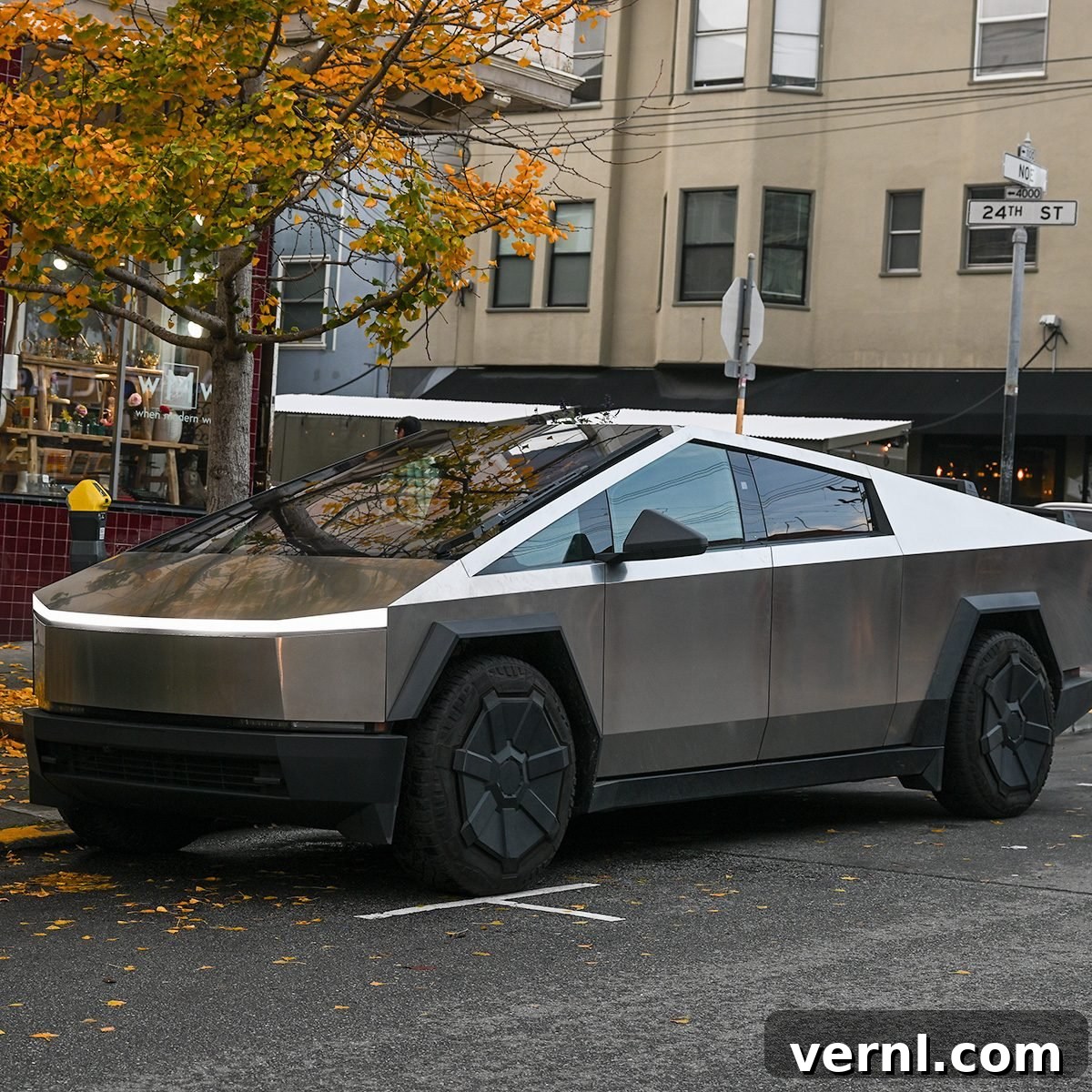
Tesla is navigating one of its most challenging periods, marked by significant market volatility and a barrage of public scrutiny. The automotive manufacturer’s shares have plummeted over 40% since January alone, a decline widely reported by outlets like CNN. This financial downturn unfolds amidst a persistent hailstorm of protests stemming from CEO Elon Musk’s increasingly prominent and often controversial political engagements. As if these external pressures weren’t enough, Tesla’s much-hyped Cybertruck, a vehicle already notorious for design quirks and initial safety concerns, is now grappling with a series of significant recalls. The latest, announced by the National Highway Traffic Safety Administration (NHTSA), targets faulty exterior panels that pose a direct risk of causing crashes. This article delves into the details of these critical safety issues, their implications for Cybertruck owners, and the broader context of Tesla’s current struggles.
A Tumultuous Year for Tesla: Beyond the Headlines
Tesla’s current predicament extends far beyond simple stock fluctuations or isolated product recalls. The company, once an unassailable leader in the electric vehicle (EV) market, is now confronting a confluence of internal and external pressures that threaten its long-term trajectory. Elon Musk’s deepened involvement in the political sphere, particularly his vocal opinions and endorsements, has alienated a segment of Tesla’s customer base and drawn considerable negative attention. This political entanglement has coincided with real-world consequences, including reported violent attacks on Tesla dealerships, as highlighted by PBS. Such controversies inevitably impact brand perception, potentially dampening demand and exacerbating an already challenging market environment.
Moreover, the automotive industry is undergoing a rapid transformation. Traditional automakers have significantly ramped up their EV offerings, presenting formidable competition to Tesla. This increased rivalry, coupled with a more cautious consumer spending climate, means Tesla can no longer rely solely on its early-mover advantage or brand mystique. Production challenges, perceived quality control issues, and a slowing growth rate in some key markets have all contributed to investor unease, manifesting in the sharp decline of its stock value. The company’s ability to navigate these multifaceted challenges will be crucial in defining its future standing in the global automotive landscape.
The Cybertruck’s Rocky Road: From Concept to Consumer Concerns
The Tesla Cybertruck was unveiled with immense fanfare in 2019, instantly becoming one of the most talked-about vehicles in modern history. Its radical, angular design, constructed from stainless steel, promised unparalleled durability and a futuristic aesthetic that divided opinions but garnered significant attention. Positioned as a game-changer in the pickup truck segment, it amassed millions of pre-orders, signaling a strong appetite for its unconventional approach. However, the journey from concept to mass production has been anything but smooth. Delays plagued its development, pushing its release date back multiple times, fueling both anticipation and skepticism.
Upon its eventual launch, the Cybertruck continued to make headlines, though not always for the right reasons. Early reviews often highlighted its unique driving experience and robust build, but also pointed out initial quality control issues, ranging from panel gaps to software glitches. The sheer weight and unconventional materials presented new manufacturing challenges for Tesla, a company known for its innovative yet sometimes turbulent production processes. These early observations foreshadowed the more serious safety concerns that would soon lead to a series of recalls, chipping away at the vehicle’s initially indestructible image and raising questions about its practical viability and roadworthiness.
Unpacking the Latest Tesla Cybertruck Recall: Detaching Exterior Panels
The most recent and particularly concerning recall for the Tesla Cybertruck involves a critical structural flaw: the potential for exterior trim panels to detach while the vehicle is in motion. Specifically, the NHTSA brief warns that “The cant rail, a stainless-steel exterior trim panel, can delaminate and detach from the vehicle.” The “cant rail” refers to a trim component located along the roofline, designed to integrate with the vehicle’s overall structure and aesthetic. When this panel detaches, it poses a direct and severe road hazard.
Imagine driving at highway speeds when a metallic panel suddenly breaks free from a vehicle in front of you. Such an incident could have catastrophic consequences. The detached panel could strike other vehicles, pedestrians, or cyclists, causing damage, injury, or even fatalities. It could also become road debris, forcing other drivers to swerve erratically to avoid it, significantly increasing the risk of multi-vehicle collisions. This is not merely an aesthetic flaw; it’s a fundamental safety concern that directly impacts not only Cybertruck occupants but also everyone else on the road. The NHTSA, whose primary mission is to save lives, prevent injuries, and reduce economic costs due to road traffic crashes, takes such defects extremely seriously, necessitating an immediate and widespread recall.
This particular recall impacts a significant number of Cybertrucks: 46,096 vehicles from the 2024-2025 model years. This broad scope indicates that the issue is not isolated to a small batch but points to a more systemic problem in the manufacturing or assembly process of these early production units. For owners of these affected models, the implications are clear: the vehicle, as currently configured, presents a potential danger and requires immediate attention.
A Growing List of Concerns: A History of Cybertruck Recalls
The latest exterior panel recall is not an isolated incident; it marks the eighth recall issued for the Cybertruck since its launch. This accumulation of safety and quality issues paints a concerning picture for a vehicle that was marketed on its supposed invincibility and revolutionary engineering. Each recall, regardless of its perceived severity, contributes to a pattern of recurring problems that undermine consumer confidence and raise questions about Tesla’s quality control processes for its newest vehicle.
Previous recalls have addressed a range of issues, some minor, others potentially serious. For example, an earlier recall concerned trunk beds that were not properly attached, posing a risk of cargo falling out. More recently, another significant recall addressed a fault with the accelerator pedal, where it could become dislodged and trapped, leading to unintended acceleration. This particular defect raised considerable alarm due to its direct impact on vehicle control and stopping capability, prompting urgent action from both Tesla and regulatory bodies. Other reported issues, though not always resulting in formal recalls, have included problems with wipers, steering, and various software glitches that affect functionality and safety features. While some issues might seem minor in isolation, their cumulative effect on the Cybertruck’s reputation for reliability is substantial. For a vehicle promoted as a rugged, durable, and advanced solution, a history of eight recalls in such a short operational span is a significant cause for concern for both current owners and prospective buyers.
What Should Cybertruck Owners Do? Your Guide to Action
If you own a 2024 or 2025 Tesla Cybertruck, understanding and acting upon this recall is paramount for your safety and the safety of others. Tesla has announced that it will be mailing owner letters regarding the cant rail recall in mid-May 2025. However, waiting for this letter might not be the most prudent course of action, given the immediate safety risk.
Here’s a detailed guide on what steps you should take:
- Verify Your Vehicle: Confirm if your Cybertruck is among the affected 2024-2025 models. While Tesla will contact owners, you can proactively check your vehicle’s VIN (Vehicle Identification Number) on the NHTSA website (nhtsa.gov/recalls) to see if it’s included in any active recalls.
- Limit Driving: The NHTSA brief explicitly cautions that detached panels increase the risk of a crash. Therefore, it is strongly advised to refrain from driving your vehicle as much as possible until the problem can be professionally repaired. If driving is unavoidable, exercise extreme caution.
- Contact Tesla Service Immediately: Do not wait for the mailed letter. Reach out to your nearest Tesla service center as soon as possible to schedule an appointment. Tesla has confirmed that service centers will replace the faulty cant rail assembly at no cost to customers. Emphasize the urgency of the safety recall when making your appointment.
- Provide Recall Information: When contacting Tesla customer service, clarify that you are calling about recall number SB-25-10-001. This will help them quickly identify the specific issue and expedite your service request. You can reach Tesla customer service at 1-877-798-3752.
- Understand the Fix: The proposed fix involves the replacement of the faulty cant rail assembly. Ensure you understand what the service will entail and how long your vehicle will be out of commission.
- Stay Informed: Continue to monitor official communications from Tesla and the NHTSA for any updates regarding this or future recalls.
- Inform Others: If you know friends, family, or colleagues who own a Cybertruck, make sure they are aware of this critical recall. Spreading awareness can help prevent potential accidents and ensure all affected vehicles receive timely repairs.
- NHTSA Contact: For additional information or to report a safety concern, you can also reach the NHTSA directly at 888-327-4236. The NHTSA’s reference number for this specific recall is 25V170000.
Proactive engagement with these steps is essential. Driving a vehicle with a known defect that could endanger yourself and other road users is a serious responsibility. Tesla’s commitment to providing the fix at no cost underscores the critical nature of this safety issue.
The Broader Implications: Tesla’s Future Amidst Quality Challenges
The continuous stream of recalls for the Cybertruck and the broader challenges facing Tesla have significant implications for the company’s future. Persistent quality control issues, particularly with a high-profile new product like the Cybertruck, can severely erode consumer trust and brand loyalty. In a highly competitive EV market, where new entrants are constantly vying for market share, a reputation for reliability and safety is paramount. If consumers begin to perceive Tesla as prioritizing innovation and speed over meticulous quality and safety, it could significantly impact sales and market penetration.
From an investor perspective, a string of recalls represents not only financial costs for repairs but also potential legal liabilities and a hit to brand valuation. It can signal underlying manufacturing or design flaws that could affect other models or future products. For Tesla, a company that has long traded on its futuristic vision and technological prowess, the current challenges highlight the demanding realities of scaling production and maintaining consistent quality in the mass market automotive industry. How Tesla addresses these issues, not just technically but also in terms of transparent communication and swift customer service, will be pivotal in determining whether this period becomes a temporary setback or a more enduring crisis for the EV giant.
Frequently Asked Questions About the Cybertruck Recalls
What is the latest Tesla Cybertruck recall about?
The latest recall, announced by the NHTSA, is for faulty exterior trim panels, specifically the “cant rail,” which can delaminate and detach from the vehicle while driving. This creates a significant road hazard and increases the risk of a crash.
Which Cybertruck models are affected by this recall?
The recall affects 46,096 Tesla Cybertruck vehicles from the 2024 and 2025 model years.
Is there a proposed fix for the detached panel issue, and will it cost me anything?
Yes, Tesla service centers will replace the faulty cant rail assembly at no cost to affected customers. Owners should schedule an appointment as soon as possible.
What should I do if I own an affected 2024 or 2025 Cybertruck?
You should limit driving your vehicle as much as possible until the repair is completed. Contact Tesla customer service at 1-877-798-3752 or your nearest service center immediately to schedule a free repair. Provide recall number SB-25-10-001.
How many recalls has the Cybertruck had so far?
The latest recall for exterior panels is the eighth recall issued for the Tesla Cybertruck since its introduction. Previous recalls have addressed issues such as accelerator pedals and improperly attached trunk beds.
Where can I find more information about this Cybertruck recall or check if my vehicle is affected?
You can contact Tesla customer service at 1-877-798-3752 (recall number SB-25-10-001) or the NHTSA at 888-327-4236 (recall number 25V170000). You can also check your vehicle’s VIN on the NHTSA website (nhtsa.gov/recalls).
Why are these recalls so critical for Cybertruck owners and other drivers?
Recalls, especially those involving detaching parts or control issues like the accelerator pedal, are critical because they pose direct safety risks. Detached panels can cause accidents by striking other vehicles or becoming dangerous road debris, endangering everyone on the road.
Sources and Further Reading
- NHTSA.gov: “Exterior Trim Panel Can Detach While Driving” (2025)
- CNN: “Gravity may be finally catching up to Elon Musk as Tesla stock tumbles” (2025)
- PBS: “As Musk takes prominent role in Trump White House, violent attacks on Tesla dealerships spike” (2025)
- Family Handyman: “Tesla Cybertruck Recalls” (Ongoing)