The Costly Truth About “Flushable” Wipes: Protecting Your Plumbing and Our Sewers
Many homeowners have fallen victim to the misleading promises of products labeled “flushable” wipes. What often seems like a convenient personal hygiene solution frequently escalates into a costly nightmare, leading to severe plumbing blockages and expensive repairs. Just last year, I experienced this frustrating reality firsthand when a significant main drain clog in one of my rental properties demanded immediate, professional intervention from a sewer company. The undeniable culprit? An accumulation of these very “flushable” wipes.
Since that substantial plumbing bill, I’ve implemented a strict ban on these wipes in all my rental units. However, the experience left me with a lingering question that resonates with countless consumers: are any flushable wipes truly safe to flush without risking damage? To get to the bottom of this widespread plumbing dilemma and separate fact from marketing fiction, I sought expert opinions from seasoned professionals in the field: Alexander Siv of Amherst Plumbing and Heating, and Jonathan Giedrowicz from Always Reliable Sewer and Drain. Their insights reveal a unanimous and unequivocal stance on the matter.
What Exactly Are “Flushable” Wipes and How Do They Differ from Toilet Paper?
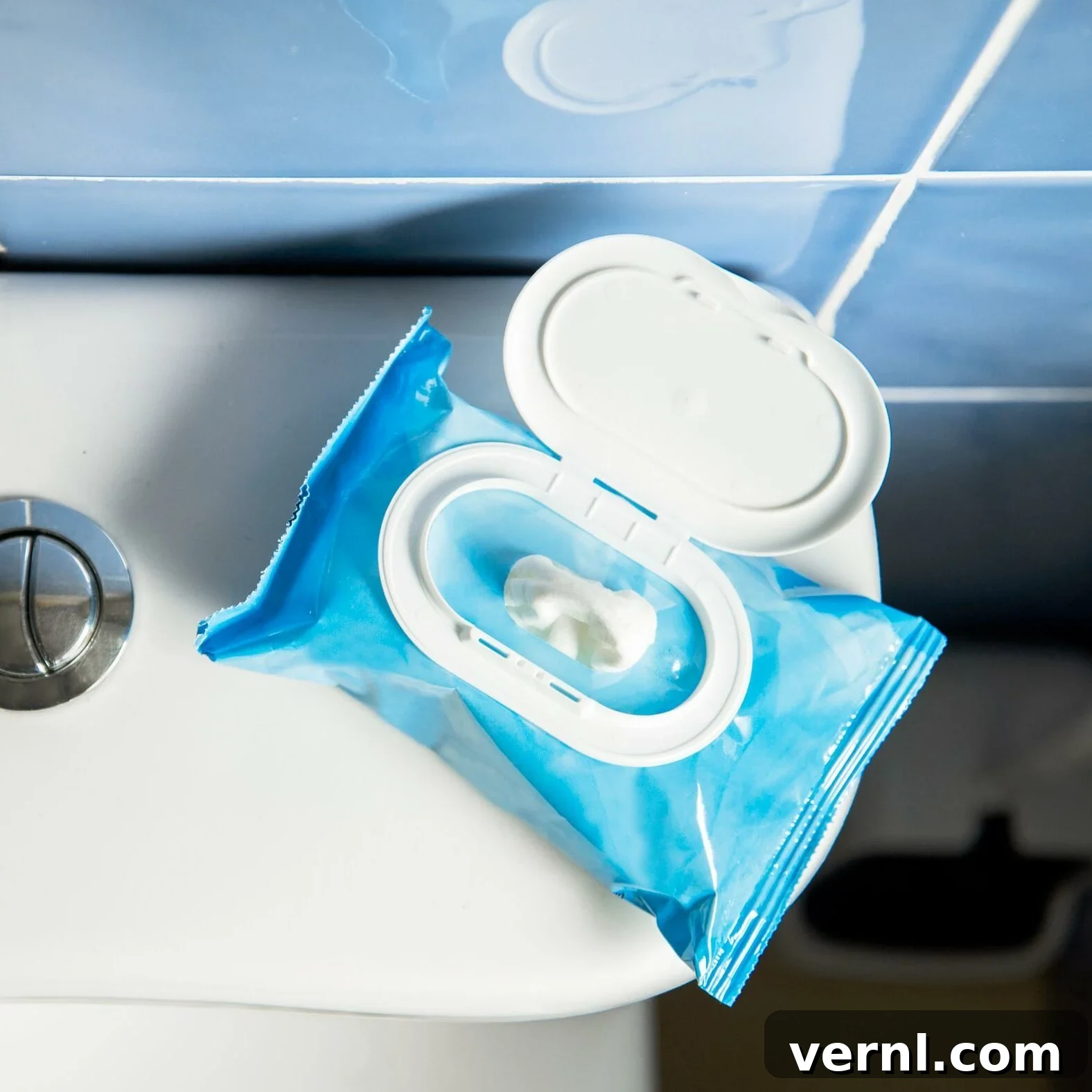
A “flushable” wipe is typically presented as a pre-moistened, disposable cloth primarily designed for personal hygiene after using the toilet. These products are conveniently packaged in resealable containers, often containing 50 to 100 wipes stacked neatly, promising convenience and a fresh feeling. They are frequently infused with various cleaning agents and pleasant fragrances, making them an attractive alternative to traditional dry toilet paper for many consumers seeking an enhanced sense of cleanliness and comfort.
Marketed heavily as a superior toilet paper alternative, the central claim of flushable wipe manufacturers is their supposed ability to break down quickly after being flushed. This characteristic is paramount; it’s advertised as essential for preventing the formation of clogs within both household plumbing systems and broader municipal sewer networks. Companies often emphasize their product’s disposability and convenience, implying a seamless and problem-free journey through your pipes and into the wastewater treatment system.
The Crucial Difference: Disintegration Rates and Materials
The true measure of a product’s flushability lies in its disintegration rate and material composition. Standard toilet paper is specifically engineered to begin breaking down almost immediately upon contact with water, particularly in the turbulent environment of a flushing toilet. Its short cellulose fibers quickly lose their structural integrity, dissolving into small, manageable pieces that can pass through plumbing pipes without causing obstructions. This rapid disintegration is why toilet paper is considered safe for flushing.
In stark contrast, most “flushable” wipes are constructed using different materials and methods. They are generally thicker, more robust, and significantly more absorbent than toilet paper, designed to withstand tearing and maintain integrity during use. This enhanced durability comes at a significant cost to their ability to break down in water. The materials used in their construction often include a blend of natural fibers (like wood pulp) and synthetic plastics (like polyester or polypropylene). These fibers are bound together with resins that prevent rapid disintegration in water, making them remarkably resilient. While they may feel soft and pliable, their molecular structure is far more resistant to water breakdown than that of toilet paper. Consequently, these wipes do not break down quickly; in fact, they often retain their form entirely, becoming a persistent problem as they attempt to travel—or fail to travel—through your plumbing system.
The Regulatory Vacuum: Why “Flushable” Doesn’t Mean What You Think
One of the most perplexing aspects of “flushable” wipes is the glaring lack of a consistent, government-regulated standard for this designation. Unlike many consumer products that must adhere to strict safety or performance criteria mandated by official bodies, manufacturers of wipes are largely free to label their products as “flushable” based on their own internal testing or interpretations. This significant regulatory loophole allows companies to market products as safe for flushing, even if real-world performance—as evidenced by countless clogged drains—demonstrates otherwise. This leads to profound consumer confusion and widespread plumbing infrastructure problems across communities.
Adding to this complexity is the sheer variety of wipes available on the market. Many types, such as baby wipes, make-up remover wipes, and household cleaning wipes, are explicitly *not* intended for flushing due to their high plastic content and complete lack of biodegradability in water. These products are clearly meant for the trash bin. However, the visual and tactile similarities between these undeniably non-flushable wipes and those deceptively labeled “flushable” can easily lead consumers astray. As Alexander Siv, an experienced plumber, candidly notes, “We see all sorts of wipes stuck in drains—flushable and otherwise.” This observation underscores the critical point that regardless of what the label claims, many wipes simply do not behave as advertised once they enter the wastewater system, posing an equal threat to pipes.
The Unequivocal Answer: Are “Flushable” Wipes Truly Flushable?
The consensus among plumbing professionals, drain specialists, and wastewater treatment operators is overwhelmingly clear and consistent: generally not. Despite persuasive marketing campaigns and product claims, the safest and most responsible course of action for homeowners and renters alike is to dispose of all wipes, regardless of their “flushable” label, in the trash. This simple act can save you significant money and hassle.
Industry Disputes and Evolving Standards (or Lack thereof)
The contentious debate surrounding flushable wipes has ignited numerous legal battles and industry-wide efforts to establish clearer, more stringent guidelines. A prominent and frequently cited example involves Kimberly-Clark, the manufacturer behind Cottonelle products. While the company now asserts that its wipes are “100% flushable” and “break down like toilet paper,” this wasn’t always the case. Kimberly-Clark previously settled a significant lawsuit with the Charleston, South Carolina Water System for substantial damages incurred to their water-treatment equipment, which was partly attributed to Cottonelle flushable wipes. This settlement mandated crucial changes to the product’s labeling and a re-engineering of the wipes to meet specific, improved guidelines.
These new guidelines were partly set forth by the International Water Services Flushability Group (IWSFG), a collaborative consortium of water associations, utilities, and professionals dedicated to providing authoritative guidance on what should and shouldn’t be flushed. The IWSFG’s criteria aim to ensure products truly disintegrate and disperse in the sewer system to prevent infrastructure damage. While Cottonelle Flushable Wipes now reportedly meet these updated IWSFG criteria, it’s crucial for consumers to understand that many other companies have not adopted these rigorous standards, leaving the actual flushability of their products largely unregulated and highly questionable in real-world scenarios.
The “Three Ps” Rule: A Plumber’s Golden Guideline for Your Toilet
When you ask plumbers and drain professionals, their advice is remarkably consistent and refreshingly simple: only flush the “three Ps” – pee, poop, and (toilet) paper. This isn’t just a catchy phrase; it’s a fundamental principle for maintaining a healthy and functioning plumbing system in your home. Anything introduced into the toilet beyond these three items introduces an unnecessary, high risk of blockages, system failures, and costly repairs. “I do not recommend flushing wipes,” emphasizes Alexander Siv, “Even ones that are labeled flushable.” Jonathan Giedrowicz, a drain specialist, concurs, stating plainly, “They’re not biodegradable. They don’t break down.” This expert consensus should serve as a strong warning to all.
How Wipes Create Costly Clogs in Your Home Plumbing
The mechanism by which wipes cause clogs is both straightforward and insidious, leading to significant homeowner expense. Unlike toilet paper, which fragments and disperses almost instantly upon wetting, a flushable wipe tends to retain its structural integrity long after flushing. As it navigates the intricate twists and turns of your home’s drainage pipes, it can easily snag on any imperfection—a rough pipe surface, a corroded spot, or, most commonly, an elbow joint where direction changes. Once a single wipe gets caught, it acts as a sticky net, creating a significant obstruction. This initial trapped wipe then begins catching everything else that attempts to pass by, including hair, cooking grease, food particles, and other non-flushable debris that would normally flow freely. Gradually, this accumulation builds up until a complete and impenetrable blockage forms, leading to a complete standstill in your drainage system. “Once that happens,” Giedrowicz explains, “the wipe just starts catching everything that goes by until you have a clogged drain.”
This frustrating scenario is far from rare; it’s a common occurrence in the plumbing industry. Siv confirms, “We run into clogged drains from wipes pretty regularly. It costs the homeowners and is such a preventable plumbing issue.” These types of clogs often occur deep within the system, making them difficult for homeowners to resolve themselves and typically requiring professional intervention with specialized equipment. This professional service translates directly into unexpected and often substantial expenses, with the cost of a professional drain clearing service easily ranging from hundreds to thousands of dollars, depending on the severity and exact location of the blockage. This entirely preventable expense is a direct consequence of ignoring the simple, expert advice to dispose of all wipes in the trash, not the toilet.
The Municipal Nightmare: Fatbergs and Devastating Environmental Damage
Even if individual “flushable” wipes manage to successfully navigate your home’s internal plumbing without creating an immediate incident, their journey often culminates in disaster for municipal sewer systems and wastewater treatment facilities. These wipes do not simply disappear; they continue their non-biodegradable existence, combining with other flushed materials like cooking grease, oils, and other non-degradable items that should never be put down drains. This lethal cocktail forms enormous, solid masses known as “fatbergs.”
Fatbergs are grotesque conglomerations that can weigh many tons and grow to incredible sizes, capable of completely blocking massive municipal sewer lines, halting the flow of wastewater for entire neighborhoods. They are exceptionally difficult and expensive to remove, often requiring specialized equipment like high-pressure water jets, industrial cutters, and even extensive excavation of streets and public land. “They get into the sewer plant’s equipment and clog things up there too,” Giedrowicz warns, highlighting the severe damage to vital infrastructure such as pumps, screens, and other machinery at wastewater treatment plants. These extensive issues necessitate expensive emergency repairs, ongoing maintenance, and costly facility upgrades, the financial burden of which is inevitably passed on to consumers through higher utility bills and local taxes. Beyond the immediate financial implications, fatbergs also pose a significant environmental threat by causing sewer overflows into rivers, lakes, and oceans, releasing untreated raw sewage into delicate ecosystems and public waterways, with devastating consequences for wildlife and human health.
Protecting Your Plumbing: Practical Advice and Safer Alternatives
Given the overwhelming scientific evidence, expert warnings, and the documented financial and environmental damage, the best advice for using “flushable” wipes is unequivocally: do not flush them. The potential risks to your personal plumbing system and the wider municipal infrastructure far outweigh any perceived convenience these products offer. It’s simply not worth the risk of a catastrophic clog, expensive repairs, or contributing to larger environmental and public health problems.
Simple Habits for a Healthy, Problem-Free Plumbing System:
- Trash It Without Exception: Establish a clear and consistent habit of disposing of all wipes, regardless of their label or advertising claims, in a waste bin. Keep a small, lidded trash can conveniently located next to every toilet for easy and hygienic disposal.
- Embrace the “Three Ps” Strictly: Educate and reiterate to everyone in your household that only pee, poop, and traditional toilet paper should ever enter the toilet bowl. Make this a non-negotiable rule.
- Educate Others: Inform guests, visitors, and extended family members about the critical dangers of flushing wipes to prevent accidental blockages and ensure everyone is contributing to plumbing health.
Safer Alternatives for Enhanced Personal Hygiene:
If you prefer a cleaner, fresher feel than dry toilet paper alone provides, there are several plumbing-safe and environmentally responsible alternatives:
- Bidet Attachments or Toilets: A bidet offers a superior clean using only water, which is completely safe for plumbing. There are many affordable and easy-to-install bidet attachments that connect directly to your existing toilet, requiring minimal setup. Dedicated bidet toilets also offer advanced features.
- Washable Cloth Wipes: For those seeking an eco-friendly and flush-free alternative, reusable cloth wipes (often made from soft flannel or cotton) can be moistened with water, used for personal hygiene, and then laundered with your regular towels. This reduces waste and eliminates plumbing risks.
- Toilet Paper Sprayed with Water: A simple, inexpensive spray bottle filled with water can be used to moisten a small amount of traditional toilet paper, providing a wet wipe experience without introducing non-degradable materials into your pipes.
Ultimately, safeguarding your home’s plumbing system and contributing to the health and efficiency of municipal wastewater infrastructure is a shared responsibility. By understanding the true, detrimental nature of “flushable” wipes and consciously adopting safer disposal habits, you can prevent costly repairs, protect the environment from fatbergs and pollution, and ensure your home’s drainage system functions smoothly and reliably for many years to come.
About the Experts
Jonathan Giedrowicz has proudly owned and operated Always Reliable Sewer and Drain in South Hadley, Massachusetts, for eight years. His extensive hands-on experience has provided him with deep insights into diagnosing and addressing even the most complex drainage issues.
Alexander Siv is the dedicated owner of Amherst Heating and Plumbing in Amherst, Massachusetts. Holding a master plumber’s license in Massachusetts and boasting over 10 years of invaluable plumbing experience, Alexander provides expert guidance and practical solutions for both residential and commercial plumbing challenges.