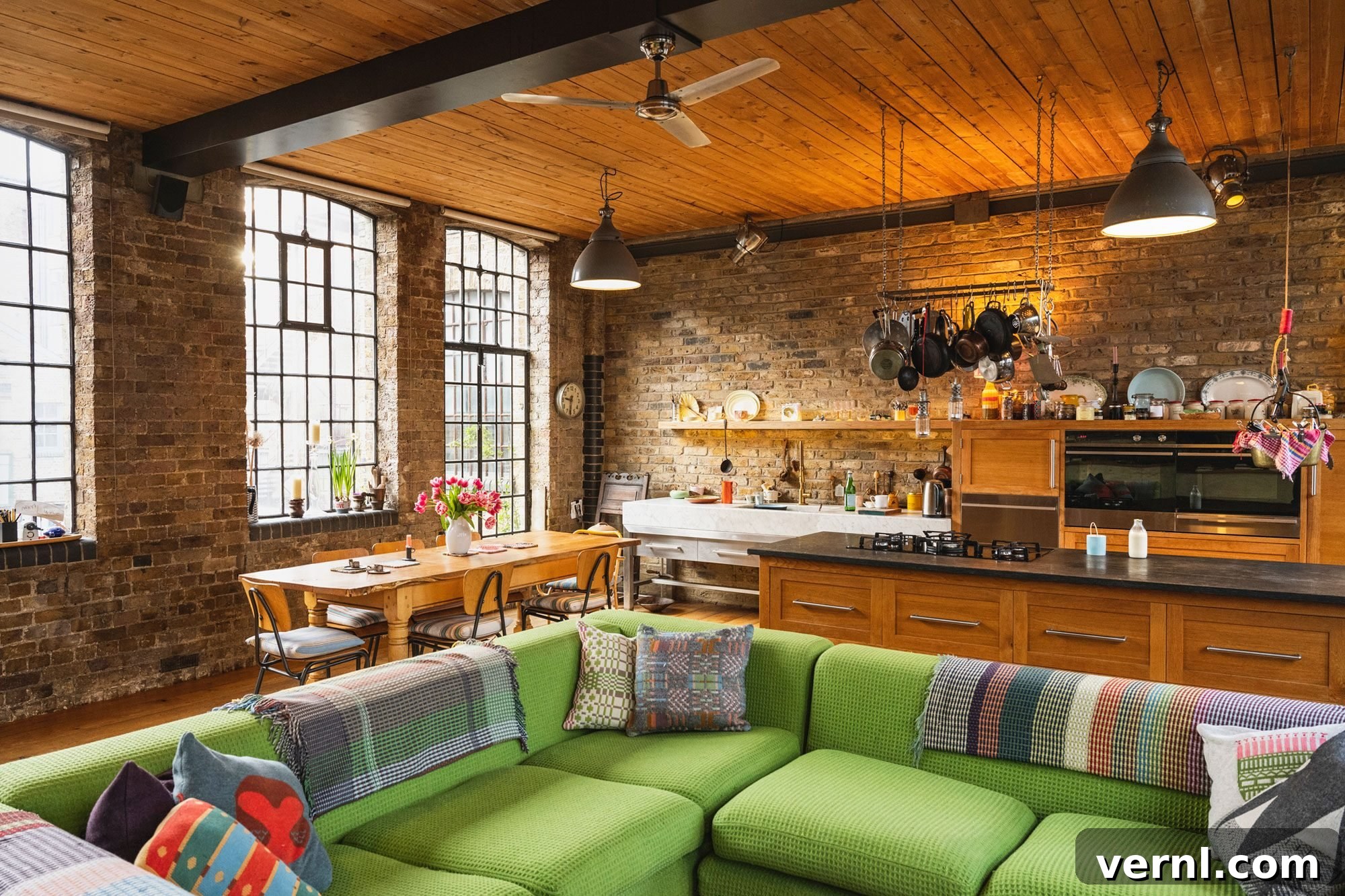
In the early 2000s, a design revelation swept through urban centers and beyond, transforming forgotten factories and warehouses into coveted living spaces. My own journey into this aesthetic began when my husband and I moved into a genuine one-room loft. The building, a former factory, captivated us with its raw, authentic charm: the beautifully worn wood floors, a brick wall scarred with paint marks and dings from its industrious past, and the unapologetic exposure of ductwork. It wasn’t just a place to live; it felt like stepping into a narrative, a powerful statement against polished perfection.
This distinct aesthetic is what we now universally recognize as industrial interior design. Its roots are deeply embedded in the very fabric of these old buildings, celebrating their history and utilitarian purpose. Lindsay Boudreaux, proprietor and creative director at Shotgun Double Interior Design, points to architect Frank Gehry’s groundbreaking renovation of his California home as an early and pivotal example.
“Gehry’s work on his 1920s Dutch Colonial-style home was revolutionary,” Boudreaux explains. “He meticulously stripped away the traditional decorative architectural elements, choosing instead to utilize materials in their most raw and unrefined forms. These were often materials previously considered unsightly or unfinished, such as raw plywood, corrugated steel panels, chain-link fencing, and even exposed interior pipes. It was a bold declaration of beauty in the unembellished.”
While Gehry’s pioneering approach established the foundational principles, Boudreaux notes that the style soon evolved, venturing “into more creative territory.” This evolution saw the emergence of unique, hand-crafted light fixtures made from industrial materials like steel pipe, showcasing the warm glow of filament light bulbs. Welded machine parts were repurposed into decorative or functional elements, and the iconic rolling “barn doors” on exposed metal tracks became a signature feature, cleverly mimicking the sturdy fire doors found in old industrial warehouses.
Interestingly, Gehry’s original renovation embodied a distinctly Californian sensibility—characterized by an abundance of natural light, bright spaces, clean lines, and simple, unfussy forms. The subsequent iterations of industrial style, however, often veered towards a darker, more dramatic aesthetic. This included heavier metal accents, frequently rendered in oil-rubbed bronze, matte black, or dark steel, complemented by chunky, robust wood elements, such as striking raw-edge tables that retained the natural shape of the timber.
The Defining Characteristics of Industrial Interior Design
Industrial interior design is more than just a trend; it’s a philosophy that finds beauty in the utilitarian and celebrates the authenticity of materials. Ariana Lovato, owner and principal designer at Honeycomb Home Design, emphasizes that this style is directly inspired by the functional elegance of factories, warehouses, and other industrial spaces. It is a harmonious blend of raw, unfinished elements with highly functional and practical features, creating a cohesive and visually striking environment. Let’s explore its core components:
Raw and Unfinished Materials: Embracing Authenticity
“Exposed brick walls, concrete or bare cement floors, and visible ductwork or pipes are quintessential elements that impart an unfinished, rugged, and profoundly authentic feel to a space,” Lovato articulates. Artem Kropovinsky, founder and interior designer at Arsight, concurs, stating, “Rather than concealing them, these elements are deliberately showcased, celebrating the raw architecture and structural integrity of the building itself. This raw honesty is at the heart of the industrial aesthetic.” This approach champions the beauty of imperfection and the story embedded within aged and unadorned surfaces.
Robust Metal Accents: Strength and Style
Metal plays a starring role in industrial design, appearing extensively in furniture, fixtures, and decorative elements. Lovato advises clients to anticipate an abundance of metal, from sleek metal chairs with sturdy steel frames to distinctive pendant lights featuring industrial-style metal shades. Kropovinsky further elaborates, “These metal components are frequently crafted from durable materials like stainless steel, iron, or aluminum. Their selection is driven by both their inherent longevity and their inherently tough, unpretentious visual appeal, contributing significantly to the style’s character.”
Open and Expansive Spaces: A Breath of Fresh Air
“A hallmark of industrial design is its embrace of open floor plans,” Lovato explains. “This creates an immediate sense of spaciousness, allowing for an airy and unconfined feel that mirrors the vastness of factory floors.” In such open layouts, she advises, “It’s crucial to consider how your furnishings appear from all angles, especially if they are positioned to ‘float’ within the space, as their backs will often be visible.” This design choice promotes fluid movement and versatile functionality.
Neutral and Earthy Color Palette: The Industrial Canvas
The color scheme in industrial interiors tends to be predominantly neutral and earthy, often leaning towards monochromatic tones. Think in terms of a sophisticated spectrum of grays, warm browns, deep blacks, and crisp whites. These colors provide a calming backdrop that allows the textures and raw materials of the design to truly shine, enhancing the overall sense of rugged elegance without overwhelming the senses.
Vintage and Reclaimed Items: History with a Purpose
Incorporating vintage or repurposed pieces is an excellent way to infuse character and a sense of history into an industrial space. Lovato suggests elements like old machinery parts transformed into art or tables, reclaimed wood used for furniture or cladding, or authentic vintage industrial signage. These items not only add a unique touch but also tell a story, connecting the present space to its historical industrial predecessors.
Minimalist and Functional Furnishings: Form Follows Function
Furniture in industrial design is characterized by clean lines and a simple, highly functional aesthetic. The emphasis is firmly on practicality and durability, favoring pieces built to last and serve a clear purpose. “Imagine the robust simplicity of metal chairs, the solid presence of wooden tables, and the comfort of classic leather couches,” Kropovinsky illustrates. Each piece is chosen for its utility and its ability to withstand the rigors of daily life, embodying the ‘form follows function’ principle.
Utilitarian Fixtures: Lighting the Way
Fixtures play a critical role in reinforcing the industrial identity. Lovato highlights examples such as exposed Edison bulb lighting, which showcases the filament for a warm, vintage glow; factory-style pendant lights that evoke a sense of productivity; and open-shelving units made of metal and wood. These choices are not merely decorative; they mimic the practicality and functionality inherent in genuine industrial spaces, providing both illumination and storage with an aesthetic edge.
Statement Pieces: Bold Focal Points
To prevent a space from feeling monotonous, Lovato suggests making bold elements the focal points. These “statement pieces” can be large and commanding, such as an oversized wall clock reminiscent of a factory timepiece, industrial-sized fans that add both character and airflow, or a salvaged factory window repurposed as a striking room divider. Such elements draw the eye and underscore the industrial theme with grand gestures.
Combined Textures: Depth and Interest
The interplay of diverse textures is vital for adding depth and visual interest to industrial interiors. Lovato advises mixing rough wood, which offers warmth and natural imperfection, with the sleek coolness of smooth metals, and juxtaposing these with the softness of various fabrics. This textural contrast creates a dynamic and inviting environment, preventing the space from appearing too stark or uniform.
Why Choose Industrial Interior Design? The Appeal of Raw Elegance
Beyond its distinctive aesthetic, industrial interior design offers several compelling advantages that contribute to its enduring popularity. It’s a style that appeals to those who appreciate authenticity, durability, and a blend of history with modern living.
- Durability and Longevity: Rooted in the robust construction of factories, industrial design favors materials like steel, concrete, and solid wood, which are inherently long-lasting and resilient. This means less wear and tear, and furniture that can withstand the test of time.
- Timeless Appeal: Unlike fleeting trends, the industrial look has a timeless quality. Its emphasis on classic, functional forms and honest materials ensures it remains relevant and stylish for years to come, transcending temporary fads.
- Unique Character and Personality: Incorporating vintage finds, reclaimed items, and raw materials gives each industrial space a unique story and an undeniable sense of character. It avoids the generic, creating environments that feel personal and distinct.
- Low Maintenance: The distressed, raw, and unfinished nature of many industrial elements means that minor imperfections, scratches, or wear often enhance the aesthetic rather than detract from it. This contributes to a relatively low-maintenance lifestyle.
- Versatility and Adaptability: While strong in its identity, industrial design is surprisingly versatile. It can be softened with textiles, warmed with wood, or even blended with minimalist, rustic, or bohemian elements to create hybrid styles that cater to individual tastes.
Simple & Effective Ways to Infuse Industrial Charm into Your Home
You don’t need to live in a repurposed factory to embrace the industrial aesthetic. Our experts offer practical and inspiring ways to integrate this distinctive style into any home, regardless of its original architecture.
Strategic Furniture Choices: The Foundation of Industrial Style
Boudreaux notes that while the pure industrial style might be experiencing subtle shifts, there remains a wealth of excellent pieces to anchor this aesthetic in your home. “On the investment level, Gehry’s classic Wiggle chair, sculpted from corrugated cardboard, stands as a testament to industrial ingenuity married with elegant form,” she suggests.
For a more accessible entry point, consider shelving units crafted from a combination of steel pipes and natural wood or glass. Boudreaux recommends exploring platforms like Etsy, where talented craftspeople offer a myriad of affordable, customizable options. And for the hands-on enthusiast, why not build your own? DIY projects like pipe desks or shelving not only save money but also infuse your space with a personal, authentic touch.
Illuminate with Intent: The Edison Bulb Effect
Kropovinsky offers a swift and impactful way to inject industrial flair: swap out your standard LED bulbs for Edison bulbs. “These bulbs, with their visible filaments and warm, bright glow, instantly evoke an old factory-like appeal,” he explains. The exposed wiring and vintage aesthetic of Edison bulbs are a subtle yet powerful nod to industrial lighting, ideal for pendant lights, sconces, or even table lamps.
Unveiling the Hidden: Embrace Raw Architectural Elements
“If your home permits, exposing an existing brick wall or deliberately leaving air ducts visible can instantly bring that coveted unfinished, rough industrial character into your space,” Kropovinsky advises. This celebrates the building’s raw structure and history. If genuine exposed brick isn’t an option, Lovato suggests a clever workaround: faux brick wallpaper. Modern options are incredibly realistic and can create a convincing accent wall that mimics the texture and appearance of real brick.
The Concrete Touch: Small Scale, Big Impact
Even without the luxury of concrete counters or polished concrete floors, Kropovinsky suggests integrating concrete on a smaller, more manageable scale. “Concrete containers, planters, and candleholders can add that distinct industrial look and feel to your tabletops, shelves, and window sills,” he explains. These small touches contribute significantly to the overall aesthetic without requiring major renovations.
Mastering the Neutral Palette: Simplicity is Key
“Adopting a neutral, earthy color scheme is fundamental to industrial design,” Kropovinsky emphasizes. “Opt for light colors on your walls to create a spacious, airy backdrop, and then layer in natural materials like jute rugs, linen cushions, and perhaps even some raw wood accents. This approach maintains the inherent simplicity and understated elegance that defines industrial spaces, creating a calm and cohesive environment.”
Layering Textures and Fabrics: Softening the Edge
While industrial design celebrates raw materials, it doesn’t mean sacrificing comfort. To soften the often-hard edges of metal and concrete, introduce textiles with natural textures. Think chunky knit throws draped over a leather sofa, linen curtains that allow ample light, or patterned wool rugs that add warmth and acoustic dampening. Mixing materials like rough-sawn wood with polished steel and adding plush fabrics creates a rich, inviting environment.
Art and Decor: Thoughtful Details
Industrial spaces benefit from thoughtful, curated decor. Consider large-scale abstract art with a muted palette, or framed blueprints and architectural drawings. Vintage maps, factory blueprints, or even repurposed machine parts can serve as intriguing wall art. Sculptural elements made from metal or reclaimed wood also contribute to the aesthetic without cluttering the space. Remember, less is often more, allowing individual pieces to make a statement.
DIY Projects: Personalizing Your Industrial Space
The DIY spirit is deeply aligned with industrial design’s origins. Beyond building pipe shelves, consider creating your own lighting fixtures from old plumbing pipes, repurposing wooden crates into storage or tables, or turning salvaged gears into decorative wall art. These projects not only save money but also imbue your home with unique pieces that tell a personal story and truly embody the hands-on nature of the industrial aesthetic.
Designing Industrial for Every Room: Tailoring the Aesthetic
The versatility of industrial design means it can be adapted to any room in the house, each with its own specific considerations:
- Living Room: This is often the centerpiece for industrial style. Start with a robust leather sofa or a series of metal-framed armchairs. A large, reclaimed wood coffee table or one with a concrete top grounds the space. Exposed brick, if available, creates an immediate focal point, complemented by strategically placed Edison bulb floor lamps or factory-style pendants. Open shelving made of pipes and wood can display books and curated decor.
- Kitchen: Stainless steel appliances are a natural fit. Open shelving replaces upper cabinets, showcasing dishes and glassware on metal or wood shelves. Industrial pendant lights above an island or dining table are a must. Consider concrete countertops or even a raw wood island top. Bar stools with metal frames and wooden seats complete the look.
- Bedroom: To avoid a cold feel, balance raw elements with warmth. A metal-framed bed, perhaps with a distressed finish, can be softened with luxurious linen bedding and chunky knit throws. Exposed brick or a faux brick accent wall can be behind the headboard. Industrial-style wall sconces provide task lighting, while a vintage wooden dresser or metal storage lockers add character.
- Bathroom: Concrete vanity tops, exposed copper or black pipes for plumbing, and a large industrial-style mirror (perhaps with a metal frame) can transform a bathroom. Consider a reclaimed wood shelf for toiletries and simple, minimalist fixtures in black or chrome.
Blending Industrial with Other Styles: Hybrid Harmony
While industrial design is strong on its own, it can beautifully complement other styles, creating unique and balanced interiors:
- Industrial-Minimalist: Emphasizes clean lines, open space, and a subdued palette. Focus on fewer, highly functional pieces with strong forms.
- Industrial-Bohemian: Introduce softness and texture with macrame, patterned rugs, and an abundance of plants. Vintage textiles and comfortable, eclectic seating can warm up the industrial backdrop.
- Industrial-Rustic: Combine raw industrial elements with distressed wood, natural fibers, and a warm, earthy color palette. Think barn doors, wooden beams, and cozy, worn leather.
- Industrial-Scandinavian: Fuse the clean lines and functionality of industrial design with the light wood, bright spaces, and soft textiles of Scandinavian style. This creates a highly functional, bright, and inviting space.
Embracing industrial interior design is about appreciating history, celebrating authenticity, and finding beauty in the unadorned. It’s a style that offers character, durability, and a profound connection to the urban landscape, making it a powerful choice for contemporary living.
About the Experts
Lindsay Boudreaux, a distinguished graduate of the University of Louisiana at Lafayette School of Architecture and Design, began her career designing for acclaimed firms like Allan Greenberg Architect and the award-winning studio Adamstein & Demetriou. Today, she spearheads Shotgun Double Interior Design, specializing in high-end residential projects across Northern Virginia and the Washington D.C. area, known for her sophisticated yet practical aesthetic.
Artem Kropovinsky is the visionary founder of Arsight, a New York-based interior design firm. An experienced and innovative designer, Kropovinsky’s work has garnered international recognition, earning him finalist acknowledgements in prestigious competitions such as the international SBID Awards and the NYCxDesign Awards, highlighting his commitment to cutting-edge design.
Ariana Lovato serves as the owner and principal designer of California-based Honeycomb Home Design, bringing a passion for creating beautiful and functional spaces. An associate designer with the National Kitchen and Bath Association, Lovato extends her expertise beyond client projects through Honeycomb Gives Back, a non-profit initiative dedicated to performing transformative room makeovers for children with special needs.