
In today’s fast-paced world, safeguarding your home and loved ones has become a top priority for many. As a dedicated safety and security expert with extensive experience in installing home security cameras for both professional assignments and personal use, I understand the critical importance of a well-planned surveillance system. Deciding on the right number of cameras and their optimal placement is a fundamental step in establishing effective home security. This comprehensive guide will walk you through essential considerations, helping you determine precisely how much home security coverage you need to achieve ultimate peace of mind and create a robust defense against potential threats.
Establishing Your Home Security Needs: How Many Cameras Do I Really Need?
Embarking on the journey to fortify your home begins with a thoughtful assessment of your property’s unique characteristics and your specific security objectives. Before investing in security cameras, take a moment to visualize your property’s layout and identify the areas most crucial for monitoring. There’s no benefit in overspending on more cameras than you genuinely require, nor in leaving vulnerable spots unprotected. It’s also vital to be aware that many camera systems operate with local hubs for footage recording, and each hub often has a limit to the number of cameras it can support. Purchasing an extensive camera setup might necessitate an additional hub, adding to your overall cost and complexity.
For the average homeowner, a configuration of two to four outdoor security cameras, complemented by one or two indoor cameras, often provides robust coverage. However, your specific requirements are highly dependent on your individual security goals. If your primary concern is merely to deter a persistent newspaper thief from your porch, a simple doorbell camera might suffice. Conversely, achieving comprehensive, full-property coverage will undoubtedly involve a more elaborate and strategically planned setup. Consider key entry points: cameras positioned at your front and back doors offer invaluable insights into who enters and exits your property. Augmenting this with cameras on each side of your house ensures that the entirety of your yard is monitored. For indoor spaces, strategically place a camera in each living area you deem necessary for surveillance.
It is imperative to avoid placing cameras in rooms where occupants have a reasonable expectation of privacy, such as bedrooms and bathrooms. Not only is this an invasion of privacy, but most states have stringent laws prohibiting filming in such intimate areas. Always consult your local ordinances and legal guidelines to ensure your camera placement complies with all regulations, protecting both your security and the privacy rights of others.
Optimizing Outdoor Surveillance: How Many Outdoor Cameras Are Essential?
The size and features of your outdoor property significantly influence the number of cameras needed. If you possess an expansive yard, detached outbuildings, or barns, a standard setup of four outdoor cameras might prove insufficient. The goal isn’t necessarily to blanket every square foot of your property with surveillance but rather to secure its most vulnerable and critical zones. A remote patch of grass in the far corner of your property might not warrant a camera, but the entry point of your storage building or garage certainly does.
Focus on identifying the “security hotspots” within your outdoor environment. These are areas that present potential entry points for intruders, valuable assets, or spaces where activities need monitoring. Key hotspots often include:
- Front Door/Main Entryway: The primary point of access, crucial for identifying visitors and potential threats.
- Side Doors: Often overlooked, these can be vulnerable entry points.
- Back Door/Patio Access: Frequently less visible and therefore a common target.
- Shed/Storage Building: Houses tools, equipment, or other valuables.
- Kid or Pet’s Play Area: For monitoring safety and activities.
- Pool Area: Essential for safety monitoring, especially with children or pets.
- Garage/Carport: Protecting vehicles and stored items, often a weak link in home security.
- Barn: If applicable, for monitoring livestock, equipment, or valuable contents.
- Outdoor Entertaining Area: To secure furniture, grills, and deter loitering.
Each identified hotspot will likely require its own dedicated camera, unless they are positioned in close proximity, allowing one camera’s wide field of view to cover multiple points effectively. For instance, I personally utilize a single camera to efficiently cover both my garage and shed doors, as their minimal distance apart allows for optimal shared surveillance. Consider the camera’s field of view and resolution to ensure comprehensive coverage without blind spots, especially in larger or more complex outdoor environments.
Indoor Security: Strategic Camera Placement for Enhanced Protection
While outdoor cameras deter and record external threats, indoor cameras offer an additional layer of protection, allowing you to monitor activity within your home. The selection and placement of indoor cameras should be guided by your specific needs and a strong commitment to privacy. Common areas for indoor camera placement include living rooms, main entry hallways, and basements. These locations often see significant traffic and can provide valuable insights into any unauthorized entry or activity. For instance, an indoor camera near your front door can capture footage of who enters immediately after a forced entry, while one in the living room can monitor general activity or valuables.
Advanced indoor cameras with features like motion detection can alert you to unexpected movements, while two-way audio allows you to communicate with family members, pets, or even potential intruders remotely. Some homeowners use indoor cameras to check on pets while away, monitor elderly family members, or ensure packages delivered inside are secure. Remember, the primary goal is not to spy, but to enhance security and provide critical evidence if an incident occurs. Modern indoor cameras also offer privacy modes or physical shutters, giving users greater control over when and what is being recorded.
Understanding the Investment: How Much Do Security Cameras Cost?
The financial outlay for a home security camera system can vary significantly, influenced by a multitude of factors including brand reputation, the array of features offered, whether you opt for professional or DIY installation, and your preferred method of video storage.
DIY Security Camera Systems
For the self-reliant homeowner, DIY security cameras present a flexible and often more budget-friendly option. Individual camera units typically range from $30 to $300, with prices escalating based on advanced features such as higher video resolution (e.g., 2K, 4K), superior night vision capabilities, two-way audio communication, sophisticated AI-powered detection (for people, vehicles, or packages), and enhanced battery life. Most DIY cameras are wireless, connecting seamlessly to your home’s WiFi network, though specialized cameras that function without WiFi are also available for specific scenarios. Footage is commonly stored either in the cloud via subscription services or locally on a memory card or a DVR-style recording system.
As an example, the highly-regarded Arlo Pro 4 camera commands a price point of around $200 for a single unit, with a four-pack bundle available for approximately $500. This model is considered a top-tier DIY security camera, boasting impressive 2K video resolution, advanced detection features for distinguishing between people, vehicles, and packages, and a convenient wire-free, hub-less setup. On the more economical side, the Wyze Cam Outdoor is priced at approximately $80, or $278 for a four-camera starter bundle. This lower price point entails a trade-off in features; for instance, the Wyze camera offers 1080p HD video as opposed to the Arlo Pro 4’s 2K. It also lacks the advanced people, vehicle, and package detection functionalities. Additionally, Wyze cameras typically require a base station, which can incur an extra cost of around $20.
Significant savings on indoor camera costs can be achieved by opting for 360-degree cameras in each room. These innovative cameras are equipped with motion sensors that enable them to swivel and track any detected movement, providing comprehensive coverage from a single vantage point. The Wyze Cam Pan v2 stands out as a leading 360-degree camera, available at an accessible price of around $40.
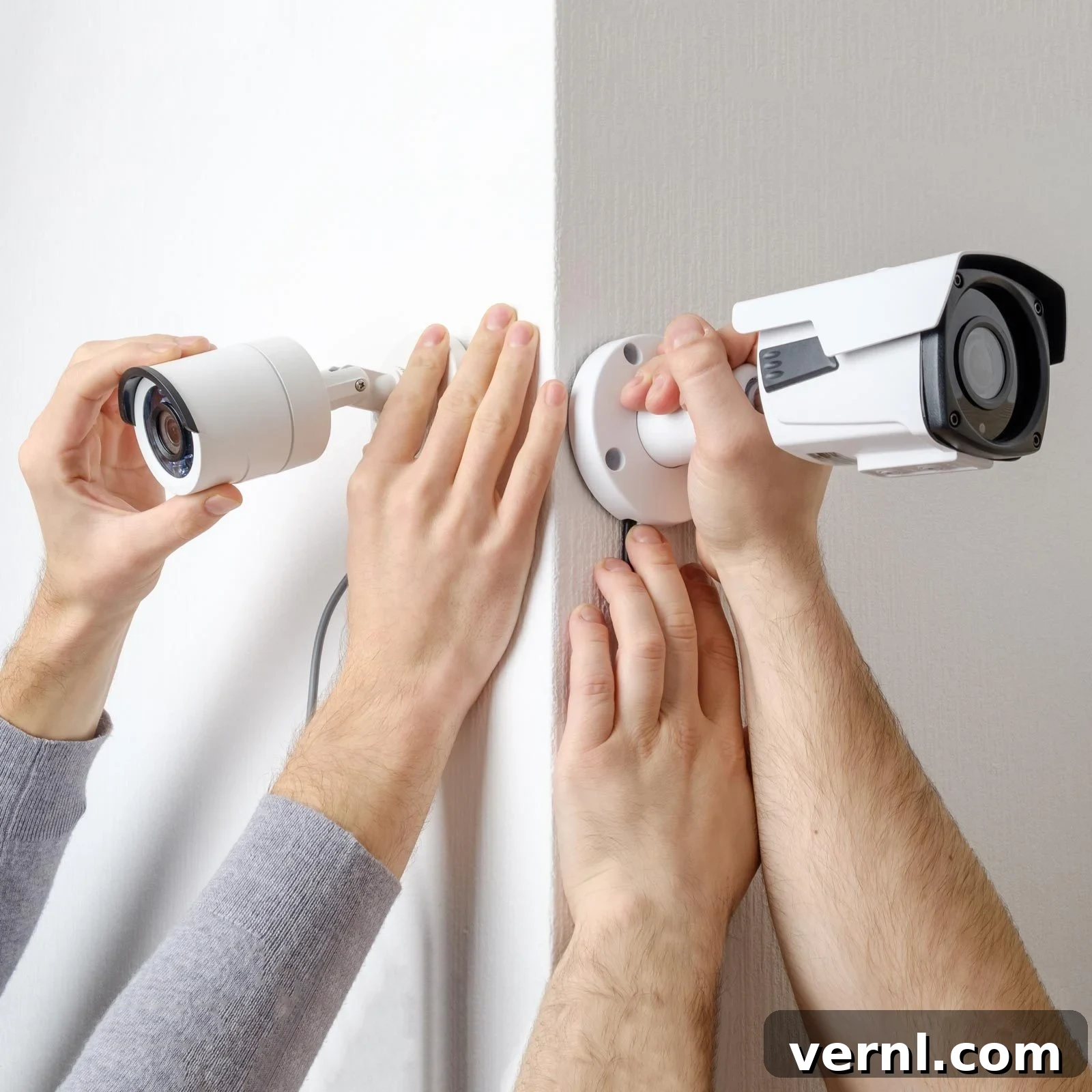
When budgeting for DIY security cameras, it’s crucial to factor in the ongoing cost of video storage. While some cameras offer local storage solutions, many rely on cloud storage subscriptions. These subscriptions typically range from $5 to $10 per month, depending on the storage duration and features. Some systems provide a choice between local and cloud storage, or even a free tier with limited features. A major advantage of DIY cameras is their straightforward installation; most models can be effortlessly installed in mere minutes using basic tools like a screwdriver. Always consider the long-term cost of ownership, including power consumption and potential accessory purchases.
Professionally Installed Security Systems
Opting for a professionally installed security system brings a different set of benefits and costs. Installation fees can vary, typically ranging from $100 to $400 per camera, with the average home installation often exceeding $1,000 for a comprehensive setup. This investment often covers not just the physical installation but also expert consultation on optimal camera placement, system configuration, and integration with existing smart home infrastructure, ensuring a seamless and highly effective security solution.
Professionally installed systems frequently include a local storage option as part of the overall package, ensuring your footage is securely stored on-site. However, many reputable home security companies, such as Vivint and Frontpoint, also offer robust cloud subscription plans for their professionally installed cameras, providing off-site backup and easy access to footage from anywhere. A significant advantage of professional installations is the option for professional monitoring services. This added layer of security, typically costing an extra $10 to $15 per month, means that trained personnel are actively monitoring your camera feeds. In the event of detecting an intruder or any suspicious activity, the monitoring company will promptly contact you and, if necessary, dispatch local authorities, offering an unparalleled level of rapid response and peace of mind. These systems often come with warranties and ongoing technical support, adding further value.
Strategic Placement: Best Places To Put Your Security Cameras for Maximum Effectiveness
The efficacy of your home security camera system hinges not just on the quality of the cameras, but critically on their strategic placement. Careful consideration of each camera’s location ensures optimal coverage, reduces blind spots, and maximizes deterrence. Here are some expert guidelines to help you position your cameras for maximum effectiveness:
- Outdoor Camera Elevation: For outdoor security cameras, mounting them at a sufficient height is paramount to prevent tampering or easy removal by potential intruders. A height of approximately nine feet is generally recommended, as it is high enough to discourage unauthorized interference while still providing a clear view of the monitored area. Ensure they are out of arm’s reach but still accessible for maintenance.
- Unobstructed Views: Before finalizing any outdoor camera placement, meticulously check for potential obstructions. Trees, overgrown bushes, flags, seasonal decorations, or other yard items can severely impede a camera’s field of view, creating critical blind spots. Regularly trim foliage and ensure nothing blocks the camera’s line of sight, especially during different seasons when plant growth changes.
- Optimal Indoor Coverage with 360-Degree Cameras: When deploying 360-degree cameras indoors, positioning them as close to the center of the room as practically possible is ideal. This central placement allows the camera’s panoramic capabilities to capture a comprehensive view of the entire area, minimizing blind spots and maximizing its motion-tracking effectiveness.
- Standard Indoor Camera Placement: For standard indoor cameras with a fixed field of view, mounting them in a corner, approximately midway up the wall, often provides the best vantage point for surveying an entire room. This angled position allows the camera to capture two walls and the area between them, offering broad coverage. Conversely, mounting cameras directly to the ceiling can inadvertently create a significant blind spot directly underneath the camera, which could be exploited.
- Considering Lighting: Ensure that cameras, especially outdoor ones, are not directly pointed into strong light sources (like direct sunlight or bright floodlights) during critical monitoring hours, as this can cause severe backlighting and obscure the image. Instead, position them so light illuminates the subject rather than directly hitting the lens. This often means facing the camera away from the rising or setting sun.
- Weather Protection: Outdoor cameras should ideally be placed under eaves or overhangs to protect them from direct rain, snow, and harsh sunlight, extending their lifespan and ensuring consistent performance. While many outdoor cameras are weather-resistant, added protection is always beneficial to prevent wear and tear.
- Wi-Fi Signal Strength: For wireless cameras, confirm that the chosen placement offers a strong and stable Wi-Fi signal. Weak signals can lead to dropped connections, poor video quality, and unreliable alerts. Consider range extenders or mesh Wi-Fi systems if necessary to ensure consistent connectivity.
- Power Source Access: While battery-powered cameras offer flexibility, wired cameras require proximity to a power outlet. Plan your placement with power access in mind to avoid lengthy cable runs or the need for professional electrical work, which can add to installation costs.
Beyond the Cameras: Essential Security System Considerations
While selecting and placing cameras is paramount, a truly robust home security system involves several other critical considerations that enhance its overall effectiveness and user experience:
- Legal and Privacy Implications: Reiterate the importance of understanding and adhering to local and state laws regarding surveillance. This includes consent for recording audio, restrictions on filming in certain areas (e.g., neighbors’ properties, public spaces without legitimate reason), and data retention policies. Transparency is key, especially if you have visitors or domestic staff, to avoid legal complications and uphold ethical standards.
- Connectivity and Reliability: For wireless systems, a strong and stable Wi-Fi network is non-negotiable. Consider upgrading your router or adding mesh Wi-Fi if coverage is spotty. For wired systems, ensure proper cabling to avoid signal loss. Some advanced systems offer cellular backup, ensuring continuous monitoring even during power or internet outages, providing an invaluable layer of redundancy.
- Video Storage Solutions: Evaluate your storage needs carefully. Cloud storage offers convenience and off-site backup, protecting footage even if cameras are stolen or damaged, but comes with recurring fees. Local storage (SD cards, NVR/DVR) provides cost savings and direct control but can be vulnerable if the device is compromised. Many hybrid systems offer the best of both worlds. Consider how long you need to retain footage for various purposes, from a few days to several weeks.
- Smart Home Integration: Modern security cameras often integrate seamlessly with smart home ecosystems (e.g., Google Home, Amazon Alexa, Apple HomeKit). This allows for centralized control, automation (e.g., lights turning on when motion is detected, doors locking when cameras are armed), and voice commands, enhancing convenience and adding another layer of security by making your home respond intelligently to threats.
- Maintenance and Power Management: Regular maintenance, such as cleaning lenses, checking connections, and updating firmware, ensures optimal performance. For battery-powered cameras, monitor battery life and plan for timely recharging or replacement. Wired cameras require a consistent power supply and protection against power surges, potentially through UPS (Uninterruptible Power Supply) systems.
- False Alarms and Notification Management: Modern cameras often feature customizable motion zones, object detection (distinguishing humans from animals), and sensitivity settings to minimize false alarms triggered by pets, swaying trees, or passing cars. Learning to configure these settings effectively is crucial to prevent alert fatigue and ensure you respond promptly to genuine threats, preventing unnecessary stress and wasted time.
Conclusion: Tailoring Your Home Security for Ultimate Peace of Mind
Designing an effective home security camera system is a personal journey that requires careful planning and consideration of your unique property, lifestyle, and security concerns. From determining the optimal number of cameras for both indoor and outdoor spaces to understanding the cost implications of DIY versus professional installations, every decision contributes to the overall effectiveness of your defense. Strategic placement, combined with a clear understanding of technical features, ongoing maintenance, and adherence to privacy laws, will empower you to create a robust and reliable surveillance system. By investing time in these critical decisions, you’re not just installing cameras; you’re building a comprehensive shield that provides constant vigilance, deterring potential threats and offering you and your family the invaluable peace of mind that comes with a secure home. A well-thought-out security system is an investment in your safety and tranquility.