
Modern vehicles represent a marvel of engineering, a culmination of nearly 140 years of relentless innovation and meticulous, incremental improvement. Today, a typical car is a complex symphony of thousands of intricate parts, each meticulously designed to work in perfect tandem, ensuring the safe and efficient movement of motorists. In well-engineered vehicles, these components are built to last, performing their functions reliably for extended periods, especially when owners adhere to a diligent maintenance schedule. However, not all vehicle failures stem from natural wear and tear or the inevitable march of time. Sometimes, a vehicle’s longevity or safety is compromised due to one or more inherent design flaws.
When these design flaws escalate to create a significant safety concern for vehicle occupants or other road users, automotive manufacturers are legally obligated to take decisive action. Regulatory bodies compel companies like Hyundai, Nissan, and many others to issue a formal vehicle recall. This critical process involves proactively contacting all registered owners of the affected models, detailing the safety issue, and providing a free-of-charge remedy. Often, this requires redesigning or replacing specific parts to ensure every recalled vehicle is brought up to the required safety standard. For prospective car buyers and current owners alike, understanding which makes and models are prone to recalls can be a vital piece of information. To shed light on this complex question, the prominent vehicle sale and research platform, iseecars.com, recently published a comprehensive analysis, offering valuable insights into vehicle recall probabilities.
Decoding Vehicle Recalls: How ISeeCars Assessed Car Models
ISeeCars undertook an extensive analysis by meticulously examining vehicle recall data officially published by the National Highway Traffic Safety Administration (NHTSA). The NHTSA, a key governmental agency responsible for vehicle safety, collects and disseminates critical information regarding recalls across the automotive industry. Leveraging this robust dataset, ISeeCars developed an sophisticated methodology to project the anticipated number of recalls various vehicle makes and models are likely to experience over a significant 30-year operational span.
The NHTSA’s vast repository of data encompasses recall statistics for virtually all makes and models produced over the past decade. This comprehensive information allowed ISeeCars to compile two distinct and highly informative lists. The first delineated vehicles with the highest projected number of recalls, while the second highlighted those expected to have the fewest. The primary objective behind these lists is to empower car buyers with data-driven insights, helping them understand which models are most and least likely to present the potential inconvenience and cost of addressing recalls throughout what could be a typical 30-year lifespan for a vehicle, factoring in multiple ownership cycles.
It’s crucial to acknowledge that these lists, while meticulously researched, are fundamentally based on educated predictions and statistical modeling. Automotive design philosophies, manufacturing processes, and technological advancements are in a constant state of evolution. Therefore, while these projections offer an invaluable benchmark, it’s reasonable to anticipate that not every prediction will align perfectly with future real-world outcomes. Nonetheless, these lists provide a powerful alternative to making uninformed purchasing decisions, equipping consumers with a proactive tool for assessing potential long-term vehicle ownership considerations.
The Top 10 Models with the Most Projected Recalls
The following vehicle models have been identified by ISeeCars’ analysis as those predicted to incur the highest number of recalls over a hypothetical 30-year lifespan. This list is carefully ordered from the model with the highest predicted recall frequency down to the tenth-highest. The projected recall numbers span a significant range, from an estimated 62 recalls at the highest end to 20 at the lower end of this particular spectrum. A noteworthy observation from this data is that a significant proportion — specifically, four out of the five top positions on this list — are occupied by predictions related to Tesla models. This often sparks discussion about the complexities of introducing cutting-edge technology and rapidly scaling production within the automotive industry, which can sometimes lead to more initial adjustments and updates, frequently manifesting as recalls.
While the prospect of a vehicle having numerous recalls might seem daunting, it’s important to frame this information correctly. A high number of recalls can sometimes indicate a manufacturer’s proactive approach to safety and quality assurance, swiftly identifying and rectifying issues rather than letting them persist. However, for a consumer, it undeniably signals a higher potential for required service visits and vehicle downtime over the ownership period. Potential reasons for a higher recall rate often include the integration of novel, unproven technologies, rapid design changes, or challenges in manufacturing consistency across a high volume of units. Consumers considering these models should research specific recall types to understand the nature of the issues.
- Tesla Model Y
- Porsche Panamera
- Tesla Model 3
- Tesla Model X
- Tesla Model S
- Lincoln Aviator
- Volkswagen Atlas Cross Sport
- Volkswagen Atlas
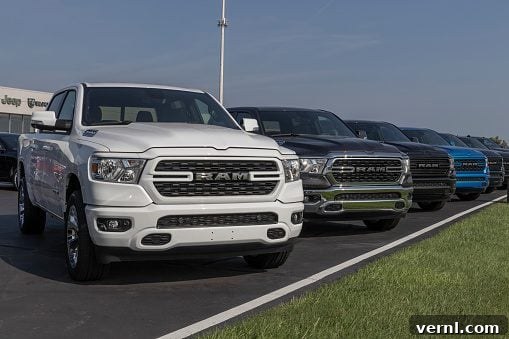
- Ram 1500
- Ram 1500 Classic
The Top 10 Models with the Fewest Projected Recalls
In stark contrast to the previous list, the following vehicle models are predicted by ISeeCars to have the fewest recalls issued throughout a comprehensive 30-year lifespan. This list is a testament to consistent engineering, mature designs, and stringent quality control. Remarkably, all the vehicles on this list are anticipated to experience less than one recall on average over the entire projected period, highlighting an exceptional level of reliability and stability. The list is meticulously ordered from the model with the absolute lowest chance of a recall to the tenth-lowest, showcasing models that typically represent a significantly lower risk of safety-related design flaws.
Vehicles that consistently achieve lower recall rates often share common characteristics. These can include established platforms that have undergone multiple refinement cycles, extensive pre-production testing, a focus on proven technologies rather than experimental ones, and robust quality management systems throughout the manufacturing chain. Many models on this list belong to luxury brands renowned for their meticulous attention to detail and long-standing reputations for durability, such as Lexus and Mercedes-Benz. Furthermore, some models may benefit from having remained relatively unchanged in their core design for several years, allowing manufacturers to iron out potential issues long before new models are introduced. For buyers prioritizing peace of mind and minimal disruption from service visits, these models offer a compelling proposition.
- MINI Convertible
- Lexus NX 300h
- Lincoln MKZ Hybrid
- Mercedes-Benz CLA
- Lexus RX 450h
- Nissan 370Z
- Hyundai Elantra GT
- Mercedes-Benz GLA
- Mercedes-Benz GLC
- Lexus IS 300
Understanding Car Recalls: What Every Owner Needs to Know
Beyond simply knowing which cars are likely to be recalled, it’s essential for every vehicle owner to understand the practical aspects of a recall. A recall is not just a statistic; it’s a direct communication from the manufacturer regarding a potential safety defect in your vehicle. The process is designed to protect you, your passengers, and others on the road. The first step for any concerned owner is to regularly check for open recalls. The easiest way to do this is by visiting the official NHTSA website (nhtsa.gov/recalls) and entering your vehicle identification number (VIN). Your VIN is a unique 17-character code found on your dashboard (visible through the windshield) or on your driver’s side door jamb. This simple check can instantly reveal if your specific vehicle has any unaddressed safety recalls.
If your car is indeed subject to a recall, the procedure for resolution is straightforward and, crucially, free of charge to the owner. The manufacturer is legally obliged to remedy the defect without cost to you, even if your vehicle is out of warranty. Upon notification or discovery of a recall, you should contact your authorized dealership. They will schedule an appointment for the necessary repair, which typically involves replacing the faulty part or performing a software update. It’s imperative to address recalls promptly, as an unaddressed safety defect could lead to serious accidents or injuries. Ignoring a recall notice could also potentially affect your vehicle’s resale value or even its insurability in some cases.
It’s also important to differentiate between a safety recall and a Technical Service Bulletin (TSB). While both originate from the manufacturer, a TSB addresses common issues or repair procedures that are not necessarily safety-related, but rather enhance performance or address customer complaints. TSB repairs are generally covered under warranty, but unlike recalls, they are not free if your warranty has expired. Understanding this distinction empowers you to advocate for the correct service when you visit a dealership.
Beyond the Numbers: Factors Influencing Vehicle Reliability and Safety
While recall statistics provide a valuable snapshot, true vehicle reliability and safety are shaped by a multitude of deeper factors that extend far beyond mere numbers. A manufacturer’s unwavering commitment to quality, spanning from the initial design phase through to post-sale customer support, is paramount. This includes rigorous design and engineering processes that anticipate and mitigate potential failure points before a vehicle even enters production. The choice between integrating complex, bleeding-edge technology versus relying on proven, established solutions can also significantly impact a vehicle’s long-term reliability profile. While innovation drives progress, it can also introduce unforeseen complexities and potential software or hardware glitches that may necessitate future recalls.
Furthermore, the intensity and thoroughness of a manufacturer’s testing protocols are critical. This encompasses everything from extensive crash testing to endurance testing of components under extreme conditions, ensuring that parts can withstand the stresses of real-world driving over many years. Effective quality control measures throughout the supply chain and manufacturing process are equally vital, preventing defective components from being installed in new vehicles. Finally, a robust post-sale monitoring system, which actively tracks customer complaints, warranty claims, and field failures, allows manufacturers to quickly identify emerging issues and address them, often through TSBs or, if safety is compromised, through recalls. The vigilance of consumer reporting and independent safety organizations also plays a crucial role in bringing potential defects to light, influencing regulatory action and ultimately enhancing overall automotive safety standards for everyone.
In conclusion, the journey of vehicle ownership is a dynamic one, filled with continuous advancements and evolving safety standards. Studies like the one conducted by ISeeCars offer an invaluable resource for navigating the complexities of the automotive market. They highlight that while some vehicles are engineered for exceptional long-term reliability with minimal recall incidents, others, especially those pushing technological boundaries, may require more attention over their lifespan. Recalls, though inconvenient, are ultimately a testament to a system designed to prioritize consumer safety and facilitate continuous improvement in vehicle design and manufacturing. By staying informed, understanding the recall process, and choosing vehicles that align with your expectations for maintenance and reliability, consumers can make more empowered and safer decisions on the road ahead.