The Unseen Heroes: How Car Crumple Zones Protect You in a Collision
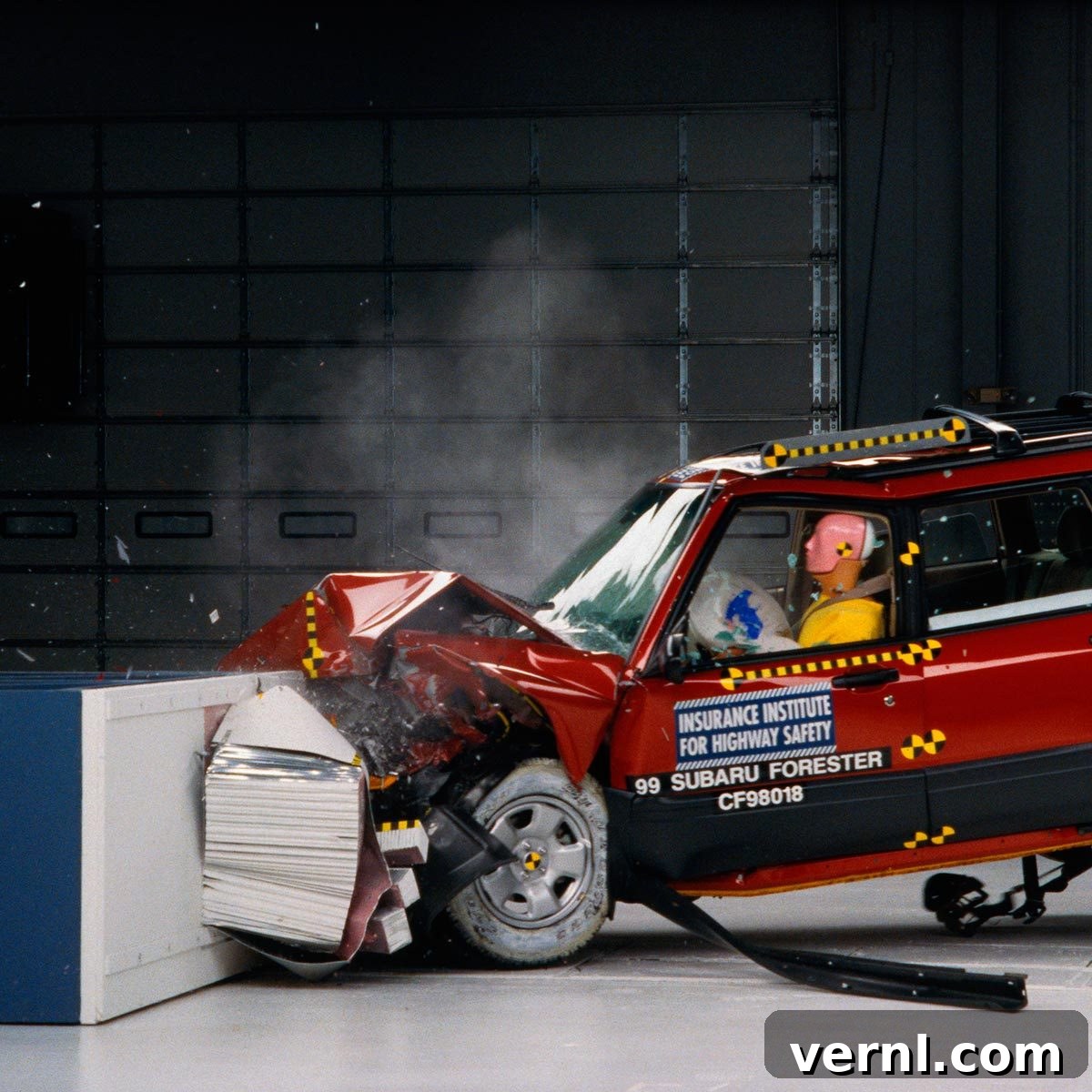
The aftermath of a severe car accident can be a jarring sight. Vehicles twisted into unrecognizable metal, often destined for the scrap yard. It might seem counterintuitive, but this extensive damage isn’t always a sign of poor design. In fact, the very act of your car deforming is a critical testament to sophisticated engineering aimed at protecting its occupants. While visible damage to your cherished vehicle can be frustrating, it signifies that one of the most vital safety features – the crumple zone – has performed its job flawlessly.
Often overshadowed by more widely recognized safety innovations like airbags and seatbelts, car crumple zones are nevertheless an indispensable component of modern vehicle safety. They represent a remarkable feat of design, transforming potentially lethal impact forces into controlled deformation, thereby dramatically increasing the chances of survival and reducing injuries for those inside.
What Exactly Are Car Crumple Zones?
At their core, crumple zones are specific areas of your vehicle meticulously engineered to buckle, fold, and collapse in a controlled manner during a collision. This deliberate deformation might initially appear counterproductive – why would you want your car to be damaged in a crash? The answer lies in the fundamental principles of physics, specifically the relationship between force, mass, and acceleration.
The Physics of Impact: Force, Mass, and Acceleration
The equation F=ma (Force equals mass times acceleration) is central to understanding why crumple zones are so effective. In a car accident, immense forces are generated due to the large masses of the vehicles involved and their rapid deceleration. If these forces are not managed, they are transferred directly to the vehicle’s occupants, leading to severe injuries.
When a vehicle crashes, it experiences a rapid change in momentum. The impulse-momentum theorem states that the impulse (force multiplied by the time over which the force acts) equals the change in momentum. By designing parts of the car to crumple, engineers effectively extend the time it takes for the vehicle (and its occupants) to come to a complete stop. Even a fraction of a second can make an enormous difference. This extended deceleration time reduces the peak force exerted on the vehicle and, crucially, on the people inside. Instead of an instantaneous, bone-shattering stop, crumple zones allow for a more gradual, albeit still rapid, deceleration.
Consider the alternative: a vehicle built like a solid, unyielding tank. While such a structure might withstand impact with minimal deformation itself, it would transfer the full, undiminished force of the collision directly to the occupants. In essence, the car would remain intact, but its passengers would bear the brunt of the impact, suffering catastrophic injuries. Crumple zones sacrifice the vehicle’s structural integrity in specific areas to safeguard human life.
A Brief History of Automotive Safety and Crumple Zones
The concept of designing vehicles to deform in a controlled manner for occupant safety is not new. For decades, cars were often built with rigid, strong frames, under the misguided belief that an unyielding structure offered the best protection. However, early crash tests and real-world accidents demonstrated that these stiff structures actually increased the risk of injury to occupants, as the car itself provided little energy absorption.
The pioneering work of engineer Béla Barényi at Mercedes-Benz in the 1950s laid the groundwork for modern crumple zones. Barényi patented the concept of a “safety cell” for passengers combined with crumple zones at the front and rear. This revolutionary idea, first implemented in the Mercedes-Benz W111 “Fintail” sedan in 1959, marked a paradigm shift in automotive safety. Instead of a uniformly rigid structure, the W111 featured a rigid passenger compartment surrounded by progressively deformable zones. This innovation drastically improved occupant protection and set the standard for future vehicle design.
Over the decades, as materials science advanced and computer simulation tools became more sophisticated, the design and effectiveness of crumple zones evolved dramatically. Today, they are an integral part of passive safety systems, working in concert with seatbelts, airbags, and a rigid passenger cell to create a comprehensive safety cocoon around vehicle occupants.
Why Crumple Zones are Absolutely Crucial for Your Safety
The primary function of crumple zones is to absorb impact energy during a collision. By doing so, they prevent this energy from being transferred directly to the passenger compartment, where it would endanger the occupants. Volkswagen eloquently states that “most of the energy is dissipated across these zones, and not in your passenger compartment.” This energy dissipation is the key to preventing severe injuries and saving lives.
Protecting the Passenger Cell
Modern vehicle safety design is a delicate balance. While the front and rear of a car are designed to crumple, the central passenger compartment, also known as the safety cell or survival cell, is engineered to be as rigid and robust as possible. Its purpose is to maintain its structural integrity, preventing intrusion into the occupant space during a crash. Crumple zones act as a buffer, dissipating energy before it can compromise the integrity of this vital safety cell. Think of it as a protective shield that takes the initial blow, allowing the inner sanctuary to remain intact.
Reducing Injury Severity
When the force of an impact is absorbed by crumple zones, occupants inside the vehicle experience significantly less force. This reduction in force directly translates to a lower risk of severe injuries and fatalities. Without adequate crumple zones, the sheer magnitude of the impact force would overwhelm the human body, leading to a host of debilitating injuries:
- Internal Injuries: Organs can be ruptured or damaged by sudden, extreme deceleration.
- Bone Fractures: Limbs, ribs, and the spine are highly susceptible to breaks under immense force.
- Head Trauma: The brain can suffer severe injury from sudden impacts against the skull or from rapid deceleration forces.
- Spinal Cord Injuries: These can lead to paralysis and permanent disability.
As automotive expert Michael Brooks noted in an interview referenced by Mike Gagliardi of NBC News, a lack of sufficient crumple zones “would increase the force upon occupants in the event of a crash.” Your body, being significantly smaller and more fragile than a car, cannot absorb such concentrated force without suffering grave consequences. A vehicle designed to crumple essentially takes the brunt of the impact for you, acting as a buffer that sacrifices its own form to preserve yours.
Design and Engineering Behind Crumple Zones
The design of crumple zones is a highly sophisticated process, integrating advanced materials, structural analysis, and extensive testing. Engineers strategically place weak points and energy-absorbing structures within the frame rails, fenders, and other components of the car’s body. These areas are designed to fold or collapse in a predictable and controlled sequence, maximizing energy absorption.
Materials science plays a crucial role. Modern vehicles utilize a combination of high-strength steel, aluminum, and even composite materials, each chosen for its specific properties. Some materials are designed to deform progressively, while others are used to maintain the integrity of the passenger cell. Computer simulations, often involving complex finite element analysis (FEA), allow engineers to predict how different designs and materials will behave under various crash scenarios before a physical prototype is even built.
Beyond the Basics: Types and Locations
Crumple zones are not confined to just the front and rear of a vehicle. Modern safety design incorporates energy absorption in multiple areas to protect against various types of collisions:
- Front Crumple Zones: These are the most prominent and are designed to absorb energy in head-on and frontal offset collisions. They protect occupants from forward momentum.
- Rear Crumple Zones: Critical for absorbing energy in rear-end collisions, protecting occupants from whiplash and preventing rear components from intruding into the passenger compartment.
- Side Impact Structures: While not traditional “crumple zones” in the same way as front/rear, side doors and pillars are reinforced and designed to deform in specific ways to absorb energy and protect occupants from lateral impacts.
- Roof Reinforcements: Designed to prevent collapse in rollover accidents, often incorporating high-strength steel.
The Modern Landscape: Challenges and Future Outlook
While the benefits of crumple zones are undeniable, their implementation continues to evolve. New vehicle designs and materials present unique challenges. The recent discussion around the Tesla Cybertruck, with its stainless-steel exoskeleton, highlights some of these complexities. As Brooks pointed out, the vehicle’s rigid stainless-steel construction raises questions about its ability to create sufficient crumple zones. While ultra-hard materials offer durability, they can make controlled deformation more challenging, potentially shifting more impact force onto occupants or other vehicles involved in a collision. Engineers must find innovative ways to achieve controlled deformation even with extremely stiff materials.
Balancing Safety with Practicalities
Another aspect of crumple zone design is the trade-off between occupant safety and vehicle repairability. A car that crumples extensively to protect its occupants will, by definition, sustain significant damage. This often leads to high repair costs, or the vehicle being deemed a total loss, even in crashes where occupants walk away relatively unharmed. While safety remains the paramount concern, the economic implications of crumple zone performance are a constant consideration for manufacturers and consumers alike.
The future of crumple zones may involve “smart” or adaptive designs. Imagine crumple zones that can adjust their stiffness based on the speed and angle of an impending impact, or vehicles that use active systems to prepare for a crash by altering structural components. As technology advances, these unseen heroes of road safety will only become more sophisticated, offering even greater protection to drivers and passengers around the world.
Conclusion: Unseen Heroes of Road Safety
Crumple zones are an ingenious and life-saving marvel of automotive engineering. They embody a philosophy where the car is designed to sacrifice itself, absorbing devastating impact forces to protect the fragile human occupants within. From the pioneering efforts of Béla Barényi to today’s advanced computer-aided designs, these crucial safety features continuously evolve, working tirelessly in the background to mitigate the destructive power of collisions. So, the next time you see a heavily damaged vehicle after an accident, remember that its crumpled form is not a sign of failure, but rather a testament to a successful and often life-saving deployment of its hidden heroes: the crumple zones.
Resources and Further Reading
- Crumple Zones, Volkswagen.
- Pedestrians, already dying at record levels, now face Elon Musk’s Cybertruck, NBC, 2023.