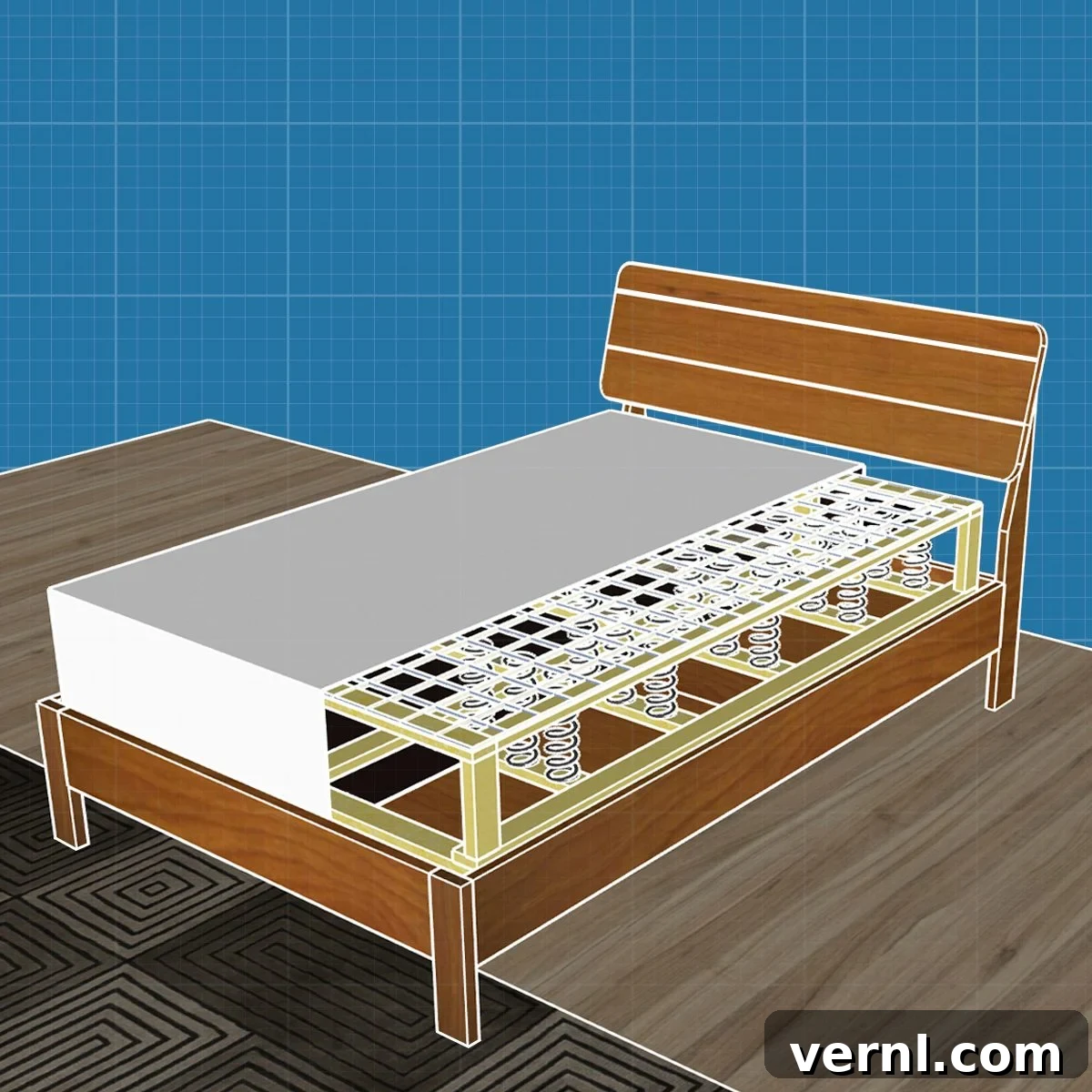
The Ultimate Guide to Box Springs and Modern Mattress Foundations
Do you recall the distinct sound of an old mattress in a rustic cabin or a vintage motel room? That characteristic symphony of high-pitched squeaks and resonant creaks often stemmed from a crucial, yet often overlooked, component of the bed: the box spring. These traditional foundations played a significant role in the sleep experience of generations, providing support and comfort. But what exactly is a box spring, and how has its role evolved in the contemporary bedding landscape? This comprehensive guide delves into everything you need to know about box springs, their modern alternatives, and how to ensure your mattress has the optimal support for a restful night’s sleep.
What Is a Box Spring? Unpacking the Traditional Bed Base
At its core, a box spring is a bed-sized, wooden frame containing a network of steel springs or, in more economical versions, a rigid metal grid pattern, all neatly encased in fabric. Historically, its primary role was to serve as a vital intermediary, positioned between an innerspring mattress and the bed frame. This design offered a multi-faceted approach to enhancing sleep quality and mattress longevity.
The Key Functions of a Box Spring
- Provides Essential Support: For traditional innerspring mattresses, a box spring was instrumental in distributing the sleeper’s weight evenly across the mattress surface. This prevented premature sagging and maintained the integrity of the mattress’s coil system, contributing to its overall lifespan.
- Absorbs Impact: Acting much like a shock absorber for your mattress, the springs within a box spring would flex and compress, mitigating the impact of movement and weight. This not only enhanced comfort but also reduced wear and tear on the mattress itself.
- Improves Airflow: The open structure of a box spring, with its internal springs, allowed for crucial air circulation beneath the mattress. This enhanced ventilation helped to dissipate heat and moisture, preventing the mattress from becoming too warm and creating an environment less conducive to mold, mildew, and dust mites.
- Elevates Mattress Height: Beyond its functional benefits, a box spring also served to raise the mattress to a more comfortable and ergonomic height. This made getting into and out of bed significantly easier, eliminating the need for awkward squats or uncomfortable climbs.
The Decline of Traditional Box Springs
While once ubiquitous, traditional box springs are less common today than in decades past. This shift is largely attributed to significant advancements and changes within the mattress industry itself. Roughly ten years ago, industry leaders such as Serta Simmons Bedding and Tempur-Sealy International began to pivot towards promoting alternative foundations, primarily solid wood foundations. The reason for this evolution is rooted in the changing construction of mattresses. Many contemporary mattresses, particularly those made from foam (memory foam, gel foam) and latex, require a far more rigid and unyielding support surface than a traditional box spring can provide. The flexibility of springs in an older box spring can actually hinder the performance and potentially damage the specialized support layers of newer mattress technologies.
Noah Meicler, head of sales for Texas Mattress Makers in Houston, succinctly puts it: “Most of today’s mattresses have tempered coils or a support layer that does not need to interact with a box spring. So there are no box springs, really, any more in the bedding industry.” He further explains, “The way most mattresses are created, the support comes from a tempered coil in a mattress that sits on a foundation. The mattress doesn’t need to interact with a box spring like it used to. So a box spring is a legacy term.” This highlights how the internal engineering of modern mattresses has largely absorbed the functions traditionally performed by external box springs.
Modern Mattress Foundations: Beyond the Box Spring
Regardless of your mattress type, a proper base is essential. While placing a mattress directly on the floor might seem like a minimalist solution, it severely restricts crucial airflow, creating an environment prone to a buildup of dust, moisture, and mold. This can compromise both the mattress’s hygiene and lifespan, as well as potentially impact your health. Thus, the need for a suitable mattress foundation remains paramount. With the decline of the traditional box spring, a variety of effective alternatives have emerged to cater to the diverse needs of modern mattresses and sleepers.
Types of Mattress Foundations
The bedding industry now offers a range of innovative solutions, each designed to provide optimal support and enhance your sleep experience:
1. Foundations (Wood Slat or Solid)
Often referred to simply as “foundations,” these are the direct descendants and modern replacements for box springs, especially for foam and latex mattresses. Unlike their spring-filled predecessors, these foundations feature a sturdy wooden or metal frame topped with either closely spaced wooden slats or a flat, solid surface. They are engineered to provide the firm, unyielding support that many contemporary mattresses demand.
- Construction: Typically made from robust wood or metal, covered in an aesthetic fabric. The key is the rigid surface, whether solid or slatted.
- Suitability: Ideal for foam, latex, and many hybrid mattresses that require consistent, non-yielding support to prevent sagging and ensure proper alignment of internal layers. When choosing a slatted foundation, ensure the slats are no more than 2-3 inches apart to prevent foam from dipping between gaps.
- Integration: Most foundations are designed to fit within an existing bed frame, creating a seamless look. However, some manufacturers offer freestanding models that can be used independently with legs attached.
2. Platform Beds
Platform beds represent an all-in-one bedding solution, ingeniously combining the bed frame and mattress foundation into a single, cohesive unit. These beds feature a low-profile design and incorporate a sturdy base (which can be solid, slatted, or a metal grid) designed to directly support the mattress. No additional box spring or foundation is required, simplifying setup and often creating a contemporary aesthetic.
- Design & Aesthetics: Available in an immense variety of styles, from minimalist wooden frames to upholstered designs, and options with built-in storage drawers or unique headboards.
- Support System: The integrated base can consist of widely spaced wooden slats (requiring a bunkie board for foam mattresses), closely spaced slats, or a solid surface.
- Pros: Aesthetically pleasing, eliminates the need for extra components, often saves space, and can be very cost-effective in the long run.
- Cons: Can be heavier to move, and changing the mattress height significantly is not always possible. Some lower-profile designs might not be ideal for individuals with mobility challenges.
3. Adjustable Bases
For those seeking the ultimate in comfort and customization, adjustable bases offer a premium sleep experience. These sophisticated foundations allow sleepers to elevate the head and/or foot of the mattress to various positions, transforming your bed into a versatile haven for reading, watching TV, or simply relaxing. Advanced models often include features like massage functions, USB charging ports, under-bed lighting, and programmable memory positions.
- Functionality: Controlled via a remote, allowing for independent adjustment of head and foot sections. Some offer zero-gravity positions for optimal pressure relief.
- Health Benefits: Can alleviate snoring, reduce symptoms of acid reflux, improve circulation, and relieve back pain or joint discomfort by allowing precise ergonomic positioning.
- Mattress Compatibility: Best paired with flexible mattresses such as memory foam, latex, or specific hybrid models designed to bend without damage. Traditional innerspring mattresses are generally not suitable for adjustable bases.
- Cost: Typically the most expensive foundation option, reflecting their advanced technology and features.
4. Bunkie Boards
A bunkie board is a thin, solid, or slatted piece of wood, usually 1-2 inches thick, wrapped in fabric. It’s designed to provide a firm, low-profile support surface. They are particularly useful when a platform bed has slats that are too far apart for a foam or latex mattress, or if you want to add firm support without significantly increasing the bed’s height, such as in bunk beds (hence the name “bunkie”).
- Profile: Very low-profile, ideal for maintaining a modern, minimalist look or for use in limited-height settings.
- Purpose: Adds firm, even support, preventing sagging and extending mattress life, especially over widely spaced slats.
Signs That Your Box Spring is Wearing Out
Even if you’re not in the market for a new box spring, you might still be using one with your current mattress. While many can last for years, they are not immortal. Too many restless nights, unexplained aches, and pains can be clear indicators that it’s time to question the integrity of your entire sleep system, including your foundation. As Noah Meicler, whose family has been in the mattress business for four generations, observes, “There are some customers who inherited a box spring and mattress from their grandparents. There are people who’ve had a mattress set for more than 30 years. They come in and cringe and make that full-of-teeth face and say, ‘I don’t want to tell you how old my mattress is.'” While an older box spring might technically still function, its diminishing support can severely impact your mattress’s performance and your overall sleep quality.
You’ll know your box spring is nearing the end of its useful life if you notice any of these tell-tale signs:
- Audible Cues: If your bed emits creaks or squeaks with even minimal weight or pressure, it’s a strong indicator. These noises typically originate from loose springs, worn wood joints, or structural instability within the box spring itself.
- Visible Sagging or Bowing: Inspect your box spring for any visible dips, sags, or bowing, particularly around the edges or in the center. A compromised box spring can no longer provide even support, leading to premature mattress wear and poor spinal alignment.
- Damaged Internal Components: Carefully examine the steel wire or metal grid patterns that organize the springs. If you observe any bending, breakage, or damage along the perimeter, it’s highly probable that the interior support system is also compromised. This structural failure means the box spring can no longer properly support your mattress.
- Lumps or Unevenness: Beyond visible sagging, you might feel lumps or an overall unevenness when running your hand across the surface of the box spring. This indicates internal components have shifted or broken.
- Increased Aches and Pains: If you’re waking up with new or worsened back pain, neck stiffness, or joint discomfort, and your mattress isn’t excessively old, a failing box spring could be the culprit. Inadequate support from below can cause your mattress to sag in unsupported areas, leading to poor sleep posture.
- Shortened Mattress Lifespan: A deteriorating box spring cannot provide the consistent, firm foundation your mattress needs. This accelerates the wear and tear on your mattress, potentially shortening its lifespan significantly, even if the mattress itself is relatively new.
How Long Does a Box Spring Last?
The lifespan of a box spring can vary significantly depending on its quality, the materials used in its construction, and how it’s used. High-quality box springs, built with durable wood frames and robust steel springs, can impressively last for more than 20 years. Conversely, inferior models, often made with cheaper materials and less resilient construction, might only endure for two or three years before showing signs of significant wear and tear. According to the Sleep Foundation, the average lifespan for most box springs is approximately 10 years. Factors such as how frequently it’s used, the weight of the individuals sleeping on it, and whether it’s paired with an appropriate mattress all contribute to its longevity. Less usage and lighter weight tend to correlate with a longer lifespan.
What To Do With a Worn Out Box Spring? Responsible Disposal and Recycling
Once your box spring has reached the end of its useful life, responsible disposal is crucial. Due to their bulky size and mixed materials, they cannot simply be tossed into regular household trash.
As Meicler explains, “In Texas at least, you can’t throw a box spring in a dumpster. Our company hauls away your old one, and we break it down at our factory and send the parts for recycling or scrap. Otherwise, you’d have to call a company like 1-800-GOT-JUNK?” This highlights the importance of understanding local regulations and available services.
Here are your primary options for disposing of a worn-out box spring:
- Local Recycling Centers: Many municipal or county recycling centers accept large bulky items, including box springs. It’s advisable to check with your specific local facility for their acceptance policies and any preparation requirements (e.g., removing fabric).
- Junk Removal Services: Companies like 1-800-GOT-JUNK? specialize in hauling away large, unwanted items. This is often a convenient option, though it comes with a service fee. They are typically equipped to handle the dismantling and proper disposal or recycling of components.
- Mattress Retailer Haul-Away Programs: When purchasing a new mattress and foundation, many retailers offer a haul-away service for your old mattress and box spring, often for a nominal fee or as part of a delivery package. This is usually the most straightforward option.
- Special Collection Days: Some communities have designated “bulk trash” or “heavy trash” collection days where residents can place large items at the curb for pickup. Check your local sanitation department’s schedule and guidelines.
- DIY Recycling (Advanced): For the ambitious DIYer, a box spring can be disassembled into its core components: wood, metal, and fabric. The wood and metal can often be recycled at appropriate facilities, while the fabric may need to be discarded with general waste. This method requires tools and effort but is a sustainable approach.
Proper disposal ensures that valuable materials are recycled and bulky items do not end up in landfills, contributing to environmental sustainability.
Conclusion: The Foundation of Good Sleep
Whether you’re clinging to an inherited box spring or exploring the myriad of modern mattress foundations, understanding the role of your bed’s base is fundamental to achieving optimal sleep and maximizing the lifespan of your mattress. While traditional box springs have largely given way to more rigid foundations suited for contemporary mattress technologies, the core principle remains: a good night’s sleep starts with the right support from the ground up. By choosing the appropriate foundation for your specific mattress type and being aware of the signs of wear, you can ensure your bed remains a sanctuary of comfort and proper alignment for years to come.