
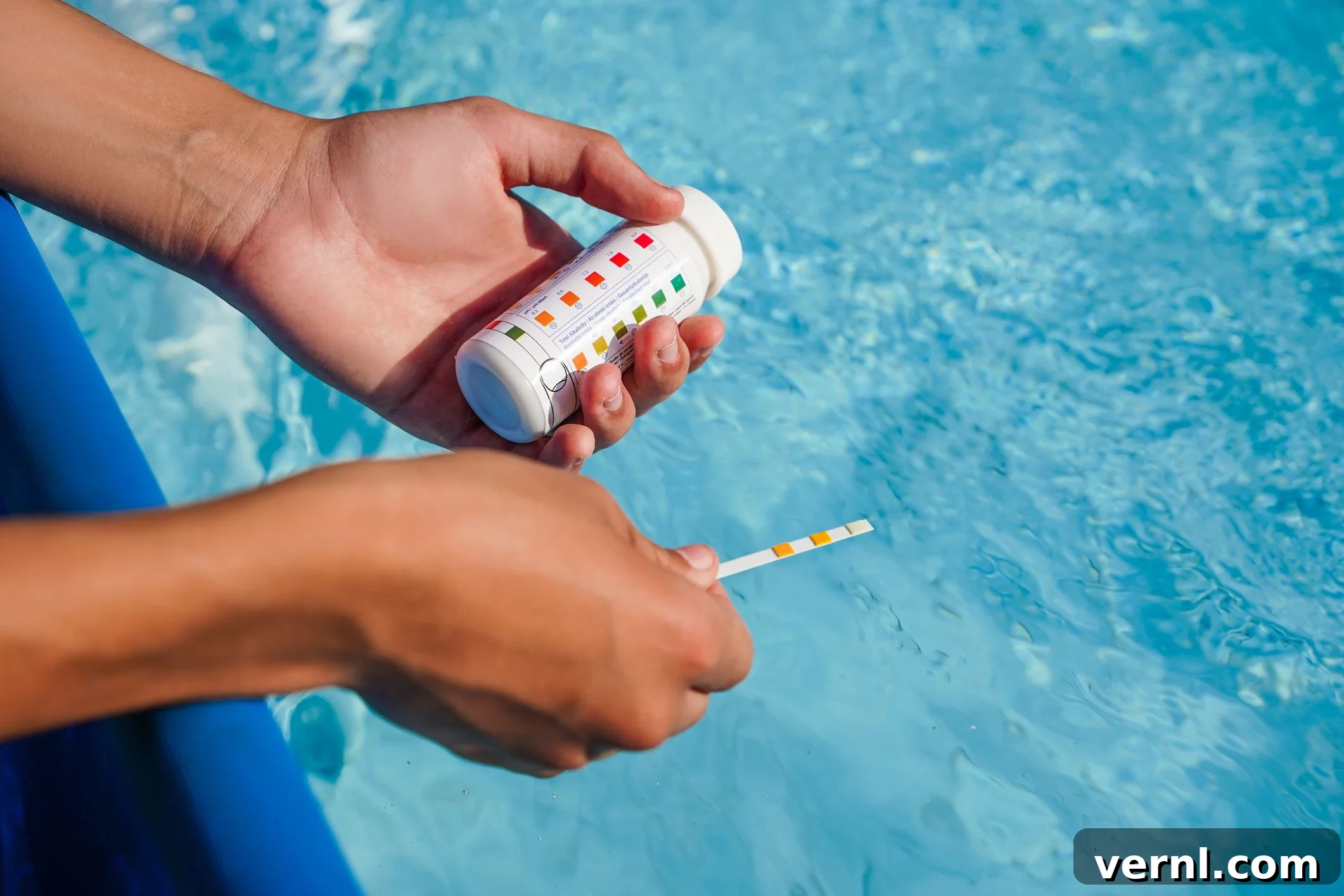
As the crisp autumn air signals the arrival of colder months, many pool owners turn their attention to the vital task of closing their in-ground pools and numerous above-ground models for the winter season. While most pools don’t require complete draining, they certainly demand meticulous preparation – often referred to as “tucking them in” – for their long winter hibernation. This process, known as passive winterization, is essential for preserving your pool’s longevity and ensuring a smooth reopening next spring. A cornerstone of this critical seasonal maintenance, alongside steps like draining a pool to lower water levels or fully winterizing your pool, is the precise balancing of its pH level. “pH” stands for “potential of hydrogen,” and in pool water, it serves as a measure of acidity or alkalinity on a scale from 0 to 14. Achieving the ideal pH balance is not merely a recommendation; it’s a fundamental requirement for pool health, impacting everything from water clarity to equipment longevity. Therefore, before you hang up your swimsuits until next summer, it’s imperative to have your pool water tested and properly balanced.
Why Is Proper Pool pH Level So Important?
Understanding the significance of your pool’s pH level is key to effective pool maintenance, both during active swimming seasons and throughout the dormant winter months. As Tina Doyle of Leslie’s Pool Supply aptly states, “The chemistry of your water, including pH, is what is responsible for keeping your pool clean, safe and healthy to use.” The pH scale is a logarithmic measure, meaning even small numerical differences represent significant changes in acidity or alkalinity. A neutral pH is 7; anything below 7 is acidic, and anything above 7 is basic (alkaline). The optimal pH range for swimming pools is remarkably narrow: between 7.4 and 7.8. Maintaining this delicate balance is crucial because it prevents your water from becoming either excessively acidic (low pH) or overly basic (high pH), both of which can lead to a cascade of costly and unpleasant issues.
The immediate and most noticeable impact of unbalanced pH often affects swimmers directly. Water that is too acidic or too alkaline can cause skin and eye irritation, leading to discomfort and deterring use. However, the problems extend far beyond swimmer comfort, significantly affecting the pool’s infrastructure and overall water quality. Even during the cold-weather months, when the pool is covered and inactive, an improper pH level can silently wreak havoc. Here are some of the critical problems that can arise from unbalanced pH:
- Stains and Scale on Pool Surfaces: Low pH (acidic water) can etch pool surfaces, leading to mineral stains, especially on plaster. High pH (basic water), conversely, can cause calcium and other minerals to precipitate out of the water, forming unsightly and rough scale deposits on walls, floors, and equipment. Over time, these can become difficult and expensive to remove.
- Corrosion of Metals: Highly acidic water is corrosive. It can aggressively attack metal components within your pool system, including ladders, handrails, light fixtures, and, critically, internal components of your pool heater, pump, and filter. This corrosion shortens the lifespan of expensive equipment, leading to premature failures and costly replacements.
- Cloudy or Discolored Water: Unbalanced pH directly impacts water clarity. High pH can cause calcium hardness to fall out of solution, leading to milky, cloudy water. It also reduces the effectiveness of your primary sanitizer, chlorine, making the pool more susceptible to algae growth and bacterial contamination, which can result in green or discolored water.
- Plaster Pitting: For pools with plaster finishes, chronically low pH can lead to “pitting” – small, localized depressions that not only look bad but can also compromise the structural integrity of the plaster over time, potentially requiring extensive repairs.
- Vinyl Stretching/Puckering: Vinyl liners are particularly sensitive to water chemistry. Highly acidic or alkaline water can degrade the vinyl material, causing it to stretch, wrinkle, or pucker, which can lead to leaks and necessitate an expensive liner replacement.
- Fiberglass Blistering: Fiberglass pools can develop blisters when exposed to persistently imbalanced water chemistry, often linked to osmosis and improper pH levels, which can trap water within the laminate layers of the pool shell.
Beyond these structural and aesthetic concerns, there’s an overarching issue: the efficacy of your sanitizers. As Doyle emphasizes, “Perhaps most importantly, pH has a direct impact on the efficacy and longevity of your chlorine, which can quickly lead to unsanitary water conditions.” Chlorine, the most common pool sanitizer, works best within that narrow pH range of 7.4-7.8. If the pH is too high, chlorine becomes significantly less effective at killing bacteria and algae, essentially becoming “lazy.” If the pH is too low, chlorine is consumed too rapidly, becoming overly aggressive and quickly dissipating, leading to the need for excessive chemical additions and unstable sanitization.
Why Does the Pool pH Level Matter in the Winter?
The importance of balanced pool pH doesn’t diminish once the swimming season ends; in fact, it becomes even more critical for effective winterization. As Doyle explains, “Making sure the pH is balanced before closing ensures that your chlorine can work efficiently throughout the winter months, and you’ll reduce the risk of stains and scale while the pool is closed.” When a pool is winterized, it enters a state of passive maintenance. Chemicals are added to prevent algae growth and protect surfaces and equipment over several months without active filtration or circulation. If the pH is out of balance during this period, the winterizing chemicals, including any residual chlorine or algaecides, will be less effective, leaving your pool vulnerable to potential issues.
An improperly balanced pool through winter is an invitation for trouble. Low pH water can continue to corrode metal parts and etch surfaces, while high pH can lead to scale formation, which can harden over the cold months, making spring opening a much more arduous and expensive task. Stains that set in over winter can be incredibly stubborn to remove, often requiring harsh chemicals or professional cleaning.
Once the pool is properly winterized and covered, Doyle suggests that you typically won’t have to worry much about major water balance adjustments until spring. However, this doesn’t mean complete neglect. It’s still a smart practice to test the water about once a month, especially when ambient temperatures are consistently below 60 degrees Fahrenheit (15-16 degrees Celsius). This routine check helps to ensure that no unexpected chemical balance issues arise, giving you an early warning if something has shifted significantly.
A crucial caveat to winter maintenance: Doyle strongly advises against adding water balancing chemicals to the pool while your plumbing is winterized and the pump disconnected. Without active water circulation, any added chemicals will remain concentrated in one area of the pool. This highly concentrated dose can directly damage the pool’s surfaces, liner, or components, leading to localized bleaching, staining, or corrosion. If you identify a balance issue during your monthly winter check, note it, and plan to address it comprehensively when you begin the spring opening process, or consult a pool professional for specialized guidance.
Furthermore, for those fortunate enough to live in climates where year-round swimming is possible and pool winterization isn’t necessary, Doyle underscores that “it’s important to still routinely check and balance your pH level to avoid any issues and maximize chlorine efficiency.” Consistent, proactive pool chemistry management is a year-round commitment, regardless of seasonal closures, to ensure a healthy, safe, and beautiful swimming environment.
How Do You Test Pool pH Levels?
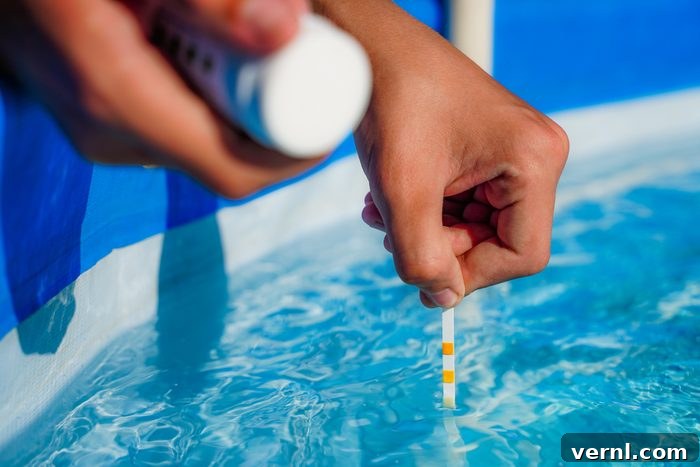
Accurately testing your pool’s pH level is the first step toward maintaining proper water balance. Fortunately, there are several straightforward methods available to pool owners. To conduct your own water testing at home, you’ll typically need at minimum a container of chemical test strips. These are widely available, inexpensive, and offer a quick snapshot of your water chemistry.
Using test strips is simple: remove one strip from its container, dip it into the pool water for the recommended time (usually a few seconds), and then compare the color changes on the strip to the corresponding color chart printed on the container. This chart illustrates acceptable ranges for various parameters, including pH, bromine, free chlorine, total alkalinity, and sometimes cyanuric acid or water hardness. The healthy pH range for a swimming pool is specifically between 7.4 and 7.8. While most home test kits might not provide a precise numerical reading, the “good” or “ideal” color range on the test control chart will clearly indicate when your pH is within the optimal zone.
Beyond test strips, other home testing options offer varying levels of precision:
- Liquid Test Kits (Reagents): These kits typically involve adding drops of specific liquid reagents to small vials of pool water. The color change in the water then indicates the level of a particular chemical. They often provide more accurate readings than test strips for pH and chlorine, and are excellent for total alkalinity as well.
- Digital Pool Testers: For the most precise home readings, digital testers are available. These electronic devices use probes to measure pH and other parameters directly, displaying a numerical value. While more expensive and requiring calibration, they eliminate the subjectivity of color matching and are preferred by many serious pool owners.
If you prefer a more precise and detailed analysis, or if you’re struggling to balance your water with home kits, you can always take a water sample to a local pool supply store. Most reputable stores offer free water testing services. Swimming pool professionals can utilize advanced equipment to perform a comprehensive water analysis, providing highly accurate readings for all critical parameters. They can then offer quick, tailored solutions for balancing your water, taking the guesswork out of the process and giving you specific recommendations for chemicals and dosages.
How Do You Lower or Raise Pool pH?
Adjusting your pool’s pH level is a critical maintenance task, but it’s not always as simple as adding a single chemical. As Tina Doyle points out, it’s often a process that requires a holistic understanding of pool chemistry. “Before addressing pH balance, first make sure that your total alkalinity [TA] level is within the recommended range [80 to 120 parts per million, or ppm],” she advises. Total Alkalinity is almost certainly another measure on your test strips or liquid testing kit, and it’s paramount because, as Doyle explains, “TA acts as a buffer to control pH and keep it more stable.” Think of TA as your pH’s bodyguard; if it’s too low, your pH will fluctuate wildly; if it’s too high, your pH will be stubbornly resistant to change. Therefore, always address TA before making significant pH adjustments.
Adjusting Total Alkalinity (TA) and pH:
- To Raise Total Alkalinity (and often pH): If your TA is low, the most common chemical used is sodium bicarbonate (baking soda). This common household item is a mild alkali that effectively increases TA without drastically spiking pH. Always add it incrementally, distributing it evenly across the pool surface (or pre-dissolving it), and allow time for it to circulate and affect the water chemistry before retesting.
- To Raise pH (and often TA): If your pH is low but your TA is within range, or if both are low, sodium carbonate (soda ash) is the primary choice. Soda ash is a stronger alkali than baking soda and is specifically formulated to increase pH effectively, often having a secondary effect on TA. It should also be added slowly and incrementally.
- To Lower Total Alkalinity (and often pH): When both your TA and pH are too high, or if TA is high and stubbornly keeping pH high, you’ll need to add an acid. The two most common options are sodium bisulfate (dry acid) or muriatic acid.
- Dry Acid (Sodium Bisulfate): This granular form of acid is safer to handle than liquid muriatic acid and is often recommended for home users. It effectively lowers both pH and TA.
- Muriatic Acid (Hydrochloric Acid): A powerful liquid acid, muriatic acid is highly effective at lowering both pH and TA. However, it is corrosive and requires extreme caution during handling, including wearing appropriate personal protective equipment (PPE) like gloves and eye protection, and ensuring good ventilation. Always add acid to water, never water to acid, and pour it slowly into the deep end of the pool to avoid damaging surfaces.
Whichever direction you need to go with TA and subsequent pH levels, the golden rule is incremental adjustment. Add the requisite chemical in small doses, allow sufficient time for it to circulate and mix throughout the pool water (typically several hours or overnight with the pump running, if not winterized), and then retest. Avoid the temptation to dump in large quantities, as over-correction can lead to a frustrating cycle of chasing ideal levels. Once you reach that coveted “good” color range on your pool test strips or achieve the optimal numerical reading on your testing kit, you’re good to go. This diligent approach ensures your pool remains clean, safe, and protected, ready for enjoyment next season.
General Tips for Chemical Addition:
- Read Instructions: Always follow the manufacturer’s directions for any pool chemical.
- Safety First: Wear gloves and eye protection when handling chemicals, especially acids. Work in a well-ventilated area.
- Dissolve First: For granular chemicals like soda ash or dry acid, it’s often beneficial to pre-dissolve them in a bucket of pool water before slowly adding them to the main body of the pool.
- Add Slowly: Never dump chemicals directly into skimmers or allow them to sit on pool surfaces, as this can cause damage. Add them slowly, distributing them evenly over the deepest part of the pool.
- Circulation is Key: Ensure your pool pump is running during and after chemical addition (unless the pool is fully winterized and the pump is disconnected) to thoroughly mix the chemicals and achieve an accurate reading on your next test.
Conclusion
Maintaining the perfect pH balance in your swimming pool is far more than just a seasonal chore; it’s a foundational element of comprehensive pool care that ensures safety, comfort, and longevity. Whether you’re preparing your pool for its long winter slumber or enjoying it year-round, proactive pH management prevents costly damage, enhances sanitizer effectiveness, and safeguards your investment. By understanding the “why” behind pH importance, knowing “how” to test accurately, and confidently adjusting “how” to raise or lower levels, you empower yourself to keep your pool water pristine, healthy, and inviting for many seasons to come. Prioritize your pool’s chemistry, and it will reward you with years of trouble-free enjoyment.