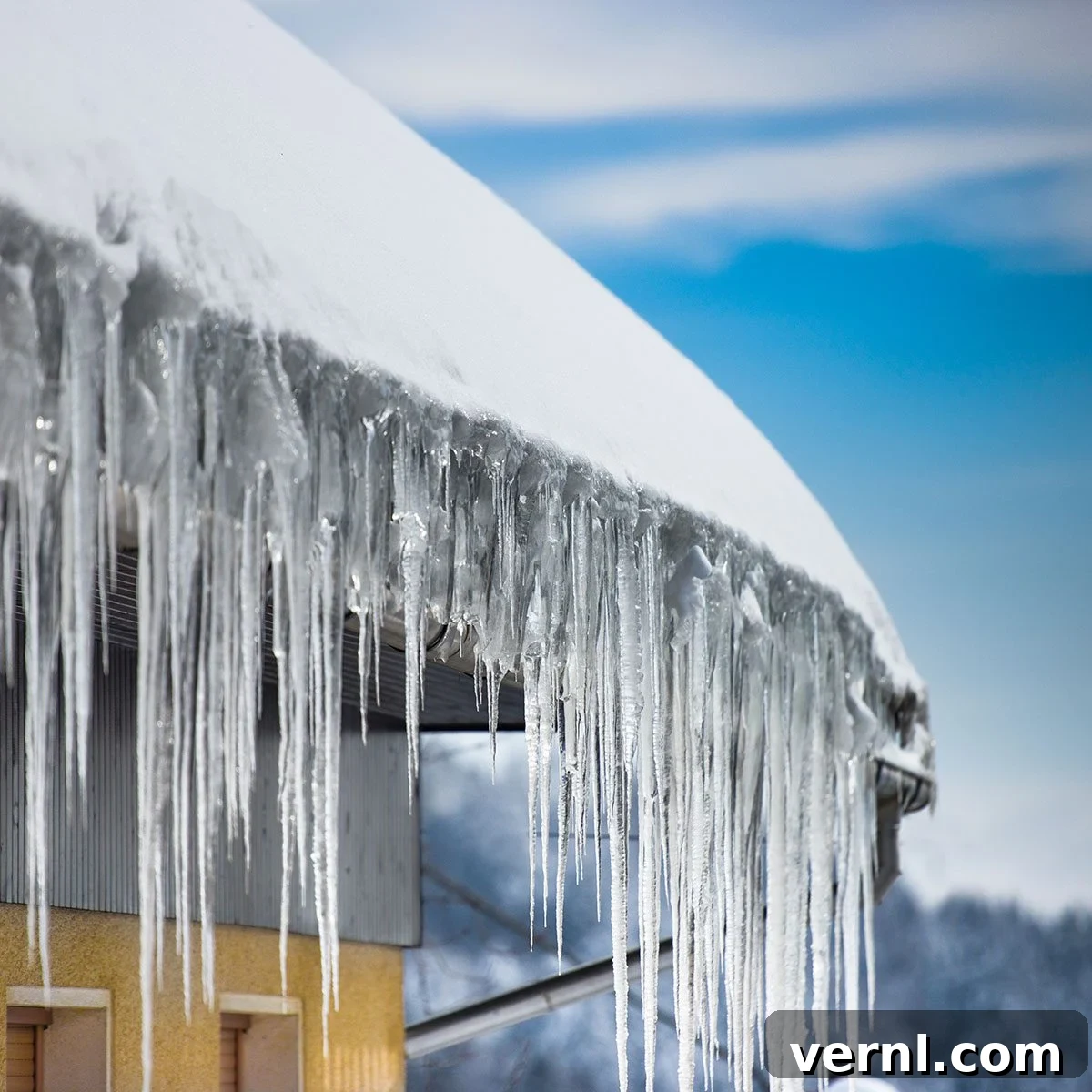
While spring storms are notorious for damaging roofs, the harsh grip of winter can also pose significant threats to the structural integrity and longevity of your home’s protective layer. Among the most pressing concerns homeowners face when temperatures plummet and snow blankets the landscape are ice dams. These frozen formations can lead to extensive and costly damage if left unaddressed. Fortunately, by understanding their causes and implementing proactive strategies, you can effectively prevent ice dams, safeguard your property, and significantly extend the life of your roof system.
Understanding Ice Dams: What They Are and How They Form
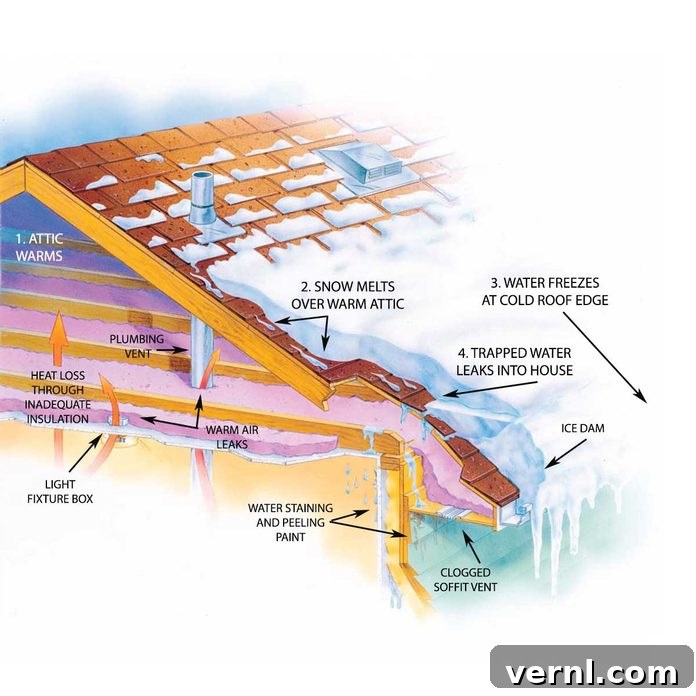
Ice dams, often accompanied by a dramatic display of icicles cascading from your eaves, are more than just a picturesque winter phenomenon. They are a serious indicator of an underlying issue: uneven roof temperatures. These formations begin when snow on a portion of your roof melts, typically due to warmth escaping from your attic, and then refreezes as it reaches the colder edges of the roof or gutters. This delicate balance of melting and refreezing is the fundamental mechanism behind their formation.
This problematic scenario primarily occurs when a section of your roof warms to above 32 degrees Fahrenheit (0 degrees Celsius), allowing the accumulated snow to melt, while the critical eaves and roof edges remain below freezing. This temperature disparity is most frequently the direct result of a poorly insulated or inadequately ventilated attic, which permits significant heat transfer from the living spaces below into the attic cavity. As heat rises from the interior of your home, it warms the attic air, and subsequently, the roof decking and shingles directly above. Even if the outdoor ambient temperature is well below freezing, this localized warmth is sufficient to melt the snow.
As this meltwater flows harmlessly down the warmed section of the roof, it eventually encounters the much colder roof edge. This critical zone, typically not warmed by the attic’s escaping heat, acts as a natural freezer. Here, the water rapidly refreezes, forming a small, initial rim of ice. With continued melting and refreezing cycles, this rim grows progressively larger, creating a formidable barrier. This growing ice barrier then traps additional meltwater behind it, preventing it from draining off the roof. Once trapped, this water accumulates, and a full-fledged ice dam is officially born.
With no other escape route, the impounded water begins its insidious journey, working its way back up underneath the roofing shingles. Shingles are designed to shed water downwards, not to withstand upward-creeping moisture. Over time, this trapped water seeps through the roof decking and into your home’s interior, leading to distressing leaks in your roof. These leaks can manifest in various visible signs, such as water dripping into soffits, staining walls, and ultimately damaging ceilings. You might initially observe subtle indicators like rust spots on drywall fasteners, which are often an early sign of moisture intrusion from ice dams. Other red flags include peeling paint on interior walls, visible sagging in sheetrock, or persistent water stains around window and door frames. In more severe or prolonged cases, the sustained moisture can create an ideal environment for the growth of harmful mold and mildew or cause extensive wood rot, compromising the structural integrity of your home and posing significant health risks.
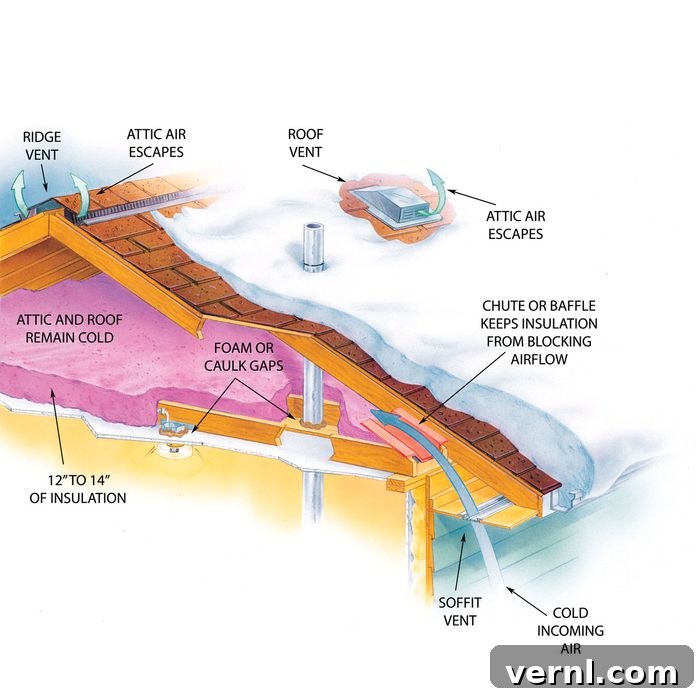
The fundamental principle for effective ice dam prevention revolves around a simple yet crucial concept: maintaining a consistently cold attic and roof surface. After a fresh snowfall, a properly cold roof will retain a uniform, thick blanket of snow. In contrast, a warmer roof will quickly develop clear, melted patches where snow has disappeared, and will likely exhibit tell-tale icicles hanging prominently from the eaves, signaling heat loss. To achieve and maintain this essential cold roof condition, homeowners should systematically follow three core steps, each addressing a critical aspect of heat management and airflow within the attic space.
Step 1: Seal Attic Bypasses – Eliminating Hidden Heat Leaks
One of the primary culprits behind a warm attic and subsequent ice dam formation is uncontrolled heat transfer through attic bypasses, also known as air leaks. In an average residential property, approximately one-third of the total heat loss from the conditioned living space occurs directly through the ceiling into the unconditioned attic. A significant portion of this heat loss isn’t through the ceiling material itself, but rather through pervasive air leaks. These leaks are typically caused by unblocked wall cavities, unnoticed gaps in drywall, and numerous cracks or openings around recessed light fixtures, plumbing pipes, electrical wiring, chimneys, attic access hatches, and other ceiling penetrations. Each of these small openings acts as a conduit for warm, conditioned air to escape into the colder attic, raising the roof’s temperature.
Identifying and Sealing Attic Air Leaks
Locating and effectively sealing these elusive air leaks can be a challenging but highly rewarding task. It requires careful inspection and diligent work in the attic space. Homeowners often need to climb into the attic, meticulously pull back or rake existing insulation, and then methodically plug the leaks using appropriate materials such as expanding foam sealants, high-quality caulk, specialized tapes, or solid blocking materials. Areas where walls meet the ceiling, utility penetrations, and chimney chases are particularly notorious for harboring significant leaks. Low roof angles or limited attic access can make some air leaks exceptionally difficult to reach, potentially requiring creative solutions or professional assistance.
It is strongly recommended to undertake this work during cooler weather conditions. Attics can become unbearably hot and uncomfortable during warmer months, making the work both difficult and potentially unsafe. When working in the attic, always prioritize safety: wear a dust mask to protect against airborne particles and insulation fibers, and don a long-sleeved shirt and long pants to help prevent skin irritations caused by direct contact with insulation materials. This essential step not only combats ice dams but also yields substantial benefits for your home’s energy efficiency.
Bonus Benefits of Sealing Air Leaks: By actively stopping air leakage to mitigate the risk of ice dams, you’ll concurrently save energy throughout the year. This crucial home improvement will result in a noticeable reduction in your heating bills during winter months and considerably lower air conditioning bills during the summer, enhancing overall home comfort and reducing your carbon footprint.
Step 2: Optimize Attic Insulation Level – Creating a Thermal Barrier
Once you’ve tackled the air leaks, the next critical step while you’re in the attic is to assess and, if necessary, upgrade your attic insulation. Insulation acts as a thermal barrier, preventing heat from radiating from your living spaces into the attic. Insufficient insulation is a common cause of warm attics and, consequently, ice dams. The effectiveness of insulation is measured by its R-value, which indicates its resistance to heat flow.
Assessing and Upgrading Your Insulation
Current building codes typically recommend an R-value of around R-40 to R-60 for attics in most climates, translating to approximately 12 to 14 inches of fiberglass or cellulose insulation. Visually inspect the depth of your existing insulation. If you have less than eight inches, or if you’ve experienced recurrent ice dam problems in the past, it’s a strong indicator that additional insulation is needed. Adding more insulation will significantly reduce the amount of heat escaping into your attic, thereby keeping your roof surface colder and less prone to snowmelt.
Blown-in cellulose and fiberglass insulation are often superior to hand-placed batts for attic applications. Blown-in insulation conforms tightly around rafters, joists, and other obstructions, effectively filling every nook and cranny. This minimizes gaps and ensures a more complete and uniform thermal barrier, which is crucial for preventing localized warm spots that can trigger ice dam formation. While it is possible to rent a blowing machine from a rental yard or home center (sometimes even free with a qualifying insulation purchase), hiring a professional for this job is often a worthwhile investment. Professionals possess the specialized equipment and expertise to achieve optimal coverage and R-value, often leading to better long-term performance and efficiency than a DIY installation.
Step 3: Enhance Roof and Soffit Vents – Ensuring Proper Airflow
Even with excellent insulation and sealed air leaks, a properly ventilated attic is essential for ice dam prevention. Attic ventilation systems are designed to draw in cold outdoor air, typically through soffit vents located at the lower edges of the roof, and flush out warmer, moisture-laden attic air through ridge vents or other exhaust vents situated near the roof peak. This continuous airflow effectively cools the entire attic space and, by extension, the underside of the roof deck, preventing heat buildup and maintaining a consistently cold roof surface.
Calculating and Installing Adequate Ventilation
The minimum recommended ventilation area, which refers to the total size of the vent openings, should be approximately one square foot of vent per 300 square feet of ceiling area (or attic floor area). This ratio works most effectively when half of the total vent area is provided by low intake vents (soffit vents) and the other half by high exhaust vents (ridge or peak vents), ensuring a balanced and efficient airflow pattern. Calculating the exact ventilation requirements can be somewhat complex; you’ll need to examine your existing vents to find their stamped area specifications. As a practical rule of thumb, consider installing an 8-inch by 16-inch soffit vent in the underside of the overhang in every other rafter space. If you are planning to rebuild the soffit, a continuous 2-1/2-inch-wide “strip” vent offers superior aesthetics and more uniform air intake. Complement these intake vents by installing a continuous ridge vent along the entire peak of your roof to allow warm air to escape efficiently.
In cases where the ridge on your roof is significantly shorter than the total length of the roof edge—common on pyramid-shaped roofs or those with complex geometries—you may need to supplement ridge ventilation by adding traditional square-shaped roof vents near the peak. Ensure that the total ventilating area of these additional vents is roughly equal to the area provided by your soffit vents. While this might result in more ventilation than the absolute minimum requirement, there is generally no such thing as “too much” attic ventilation, particularly in climates prone to ice dams. More airflow typically means a colder, drier attic, which is ideal for prevention.
Additional Considerations for Effective Ventilation:
- Challenging Roof Types: Certain roof types present unique ventilation challenges. This includes homes with angled or cathedral ceilings that lack a traditional attic space, roofs incorporating skylights, flat roof dormers, and low-slope roofs. In such instances, relying solely on standard ventilation might be insufficient. You may need to explore alternative or secondary strategies, such as those discussed in the next section, to compensate for ventilation limitations.
- Blocked Airflow: Insulation, particularly the blown-in type if not properly installed, can inadvertently block the critical airflow path from the soffit vents into the attic. To ensure unobstructed airflow, take a long 1×2 piece of lumber into the attic and gently poke it through the spaces between rafters over the exterior walls. This action helps verify that the air channels remain open. Ideally, insulation baffles (also known as vent baffles or rafter vents) should be installed before adding insulation to maintain these clear pathways. If baffles are absent, consider adding them before installing additional insulation. For plugged soffit vents that are difficult to access from the inside, a shot of compressed air from the outside can sometimes dislodge debris and reopen them.
- Retrofit Soffits: Assessing proper venting can be particularly tricky on older homes where aluminum soffits have been retrofitted over original construction. If you experience persistent ice damming in a specific area, it might be necessary to carefully remove several sections of the aluminum soffit to visually inspect the condition and functionality of the underlying venting system.
Safety Reminder: Climbing onto your roof can be extremely dangerous, especially in winter conditions. Always prioritize safety, use appropriate fall protection gear like a roof safety harness, and follow established safety procedures. If you are uncomfortable or lack the necessary equipment, consider hiring a qualified professional.
Carbon Monoxide Caution: Whenever you make your home more airtight through extensive sealing and insulation, it’s crucial to check your combustion appliances. Gas, oil, or propane-fired water heaters, furnaces, and other vented appliances can be affected. Ensure they are not backdrafting, a condition where combustion gases are pulled back into the home instead of being properly vented outdoors. Appliances that do not draft correctly can release dangerous waste gases, including potentially deadly carbon monoxide, into your living spaces. Install and regularly check carbon monoxide detectors on every level of your home.
Advanced Ice Dam Prevention Products and Secondary Strategies
While maintaining a cold roof through meticulous attic bypass sealing, proper insulation, and effective ventilation is the cornerstone of ice dam prevention, it’s not always a perfect solution. During winters characterized by exceptionally heavy snowfall, or in specific architectural scenarios, ice dams may still form despite your best efforts. They can consistently appear at the foot of roof valleys, for instance, where windblown snow tends to accumulate, or on certain roof sections that are inherently difficult to keep consistently cold. In these circumstances, it becomes necessary to employ secondary strategies and specialized ice dam prevention products to prevent costly damage.
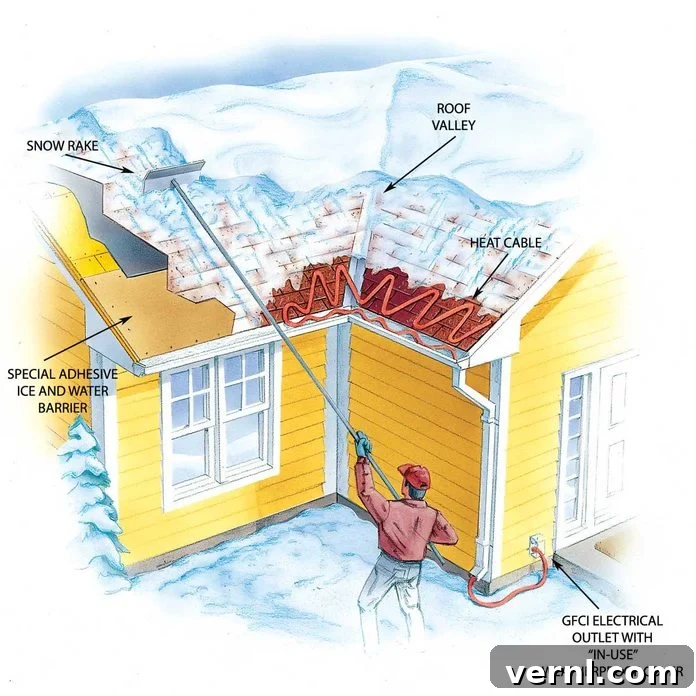
- Ice-and-Water Barrier Installation: The most robust long-term solution for preventing water penetration from ice dams is the installation of an adhesive ice-and-water barrier. This specialized roofing underlayment should be applied from three to six feet up the roof deck from the edge, particularly the eaves, during your next reroofing project. This self-sealing membrane adheres directly to the roof decking, creating an impenetrable waterproof layer beneath the shingles. It’s designed to prevent meltwater, even when backed up by an ice dam, from seeping into the roof structure. The building code in most cold-climate regions now mandates the use of an ice-and-water barrier. While installing this barrier on an otherwise sound roof requires the significant expense of tearing up existing shingles, it is an invaluable and relatively inexpensive insurance policy when you are already undertaking a full reroofing project. Always consult with your local building inspector to determine the precise distance it should extend up the roof in your specific geographical region.
- Regular Snow Raking: For an immediate and effective, albeit manual, solution during periods of heavy snowfall, consider using a roof snow rake. This tool, typically an aluminum scraper mounted at a right angle on a telescoping aluminum pole, allows you to safely rake the snow off your roof from the ground. By removing the accumulated snow, you eliminate the source of meltwater and thus prevent ice dams from forming. This is a highly effective method for single-story homes, though reaching second-story roofs can be challenging or impossible. Crucially, never use a snow rake while standing on a ladder due to significant fall risks. Exercise extreme caution when raking, as frozen shingles can be brittle in cold weather and prone to damage. Most home centers and hardware stores in regions prone to ice dams stock or can order snow rakes; it is highly advisable to purchase one before the first heavy snowfall, as demand surges quickly afterward.
- Installation of Heat Cables: When all other preventative measures prove insufficient, or for specific areas where ice dams consistently occur despite optimal attic conditions, installing heat cables can be a viable solution. Heat cables are high-resistance electrical wires designed to be mounted on the roof edge in a zigzag pattern and then plugged into an outdoor GFCI receptacle (Ground Fault Circuit Interrupter) for safety. These cables gently warm the roof surface, melting snow and creating channels for meltwater to drain away. They are particularly effective for problematic spots that defy other prevention methods. One important consideration when using heat cables is managing the melted water. If the water simply refreezes in the gutters or along the roof edge below the cables, you’ve only shifted the problem. To ensure proper drainage, it’s often necessary to run the heat cable inside downspouts as well, preventing them from clogging with ice and allowing the water to flow freely to the ground.
Responding to Existing Ice Dams: What to Do When They’ve Already Formed
Discovering an ice dam on your roof can be alarming, but the mere presence of an ice dam isn’t necessarily an immediate crisis. The primary concern and source of the most significant damage are the leaks that result from the trapped water. If you can’t detect any signs of leakage—neither in the soffits on the exterior nor in the attic or ceilings inside your home—you may not need to take immediate, emergency action. In such cases, your best course of action is to focus on implementing the comprehensive prevention strategies outlined earlier during warmer weather, ensuring that future ice dam formation is minimized or eliminated.
Professional Removal vs. DIY Dangers
However, if you observe clear signs of water leakage stemming from an existing ice dam and you are unable to safely and effectively rake the snow off your roof, the safest and most recommended approach for removing the ice dam is to hire a professional roofing company specializing in ice dam removal. These professionals typically use specialized steaming equipment. An ice dam steamer functions similarly to a pressure washer but utilizes high-temperature steam rather than high-pressure cold water. The hot steam gently melts the ice away, creating channels for drainage without causing damage to your delicate roofing materials like shingles, gutters, or flashing. This method is crucial because attempting to chip away at ice dams with blunt instruments like a hatchet, chisel, or an ice pick can severely damage or puncture your roof shingles, potentially creating new, more severe leak points and invalidating your roof warranty. Such aggressive DIY attempts are incredibly risky for both the homeowner and the roof itself. Always prioritize safety and professional expertise when dealing with active ice dam leaks.
Conclusion: Proactive Prevention is Key
Ice dams represent a significant winter threat to your home’s integrity, capable of causing extensive damage from leaks, mold, and rot. However, with a clear understanding of their formation and a commitment to proactive prevention, you can safeguard your property. By systematically sealing attic air leaks, ensuring adequate insulation, and optimizing attic ventilation, you create a consistently cold roof surface that discourages ice dam formation. For persistent issues or specific roof configurations, supplementary solutions like ice-and-water barriers, regular snow removal, or heat cables offer additional layers of protection. When ice dams do form and cause leaks, professional removal via steaming is the safest method to protect your roof. Investing in these preventative measures not only protects your roof but also enhances your home’s energy efficiency, comfort, and overall value, providing peace of mind throughout the coldest months.