
Navigating Your Garden: Identifying and Managing Invasive, Irritating, and Poisonous Plants
Gardening is a rewarding passion, a connection to nature that brings beauty and tranquility to our homes. However, beneath the surface of lush foliage and vibrant blooms, lurks a hidden world of potential hazards. Beyond the familiar nuisance of common weeds like dandelions or quackgrass that muscle into your lawn, there are more insidious threats: plants that aggressively overtake your space, those that cause uncomfortable skin reactions, and even those that are dangerously toxic if ingested. Understanding these “unwanted characters” is crucial for creating a safe, healthy, and harmonious garden.
This comprehensive guide will equip you with the knowledge to identify and manage the most common invasive, irritating, and poisonous plants. By learning what to avoid and how to protect yourself, your loved ones, and your local environment, you can cultivate a garden that is a source of joy, not a hidden danger.
Understanding Invasive Plants: The Silent Takeover
Invasive plants are species introduced to an area outside their native range that cause significant ecological or economic harm. Unlike native plants, which coexist in a delicate balance with local wildlife and other flora, invasive species often lack natural predators or diseases in their new environment. This allows them to spread rapidly, outcompeting native vegetation for resources like sunlight, water, and nutrients. The consequences are far-reaching: diminished biodiversity, altered ecosystems, reduced habitat for native wildlife, and even economic losses for agriculture and forestry.
Many invasive plants are deceptively beautiful, leading unsuspecting gardeners to plant them without realizing the long-term damage they can inflict. It’s essential for every gardener to be aware of the common culprits in their region and to make informed choices that support local ecosystems rather than disrupt them.
Common Invasive Plants in North America to Watch Out For:
- Barberries: Often planted for their attractive foliage, many barberry species are highly invasive, particularly Japanese barberry, which forms dense thickets.
- Buckthorn: Several species, including Common and Glossy Buckthorn, invade woodlands and open fields, displacing native understory plants.
- Chinese and Japanese Wisterias: While beautiful, these vigorous vines can smother native trees and shrubs.
- English Ivy: A popular groundcover, it can climb and damage trees, structures, and outcompete native plants on the forest floor.
- Garlic Mustard: This biennial herb rapidly colonizes forest understories, inhibiting the growth of native wildflowers and tree seedlings.
- Japanese Honeysuckle: A widespread vine that smothers native vegetation and alters forest structure.
- Japanese Knotweed: One of the most aggressive invaders, known for its rapid growth and ability to damage foundations and infrastructure.
- Kudzu: Infamously known as “the vine that ate the South,” it can grow a foot a day, blanketing everything in its path.
- Oriental Bittersweet: A woody vine that girdles and strangles trees, often seen with its distinctive orange berries.
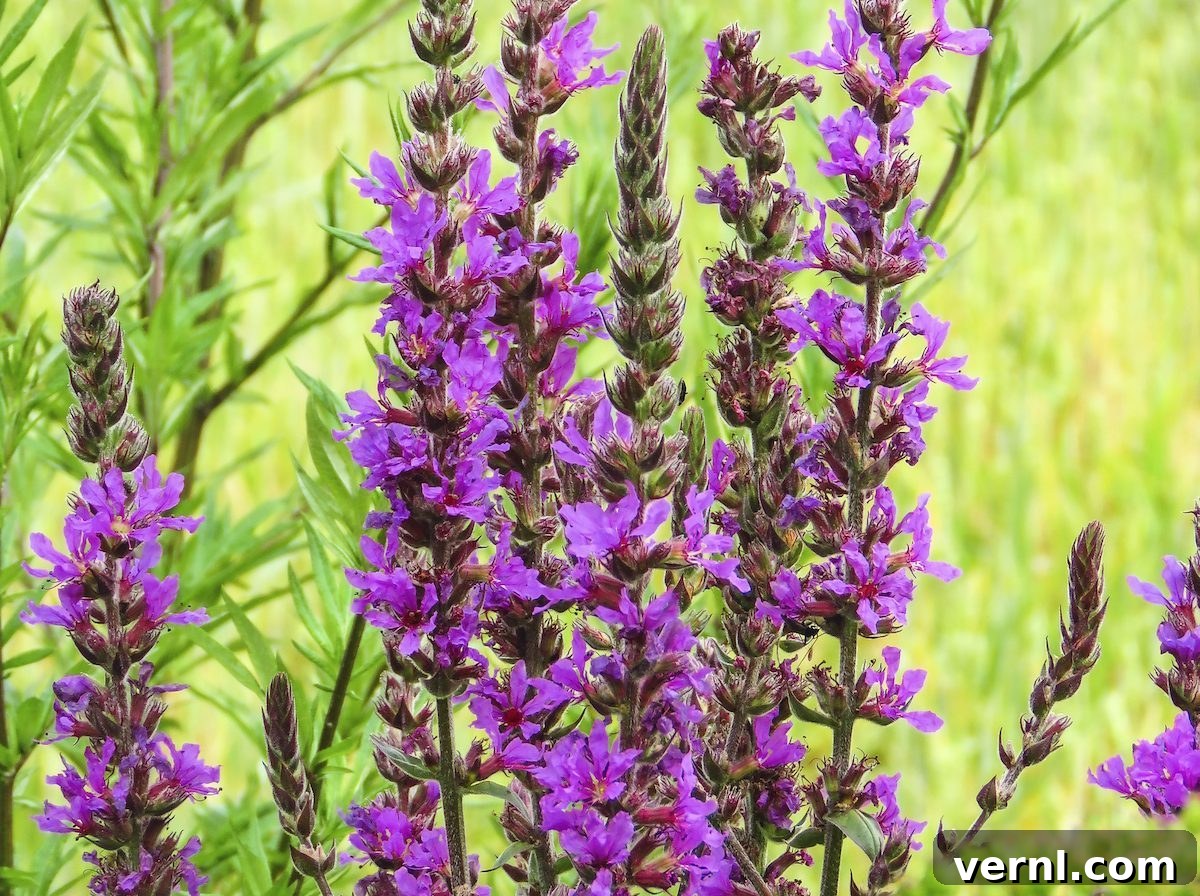
- Purple Loosestrife: A wetland invader that displaces native marsh vegetation.
- Queen Anne’s Lace (Wild Carrot): While often considered a wildflower, it can aggressively spread and outcompete native species in disturbed areas.
- Tree-of-Heaven: A fast-growing tree that invades disturbed sites, roadsides, and open forests, known for its unpleasant odor.
A Closer Look at Key Invasive Species
Purple Loosestrife: A Beautiful Menace
From late summer through fall, purple loosestrife captivates with its striking spikes of vibrant purple flowers. This long-lived perennial boasts adaptability to a vast array of growing conditions, making it seemingly a gardener’s dream, and its elegant blooms even make for a beautiful cut flower. Yet, this seemingly innocent plant harbors a dark secret.
Throughout the U.S. and Canada, purple loosestrife has earned a notorious reputation among gardeners and environmentalists alike. Its aggressive nature has allowed it to take over countless backyard gardens, but its most devastating impact is on our precious natural wetlands. A vigorous grower, purple loosestrife forms dense monocultures, crowding out crucial native plants. This displacement eliminates essential cover and vital food sources that wetland wildlife, including birds, insects, and amphibians, depend upon for survival. Its prolific seed production – a single plant can produce millions of seeds – ensures its continued spread, making eradication a significant challenge. Learning how to manage invasive plants like loosestrife is critical for preserving local biodiversity.
Buckthorn and Honeysuckle: Woodland Invaders
Purple loosestrife isn’t the sole invasive plant wreaking havoc on our natural landscapes. Woodland ecosystems are particularly vulnerable to invaders like buckthorn and honeysuckle. Species such as common buckthorn, glossy buckthorn, and various invasive honeysuckles (e.g., Tatarian, Amur, Morrow’s) relentlessly colonize forest understories. These aggressive shrubs leaf out earlier in spring and retain their leaves longer into fall than native species, giving them an unfair advantage in capturing sunlight. They produce dense shade that prevents native tree seedlings, wildflowers, and shrubs from growing, fundamentally altering the forest composition and reducing crucial habitat for birds and other wildlife.
Their rapid spread is often aided by birds, which consume their berries and disperse seeds widely. If you suspect you have buckthorn, here’s how to remove it effectively. Similarly, various invasive maples, like Norway and Amur maples, also pose a threat to native woodlands, outcompeting sugar maples and other indigenous species.
The Regional Nature of Invasiveness: The Butterfly Bush Example
It’s important to understand that a plant’s invasive potential can vary significantly from one region to another. A species that aggressively colonizes natural areas in one climate might struggle to survive in another. For instance, the butterfly bush (Buddleja davidii), tamarisk, and English ivy are classified as invasive in many warmer locales with favorable growing conditions. However, in colder, wetter, or less-than-ideal environments, their spread might be naturally limited.
This highlights the importance of local knowledge. Before adding any new plant to your backyard, do your research. Select plants that are truly suited for the specific growing conditions and climate of your region. More importantly, consult your local extension service or a reputable area nursery for a list of invasive plants that are problematic in your community. They can provide invaluable guidance on native alternatives that will thrive without threatening local ecosystems.
Preventing and Managing Invasive Plants
The best defense against invasive plants is proactive prevention. Always choose native species for your landscaping whenever possible, as they are adapted to local conditions and support local wildlife. If you must plant a non-native, ensure it is not listed as invasive in your area. When you identify an invasive plant in your garden, early removal is key. For smaller infestations, hand-pulling or digging can be effective. For larger, more established invasive plants like buckthorn or Japanese knotweed, more aggressive methods, including cutting, girdling, or targeted herbicide application, may be necessary. Always dispose of invasive plant material responsibly – often by bagging and sending it to a landfill, rather than composting, to prevent further spread.
Navigating Skin Irritants in Your Garden
For many, gardening can be an intensely sensory experience, unfortunately sometimes involving itchy, red rashes. A wide array of common landscape plants can trigger skin irritation, a condition known as phytodermatitis. While the list of potential culprits is extensive, it’s worth noting that not all gardeners will be affected by every plant, or even any of them. Individual sensitivities vary greatly. However, understanding which plants pose a risk and adopting smart gardening habits are your best tactics for keeping your skin rash-free.
Common Irritating Garden Plants to Be Aware Of:
- Poison Ivy, Poison Oak, and Poison Sumac: These infamous plants contain urushiol oil, which causes a severe allergic reaction in most people.
- Gas Plant (Dictamnus albus): The sap, when exposed to sunlight, can cause blistering burns.
- Wild Parsnip (Pastinaca sativa): Similar to gas plant, its sap is phototoxic, leading to painful skin reactions in sunlight.
- Giant Hogweed (Heracleum mantegazzianum): An extremely dangerous plant whose sap can cause severe burns and permanent scarring when exposed to sunlight.
- Euphorbias: Many species, including ornamental varieties, produce a milky white sap that can cause skin and eye irritation.
- Hyacinths and Daffodils: The bulbs contain oxalic acid and other irritants that can cause skin irritation, sometimes called “daffodil itch.”
- Meadow Rue (Thalictrum spp.): Some species can cause skin irritation upon contact.
- Prickly Plants: Roses, thistles, and cacti, while not chemically irritating, can cause mechanical irritation and introduce bacteria into the skin.
Essential Protective Measures for Irritating Plants
The first step in avoiding an irritating rash is careful identification of plants in your garden. If you know you have problematic species, or if you have sensitive skin, adopt a diligent approach to wearing protective garden garb. This includes heavy-duty gloves (preferably leather), long-sleeved shirts, and long pants, even on warm days. The goal is to create a physical barrier between your skin and the plant’s irritating compounds.
Pay close attention to how specific plants cause irritation. Some gardeners with sensitive skin might develop a rash after only brief handling of prickly plants. For these individuals, robust protection is non-negotiable. If you find yourself highly sensitive, consider enlisting the help of a less sensitive friend for tasks involving known irritants.
For notorious plants like poison ivy, poison oak, or even some ornamental euphorbias, the irritants are contained within their saps or oils. If you plan to garden near or weed out these plants, make sure your skin is completely covered. If accidental exposure occurs, immediately wash the affected skin thoroughly with soap and water. It’s also wise to wash any clothing that came into contact with the plant to prevent further exposure and the spread of the rash.
A peculiar characteristic of plants like gas plant, wild parsnip, and giant hogweed is that their sap causes a rash only when the irritating oils are subsequently exposed to sunlight (phototoxicity). This is why some experienced gardeners choose to work with these irritants at dusk or under their landscape lighting to minimize the risk. However, if you must work with them during daylight hours, wear full protective gear – long sleeves, gloves, and even safety glasses – and immediately wash any exposed skin. Prompt washing is crucial to remove the phototoxic compounds before they react with UV light.
Safeguarding Your Space: Identifying and Avoiding Poisonous Plants
Just as we consider the risk of planting allergy-inducing plants, we must also assess the dangers posed by poisonous plants. It might be surprising to learn how many common and beautiful garden plants can cause everything from mild stomach upset and diarrhea to severe illness or even death if ingested. However, there’s no need to level your garden beds and switch entirely to artificial turf and silk flowers. A realistic approach to living with potentially poisonous landscape plants involves knowledge, prevention, and vigilance.
High-Risk Poisonous Plants to Know:
- Datura (Jimsonweed): All parts, especially the seeds, are highly toxic and hallucinogenic, leading to severe illness or death.
- Castor Bean (Ricinus communis): The seeds contain ricin, one of the most potent toxins known, even a few can be fatal if ingested.
- Yew (Taxus spp.): All parts are toxic, except for the fleshy red aril surrounding the seed. The seed itself, however, is highly poisonous.
- Oleander (Nerium oleander): Every part of this plant is extremely toxic, and even smoke from burning it can be dangerous.
- Foxglove (Digitalis purpurea): Contains cardiac glycosides that can disrupt heart function.
- Lily of the Valley (Convallaria majalis): Contains similar cardiac glycosides to foxglove.
- Rhododendrons and Azaleas (Rhododendron spp.): Contain grayanotoxins that can cause nausea, vomiting, and cardiovascular issues.
- Horse Chestnut (Aesculus hippocastanum): The nuts, leaves, and bark contain a toxic compound called aesculin. Do not confuse with edible sweet chestnuts.
- Wild Mushrooms: Mother Nature sometimes scatters various fungi in the yard, many of which are highly poisonous. Never eat a wild mushroom unless positively identified by an expert.
Protecting Vulnerable Family Members: Children and Pets
Those with small children and pets should exercise particular caution. Avoiding highly toxic plants like datura (Jimsonweed) and castor bean is paramount, as their attractiveness to children and pets, combined with extreme toxicity, presents a severe risk. The fleshy red fruit of the yew, while appealing, contains highly toxic seeds. Similarly, the nuts of horse chestnut trees and all parts of the oleander plant are dangerous if ingested. And of course, the wild mushrooms that can pop up unexpectedly in your yard demand extreme caution.
Perhaps the single most important action parents can take is to curb their children’s sense of adventure when it comes to plants. Teach them from an early age the “look but don’t touch, and never eat” rule for any wild plants or those in the garden. Educate them on the difference between safe edible flowers and berries versus unknown ones. This fundamental lesson can prevent many accidents.
Beyond outdoor plants, remember that common houseplants, seeds, and bulbs can also be toxic. Keep these items out of the reach of small children and curious pets. Furthermore, always store all garden chemicals – fertilizers, pesticides, herbicides – in their original, clearly labeled containers in a secure, locked location, far from inquisitive hands and paws.
Cultivating a Safe and Harmonious Garden
Finally, one of the most effective ways to reduce risk is through diligent identification and clear labeling of all your landscape plants. As a dedicated gardener, keeping a record of what’s planted where is a valuable practice for plant care. However, as a parent or pet owner, this kind of detailed information can be absolutely critical in an emergency. If a child or pet ingests a plant, knowing its exact name can provide vital information to emergency services or veterinarians, potentially saving a life.
Your garden should be a sanctuary, a place of beauty and relaxation, not a source of worry. By understanding the threats posed by invasive, irritating, and poisonous plants, and by taking proactive steps to manage them, you can ensure your outdoor space remains a safe, vibrant, and cherished part of your home for everyone to enjoy.