
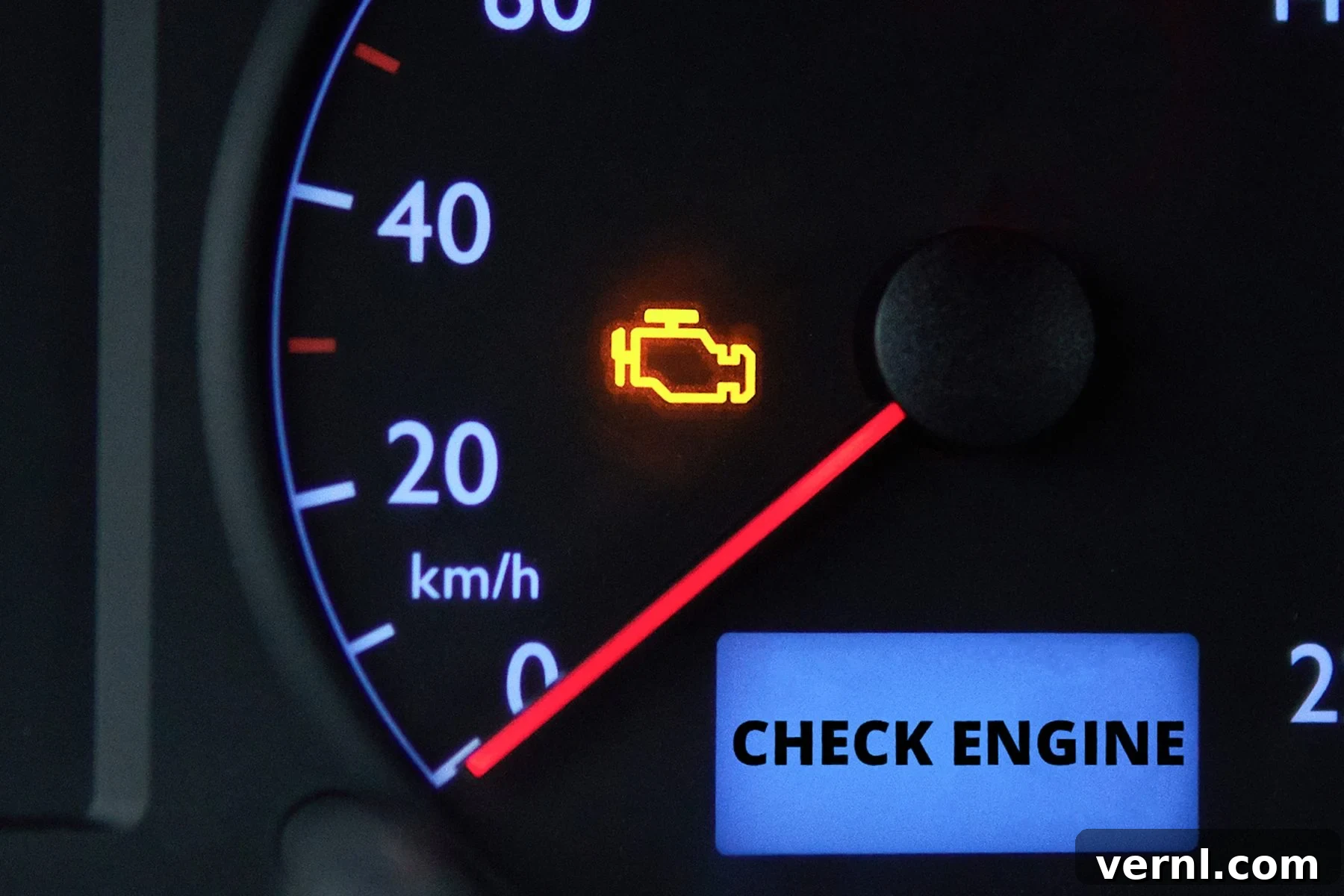
Decoding Your Dashboard: Understanding the Check Engine Light
Modern vehicles are equipped with an intricate network of sensors and a sophisticated onboard diagnostic (OBD-II) system, all designed to keep you informed about your car’s health. The dashboard, in turn, acts as your car’s communication hub, displaying a plethora of indicator and warning lights. While this immediate feedback is invaluable for pinpointing potential issues, the sheer volume of information can sometimes be overwhelming. Among these numerous illuminated symbols, one stands out as particularly critical: the Check Engine Light (CEL).
The Check Engine Light is arguably the most recognized and often the most anxiety-inducing warning on your dashboard. It signals a problem within your engine or its emission control system, but the nature of its illumination—whether it’s blinking or solid—carries significant weight, indicating varying degrees of urgency and potential severity. Ignoring this light, especially if it’s blinking, can lead to severe damage and expensive repairs down the line. Understanding what your Check Engine Light is trying to tell you is the first step towards responsible vehicle ownership and maintaining your car’s longevity.
While there’s always a slim possibility of a false alarm (and you can learn how to reset the light, though it’s only advisable if you are absolutely certain it’s an error and not an underlying issue), the vast majority of the time, an illuminated Check Engine Light is a legitimate warning. It’s a clear signal that your car needs attention. Delaying diagnosis and repair, particularly if the light is blinking, significantly increases the risk of more extensive damage to critical components. Always prioritize consulting with a qualified mechanic sooner rather than later to get to the root of the problem.
The Urgent Warning: A Blinking Check Engine Light
Among all the dashboard warnings, a blinking Check Engine Light is the most serious and demands immediate attention. Unlike a steady illumination, a flashing CEL signifies a critical problem that could be causing active damage to your vehicle, particularly to the emission control system, specifically the catalytic converter.
According to vehicle manufacturers like Subaru, a blinking check engine light typically indicates an “engine misfire condition has been detected.” An engine misfire occurs when one or more of your engine’s cylinders fail to properly ignite the fuel-air mixture. This incomplete combustion means unburnt fuel is expelled into the exhaust system, where it reaches the catalytic converter. The catalytic converter relies on high temperatures to process exhaust gases, and the introduction of unburnt fuel can cause it to overheat rapidly and melt internally, leading to extremely costly damage. Catalytic converter replacements can run into thousands of dollars, making immediate action crucial.
Common Causes of Engine Misfires
- Faulty Spark Plugs or Ignition Coils: Worn-out spark plugs or failing ignition coils are primary culprits. They prevent the spark needed for combustion, leading to misfires.
- Damaged Spark Plug Wires: If your vehicle uses spark plug wires, they can degrade, crack, or become disconnected, interrupting the electrical path to the spark plug.
- Fuel System Issues: This can include clogged fuel injectors that aren’t delivering enough fuel, a faulty fuel pump resulting in low fuel pressure, or even contaminated fuel.
- Vacuum Leaks: A leak in the intake system allows unmetered air into the engine, disrupting the air-fuel ratio and causing misfires.
- Internal Engine Problems: More severe issues like low compression in a cylinder due to worn piston rings, valves, or a damaged head gasket can also cause misfires.
- Exhaust Gas Recirculation (EGR) Valve Issues: A malfunctioning EGR valve can upset the air-fuel mixture, leading to combustion irregularities.
Immediate Actions for a Blinking Check Engine Light
Given the severe implications, Subaru and other manufacturers strongly recommend minimizing the strain on your vehicle immediately. This means:
- Reduce Speed: Slow down and avoid high speeds or sudden acceleration.
- Avoid Heavy Loads: Refrain from towing or carrying heavy cargo.
- Seek Professional Help: Drive directly to the nearest trusted mechanic or pull over safely and arrange for a tow. Do not attempt long journeys.
Ignoring a blinking light can quickly escalate the problem from a relatively minor component failure to significant and irreversible engine or catalytic converter damage. The cost of delaying can be exponentially higher than addressing the initial issue promptly.
The Persistent Alert: A Solid Check Engine Light
While certainly not a good sign, a solid (non-blinking) Check Engine Light indicates a less drastic, though still important, issue compared to a blinking one. It typically points to an emission control system malfunction, signifying that your car is likely emitting more pollutants than legally allowed, or there’s a problem affecting engine efficiency that, if ignored, could lead to larger issues over time.
On Subaru vehicles, for instance, a steady light indicates an “emission control system malfunction has been detected.” This could encompass a wide range of problems that, while not immediately damaging to the engine in the way a misfire is, still require timely diagnosis and repair to prevent further complications, maintain fuel efficiency, and ensure your vehicle passes emissions tests.
Common Causes of a Solid Check Engine Light
- Loose or Faulty Gas Cap: This is often the simplest and easiest issue to troubleshoot. The gas cap is a crucial component of the Evaporative Emission (EVAP) system. If it’s not tightened properly until it clicks, or if the cap itself is faulty, fuel vapors can escape, triggering the CEL. The car’s computer interprets this as an emission leak.
- Failing Oxygen Sensor (O2 Sensor): Oxygen sensors monitor the amount of oxygen in your exhaust gases and send data to the engine control unit (ECU) to adjust the fuel-air mixture. A failing sensor can lead to incorrect fuel mixture, reduced fuel economy, increased emissions, and eventually catalytic converter damage.
- Malfunctioning Mass Airflow (MAF) Sensor: The MAF sensor measures the amount of air entering the engine, allowing the ECU to inject the correct amount of fuel. A faulty MAF sensor can cause rough idling, poor acceleration, and increased fuel consumption.
- Catalytic Converter Efficiency Below Threshold: While a misfire can damage the catalytic converter, a solid CEL might indicate that the converter isn’t performing optimally (e.g., due to age or other component failures) but hasn’t yet melted or completely failed. It’s working, but not as efficiently as it should.
- Spark Plugs or Ignition Coils (Less Severe): Sometimes, less severe issues with spark plugs or coils that don’t cause a significant misfire might still trigger a solid CEL due to inefficient combustion.
- EGR Valve Issues: A stuck or clogged EGR valve can lead to poor engine performance and increased NOx emissions.
- Minor Vacuum Leaks: Small leaks in vacuum lines or intake manifolds can affect the air-fuel ratio.
- Thermostat Issues: A failing thermostat can cause the engine to run too hot or too cold, affecting efficiency and emissions.
Troubleshooting the Gas Cap First
As mentioned, a loose fuel filler cap is a common and easily rectifiable cause for a solid Check Engine Light. If the light illuminates shortly after you’ve refueled, your first step should always be to double-check that the cap is securely tightened until you hear it click several times. This ensures a proper seal in the fuel system.
However, it’s important to understand that “tightening the cap will not make the CHECK ENGINE warning light turn off immediately,” as Subaru clarifies. The vehicle’s computer needs time to re-run its diagnostic checks and confirm the issue is resolved. They advise that “it may take several driving trips” for the light to extinguish itself. So, if you inspect your gas cap, tighten it, and the light doesn’t go off instantly, don’t panic or immediately schedule an appointment. Give it a few drive cycles over the next day or two. If, after several driving trips, the light persists, then the gas cap was likely not the sole issue, or perhaps not the issue at all. At that point, it’s imperative to take your car in to be serviced before other, potentially more serious, problems lead to greater damage or compromise your vehicle’s performance.
What to Do When Your Check Engine Light Comes On (General Advice)
Regardless of whether your Check Engine Light is blinking or solid, the core principle remains: do not ignore it. It’s your vehicle’s way of asking for help. Here’s a general guide on how to proceed:
1. Observe Your Vehicle’s Behavior
Pay attention to any changes in your car’s performance. Is it driving differently? Are there any unusual sounds, smells (like burning oil or rotten eggs), or smoke? Is the engine idling rough? Does it feel less powerful? These symptoms can provide valuable clues to your mechanic.
2. Check the Gas Cap
As detailed above, this is the easiest and cheapest fix for a solid CEL. Ensure it’s tight and sealed. Give your car a few drive cycles to reset its system.
3. Get a Diagnostic Scan
The OBD-II system stores trouble codes (e.g., P0420, P0301) that precisely indicate the nature of the problem. Many auto parts stores offer free diagnostic scans. This scan will provide a specific “P-code” that your mechanic can use to quickly pinpoint the issue. Knowing the code yourself can also help you research potential causes and avoid unnecessary repairs.
4. Consult a Trusted Mechanic
Once you have a general idea from the light’s pattern and possibly a diagnostic code, the next crucial step is to consult a qualified and trusted mechanic. They have specialized tools and expertise to accurately diagnose the problem, perform further tests if needed, and execute the correct repairs. Don’t fall into the trap of guessing or attempting complex repairs yourself unless you are a trained professional.
5. Be Wary of Resetting the Light (Without a Fix)
While you can temporarily reset the Check Engine Light, this only clears the code from the ECU and turns off the light. It does not fix the underlying problem. Resetting the light should only be done if you are absolutely certain it was a false alarm (e.g., after tightening the gas cap and waiting, or after a known, minor, resolved issue). Using it to hide a problem can lead to more severe damage and even make it harder for a mechanic to diagnose the issue later, as the diagnostic history is wiped.
Preventative Maintenance to Keep Your Check Engine Light Off
Many Check Engine Light issues can be prevented with regular and diligent vehicle maintenance. Proactive care not only keeps your car running smoothly but also helps you avoid unexpected and costly repairs. Here are some key preventative maintenance tips:
- Follow Your Manufacturer’s Service Schedule: Adhere to the recommended intervals for oil changes, filter replacements (air, fuel, cabin), fluid checks, and major tune-ups.
- Replace Spark Plugs and Wires on Time: Worn spark plugs or faulty wires are common culprits for misfires. Replace them as per your car’s maintenance schedule.
- Inspect and Replace Air Filters: A clogged air filter can restrict airflow, affecting the air-fuel mixture and leading to decreased performance and emissions issues.
- Maintain Your Fuel System: Use quality fuel, and consider periodic fuel injector cleaning. Replace your fuel filter according to manufacturer recommendations.
- Regularly Check Your Tires: While not directly related to the engine light, proper tire pressure contributes to overall vehicle efficiency and can prevent related sensor issues in some systems.
- Tighten Your Gas Cap: Make it a habit to always tighten your gas cap until it clicks multiple times after every refueling.
- Address Minor Issues Promptly: Don’t let small problems linger. A minor issue left unattended can often escalate into a more significant, CEL-triggering problem.
Conclusion
The Check Engine Light is more than just an annoying illumination on your dashboard; it’s a vital communication tool from your vehicle. Understanding the critical distinction between a blinking and a solid light empowers you to react appropriately and protect your investment. A blinking light signals an emergency requiring immediate attention to prevent catastrophic damage, while a solid light indicates a problem that, while less urgent, still needs timely diagnosis and repair.
By heeding these warnings, observing your car’s behavior, getting diagnostic scans, and consulting with professional mechanics, you can ensure your vehicle remains reliable, efficient, and safe on the road. Don’t let ignorance or procrastination lead to avoidable breakdowns and expensive repairs. Be proactive, stay informed, and drive with confidence.
Source
Vehicle Resources, Subaru.