

Understanding Your Property Lines: A Comprehensive Guide for Homeowners
Navigating the intricacies of property ownership involves a myriad of responsibilities, and among the most fundamental is a clear understanding of your property lines. Pinpointing exactly where your land ends and your neighbor’s begins is not merely a trivial detail; it’s a cornerstone of responsible homeownership that can prevent future headaches and preserve peace of mind. Whether you’re planning a home improvement project like installing a new fence to enhance curb appeal, considering whether to cut down a tree that’s encroaching on your space or causing damage, or even something as routine as knowing the precise area you need to mow, having this knowledge is indispensable. Ignoring your property line can lead to costly legal disputes, strained neighborly relations, and complications with future property development. This guide will walk you through the essential steps to accurately identify your property boundaries and empower you with crucial information to protect your investment.
The Definitive Guide to Locating Your Property Lines
The journey to identifying your property lines begins with readily available official documentation. As soon as you acquire a new home, or if you haven’t done so already, your first step should be to request a plot plan from your local city hall or municipal planning department. This crucial document, often referred to as a plat map or survey map, is a detailed drawing that outlines your property’s dimensions, boundaries, easements, and the location of any structures. Ideally, a plot plan should have been included with the stack of real estate documents you received during the home purchasing process. If not, it’s imperative to obtain one. This official record is what real estate agents, lawyers, and municipal authorities will reference in any official capacity, making it the most authoritative source of information for your property’s legal boundaries.
Deciphering Your Plot Plan and Finding Physical Markers
Once you have your plot plan in hand, you’ll notice that most municipalities utilize physical markers to delineate property lines on the ground. The most common type of marker is an iron stake or rebar, typically driven into the ground at the corners of the plot and at any point where the property lines change direction. These markers serve as the tangible representation of the legal boundaries depicted on your plot plan. Using the plot plan as your guide, you can begin the exciting process of searching for these hidden stakes. The plan will show the exact measurements and angles between these points, allowing you to estimate their approximate location.
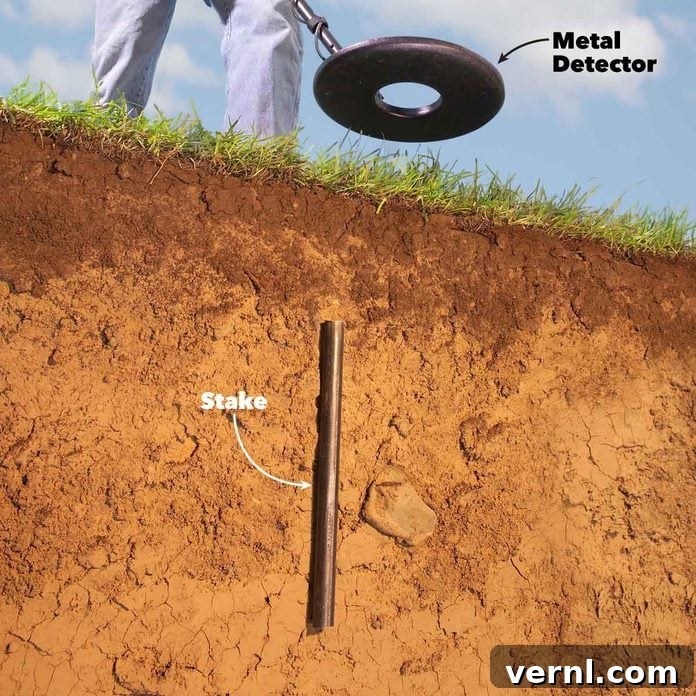
While you might get lucky by dragging a rake over a suspected location and unearthing an iron stake, it’s far more common for these markers to be buried several inches below the surface, obscured by years of soil accumulation, grass, and landscaping. They aren’t usually buried as deep as the frost line, but they are deep enough to require more than a casual sweep of the ground. For these more elusive markers, a dedicated search with specialized equipment becomes necessary.
Unearthing Your Property Stakes: A DIY Approach
As mentioned, property stakes are often buried several inches underground, making them invisible to the naked eye. This is where a little ingenuity and the right tools come into play. Your best bet for locating these subterranean markers is to use a metal detector. You can either purchase an affordable model or rent one from a local hardware store or equipment rental center. When using the metal detector, slowly sweep the area where your plot plan indicates a marker should be. Listen for a distinct signal, which will increase in intensity as you get closer to the metal stake.
Once your metal detector signals a target, carefully dig down to confirm what you’ve found. It’s important to verify that it’s indeed a property stake and not just a lost coin, an old piece of rebar, or some other metallic debris. Property stakes typically have a distinct shape, often a round or square rebar, and sometimes even a cap with the surveyor’s license number. Once you’ve positively identified the iron property stake, carefully replace the dirt around it. To ensure it remains easily visible for future reference, consider hammering a small, brightly colored piece of wood or a plastic cap directly into the top of the stake, or placing a small flag next to it. This visible marker will save you time and effort if you ever need to locate the boundary again.
When to Call a Professional Surveyor
While DIY methods can be effective for general knowledge, there are specific situations where the precision and legal standing of a professional land survey are indispensable. For instance, if you are planning any significant construction or renovation projects near your property line, such as adding an extension, building a fence, or installing a pool, a professional survey can prevent costly errors and potential legal disputes. Similarly, in any legal dispute with a neighbor regarding property boundaries, or when buying or selling property, the verified findings of a licensed surveyor hold significant legal weight. A professional surveyor will use advanced equipment like GPS and total stations to accurately determine your property’s precise boundaries, often installing new, legally recognized markers that are documented with the county. While an upfront investment, the peace of mind and legal protection offered by a professional survey are invaluable.
Key Considerations and Common Property Line Issues
Understanding your property lines goes beyond just finding markers; it’s about knowing your rights and responsibilities as a homeowner to prevent potential conflicts. Property line disputes are a surprisingly common source of neighborhood arguments, which can be easily mitigated with proper knowledge and clear communication. Below are some crucial reminders and common scenarios to be aware of:
- Natural Debris Responsibility: Leaves, pods, acorns, and other natural debris falling onto your property from a neighbor’s tree are generally considered a natural occurrence. It is typically the responsibility of the property owner on whose land the debris falls to clear it away.
- Tree Damage and Responsibility: If tree branches fall and cause damage on your property for any reason other than a major natural disaster like a severe storm (e.g., due to poor maintenance, disease, or simply falling on a calm day), your neighbor may be held responsible for both the cleanup and the cost of the damage. However, laws vary, so always document incidents and consult local regulations.
- Overhanging Branches: In most jurisdictions, you have the right to trim branches or roots that extend over your property line, provided you do so without trespassing on your neighbor’s property and without harming the health of the tree. It is always best practice to discuss your intentions with your neighbor beforehand.
- Deed Discrepancies and Survey Costs: If you and your neighbor compare deeds and find that the property lines described do not match up, or if there’s any ambiguity, agreeing to pay for a professional survey becomes critical. It’s important to understand that one party cannot unilaterally force the other to pay for the survey; typically, both parties must agree to split the cost, or negotiate an arrangement. This collaborative approach helps ensure a fair and legally binding resolution.
- Fences and Construction: When planning to build a fence, shed, or any other structure near a property line, it’s essential to know local zoning laws and setback requirements. These regulations dictate how close to the property line you can build. Furthermore, if a fence is to be built on the property line itself, it’s often considered a shared responsibility, requiring mutual agreement with your neighbor regarding cost, style, and maintenance.
- Easements: Property lines can also be affected by easements, which grant another party the right to use a portion of your land for a specific purpose (e.g., utility companies for power lines, a neighbor for shared access). Always review your property’s deed for any recorded easements, as they can limit your use of certain areas.
- Adverse Possession: In some cases, if a neighbor openly, notoriously, continuously, and adversely uses a portion of your land for a statutorily defined period (which varies by state), they may be able to claim legal ownership of that land through a doctrine known as adverse possession. Knowing your boundaries and actively protecting them is the best defense against such claims.
It is paramount to always check with your local municipal codes and state laws before getting into any dispute or undertaking any significant property alteration. Property laws can change drastically from state to state, and even between different counties or cities within the same state. A little proactive research and clear communication with your neighbors can save you immense stress, time, and money, ensuring your homeownership experience remains positive and dispute-free.