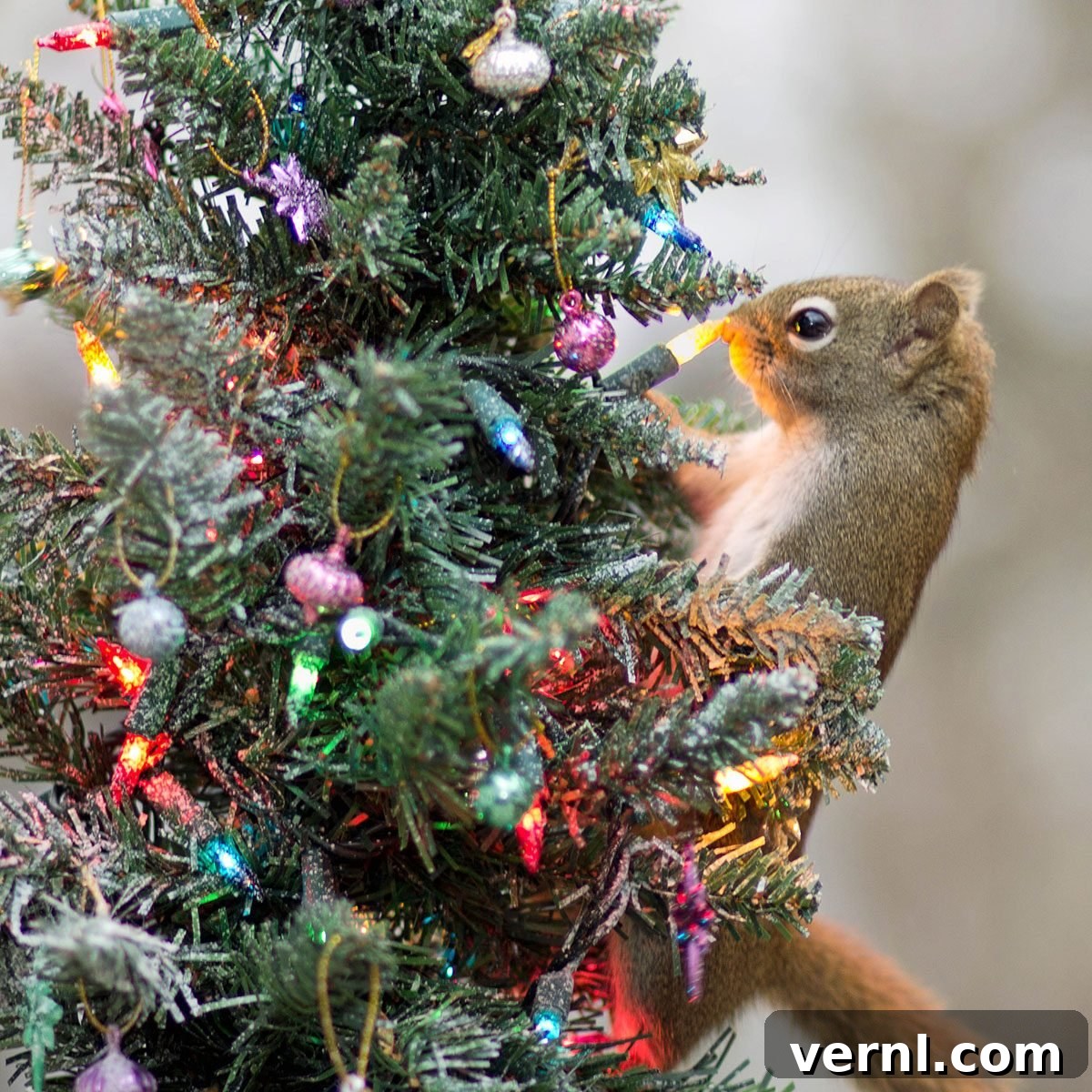
Why Do Animals Attack Holiday Decorations? A Guide to Protecting Your Festive Displays
For many of us, decorating our homes for the holidays is a cherished tradition. Twinkling lights, festive wreaths, and cheerful ornaments bring joy and create a warm atmosphere. However, this festive spirit can sometimes be dampened by unexpected visitors: the local wildlife. Squirrels, raccoons, deer, and even birds can wreak havoc on our carefully curated displays, leaving us wondering why they’re so attracted to our holiday decorations.
If you’ve ever found your Christmas lights chewed through, your inflatable snowman deflated, or your wreaths nibbled on, you’re not alone. This article delves into the reasons behind this animal attraction and provides practical strategies to protect your holiday decorations from unwanted critters. We’ll explore the motivations behind their behavior, identify the most common culprits, and offer expert advice on how to deter them, ensuring your holiday season remains merry and bright.
What Holiday Decorations Attract Animals?
A wide range of holiday decorations can capture the attention of wildlife. Shiny tinsel, dangling ornaments, inflatable decorations with internal fans, and, most commonly, strings of lights are all potential targets. While it’s impossible to know precisely what’s going on in their minds, experts believe that these items often trigger curiosity and predatory instincts.
According to veterinarian Iryna Smyrnova, “Scented, edible decorations, or those located near food sources, such as bird feeders, are the most inviting.” Decorations that resemble food or are placed near areas where animals regularly feed are more likely to attract unwanted attention. The textures, colors, and even the movement of certain decorations can also pique their interest.
Which Animals Are the Usual Suspects in Holiday Decoration Damage?
Several animal species are known for causing damage to holiday decorations. Understanding which animals are most likely to target your displays can help you tailor your protection strategies.
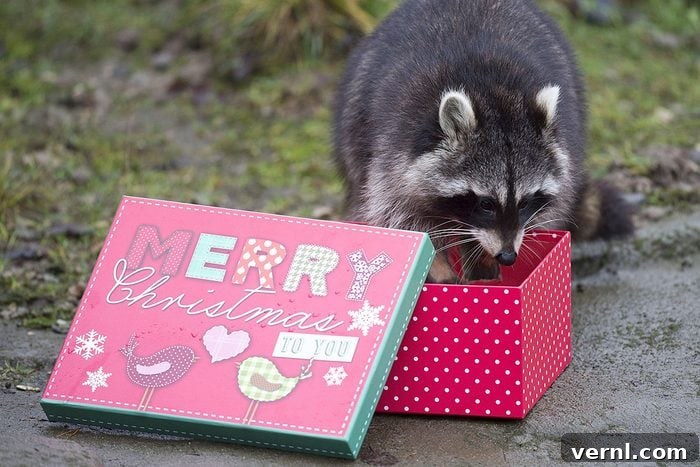
Raccoons are intelligent and curious creatures often drawn to holiday decorations.
Squirrels and raccoons are frequent offenders. These animals are adventurous, intelligent, and possess the dexterity to manipulate and explore their environment. They are constantly searching for food and new experiences, making holiday decorations an irresistible temptation. Deer are also known to nibble on the greenery of wreaths and garlands, especially during the winter months when other food sources are scarce.
While some animals intentionally damage decorations, others may do so unintentionally. Moose, deer, and birds can become entangled in low-hanging lights and other decorations, causing damage in their struggle to free themselves. Even smaller animals like mice and rats may chew on wires or nest within decorations, leading to significant problems.
Why Do Squirrels Chew on Holiday Lights? Understanding Their Behavior
Squirrels are notorious for chewing on holiday lights, and understanding their motivations can help you prevent this frustrating behavior. While it may seem like they have a personal vendetta against your festive cheer, the real explanation is rooted in their natural instincts and needs.
The Constant Need to Gnaw: Dental Health for Squirrels
Squirrels, like all rodents, have incisors that continuously grow throughout their lives. To prevent their teeth from becoming too long and hindering their ability to eat, they must constantly gnaw on hard materials. “For them, a string of lights is like another branch,” explains wildlife expert Peter Gros. “They may even mistake the wires for twigs and other natural items.” The act of chewing on the wires helps them keep their incisors filed down and maintain their dental health.
Natural Curiosity and Exploration
Squirrels are naturally curious creatures, and holiday lights introduce new colors, textures, and shapes into their environment. These novel stimuli draw them to investigate and explore the decorations. During the winter months, squirrels are also busy collecting, hoarding, and burying food in preparation for leaner times. “Their foraging behavior during this time of year may inevitably increase their encounters with your holiday decorations,” says Gros.
The Misinterpreted Meal: Food or Foe?
Some people speculate that squirrels mistake holiday bulbs for nuts or other food sources. However, naturalist David Mizejewski believes this is unlikely, “mostly because they don’t smell like those food items.” Squirrels rely heavily on their sense of smell to locate food, and the artificial materials used in holiday lights typically lack the scents associated with edible items.
Another theory suggests that the eco-friendly electrical insulation, which often contains soy and other plant oils, may attract squirrels. There’s a similar theory explaining why chipmunks and mice chew on car wires. However, scientific evidence supporting this claim is limited and inconclusive, making it a less likely primary motive.
The Impact of Light Pollution on Wildlife
While less likely to be a direct cause of chewing, it’s possible that leaving holiday lights on all night could indirectly contribute to the problem. Continuous light exposure can disrupt the natural activity patterns of wildlife, potentially making them more active and increasing their chances of encountering and interacting with the lights. However, more research is needed to confirm or deny this theory.
Effective Strategies to Stop Animals From Ruining Your Holiday Decorations
Protecting your holiday decorations from animal damage requires a multi-pronged approach. Combining deterrents, preventative measures, and environmental modifications can significantly reduce the risk of unwanted encounters and ensure your displays remain intact throughout the festive season.
- Scent Deterrents: Try coating lights and other decorations with a mist of a strong or bitter scent, such as apple cider vinegar or hot pepper spray. “It may be enough to deter them,” says Gros. “Wildlife learn quickly when something tastes or smells unpleasant.” However, remember that sprays need to be reapplied regularly, especially after rain or snow.
- Physical Barriers: Consider switching to rope lights or encasing wires in protective safety tubes. These barriers make it more difficult for animals to access and chew on the wires.
- Strategic Placement: Place decorations out of reach, far from trees, railings, and fences. The harder it is for animals to reach the decorations, the less likely they are to target them.
- Pruning Tree Branches: Prune back tree branches so they are at least 15 feet away from your house or wherever lights are hung. This prevents squirrels and other animals from easily accessing the decorations from the trees.
- Eliminate Attractants: Remove other elements that attract wildlife to your home, such as bird feeders, accessible trash cans, and pet food. Reducing the overall appeal of your property to wildlife will decrease the likelihood that they will target your holiday decorations.
- Motion-Activated Lights: Install motion-activated lights on larger decorations, like those that might be a draw to deer. The sudden burst of light can startle animals and deter them from approaching the decorations.
Squirrels: Little Scrooges or Beloved Backyard Buddies? Finding Harmony
Even if squirrels aren’t devouring your holiday lights, their antics can sometimes cause frustration. Their penchant for emptying bird feeders and stashing pine cones in attics can test the patience of even the most ardent animal lover. In many cases, deciding to coexist peacefully with these creatures can be the most rewarding approach.
As Mizejewski notes, “Squirrels are amazing creatures. We tend to take them for granted because they are common, but they are one of the few wild animals that we get to see and enjoy every day, and that’s something special.” Their playful behavior and acrobatic skills can bring joy to our lives and connect us with the natural world.
Furthermore, all creatures play vital roles in the ecosystem. Squirrels contribute to seed dispersal and help stabilize the food web, serving as prey for hawks, foxes, and other wildlife. Recognizing their ecological importance can foster a sense of appreciation and encourage us to find ways to coexist peacefully.
The Mystery Remains: Why Now?
One perplexing aspect of animal damage to holiday decorations is the sudden onset of the problem. Why do animals ignore decorations for years, only to suddenly start targeting them? In the case of the opening anecdote, the homeowner wondered why squirrels had left their lights alone for decades before suddenly developing a taste for them three years ago.
Smyrnova theorizes that it could signify an increase in the local squirrel population, leading to greater competition for resources and increased stress behaviors. Another possibility is that a new generation of squirrels has learned the habit from a particularly stubborn individual. “The behavioral trait, once learned and reinforced, could be very fast in spreading among the neighboring squirrels,” she suggests.
Meet the Experts: Insights From Wildlife Professionals
The information in this article is based on the expertise of leading wildlife professionals. Here’s a brief introduction to some of the experts who contributed their knowledge and insights:
- Peter Gros: A veteran wildlife expert and co-host of Mutual of Omaha’s Wild Kingdom Protecting the Wild.
- David Mizejewski: A naturalist with the National Wildlife Federation and author of Attracting Birds, Butterflies and Other Backyard Wildlife.
- Iryna Smyrnova, DVM: A veterinarian at Meowoff, with over 20 years of experience working with animals of all kinds.
By understanding the motivations behind animal behavior and implementing effective protection strategies, you can enjoy the beauty and joy of holiday decorations without the frustration of animal damage. Embrace the festive season and create a welcoming environment for both humans and wildlife.