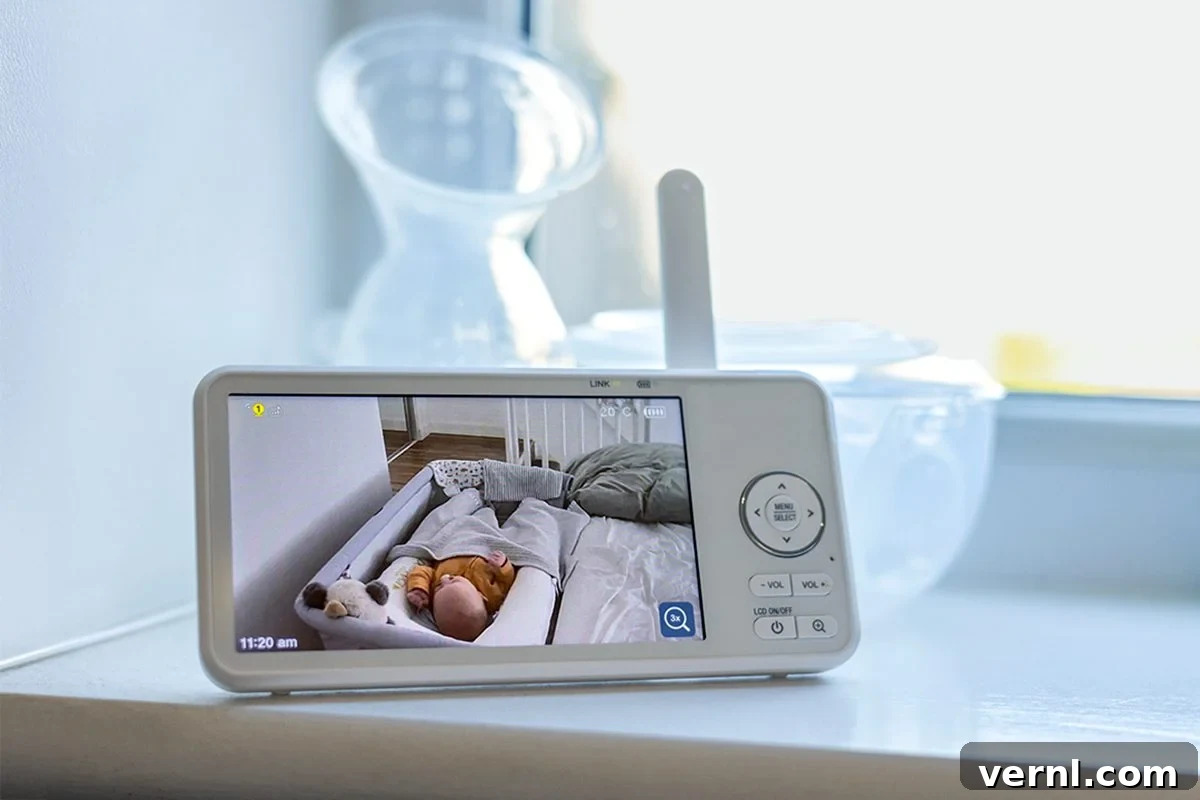
Are Wi-Fi Baby Monitors Safe? A Comprehensive Guide to Security and Peace of Mind
Wi-Fi connected baby monitors offer a convenient way to keep an eye on your little one from anywhere. Simply glance at your phone, and you can check on your baby. However, with growing concerns about data protection and home network security, it’s natural to wonder: “Are Wi-Fi baby monitors truly safe?” This article explores the potential risks and benefits of these devices, offering expert advice to help you make an informed decision and secure your home network.
Many parents are drawn to the convenience and advanced features of Wi-Fi baby monitors. But before you set one up in your nursery, it’s crucial to understand the potential vulnerabilities and take the necessary steps to mitigate them.
We consulted with leading cybersecurity specialists to provide you with a clear understanding of the risks and rewards of using a Wi-Fi connected baby monitor. This guide breaks down the pros and cons, providing practical, expert-approved advice on how to protect your network and your family if you choose to use one of these devices.
The Allure of Wi-Fi Baby Monitors: Understanding the Benefits
Traditional baby monitors have a limited range, restricting your ability to check on your baby when you’re outside that range. Wi-Fi baby monitors, on the other hand, connect to your home network, allowing you to monitor your baby from almost anywhere using a smartphone app. This is particularly useful when you need to check on your baby while you’re at work, or if you want to relax in your garden outside the range of a traditional monitor.
Beyond the convenience of remote monitoring, many Wi-Fi baby monitors offer a range of advanced features. Mike Coogan, Chief Information Security Officer at Brinks Home, explains that some models can track breathing movements and provide real-time alerts for crying, coughing, or motion. These features can help you identify patterns and respond quickly to any potential issues.
“Wi-Fi connectivity also allows video clips to be saved directly to your phone, making it easy to preserve precious memories,” says Coogan. “Moreover, these monitors allow multiple authorized users, such as partners or babysitters, to securely access the feed.”
These advanced features, combined with the convenience of remote access, make Wi-Fi baby monitors an attractive option for many modern parents. However, it’s essential to consider the potential security risks before making a decision.
Are Wi-Fi Baby Monitors a Security Threat? Examining the Risks
Like any device connected to your home network, Wi-Fi baby monitors rely on a stable and secure internet connection. Weak passwords, outdated software, and unsecured networks can leave these devices vulnerable to cyberattacks. A poorly protected monitor can become an entry point for broader network intrusions, increasing the risk of personal information theft.
Aravind Prakash, an Associate Professor in the School of Computing at Binghamton University, emphasizes the additional risks associated with cloud storage. Typically, audio, photos, and video from Wi-Fi baby monitors are stored on remote servers managed by third-party providers and accessed via the internet. This reliance on cloud storage introduces potential vulnerabilities like ransomware attacks and privacy breaches.
“If the cloud storage is compromised, a significant amount of sensitive information could be at risk,” Prakash explains. This includes not only video and audio of your child, but also potentially your home network credentials and other personal data.
Furthermore, Prakash points out that legal recourse may be limited if your data is lost or stolen. “The laws governing data security and privacy are still developing, especially when compared to more stringent regulations in Europe.” This lack of robust legal protection makes it even more critical to take proactive steps to secure your Wi-Fi baby monitor and your home network.
While reputable companies invest in security measures, Prakash cautions that no system is entirely immune to attacks. “Cybersecurity is a constant game of cat and mouse. A determined attacker can compromise even the most sophisticated systems.” This underscores the importance of taking personal responsibility for securing your devices and network.
Can Wi-Fi Baby Monitors Endanger Your Baby? Addressing the Concerns
A responsibly used Wi-Fi connected baby monitor should not directly endanger your baby. However, it’s crucial to understand that these devices depend on a reliable internet connection. “If the connection drops, video feeds and alerts can lag or stop altogether, which can be frustrating for parents who rely on real-time updates,” says Coogan.
Coogan explains that the risks associated with Wi-Fi baby monitors are similar to those linked to other smart home devices, such as security cameras, video doorbells, and smart locks. “While it’s technically possible for a monitor to be misused as a surveillance tool, that risk is generally tied to poor network security rather than the monitor itself,” he says.
Prakash acknowledges that intrusions can occur, including unauthorized access to images or videos, or the disabling of alerts, which could prevent parents from responding to their baby’s needs. He distinguishes between casual mischief and sophisticated attacks. “Hearing a voice through the monitor is likely a prank or the work of an amateur hacker, not a professional attacker with more serious goals.”
He explains that sophisticated hackers usually target specific individuals with well-defined goals, rather than randomly targeting average parents. These professional hackers are unlikely to reveal themselves through a monitor’s audio system.
Making the Right Choice: Is a Wi-Fi Baby Monitor Right for You?
Deciding whether a Wi-Fi baby monitor is the right choice depends on your individual lifestyle, priorities, and comfort level with connected technology.
“Local baby monitors, those not connected to the internet, are generally safer and more secure compared to those that are connected to the network,” says Prakash. However, they lack the flexibility and advanced features that many parents find valuable.
If you travel frequently, work outside the home, or rely on multiple caregivers, the convenience of a Wi-Fi baby monitor may outweigh the potential risks, especially when you implement sensible security measures.
Protecting Your Baby and Your Network: Essential Security Tips
If you decide to use a Wi-Fi baby monitor, taking basic security precautions is essential. Fortunately, a few simple steps can significantly reduce your risk.
Prakash emphasizes the importance of changing default passwords to strong, unique alternatives. “Use multi-factor authentication whenever available and possible,” he advises. He also recommends avoiding sharing passwords with caregivers. “Create individual profiles for them instead.”
Choosing a reputable brand with a proven track record of security is also crucial. While this doesn’t guarantee immunity from attacks, it significantly reduces the risk compared to choosing the cheapest model on the market. “Consider the country where the firmware security originates from and where the products were developed, as this can influence how much you can trust it,” Prakash says.
Prakash also advises against enabling unnecessary features. “Only enable the sensor capabilities on the device as you need them.” Disabling unused audio or microphones can further minimize risk.
Coogan suggests placing smart devices, including baby monitors, on a separate Wi-Fi network for added protection. This reduces the chance of a compromised monitor being used to access sensitive data on other devices on your home network.
By following these security tips, you can significantly reduce the risks associated with Wi-Fi baby monitors and enjoy the convenience and peace of mind they offer.
Meet the Experts:
- Aravind Prakash: Associate Professor in the School of Computing at Binghamton University, State University of New York.
- Mike Coogan: Chief Information Security Officer at Brinks Home.