The Most and Least Popular Car Colors in the U.S.: A Comprehensive Analysis
When it comes to purchasing a new vehicle, the decision-making process extends far beyond just the make and model. Car color plays a significant role in influencing buyer choices. Not only does it reflect personal style and preferences, but it can also impact the car’s resale value and visibility on the road. In the United States, car color trends are constantly evolving, influenced by factors such as economic conditions, fashion trends, and technological advancements in automotive paint.
To gain a deeper understanding of these trends, a recent report by Edmunds analyzed data from the current year to determine the most and least popular car colors across the country. The report delves into state-specific preferences, offering valuable insights into regional variations in color choices. It’s important to note that the data set focuses exclusively on retail registrations to individual consumers, excluding rental sales and government vehicle registrations. This ensures a more accurate reflection of individual consumer preferences, as fleet vehicles often skew towards more practical and neutral colors like white, black, and gray.
By examining new vehicle registrations, the study provides a snapshot of current color trends, revealing which hues are capturing the attention of American car buyers and which ones are falling out of favor. Whether you’re a car enthusiast, a prospective buyer, or simply curious about the automotive landscape, understanding these color trends can offer valuable insights into the psychology and sociology of consumer behavior.
Most Popular Car Colors in the U.S.
Nationally, the data reveals a clear hierarchy of car color popularity. The top five colors dominate the market, accounting for a significant majority of new vehicle registrations. Let’s take a closer look at these frontrunners:
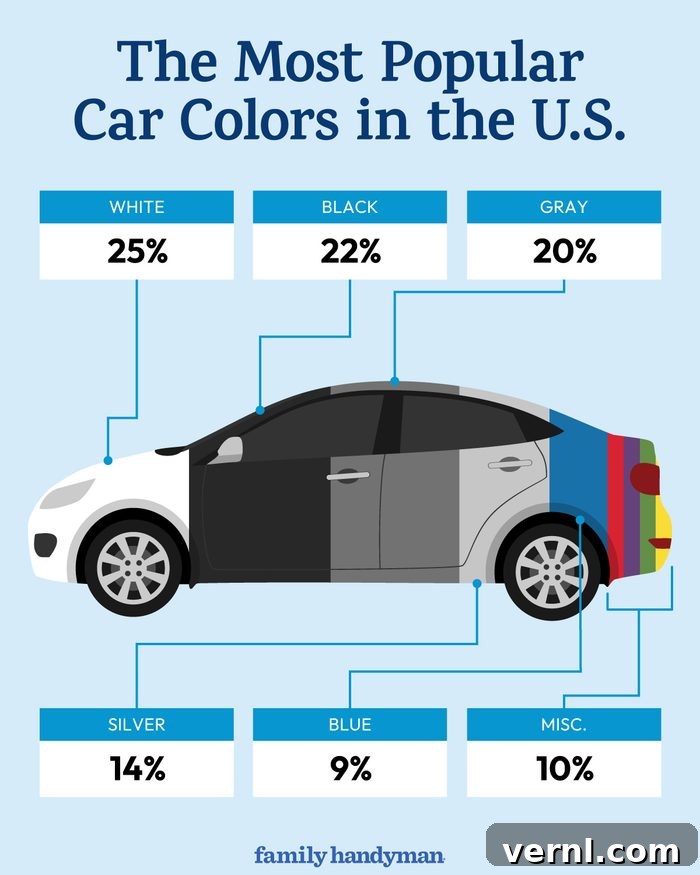
- White: Holding the top spot is white, capturing a quarter of all new individual registrations. This enduring popularity can be attributed to its clean, classic aesthetic, as well as its practicality in reflecting sunlight and keeping the car cooler in warmer climates. White cars also tend to have better visibility, enhancing safety on the road.
- Black: Trailing closely behind is black, accounting for 22% of new registrations. Black exudes a sense of sophistication and luxury, making it a popular choice for those seeking a sleek and stylish look. However, black cars can be more challenging to maintain, as they tend to show dirt and scratches more easily.
- Gray: Gray takes the third position with 20% of new registrations. A versatile and neutral color, gray offers a balance between white and black, providing a subtle yet contemporary appearance. Gray cars are also relatively easy to maintain, as they tend to conceal dirt and minor imperfections.
- Silver: Silver comes in fourth, representing 14% of new registrations. Similar to gray, silver offers a sleek and modern look, while also being practical and easy to maintain. Silver cars are known for their ability to hide dirt and scratches, making them a popular choice for busy individuals.
- Blue: Rounding out the top five is blue, capturing 9% of new registrations. Blue offers a refreshing departure from the more neutral tones, providing a pop of color and personality. With a wide range of shades available, from deep navy to vibrant sky blue, there’s a blue hue to suit every taste.
State-Specific Color Preferences
While the national trends provide a general overview, delving into state-specific data reveals interesting regional variations in color preferences. White dominates in a significant number of states, but there are notable exceptions.
- White Dominance: A staggering 33 states reported white as the most popular car color overall, solidifying its status as the top choice across a wide geographical area.
- Hawaii’s Gray Preference: Bucking the trend, Hawaii stands out as the only state where gray reigns supreme. This preference may be influenced by the state’s tropical climate and coastal lifestyle, where a cooler, more subdued color palette is favored.
- Black’s Coastal Appeal: In the remaining states, as well as Washington D.C. and Puerto Rico, black takes the lead. This preference may be linked to the more urban and sophisticated environments found in these areas, where black cars are seen as a symbol of luxury and style.
Red’s Regional Prominence
While blue typically holds the fifth position nationally, red makes a notable appearance in several states, edging out blue in popularity. These states include:
- Alabama
- Arkansas
- Arizona
- Indiana
- Iowa
- Kentucky
- Minnesota
- Mississippi
- Missouri
- Nebraska
- North Dakota
- Oklahoma
- South Dakota
- Tennessee
- Utah
- West Virginia
- Wyoming
This regional preference for red may be attributed to various factors, such as cultural associations, regional aesthetics, and the popularity of certain sports teams with red as a primary color.
Least Popular Car Colors in the U.S.
While the most popular car colors tend to be consistent across the country, the least popular colors also exhibit a degree of uniformity. Generally, colors that are considered less conventional or more polarizing tend to rank lower in popularity.
Across most states, the least popular colors include:
- Brown
- Orange
- Yellow
- Gold
- Purple
These colors often struggle to gain traction due to their perceived lack of versatility, difficulty in matching with other accessories, or simply a matter of personal preference.
Green’s Divisive Appeal
Green, while not universally unpopular, emerges as one of the least favored colors in several states and territories:
- Washington, D.C.
- Puerto Rico
- Hawaii
- Nevada
- Tennessee
- South Dakota
- Wyoming
- Mississippi
- Utah
- Washington
Green’s mixed reception may be attributed to its association with nature and the outdoors, which may not resonate with all consumers. Additionally, the limited availability of green shades in certain car models may also contribute to its lower popularity.
Puerto Rico’s Unique Color Palette
Puerto Rico presents an interesting case, with a color palette that deviates slightly from the national norm. While green, brown, orange, and yellow rank among the least popular colors, red also joins this list, accounting for 6% of new individual registrations. This suggests a potential saturation of red cars in the market or a shift in consumer preferences towards other colors.
Conclusion: Car Color Trends and Consumer Choice
The analysis of car color trends in the United States reveals a complex interplay of factors influencing consumer choices. While white, black, and gray continue to dominate the market, regional variations and emerging color preferences highlight the diversity of tastes across the country. Understanding these trends can provide valuable insights for automakers, marketers, and consumers alike, helping them to make informed decisions in the ever-evolving automotive landscape. Whether you prefer the timeless elegance of white, the sleek sophistication of black, or the bold statement of red, the choice of car color ultimately reflects individual style and personality.
Source
Most Popular Car Colors in America, Edmunds.