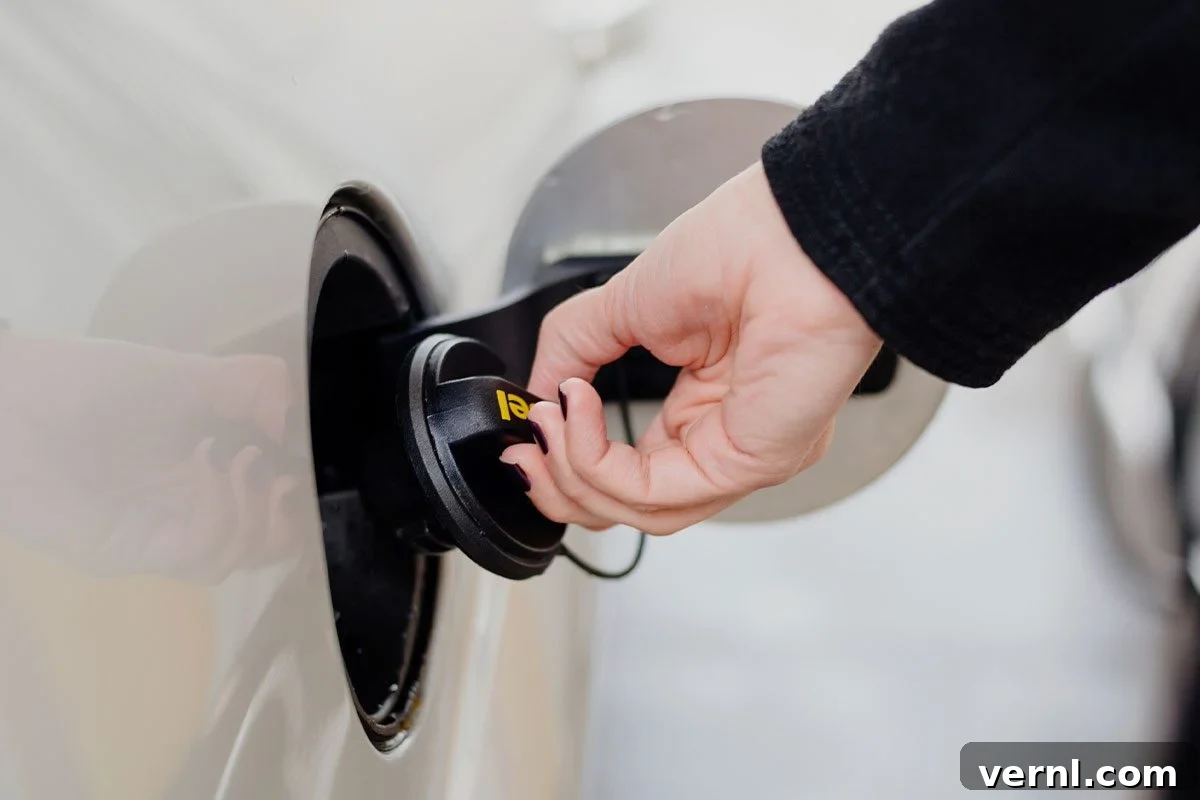
For most drivers, the routine of filling up a car with gas has become muscle memory. It’s an expensive but necessary task for anyone who drives regularly, and many people believe they have the process down to a T.
But there’s a small feature on many fuel flaps that most drivers either overlook or don’t realize exists. It’s simple, practical, and built into countless vehicles: a hidden holder for the gas cap that keeps the cap from dangling and damaging your car while you pump.
The Secret Cap Holder
Look on the inside of your fuel door and you may find small metal or molded brackets designed to hold the gas cap when it’s removed. These little holders are easy to miss, but they perform a couple of helpful jobs: they keep the cap from bumping and scratching paint, and they keep it from swinging freely where it could be damaged or lost.
Most modern gas caps are attached to the vehicle by a short plastic tether. While that tether prevents the cap from being left behind, letting the cap dangle from the tether while you refuel can cause the cap to rub against the car’s finish, nick paint, or strike the bumper. A tether can also become brittle with age and break. When that happens, caps can fall and get misplaced—costly and frustrating in its own right.
The cap holder eliminates those risks. To use it, simply unscrew the cap and place it into the slot or bracket on the inside of the fuel door. The cap sits securely in the holder so it won’t swing into the bodywork or brush against surfaces as you fuel. Some designs are metal hooks, others are molded recesses in the flap or plastic clips; the concept is the same across configurations.
There’s an added convenience: because the cap is tucked into the holder while you pump, you won’t accidentally forget to replace it before closing the fuel door. If the cap is still in the holder, the door won’t latch normally, giving you a tactile reminder to screw the cap back on. That small safeguard can prevent the embarrassment and safety issues of driving off with an unsecured fuel cap.
Automakers include these holders as a simple, low-cost design feature that addresses a common minor annoyance. You don’t need any special tools or skills to use it, and the payoff is better protection for paint and components around the filler neck. If your vehicle’s fuel door doesn’t have a built-in holder, aftermarket clips and simple DIY solutions can be found or created to hold the cap while you refuel.
Using the holder can also help when the weather is bad. In windy conditions the cap can flap around and make the refueling process awkward; placing it in the bracket keeps it steady and out of the way. And for drivers who habitually fumble with caps or who are often in a hurry, adopting the habit of using the holder adds a small layer of convenience that quickly becomes second nature.
Here are a few practical tips for using the cap holder effectively:
- Inspect your fuel door closely. Look for a small notch, clip, bracket, or molded recess where the cap can rest securely.
- If the holder is metal, avoid forcing the cap into place; align it gently so it sits without scraping. If it’s molded plastic, make sure the cap fits snugly so it won’t fall out when you close the door.
- Keep the tether intact. Even when using the holder, the tether provides a backup if the cap is bumped during refueling.
- If your tether shows signs of cracking or wear, replace it promptly to avoid losing the cap during a trip to the gas station.
- If your vehicle lacks a holder and you want one, consider a small adhesive clip designed to hold gas caps, or consult a dealer for an OEM solution that fits your model.
Small features like a cap holder are an example of thoughtful automotive design that often goes unnoticed. Once you know to look for it, using the holder becomes a quick habit that helps protect your vehicle and reduces the chances of losing or damaging the cap. The next time you open your fuel door, take a moment to check for that little bracket—you’ll be glad you did.
Related
- Do You Know What That Little Button on Your Seat Belt Is For?
- What Those Lines on Your Backup Camera Really Tell You
- Here’s What The Small Panel On Your Car’s Front Bumper Is For