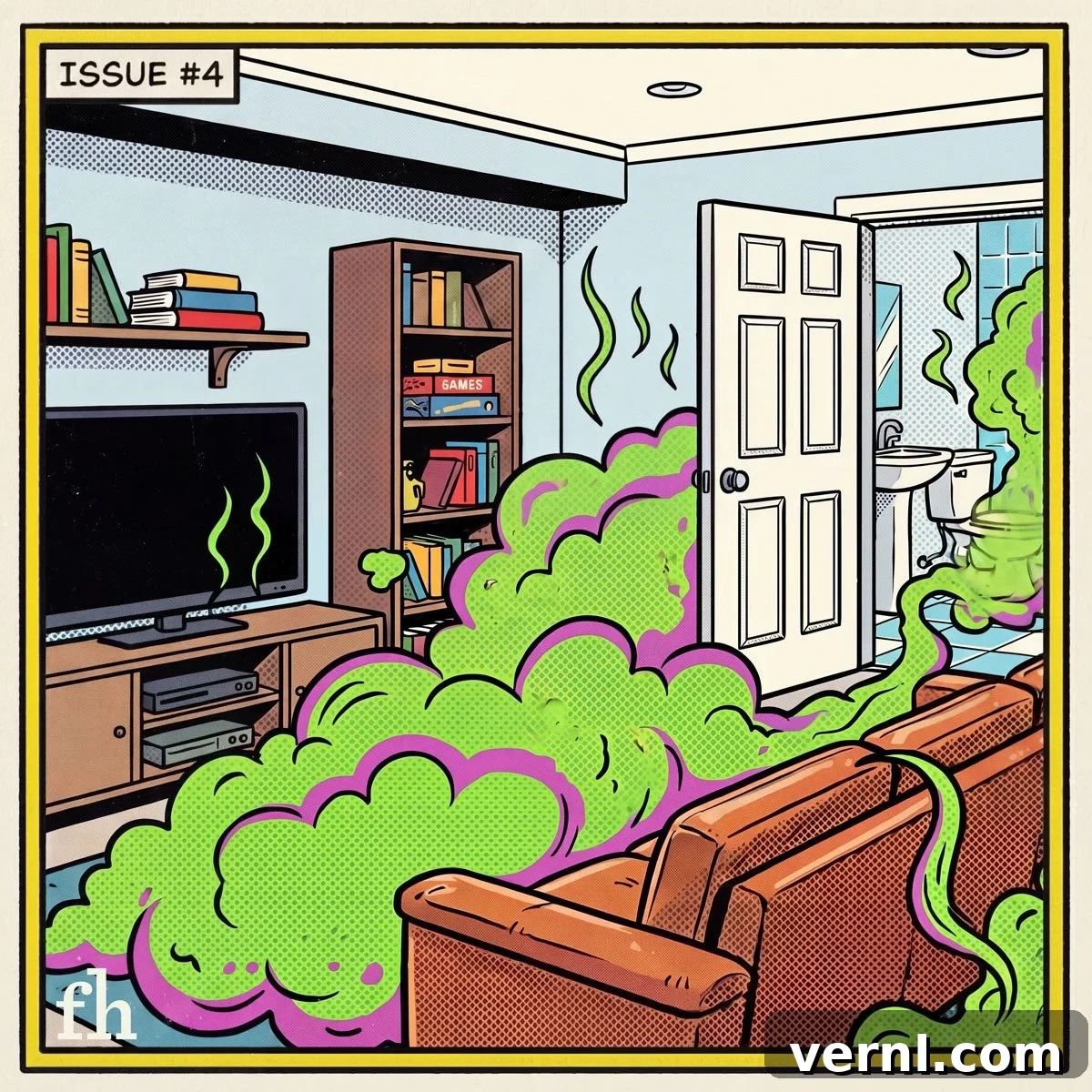
Welcome to Domestic Disasters, where we examine homeowners’ worst mess-ups and grossest discoveries. We bring these situations to experts to determine how serious the problem is and how costly the repairs can be.
A few years ago, Marisa and her husband finished their basement and added a half bath. With four children at home, the extra bathroom was a big relief—until a foul odor appeared. “My children kept blaming one another for farting, until the smell became unbearable,” she says. “We realized something more serious was wrong.”
Her husband followed the scent to a small closet near the bathroom and found raw sewage overflowing. The submersible sewage pump had failed, and the alarm that should have warned them had also malfunctioned.
Trying to fix it himself, he loosened the pump’s bolts and unintentionally triggered a larger backup. “My husband is handy, but plumbing isn’t his specialty,” Marisa says.
What They Tried
Because a plumber couldn’t arrive until the next day, her husband used a wet vacuum for more than an hour to remove the spill until it finally subsided. By then the smell had spread upstairs and filled the kitchen and living room. “The whole house stunk,” she remembers.
The plumber discovered the cause: a wad of baby wipes had jammed the pump impeller. “We suspect our toddler flushed them,” Marisa says. The repair cost was roughly $150, but the odor lingered for 24 hours. “We no longer keep baby wipes in that bathroom,” she adds.
Although the immediate problem was resolved, there are questions about whether the situation was handled safely and whether the homeowners took the right follow-up steps.
A Pro Weighs In
We consulted plumbing and remediation experts to evaluate how Marisa’s household responded and to explain how to prevent similar incidents. Submersible sewer pumps, also called sewage ejector pumps, lift wastewater from basement plumbing up to the main sewer line. They are common in homes with lower-level bathrooms.
There are several reasons these pumps can fail: jammed float switches, failed check valves, normal wear, tripped circuits, and clogged impellers—the last being the most frequent problem. Items that should never be flushed, such as feminine hygiene products and wipes labeled “flushable,” often cause clogs. Even dental floss can tangle and jam a pump.
Sewer pump alarms commonly fail because of electrical issues like tripped breakers, bad wiring, or dead backup batteries. When a pump stops working, sewage can back up into toilets, showers and onto floors. This creates a biohazard that can lead to health risks and requires professional remediation to prevent mold and structural damage.
Did the Homeowners Get it Right?
Partly. “They worked to contain the overflow and had a plumber out the next day,” says one expert. Acting quickly limited further damage. However, the way they handled the cleanup was risky. Direct exposure to raw sewage and sewer gases is hazardous. Surfaces that contacted sewage—floors, walls, and porous materials—should be cleaned and disinfected by a professional water remediation company to prevent mold and health hazards.
How The Pros Would Handle It
A professional’s first move is to stop any additional inflow by shutting off the home’s water, then cutting power to the pump at the breaker. All water use should cease as soon as a pump failure is detected. Next, the area should be ventilated before a technician inspects and diagnoses the pump. After repairs, the entire system is tested and, if contamination reached living spaces, a remediation company is recommended.
The Panic Meter

We rate domestic disasters on a four-point scale:
- Do It Yourself: Simple issues you can safely fix yourself.
- Phone a Friend: Requires some outside help or guidance.
- Call a Pro: Professional assistance is warranted.
- SOS: Dangerous problems that pose direct risk of injury or worse.
Sewage ejector pump problems can sometimes be handled by a homeowner if caught early, but diagnosing deeper issues is tricky, so calling a professional is usually the safest option. Clearing a clog is a messy, unsanitary job and the float switch must be set correctly to ensure proper operation.
The Cost Differential
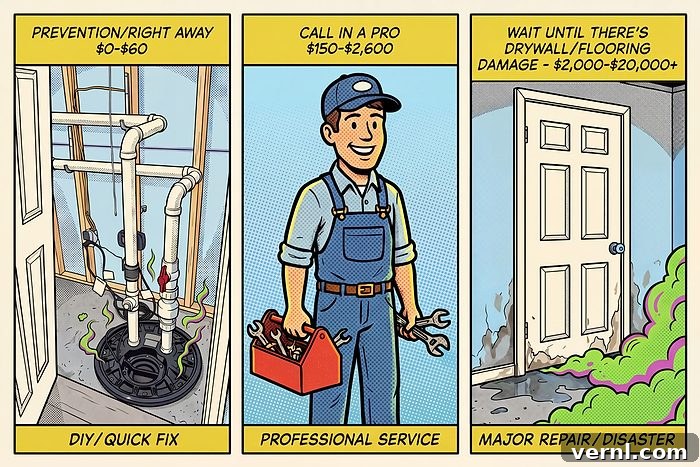
If you test your alarm regularly and clear clogs promptly, DIY costs can be minimal—typically $0 to $50 for gloves, disinfectant and a battery. Installing a high-water alarm usually costs $100 to $300. Hiring a plumber to diagnose and clear a clog typically falls between $150 and $600, but replacing a pump or major components can add $500 to $2,000 or more.
Neglecting the problem can be extremely expensive. Professional sewage remediation and replacement of flooring, drywall, and finishes can push costs into the thousands or tens of thousands. “A $20 battery and a minute a month can prevent a five-figure cleanup,” an expert notes.
The Right Way to Fix Sewage Ejector Pumps
- Shut off the home’s water supply to prevent more overflow.
- Turn off power to the pump at the breaker. Unplug any motors or float switches if possible.
- Ventilate the area by opening windows and using fans to clear sewer gas.
- Wear PPE: heavy-duty rubber gloves, eye protection, an N95 mask, boots and protective clothing.
- Use a wet vac to remove excess sewage if safe to do so.
- Call a licensed plumber for inspection and repair.
In Marisa’s case the plumber cleared the wipes from the impeller and inspected the float switch and check valve. Quick professional service helped contain the damage.
If You Choose to DIY
- Protect the area around the pump with old towels or plastic sheeting.
- Have a bucket ready to collect debris removed from the pump.
- Disconnect the discharge line at the check valve.
- Remove the pump basin lid carefully and lift the pump by its handle into the bucket.
- Clean debris from the impeller and basin using pliers if needed.
- Confirm the impeller turns freely and the float can move without obstruction.
- Replace the alarm battery and test the alarm.
- Refill the basin with clean water, reinstall the pump, and test the system to ensure proper activation and shutoff.
After any repair, test the system by pouring water into the basin to confirm the pump runs and shuts off correctly. This ensures the system is fully operational rather than temporarily fixed.
Call a Water Remediation Specialist
If sewage reached flooring, drywall, or framing, call a remediation pro. Disinfection can be attempted for limited contamination, but finished basements with soaked materials require professional cleanup to prevent mold and long-term damage.
How to Prevent Submersible Sewer Pump Issues
- Only flush toilet paper and human waste. Never flush wipes, even those labeled “flushable.”
- Test the high-water alarm every month or two and replace the battery annually.
- Pour a bucket of water into the pump basin every few months to confirm the pump cycles.
- Have a professional inspect the pump yearly and clean the basin every three to five years.
- Consider a battery backup or smart alarm that alerts you if the system fails while you’re away.
- Replace pumps proactively; typical life expectancy is seven to ten years depending on use and maintenance.
- Monitor pumps more often in areas with high water tables or freeze risk, and ensure discharge lines are protected from freezing.
Pumps that lift waste from below the sewer line endure substantial strain and need regular maintenance. Watch for early warning signs: sewage smells, gurgling or slow drains, moisture around the basin, unusual noises, or a pump that runs constantly or never runs.
What the Homeowner Learned
“It really matters what you flush,” Marisa says. “Don’t take things apart if you’re unsure what you’re doing. My husband’s attempt to unscrew the lid sent material rushing back through the system and made the situation worse.”
They also installed a smart sensor for extra protection and now maintain the pump alarm and routine checks.
About the Experts
- Mark Kay is an editor and writer who focuses on septic and wastewater system maintenance and homeowner guidance.
- Aaron Adams is a master plumber with more than 20 years of experience and leads a plumbing and HVAC service company.
- Joseph Wade is an operations executive at a plumbing company with broad experience in residential and commercial services.