
by Graham Powell
The Design Museum reopens this week in its new Kensington home after a long wait. We attended a preview to see whether the new space lives up to expectations and to consider whether a physical museum dedicated to design remains relevant in an era when information is so easily available online.
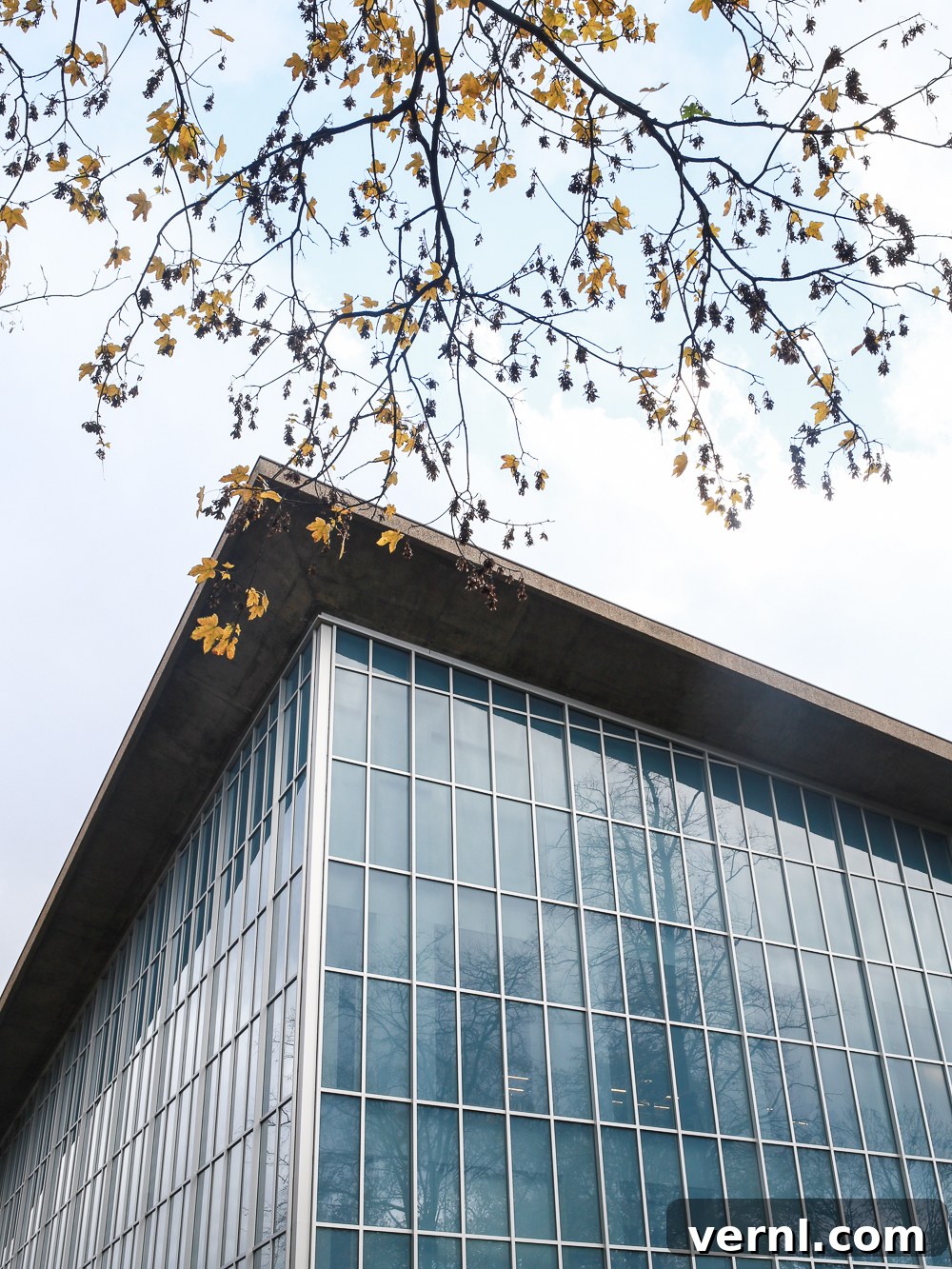
The museum now occupies the former Commonwealth Institute building at the western end of Kensington High Street. The move from its previous Shad Thames location near Tower Bridge gives the institution roughly three times more space and positions it among other cultural and educational heavyweights in the area, including the Victoria and Albert Museum, the Science Museum and several prominent art and design institutions. Terence Conran asked Deyan Sudjic, who has led the museum since 2006, to find a larger home that would allow the Design Museum to develop from a niche institution into a significant international voice in design and architecture. After a careful search, the 1960s landmark building in Kensington was selected for its character, roof form and potential for sensitive conversion. John Pawson was the unanimous choice of the selection panel to oversee the restoration and transformation of the listed building into a contemporary museum.
John Pawson’s minimalist sensibility is widely admired, and his work on the museum exemplifies the restrained, refined approach he is known for. Pawson prioritises careful detailing, high-quality materials and a muted palette to foster a calm, considered environment. The redesign follows these principles throughout the building, creating spaces that feel measured and intentional rather than decorative.
Walking into the atrium, your eyes are immediately drawn upward to the building’s dramatic hyperbolic paraboloid roof and the rhythmic sweep of its supporting beams. The scale and geometry of the space create an immediate sense of awe and a peaceful stillness that encourages visitors to pause and reflect. That transition from the bustle of everyday life to a quieter mindset is integral to the museum experience.
Museums often use minimal interiors to clear distractions and focus attention on objects and ideas; the Design Museum adopts this strategy with purpose. By removing objects from everyday contexts and presenting them in calm, neutral settings, the museum encourages closer inspection of their function, history and meaning. In that way, the building functions like a contemporary house of contemplation where design, rather than doctrine, is at the centre of attention.
Pawson’s minimalism is not a monochrome exercise in sterility. Instead, it combines a thoughtful mix of materials—Italian terrazzo at lower levels, pale marble, and warm light oak paneling and floors in other areas—to create surfaces that feel tactile and human. Darker tones are introduced in the restaurant and social spaces to anchor convivial activity. Lighting is carefully integrated and many functional elements, such as service doors and lifts, are discreetly concealed behind paneling. These choices reduce visual clutter and prioritise serenity, while framed views toward Holland Park rather than the busy High Street further enhance the sense of calm.
The museum provides two large temporary galleries along with several smaller, more intimate spaces that invite unexpected encounters and pop-up displays. The opening programme balances a range of perspectives: thematic responses to contemporary challenges, selections from the museum’s permanent collection and recognition of notable contemporary design. A residency programme gives emerging designers a platform alongside established practitioners. With three times the floor area of its former home, the museum offers a broad and varied experience that resists easy summary; each visitor will find different highlights depending on their interests.
Importantly, exhibitions include both celebrated individual designers and collaborative, systems-based work such as transport and technology. This inclusive curatorial approach underlines the museum’s commitment to showcasing design in all its forms—from singular objects to complex, team-led projects.
The new Design Museum will be more than an exhibition space: it can act as a hub for the creative industries, supporting education, innovation and community engagement. At a time when arts and design programmes often face scrutiny, a visible, ambitious institution can help demonstrate the broader societal value of design—through jobs, training, research and public engagement. With thoughtful programming and outreach, the museum has the potential to be a meaningful civic resource and an international platform for design discourse.
So, do we need a new Design Museum? In our view, the answer is yes. In an age of digital noise and rapid information turnover, a well-curated physical space that promotes focused attention, critical thinking and deep engagement still matters. John Pawson’s restrained interiors provide the right atmosphere for reflection and learning, and the museum’s expanded facilities offer scope for richer programming and broader public engagement.
For anyone interested in design—whether professionally involved or simply curious—the new Design Museum is a destination worth visiting. It offers a thoughtful, calmly presented exploration of how and why things are made, and the role design plays in everyday life.
Words by Graham Powell & photography by Helen Powell.