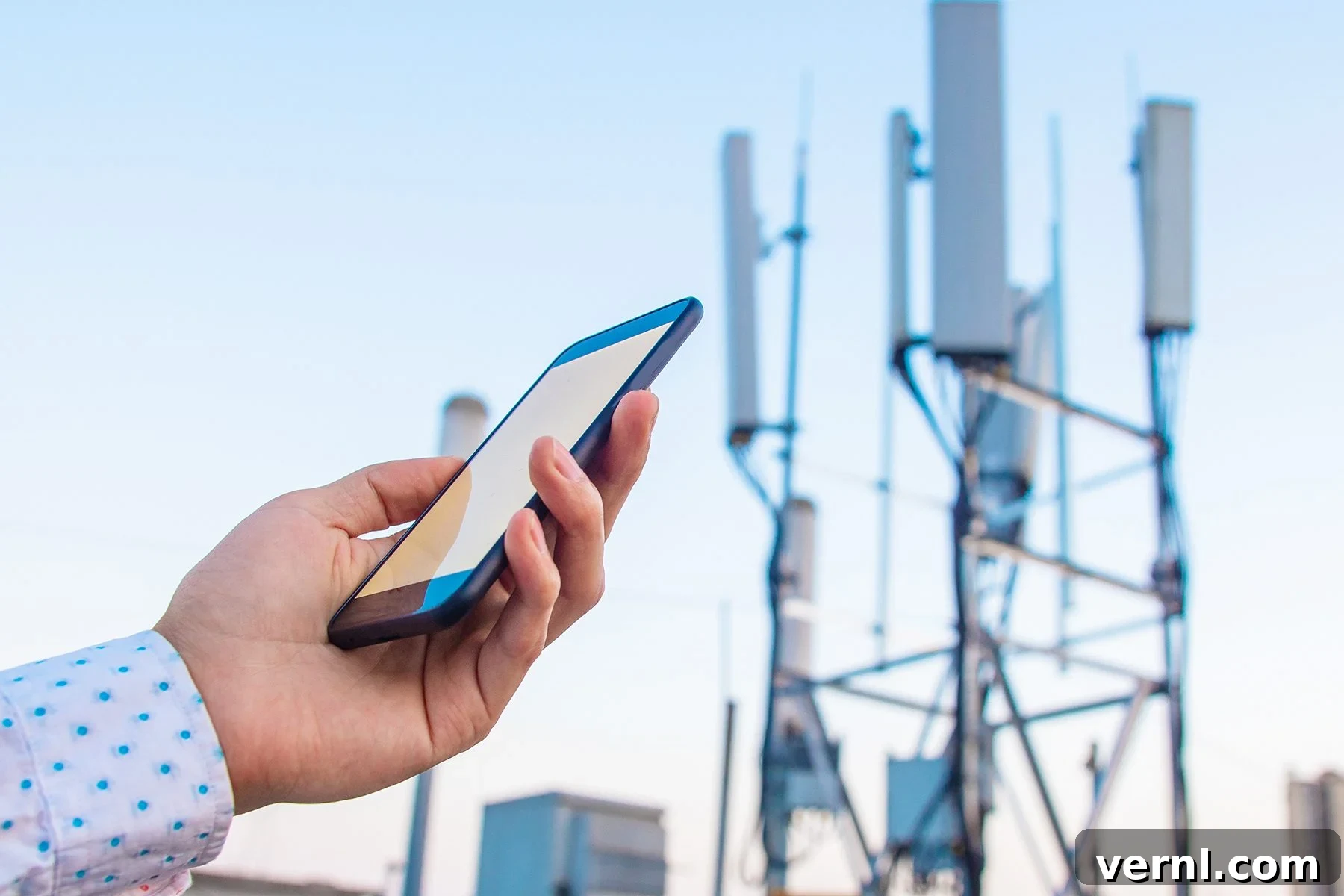
Emergency Satellite Connectivity: A Lifeline When Cell Service Fails
In our increasingly interconnected world, the smartphone has become an indispensable tool, seamlessly integrated into almost every aspect of our daily lives. From managing schedules and staying connected with loved ones to navigating unfamiliar territories, our devices are central to modern existence. However, their true value often becomes most apparent during times of crisis. When an unexpected emergency strikes, the ability to access up-to-date information or, more critically, to call for help, can literally be the difference between danger and safety.
Recognizing the profound importance of continuous communication, especially in life-threatening situations where traditional networks might fail, leading smartphone manufacturers have pioneered a groundbreaking solution: direct satellite connectivity. This revolutionary technology enables select modern devices to establish a vital link to emergency services even when conventional cellular towers or Wi-Fi networks are completely out of reach. Imagine being stranded in a remote wilderness, far from any signal, or experiencing a widespread power outage that cripples local infrastructure. In such scenarios, the ability of your phone to bypass terrestrial networks and communicate directly with orbiting satellites transforms it into a powerful, potentially life-saving tool.
Today, certain advanced models, such as the iPhone 14 and later, as well as the Google Pixel 9, are equipped with the specialized hardware and software necessary to harness this technology. They can connect directly to satellites in low-Earth orbit, utilizing that signal to relay critical messages or location data to the relevant emergency responders, effectively bridging the communication gap that once existed in the most isolated or devastated areas. This article will guide you through the essential steps and considerations for leveraging this extraordinary feature, ensuring you’re prepared to connect your phone to a satellite when it matters most.
The Lifesaving Power of Satellite Connectivity for Your Smartphone
The introduction of satellite connectivity in mainstream smartphones marks a significant leap forward in personal safety and emergency preparedness. Previously, reliable communication in remote areas or during large-scale disasters often required specialized satellite phones, which were costly, bulky, and largely inaccessible to the average consumer. Now, this critical capability is integrated directly into the devices many of us carry every day.
This innovation provides a crucial safety net for a wide range of scenarios:
- Outdoor Adventures: For hikers, campers, climbers, and adventurers exploring off-grid locations, a satellite-enabled smartphone offers peace of mind. Should an accident occur or you become lost far from civilization, the ability to send an SOS message can expedite rescue efforts.
- Natural Disasters: Earthquakes, hurricanes, floods, and wildfires can severely damage cellular towers and power grids, rendering traditional communication useless. Satellite connectivity provides a resilient backup, allowing victims to call for help, share their location, and receive critical updates from emergency services.
- Remote Work and Travel: Professionals working in isolated regions, or individuals traveling through areas with sparse network coverage, can maintain a vital link to the outside world, ensuring their safety and ability to report critical incidents.
- Vehicle Breakdowns in Rural Areas: If your car breaks down in a remote location without cell service, you can use your satellite connection to request roadside assistance or alert emergency contacts to your situation.
The underlying principle is simple yet profound: by connecting directly to satellites, your phone transcends the limitations of terrestrial infrastructure, providing a direct line to help when every second counts.
Understanding How Smartphone Satellite Connectivity Works
Unlike standard cellular communication, which relies on a network of ground-based towers, satellite connectivity establishes a direct link between your phone and orbiting satellites. These satellites act as relays, receiving signals from your device and forwarding them to ground stations, which then route the information to emergency services. Due to the vast distances involved and the limited power of a phone’s antenna, this connection is typically slower and optimized for short, critical messages rather than lengthy calls or data streaming.
The technology is designed to be intuitive and user-friendly, guiding you through the process step-by-step. It typically activates automatically when your phone detects a complete absence of cellular and Wi-Fi signals, ensuring it’s available precisely when you need it most.
How To Connect an iPhone to Satellites for Emergency SOS
NOTE: Satellite connection features, specifically Emergency SOS via Satellite, are currently exclusive to iPhone 14 models or later. Earlier iPhone models do not possess the necessary hardware for this capability.
1. Open the Connection Assistant and Initiate SOS
When your iPhone detects it has no cellular service or Wi-Fi, the option for satellite connectivity will automatically appear, prompting you to activate it for emergencies. There are primarily two simple ways to initiate the process and open the Connection Assistant on your iPhone:
- Automatic Prompt: If you attempt to call or text 911 (or your local emergency number) while out of cellular and Wi-Fi range, your iPhone will automatically display a prompt offering you the option to use Emergency SOS via Satellite. This is often the quickest path in a true emergency.
- Manual Access via Control Center: For a proactive approach or to utilize non-SOS satellite features (like sharing your location), you can access it through the Control Center. Swipe down from the top-right corner of your iPhone screen to open the Control Center. Here, you’ll see a ‘Cellular’ button (often depicted as a pole with signals radiating upwards). Tap this button, then select the ‘Satellite’ option. From there, you can choose whether you want to send an emergency message (SOS), update your location for friends via Find My, or request roadside assistance.
The system is designed to walk you through the process, making it straightforward even under stress. Once you select an option, your iPhone will then guide you on how to best establish a connection.
2. Connecting to the Satellite: Optimal Positioning
For your iPhone to successfully connect with a satellite, a clear line of sight to the sky is paramount. Satellites are constantly moving, and physical obstructions can block their signal. Here’s how to optimize your connection:
- Find a Clear View: Head outdoors to an open area with an unobstructed view of the sky and the horizon. Avoid being under dense foliage, inside buildings, or near tall structures like mountains, cliffs, or skyscrapers, as these can significantly weaken or block the signal.
- Follow On-Screen Instructions: Your iPhone will provide real-time guidance, showing you which direction to point your device. It will often display a graphic indicating the satellite’s position and an arrow directing you to move left or right to maintain the strongest connection. Follow these instructions patiently and precisely.
- Maintain Connection: Once connected, try to remain as still as possible and keep the phone pointed in the indicated direction. The connection will likely be slower than a normal 4G or 5G cellular network. Text messages are prioritized due to their small data size, so be patient as your message transmits.
3. Understanding Feature Visibility and Demo Mode
Don’t be alarmed if you don’t immediately see the satellite connection options in your Control Center or settings. The feature is context-aware: you’ll only see the option to access satellite features when your phone cannot detect any cellular network or Wi-Fi signal. This prevents accidental use and ensures the feature is reserved for true emergencies.
To familiarize yourself with the process outside of a stressful emergency situation, Apple provides a dedicated “Satellite Connection Demo.” This demo allows you to practice connecting to a simulated satellite, guiding you through the positioning and messaging steps without actually sending an SOS. It’s highly recommended to try this demo beforehand to understand how the feature works and build confidence in using it when an actual emergency arises. You can usually find this demo option within your iPhone’s Emergency SOS settings.
How To Connect an Android Phone to Satellites for SOS Calls
NOTE: As of the latest information, the Google Pixel 9 is the pioneering Android model capable of direct satellite connectivity for emergency services. While other Android manufacturers and chipmakers (like Qualcomm with Snapdragon Satellite) are developing similar features, the Pixel 9 currently leads the Android market in this specific capability.
1. Make an SOS Call
Connecting to a satellite on the Google Pixel 9 for emergency communication is designed to be as straightforward as possible, integrating seamlessly into existing emergency protocols. If you find yourself in a location without Wi-Fi or cellular service access, the process is incredibly intuitive:
- Dial 911 (or your local emergency number): Simply make an emergency call as you normally would. Your Pixel 9’s software is intelligent enough to detect the absence of traditional network coverage.
- Automatic Satellite Prompt: When the phone realizes it cannot connect via cellular, it will automatically present you with the option to connect to a satellite to complete your SOS call. This integrated approach ensures that even under duress, you don’t have to navigate complex menus.
- Follow On-Screen Guidance: Similar to iPhones, the Pixel 9 will provide clear visual instructions on how to position your phone to achieve the best connection with an overhead satellite. This usually involves pointing your phone towards the sky with a clear view of the horizon.
2. Emergency Contact and Location Sharing
Beyond simply making an SOS call, the Google Pixel 9’s satellite feature offers enhanced safety measures. You have the ability to set up specific emergency contacts in your phone’s settings. If you initiate an SOS call via satellite, these pre-selected contacts will be immediately sent your precise location information. This automatic sharing capability is invaluable, allowing your loved ones or designated emergency contacts to track your whereabouts and coordinate assistance, even if you are unable to communicate verbally.
This feature adds an extra layer of security, providing peace of mind not only to the individual in distress but also to their support network. Regularly reviewing and updating your emergency contacts and permissions is a good practice for maximizing the effectiveness of this function.
Key Considerations and Best Practices for Satellite Connectivity
While smartphone satellite connectivity is a game-changer for emergency situations, it’s essential to understand its nuances and limitations to use it effectively:
- Geographic Availability: Satellite services are not universally available across all regions and countries. Coverage varies by provider (Apple’s Globalstar partnership, for instance) and regulatory approvals. Always check the coverage map for your specific device and location, especially before embarking on international travel or adventures in remote areas.
- Service Cost and Duration: Apple currently offers Emergency SOS via Satellite free for a limited period (e.g., two years from activation of a new iPhone 14 or later). Future pricing models may apply. For Android devices, similar terms are expected to be announced. Be aware of any potential subscription fees that may become active after an initial grace period.
- Connection Speed and Data Limitations: Satellite connections on smartphones are designed for low-bandwidth communication – primarily text messages and small data packets (like location coordinates). They are significantly slower than typical cellular or Wi-Fi speeds. Do not expect to make regular phone calls, browse the internet, or stream video via satellite. Conserve your messages for critical information.
- Clear Line of Sight: As reiterated, an unobstructed view of the sky is non-negotiable for a satellite connection. Buildings, dense forests, deep canyons, or even heavy cloud cover can impede the signal. Always try to move to an open area if you need to use this feature.
- Battery Consumption: While designed to be efficient, actively searching for and maintaining a satellite connection can consume more battery power than regular cellular use. In an emergency, managing your phone’s battery life is crucial. Consider carrying a portable power bank, especially during extended trips into areas without charging facilities.
- Practice Makes Perfect: Utilize the demo modes available on devices like the iPhone to practice connecting to a satellite. Familiarity with the interface and the positioning requirements will reduce stress and improve efficiency when facing a real emergency.
The Future of Off-Grid Communication
The integration of satellite connectivity into everyday smartphones represents just the beginning of a new era in personal communication and safety. As technology advances, we can anticipate wider availability across more device models, enhanced capabilities (perhaps limited voice or faster data transfer), and even more seamless integration with various emergency services and private assistance providers. The development of dedicated satellite chipsets and broader partnerships between smartphone manufacturers and satellite network operators will undoubtedly expand the reach and reliability of this life-saving technology.
Ultimately, these advancements are about empowering individuals with the tools to stay safe and connected, no matter where their adventures take them or what unexpected challenges they encounter. It’s a powerful testament to human ingenuity, pushing the boundaries of technology to ensure that help is always within reach.
Conclusion: Your Smartphone, Your Ultimate Safety Device
In conclusion, while our smartphones are invaluable for daily convenience, their newfound ability to connect directly to satellites transforms them into indispensable safety devices for emergencies. Whether you’re an outdoor enthusiast, a frequent traveler to remote areas, or simply preparing for unforeseen disasters, understanding how to utilize satellite connectivity on your iPhone 14 or Google Pixel 9 is crucial.
This technology provides a critical lifeline, ensuring that even when traditional cellular networks fail, you can still reach emergency services, share your location, and communicate vital information. By familiarizing yourself with the steps, practicing with demo modes, and understanding the limitations, you can leverage this revolutionary feature to protect yourself and your loved ones, making your smartphone the ultimate tool for peace of mind in any crisis.