
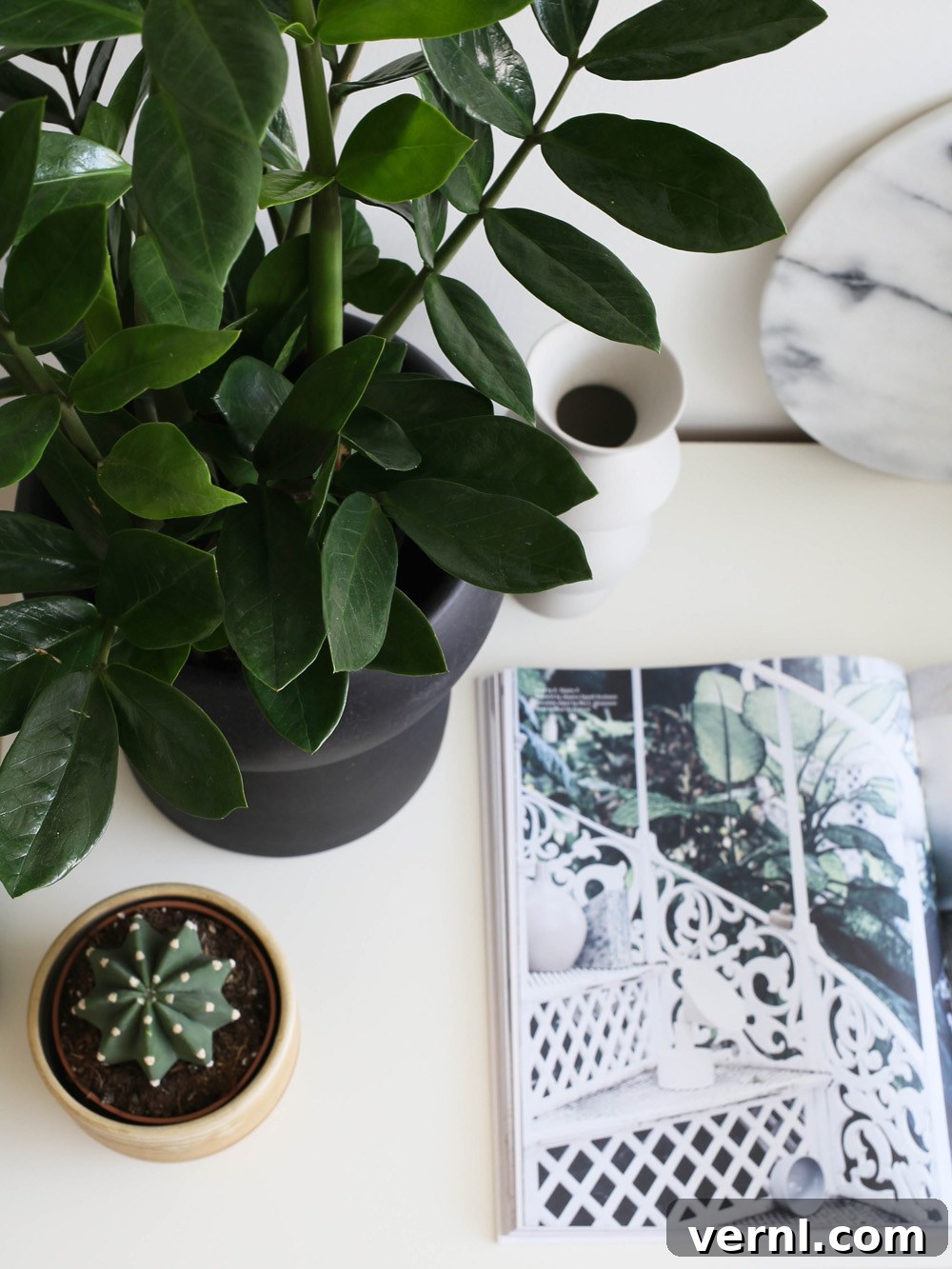
Looking for a bold, resilient and low-maintenance houseplant to brighten your home or home office? The Zamioculcas, often called the ZZ plant, is an excellent choice. With glossy dark green leaves and a striking upright habit, it adds instant presence without demanding much attention.
I first noticed how hardy this plant is in a dull corporate office I used to work in. It was rarely watered and never fertilized, yet it remained healthy and visually strong, providing a cheerful focal point in an otherwise uninspiring space. That resilience is one reason I chose to bring a ZZ plant into my home office.
I teamed up with The Joy of Plants to show how I’ve incorporated this tough, attractive plant into my workspace.
Native to parts of eastern and southern Africa, including Kenya, Zimbabwe, Tanzania, Malawi and Zanzibar, the Zamioculcas zamiifolia thrives in a variety of conditions. It stores water and nutrients in its thick stems and underground rhizomes, so it tolerates occasional neglect. If you’re going away on holiday, a single thorough watering before you leave will usually keep it going for a week or two.
How to care for Zamioculcas
- Zamioculcas adapts to both bright and low light, though it prefers indirect light for best leaf color.
- Protect it from cold drafts and avoid temperatures below about 15° C (59° F).
- Water sparingly — allow the soil to dry out between waterings and never leave the pot sitting in water.
- Repot into a larger container when growth slows or the roots outgrow the pot to encourage continued development.
I appreciate the plant’s calm, upright habit — it stands quietly and confidently on my desk, bringing a sense of order and a touch of nature. Many people also cite air-purifying qualities for ZZ plants, though the extent of that benefit depends on many factors.
Because the ZZ plant is bold and architectural, I like to pair it with a strong pot that complements its form. I chose a curvaceous black planter to anchor the upright shoots and create a clear visual statement in the room.
My office palette is mainly black and white, and I wanted to soften that contrast with natural textures and warm tones. I experimented with adding a band of cork to the base of one large planter, but the balance felt off. Instead I explored different pot shapes and display arrangements until the composition felt right.
One successful idea was converting a simple black plastic planter into a cube-shaped cork-wrapped pot. The cork adds warmth and texture, contrasting nicely with the monochrome scheme and balancing the circular black planter that houses the ZZ plant.
This small DIY is quick, inexpensive and effective — a great way to refresh existing pots without spending much time or money.
Simple Cork Planter DIY Project
You will need:
- A roll of self-adhesive cork sheet.
- A cube-shaped planter or any container you want to dress up.
- A cutting mat to protect your work surface.
- A sharp craft knife or scalpel for clean cuts.
- A long metal ruler to guide straight edges.
Measure the height and circumference of the pot, then transfer those dimensions to the back of the cork sheet. Cut carefully using a ruler and a sharp blade. Peel the protective film from the adhesive cork and apply it smoothly around the pot, aligning edges precisely for a neat finish.
Cork is warm and tactile, and while whole plant pots aren’t usually made from cork, using cork sheet as a decorative wrap is an easy way to introduce texture and visual warmth to your plant display. It’s a small detail that can make a big difference to the overall look of a room.
Posted in collaboration with The Joy of Plants as part of their Houseplant of the Month campaign.