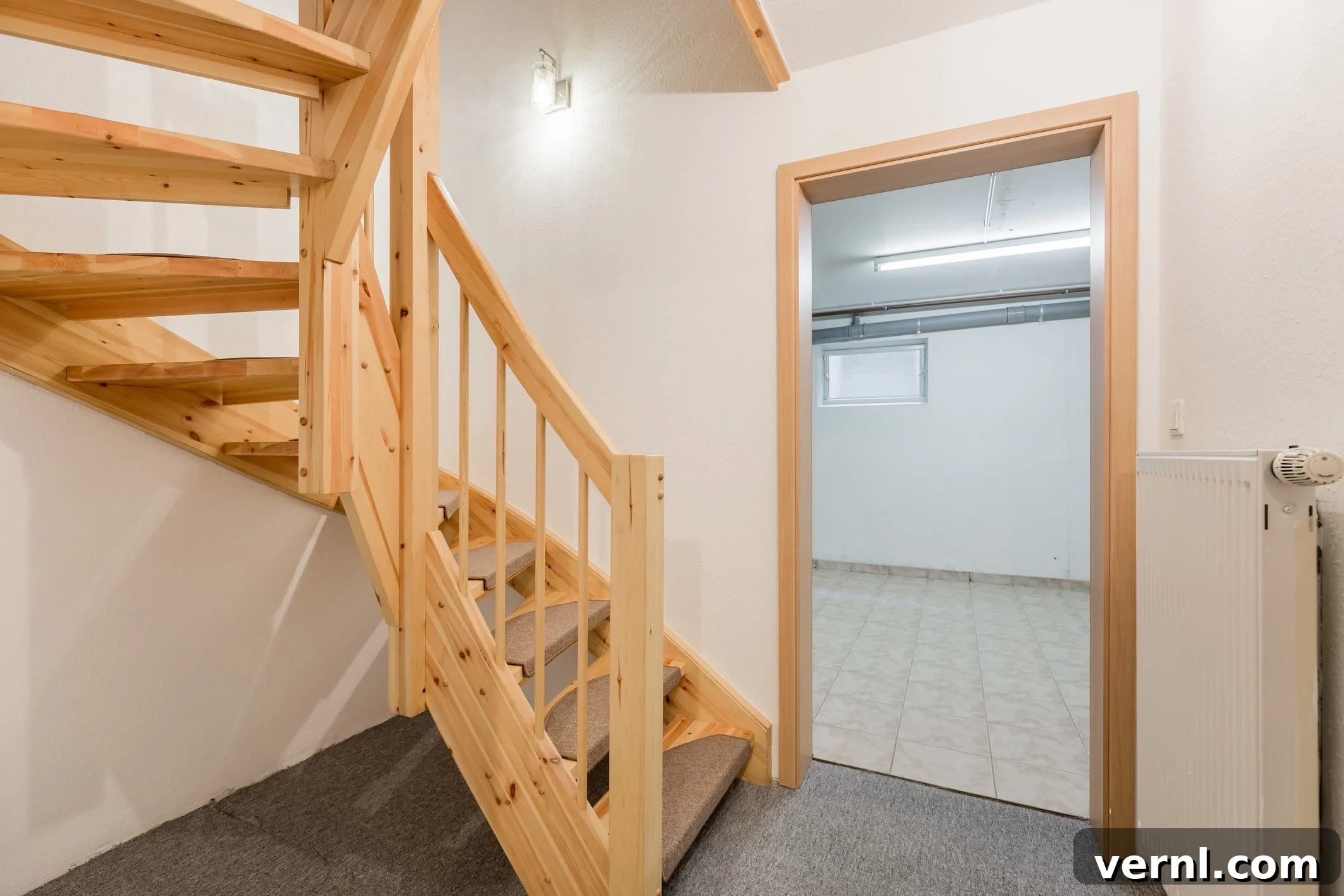
The basement staircase often reflects the overall condition and purpose of the basement itself. In many homes, an unfinished basement primarily serves as a utility or storage area, typically accessed by a straightforward, steep set of stairs, perhaps with open treads, or even a compact spiral staircase. However, as basements evolve into valuable extensions of the living space, a finished basement demands a more refined and integrated staircase. These often feature closed treads, risers, and sometimes a spacious landing, blending seamlessly with the decor of the converted space.
Fundamentally, a basement staircase prioritizes function over elaborate aesthetics. It’s commonly constructed from practical materials like wood or plywood, designed for durability rather than intricate ornamentation or oversized treads. Despite its practical nature, neglecting to properly finish these stairs can lead to a host of problems. An unfinished wooden staircase is prone to staining, can become dangerously slippery, and may even attract pests, turning a functional element into an unsightly and unsafe hazard. Investing in a proper finish not only enhances its appearance but also ensures longevity and safety.
When considering finishing options, it’s crucial to acknowledge the unique climate of a typical basement. Elevated humidity levels common in subterranean spaces often rule out natural fiber carpeting, which can be susceptible to mold and mildew. Fortunately, synthetic carpets made from materials like polyester, nylon, or olefin are excellent, moisture-resistant alternatives that can provide comfort and style.
For many homeowners, a paintable finish remains the top choice due to its affordability, ease of application, and versatility. Paint or a clear protective finish can look fantastic, offering a clean, refreshed appearance. However, it’s vital to address the potential for slipperiness. For the safety of everyone using the stairs, incorporating non-slip solutions, whether through textured paints, anti-slip additives, or adhesive strips, is an indispensable step that prevents accidents and ensures peace of mind.
Understanding Unfinished Basement Stairs: The Basics
Before embarking on your basement staircase finishing project, it’s essential to understand the fundamental components and characteristics of these often-overlooked structures. A thorough assessment will guide your material and finishing choices, ensuring a successful and lasting transformation.
- Material Choices: The most common materials for stair treads, risers, and railings in basements include pine, fir, and oak. Each wood type offers distinct aesthetic qualities and durability. Pine and fir are softer, more cost-effective, and readily available, making them popular choices for utility-oriented basements. Oak, a hardwood, provides superior durability and a more premium look, often found in basements designed as living spaces. Regardless of the wood species, all require a protective finish—whether paint or a durable clear coat—to guard against wear, moisture, and staining.
- Open or Closed Treads: This refers to the space between successive stair treads. Open treads, where there is no vertical panel (riser), are common in outdoor staircases or purely utilitarian basement stairs, giving a more industrial or rustic look. They can make the space feel more open but also allow dirt and dust to fall through. Conversely, closed treads feature a wooden riser that fills the space between steps, creating a solid, enclosed structure. Risers not only offer a more finished appearance but also contribute to the structural integrity and ease of cleaning. When finishing, both treads and risers must be treated consistently to achieve a cohesive look and maximum protection.
- Tread Nosing: The rounded front edge of a wooden stair tread is known as nosing. This feature is crucial for safety, providing a slightly extended surface for footing, and also contributes to the aesthetic finish of the stairs. If you are finishing a staircase constructed from plywood, it’s often necessary to add separate hardwood nosing pieces. These pieces are typically glued and nailed to the front edge of each plywood tread, creating a more robust, attractive, and safe edge that mimics the look of solid wood stairs.
- Railing Systems: Most basement staircases are designed to maximize space, often hugging one wall while featuring a railing on the opposite side. While basement railings typically aren’t as ornate as those in main living areas, they are essential for safety and can be customized to match your desired aesthetic. Whether simple and functional or more decorative, the railing system—including posts, balusters, and handrail—needs to be finished alongside the staircase itself. This ensures uniformity in protection and appearance, tying the entire structure together beautifully.
Key Considerations When Finishing Basement Stairs
The decision to finish your basement stairway extends beyond mere aesthetics; it’s a practical investment in the longevity, safety, and functionality of your home. If your unfinished basement sees only occasional use, you might be tempted to leave the staircase as is. While this might suffice for minimal traffic, any regular use warrants a proper finish. Beyond protecting the wood from the wear and tear of foot traffic, a well-finished staircase significantly improves the overall appearance of your basement, elevating it from a simple utility area to a more integrated part of your home. Prioritizing these considerations will help you make informed decisions for a successful project.
- Existing Basement Flooring: A harmonious transition between your basement floor and the staircase is vital for a cohesive design. Ideally, your staircase finish should complement or match your basement’s existing flooring. Thankfully, a wide array of floor coverings can be effectively installed on stairs, including durable hardwood, versatile laminate, or resilient vinyl. For basements, however, the choice of carpeting requires special attention. While carpet can provide excellent comfort and sound dampening, it must be a synthetic material—such as polyester, nylon, or olefin—to withstand the higher moisture levels typically found below grade. These materials resist mold, mildew, and moisture damage far better than natural fibers, ensuring your carpeted stairs remain fresh and durable.
- Basement Moisture Conditions: The moisture level in your basement is perhaps the most critical factor influencing your finishing choices. Basements, by their very nature, can be prone to humidity and dampness, which can wreak havoc on untreated wood. The wetter your basement environment, the greater the need for robust protection for your stairs. In such conditions, paint or clear polyurethane finishes emerge as your best defense. These coatings create a protective barrier that seals the wood, preventing moisture absorption, deterring mold and mildew growth, and significantly extending the lifespan of your staircase. Consider moisture-testing your basement if you’re unsure about its humidity levels.
- Staircase Usage and Traffic: The intended function and frequency of use for your basement will significantly impact the type and durability of the finish you choose. A staircase leading to a purely utilitarian storage area will require a less elaborate, yet still protective, finish compared to one accessing a vibrant living space, home office, or guest suite. For high-traffic areas, durability and ease of maintenance should be paramount. Furthermore, if your basement is consistently well-heated and serves as a comfortable living extension, synthetic carpeting can be an excellent choice. It offers softness underfoot, reduces noise, and allows occupants to comfortably traverse between floors without shoes, adding a layer of warmth and luxury to the space.
Optimal Approaches to Finishing a Basement Staircase
Transforming a bare wooden basement staircase into a durable, safe, and attractive feature doesn’t have to be an overwhelming task. With a range of options available, from simple DIY-friendly paint jobs to more specialized flooring applications, you can achieve a professional-looking finish that complements your basement’s style and withstands its unique environment. Each method offers distinct advantages in terms of aesthetics, durability, and maintenance.
Painting for Protection and Style
For most wooden basement staircases, painting stands out as the most versatile, cost-effective, and DIY-friendly finishing option. A high-quality paint job not only provides excellent protection but also allows for immense design flexibility through color. For the high-traffic treads and risers, a premium porch and floor enamel is highly recommended. These paints are specifically formulated to withstand heavy foot traffic, resist scuffs and abrasions, and offer superior moisture resistance. For the railings, an acrylic enamel provides a durable and smooth finish that holds up well to frequent handling.
The benefits of painting are numerous: it’s an accessible project for most DIY enthusiasts, offers an endless palette of color choices to match any decor, and provides excellent resistance against moisture, mold, and the daily wear of foot traffic. Furthermore, when the paint eventually shows signs of wear or if you simply desire a change, repainting is a straightforward process, allowing you to refresh your stairs with minimal effort. Prior to painting, proper preparation—cleaning, sanding, and priming—is crucial for a long-lasting and smooth finish. Incorporating non-slip additives into the final coat or applying anti-slip strips after painting can also significantly enhance safety.
Highlighting Natural Wood with Clear Polyurethane
If your basement stair treads or railing are crafted from attractive woods like oak or fir, and you wish to showcase their natural grain and warmth, a clear polyurethane finish is an outstanding choice. Two or three coats of a high-quality oil-based or water-based polyurethane provide a robust, transparent protective layer that guards against moisture, scratches, and everyday wear, all while allowing the inherent beauty of the wood to shine through. This method creates a more elegant and sophisticated look, particularly suitable for finished basements that aim for a natural or traditional aesthetic. Ensure adequate ventilation during application, especially with oil-based polyurethanes, and allow ample drying time between coats for optimal adhesion and durability.
Other DIY-Friendly Finishing Techniques
Beyond painting and clear coats, several other methods can be employed to finish basement stairs, many of which are achievable for the skilled DIYer, though some may benefit from professional expertise.
- Carpeting: Carpeting your basement stairs adds comfort, warmth, and sound dampening. You have two primary approaches:
- Stair Runner: A single continuous carpet runner can be stretched down the entire length of the staircase, secured with tacks or tack strips. This leaves portions of the treads and risers exposed, allowing you to paint or apply a clear finish to these visible areas, creating an attractive two-tone effect. Runners are easier to clean and replace than full carpeting.
- Full Tread Carpeting: Alternatively, you can carpet each individual tread completely, potentially leaving the risers exposed to be painted. This method provides maximum softness and slip resistance on the walking surface. For either option, remember that basement carpet must be synthetic to resist moisture and prevent mold. Professional installation is often recommended for a seamless and secure fit, especially on turns or landings.
- Hardwood Installation: If you’ve invested in engineered wood flooring for your basement, extending that same elegant material onto your stairs creates a luxurious and cohesive look. Engineered hardwood is particularly suitable for basements because its multi-ply construction offers greater stability and moisture resistance compared to solid hardwood. Installing hardwood on stairs is a meticulous process that requires precision cuts and careful fitting, especially around nosing and risers. While ambitious for a DIYer, this is a job best entrusted to a seasoned flooring installer to ensure a perfect, durable, and safe finish that matches the quality of your basement flooring.
- Luxury Vinyl Flooring (LVT/LVP): Luxury vinyl flooring is an exceptional choice for basement stairs, especially given its renowned waterproof properties, making it an ideal complement to LVT basement floors. When installing on stairs, it’s crucial to securely glue each vinyl plank or tile to the treads to prevent any slipping or shifting, which could be a significant safety hazard. Additionally, you will need to install specialized stair nosing, which is typically available from most flooring dealers in a matching or complementary style to your chosen vinyl. This nosing provides a safe, durable edge and finishes the look of each step, ensuring a professional and integrated appearance.
Inspiring Basement Stair Ideas for Every Style
The versatility of basement stairways means the design possibilities are as varied as the purposes they serve and the individuals who use them. From purely functional utility stairs to elegant transitions for luxurious living spaces, a well-executed finish can completely redefine the character of your basement. Explore these ideas to spark inspiration for your own renovation project:
Floor-Color Matching Paint
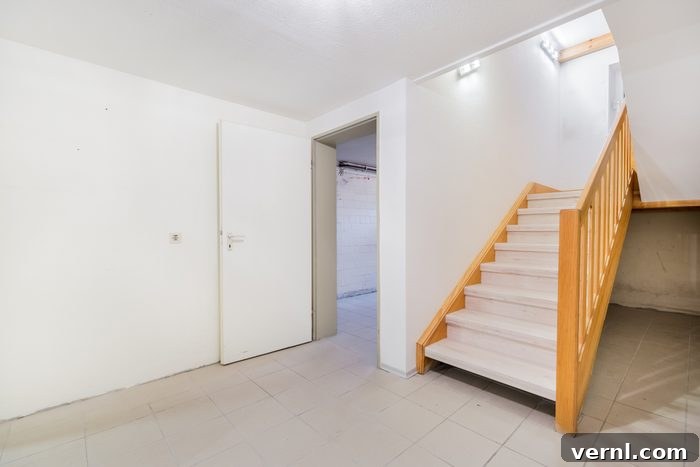
This design beautifully illustrates how to create a cohesive and modern look. The stair treads are painted in a sophisticated light gray, precisely matching the tile flooring throughout the basement. This continuity visually expands the space and creates a seamless flow from the basement floor to the upper level. To add a touch of natural warmth and texture, the railing is coated with a clear finish, allowing the inherent beauty of the wood grain to emerge. This combination of subtle color matching and natural wood creates an inviting, contemporary aesthetic that is both practical and stylish.
Cozy Carpet for Ultimate Comfort
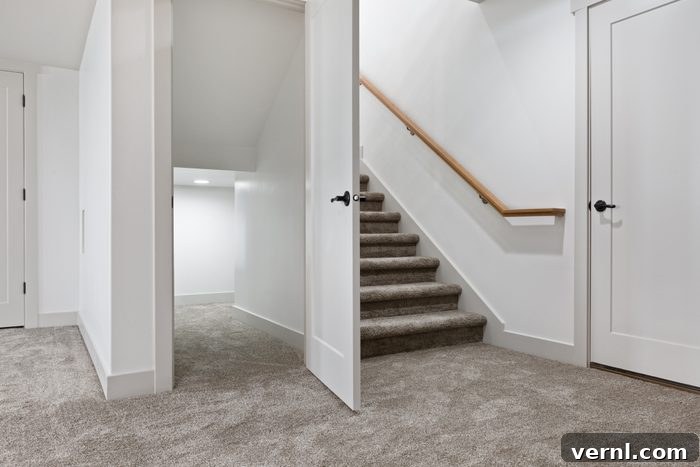
For basements transformed into comfortable living areas, a carpeted staircase offers unparalleled warmth and comfort. In this example, the staircase, nestled securely between two walls, features the same plush carpet as the basement floor. This creates a unified, cozy environment, making the journey between floors exceptionally comfortable, especially for bare feet. Beyond its tactile appeal, carpeting significantly reduces noise, enhancing the peaceful ambiance of the basement. This approach is ideal for basements that serve as family rooms, play areas, or guest suites, where comfort and quiet are paramount.
Simple Utility Steps
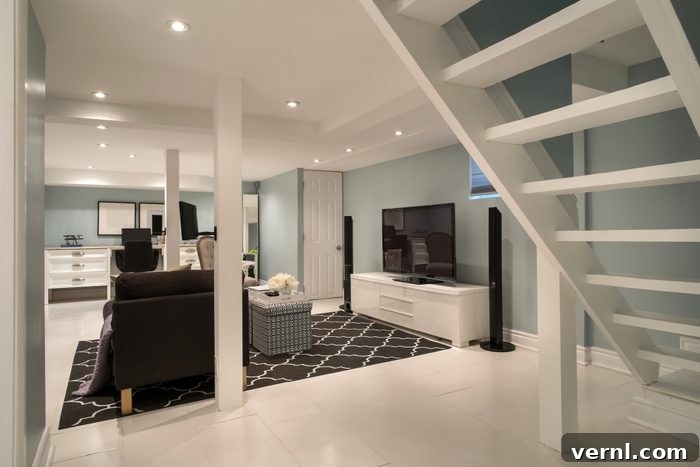
Not every basement requires an elaborate staircase. For a purely utilitarian basement—perhaps used for storage, laundry, or housing mechanical systems—simplicity and functionality are key. In this instance, there’s no need for ornate details or complex finishes. All components of the staircase, including treads, risers, and any railings, are uniformly painted. This not only provides a clean, bright, and unified appearance but, more importantly, offers essential protection to the wood from moisture, dirt, and wear. A durable, light-colored paint can also help brighten a typically dim utility space, making it feel more accessible and organized.
A Touch of Elegant Hardwood
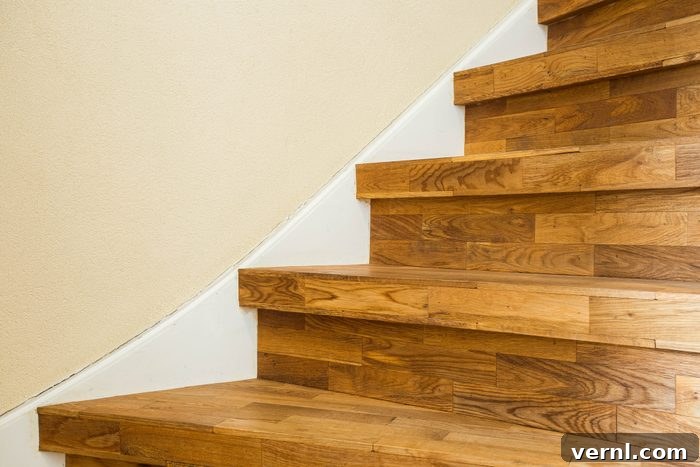
Why limit the beauty of hardwood to upper levels? Bringing hardwood to basement stairs can elevate the entire space, giving it a sophisticated and premium feel. However, the key lies in selecting the right product. It is imperative to use an engineered hardwood product that is specifically rated for below-grade installations. Unlike solid hardwood, engineered wood is constructed with multiple layers that provide enhanced stability and resistance to moisture fluctuations, making it suitable for the unique environment of a basement. When properly installed with attention to moisture barriers and expansion gaps, hardwood basement stairs can be a stunning and durable feature that adds significant value and aesthetic appeal to your home.