
Paid partnership with Rado
This year designjunction moved from King’s Cross to the Southbank and welcomed a new headline sponsor: Rado. The Swiss watchmaker has long placed design at the heart of its identity, collaborating with established designers on new timepieces and supporting emerging talent through international design competitions. Rado also combines its design focus with a love of sport — the brand is official timekeeper at numerous tennis tournaments — but here the emphasis is on their support for up-and-coming designers via the Rado Star Prize.
The Rado Star Prize uk 2018
The Rado Star Prize is a well-established international design competition that runs regional editions around the world. The UK edition launched last year, when the judges awarded Joachim Froment the prize for his 0.6 Chair. For 2018 the UK competition returned with the theme “On Time / Time Off,” asking entrants to consider how products relate to the passage of time, how they enrich daily life, and how they encourage awareness of where and how time is spent. Shortlisted projects spanned lighting, ceramics, furniture and inventive manufacturing methods. Ten finalists were chosen to exhibit at designjunction during London Design Festival, with the overall winner receiving a £5,000 cash prize and a Rado timepiece.
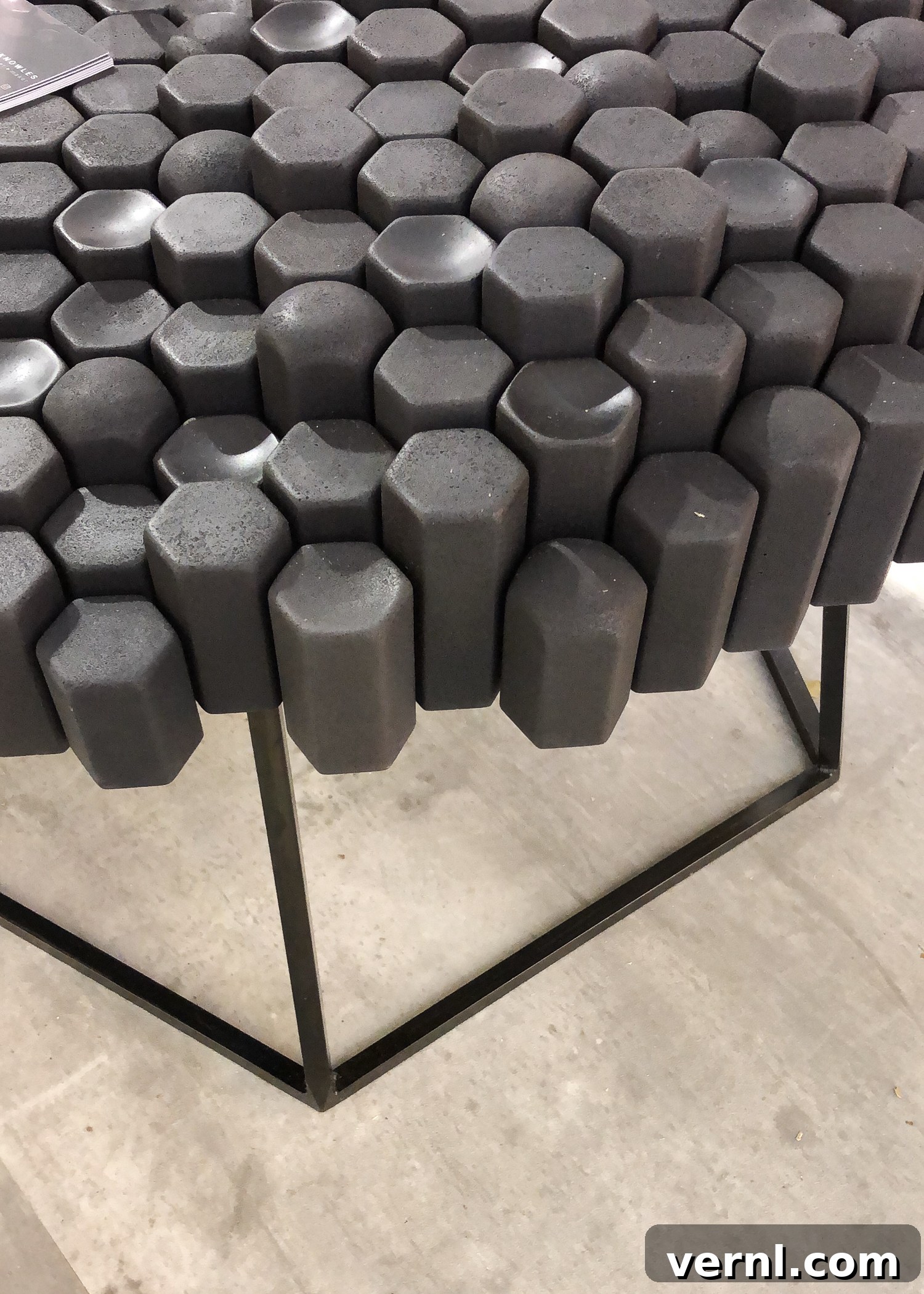
Rado Start Prize winner David Knowles and his GC18 table
The Judge’s choice
The 2018 judges’ prize went to David Knowles, a 3D design student at Northumbria University, for his GC18 coffee table. The table is constructed from hexagonal columns cast in Jesmonite and draws direct inspiration from the Giant’s Causeway. Knowles described how a visit to the site left a strong impression: the scale, rhythm and geometric order of the basalt columns inspired him to interpret that landscape as a piece of furniture.
His intention was to distill the Causeway’s layered forms and repeating hexagonal geometry into a functional object that still carries a sense of place. The GC18 translates geological structure into a tactile, domestic scale, inviting viewers to consider time in relation to natural processes and crafted objects.
The Magé Cabinet by Scott Ridgway
Other shortlisted entries
Among the shortlisted projects was Scott Ridgway’s Magé Cabinet, a whisky cabinet influenced by traditional Japanese craft. Ridgway looked to magewappa techniques — the art of bending thin cedar into curved forms used for boxes and steamers — to create a cabinet that complements an owner’s leisure moments. The Magé Cabinet pairs careful craftsmanship with a calm, considered approach to “time off,” offering a ritualised space for storing and enjoying a favourite spirit.
Kel Lamp by Georgina Heighton
Georgina Heighton presented the Kel Lamp, a playful oak light that encourages tactile interaction. Horizontal oak dowels can be rolled, slid and rearranged to alter how the light is diffused. The lamp’s simple mechanical gestures invite users to engage physically with the object, turning light into an activity and reinforcing the competition’s theme of time and interaction.
The Tartufo Collection by Heleen Sintobin
Heleen Sintobin’s Tartufo Collection stood out for its use of leather and traditional colouring techniques. The collection — a stool and a bench — revives an ancient chemical dyeing method to highlight the natural qualities of vegetable-tanned leather. Instead of relying on stitching, the leather folds are secured by wooden dowels, creating a refined, understated joinery that celebrates materiality and craft. The work feels both historical and contemporary, demonstrating how traditional processes can generate new forms and uses.
The Limescal Project by Martina Taranto
The Public Vote Prize
Alongside the judges’ award, visitors to the show were invited to cast a public vote for their favourite shortlisted entry. The Public Vote Prize was awarded to Martina Taranto for The Limescale Project. Taranto’s proposal reimagines limescale — usually seen as a nuisance — as a material resource. Her process encourages limescale to form around shaped templates, mimicking the shape of underground pipes so that objects can be “grown” and later harvested. The project reframes waste and accretion as a means of production, prompting fresh thinking about time, resource cycles and domestic maintenance.
designer collaboration with bethan grAy
Designjunction also showcased Rado’s latest designer collaboration: the True Thinline Studs by Bethan Gray, Rado’s first partnership with a leading female designer in this series. The watch adapts the brand’s slimmest case with brass studs and a marquetry-inspired dial pattern, referencing motifs found in Bethan Gray’s furniture work. The result is a restrained, elegant limited edition that translates furniture detailing into a wearable object. I will be featuring a closer look at this piece on Instagram later in the month.