
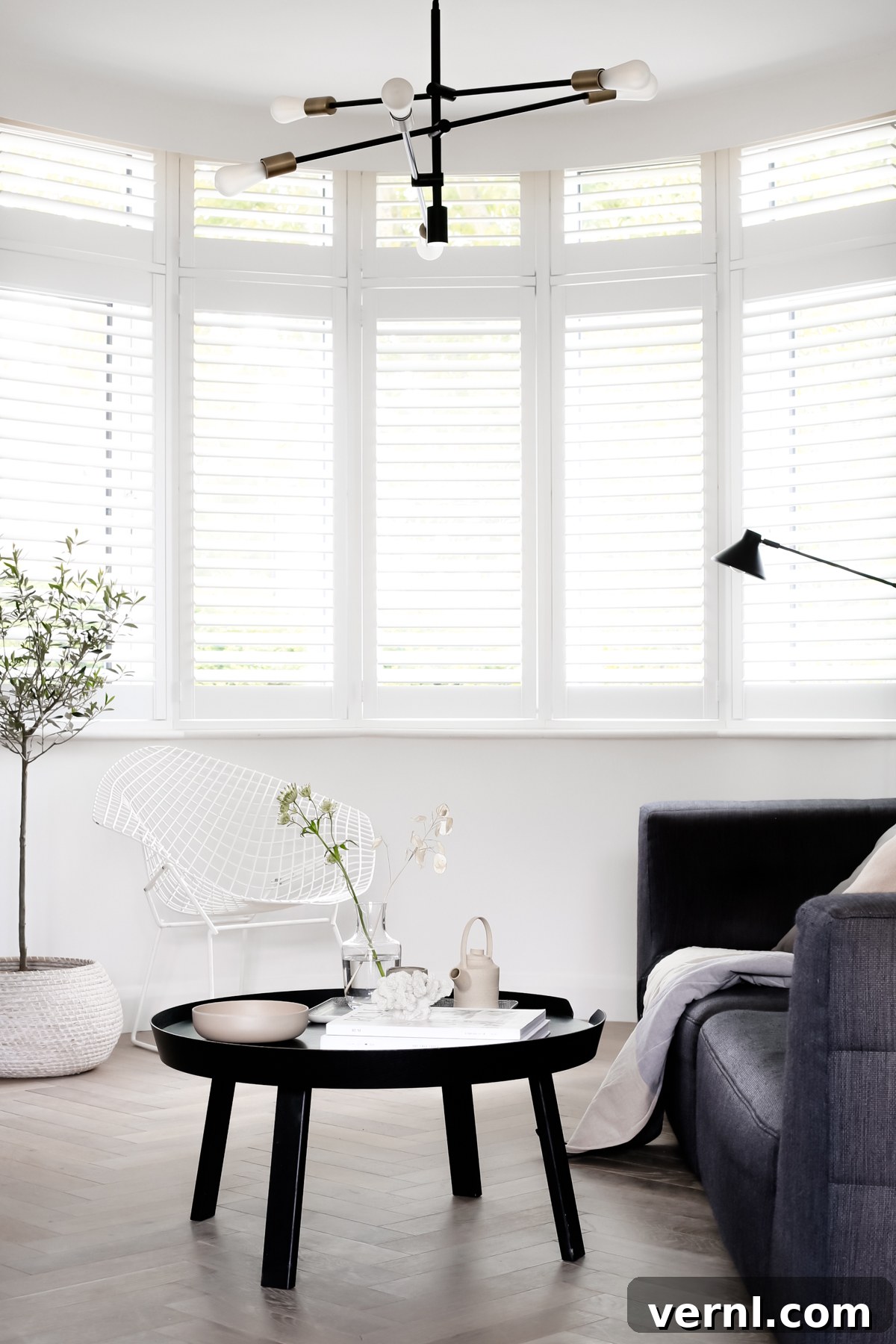
Choosing bay window shutters was one of the best decisions we made for our 1930s home.
When we first viewed the house we loved the bay windows and the character they brought. Bay windows flood a room with natural light, but they also make it easy for neighbours or passersby to see inside from multiple angles. Without the right window treatments they can leave you feeling exposed.
Bay windows can be challenging to dress. Our interior style is pared back and minimal, and while blinds worked in our previous home, they weren’t right here. Our curved bay (often called a bow window) has five sections, and separate blinds for each one would have looked cluttered. Curtains can work well, but they usually require large swathes of fabric to look right. While that might suit a living room, it wasn’t the aesthetic I wanted for the front bedroom, which I use as an office.
As a temporary fix, I ordered affordable velvet curtains for the living room. They looked acceptable, but they didn’t solve the core issue. Curtains don’t provide the same subtle control over light and privacy that shutters or blinds do, so we found ourselves keeping them either fully open or completely closed.
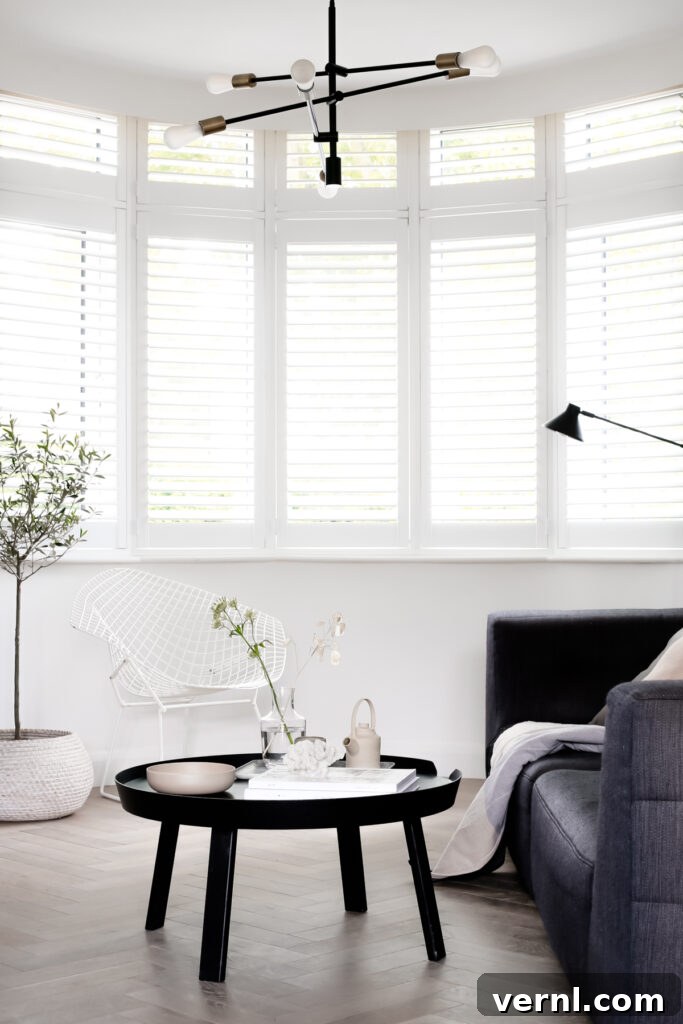
We wanted consistent window treatments for all the front-facing windows, and after visiting other properties with similar bays, we concluded that shutters offered the best balance of form and function.
Choosing our bay window shutters
Our first step was to meet a local consultant to discuss which shutter style would suit our windows best. There are three main styles to consider:
Full height shutters
Full height shutters cover the entire window. They create clean, elegant lines and visually elongate the windows.
Tier on tier shutters
Tier on tier shutters are very versatile, allowing the top and bottom panels to operate independently. This lets you admit daylight from the top while maintaining privacy at eye level.
Café style shutters
Café style shutters cover only the lower part of the window. They maximise natural light while preserving privacy at street level.
There are also custom-shaped shutters for asymmetric or unusually shaped windows, plus waterproof options suitable for bathrooms. Many companies offer a free measure and quote service where a local adviser visits your home to recommend the best solution from their range of shutters, blinds and other coverings.
If you think shutters only come in white, think again. Colour and finish options are extensive, and you can usually choose hardware finishes—black, chrome, brass—to coordinate with door knobs, sockets or other fittings. We chose pure white for a seamless look where hinges blend in rather than stand out.
Can you have shutters with curtains?
Many people assume you must choose between shutters or curtains, but you can have both. If you prefer a minimalist look, shutters alone are a clean choice. If you love the texture, colour and softness that curtains add, they can be layered over shutters for a richer aesthetic.
In our living room we kept the original 1930s pelmet because it was a feature we liked. Replastering around it would have been difficult and could have left visible damage, but leaving the pelmet in place initially prevented the shutters from opening fully. The consultant recommended tier on tier shutters with a horizontal support post, allowing the bottom panels to open independently of the top ones. That way we can open the window by opening the bottom tier while the top tier remains closed.
Although our style is minimal, wooden floors and shutters alone felt a little stark. Curtains introduced texture and warmth and made the room feel more complete and opulent. Keeping the pelmet also hid the curtain track, maintaining a tidy finish.
Shutters are not the cheapest option, but here are ten reasons we think they are worth the investment.
1. Privacy
Shutters provide strong privacy while still allowing you to see out, which is ideal for properties that face the street or are overlooked by neighbours.
2. Security
Beyond privacy, shutters add a layer of security by helping to screen high-value items from view, reducing temptation for opportunistic theft.
3. Temperature control and energy efficiency
Shutters help regulate indoor temperature by reducing heat loss in winter and limiting heat gain in summer. Our south-facing bay benefited during a recent heatwave when closed shutters kept the room comfortable. In period properties with older, drafty windows, shutters can contribute to lowering heating costs.
4. Adjustability
Shutters are easy to adjust, giving precise control over light levels and privacy.
5. Durability
Shutters are a long-term investment. Well-made shutters last for years and don’t go out of style quickly.
6. Easy to clean
Shutters attract less dust than blinds and are simple to maintain—usually a quick dust or occasional wipe with a damp cloth keeps them looking fresh.
7. Protection from UV damage
By controlling sunlight, shutters help protect furniture, artwork and carpets from fading caused by UV exposure.
8. Child safety
Shutter systems are generally cord-free, reducing hazards that blind cords can pose to young children.
9. Kerb appeal
Shutters improve both internal and external appearance, creating a cohesive and attractive façade.
10. They can help make your home more saleable
While adding value is subjective, shutters often draw compliments and can make a home more appealing to potential buyers.
DIY shutters – can you do it yourself?
A note on installation: we are confident DIYers and have handled much of our renovation, from flooring to plumbing and kitchen installation. Even so, we chose a full measure-and-fit service for our shutters. For a simple, straightforward window, measuring and fitting shutters yourself may be feasible, but complex multi-section bay windows like ours are tricky. Professional fitters bring experience and precision, reducing the risk of an imperfect result on an expensive investment. Our installation went smoothly and looked better than we expected, thanks to the expertise of the team we used.
We were extremely satisfied with the initial consultation, accurate measuring and the final install. The shutters transformed the interior and elevated the exterior appearance of the house. Even before the front of the house is rendered, the uniform treatments already make it look more finished.
Good window treatments are worth investing in. Consider how they will look from both inside and outside: when done well, they add kerb appeal and create a feature you’ll enjoy every time you come home.
All images by Helen Powell for Design Hunter.
AD | In partnership with Apollo Blinds
Before – the curtains were OK but they didn’t allow us to adjust the amount of light or privacy in the room.
Choosing the same window treatments for all the windows gives the front of the property a more cohesive look.