Selecting the appropriate piping material is a critical decision that underpins the success and longevity of any plumbing system, whether for new construction or a renovation project. In the realm of plastic piping, ABS (Acrylonitrile Butadiene Styrene) and PVC (Polyvinyl Chloride) stand out as two of the most popular and widely utilized options. Both materials have earned their reputation for reliability, cost-effectiveness, and ease of use, particularly in drain, waste, and vent (DWV) applications, as well as various water supply scenarios. However, despite their superficial similarities as rigid plastic pipes, ABS and PVC possess distinct chemical compositions, physical properties, and installation nuances that necessitate a thorough understanding before making a choice. This comprehensive guide aims to demystify these differences, providing an in-depth look into the advantages, disadvantages, application specifics, and regulatory considerations for both ABS and PVC pipes, empowering you to make the most informed decision for your plumbing needs.
What Is ABS Pipe? A Closer Look at Black Plastic Plumbing
ABS, short for Acrylonitrile Butadiene Styrene, is a high-strength thermoplastic polymer instantly recognizable by its characteristic black color. It is a copolymer made by polymerizing styrene and acrylonitrile in the presence of polybutadiene, resulting in a material that combines the strength and rigidity of styrene-acrylonitrile with the toughness of polybutadiene rubber. This unique blend gives ABS its renowned durability and impact resistance, making it particularly well-suited for DWV systems where robust performance and resistance to physical shock are essential. Its widespread use in residential and light commercial plumbing underscores its proven reliability and effectiveness in safely channeling waste and wastewater.
ABS Pipe Pros: Key Advantages for Your Plumbing Projects
ABS pipe offers several compelling benefits that contribute to its popularity in the plumbing industry:
- Exceptional Durability and Impact Resistance: One of ABS pipe’s most significant advantages is its inherent toughness. It exhibits superior resistance to impacts, crushing, and physical damage, making it less susceptible to cracks or breaks during handling, installation, or from accidental impacts once installed. This robustness translates into a longer service life, particularly in environments where pipes might experience minor stresses or movements.
- Lightweight and Simplified Installation: Despite its remarkable strength, ABS pipe is surprisingly lightweight. This characteristic dramatically simplifies transportation, cutting, and maneuvering on a job site, reducing physical strain on installers and potentially accelerating project completion times. The installation process itself is highly efficient: ABS pipe connections utilize a single-step solvent welding method. Installers only need to apply a specific ABS solvent cement directly to the pipe and fitting, eliminating the need for a primer. This streamlines the joining process, making it faster, cleaner, and less prone to errors compared to multi-step methods.
- Outstanding Chemical Resistance: ABS pipes are highly resilient against a broad spectrum of chemicals commonly found in household wastewater, including various detergents, cleaning agents, and many mild industrial solvents. This chemical inertness ensures that the pipe material will not corrode, degrade, or leach over time, thereby maintaining its structural integrity and preventing leaks, ensuring the long-term cleanliness and safety of the waste system.
- Superior Sound Dampening Properties: A notable, yet often overlooked, advantage of ABS pipe, particularly in residential and multi-story buildings, is its excellent ability to absorb and dampen sound. The material’s dense composition helps to reduce the noise generated by rushing water and waste flowing through the pipes. This results in a significantly quieter plumbing system, a considerable benefit when pipes are routed through interior walls, ceilings, or floors where noise transmission can be a concern for occupants.
- Good Performance in Cold Climates: While all pipes can be susceptible to damage from freezing water, ABS generally exhibits better resistance to fracturing in very cold temperatures compared to some other plastic pipes. Its inherent flexibility helps it to better accommodate the expansion of freezing water, reducing the likelihood of catastrophic breaks, though proper insulation and drainage practices are always recommended in cold environments.
ABS Pipe Cons: Limitations to Consider
Despite its many strengths, ABS pipe also presents certain limitations that should be carefully evaluated:
- Not Suitable for High-Temperature Systems: A primary constraint of ABS pipe is its sensitivity to elevated temperatures. It is generally not recommended for continuous exposure to water or environments exceeding 180°F (82°C). Under prolonged heat, ABS can soften, warp, or deform, compromising its structural integrity and leading to potential failures. This temperature limitation restricts its use predominantly to cold water distribution and DWV applications where water temperatures typically remain well below this threshold.
- Susceptibility to UV Degradation: Prolonged and direct exposure to ultraviolet (UV) light, such as from sunlight, can cause ABS pipes to degrade over time. UV radiation breaks down the polymer chains, leading to brittleness, discoloration, and a significant reduction in the pipe’s strength and overall lifespan. Consequently, ABS pipes are generally not recommended for outdoor, exposed installations unless they are adequately shielded from direct sunlight or protected with UV-resistant coatings or paint.
- Requires Specific Solvent Cement and Fittings: Although the single-step gluing process is an advantage in terms of speed, it is critical to use solvent cement and fittings specifically manufactured for ABS pipe. Attempting to mix different types of solvent cements or join ABS with other pipe materials without appropriate transition fittings will inevitably result in weak connections and eventual leaks, leading to costly repairs.
- Less Resilient to Extreme Cold (Though better than some): While offering better cold resistance than some plastics, in extremely frigid conditions, ABS can become more rigid and less workable, making installation challenging in freezing weather. If water freezes solid inside an uninsulated ABS pipe, it can still lead to ruptures.
What Is PVC Pipe? Exploring White Plastic Plumbing Solutions
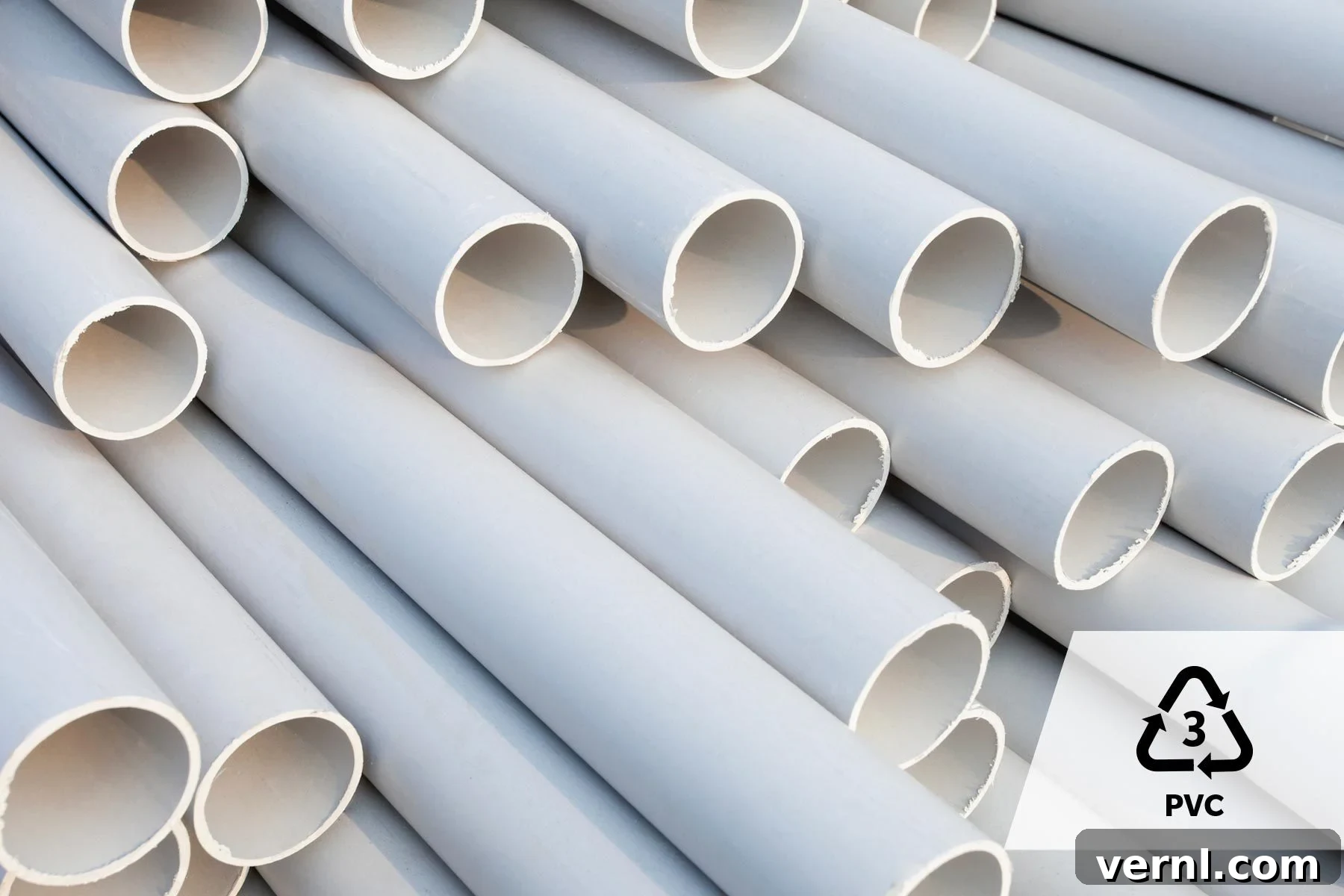
Polyvinyl Chloride, universally known as PVC, is another cornerstone of modern plumbing, easily identified by its distinctive white color. It is a synthetic plastic polymer created from vinyl chloride monomers and is one of the most widely produced plastics globally. PVC pipes, particularly in their unplasticized form (uPVC), are celebrated for their exceptional versatility, making them suitable for an expansive range of applications beyond just DWV systems, including pressurized water supply lines, irrigation networks, and conduit for electrical wiring. Discovered in the late 19th century, PVC has undergone continuous development, establishing itself as an indispensable material in both residential and industrial infrastructure due to its superior material properties and adaptability.
PVC Pipe Pros: Why PVC is a Go-To Choice
PVC pipes offer a compelling list of advantages that contribute to their extensive and diverse application in plumbing:
- Lightweight and Effortless Handling: Just like ABS, PVC pipes are remarkably lightweight, which translates directly into ease of transport, cutting, and assembly on any job site. This characteristic significantly reduces the physical demands of installation, thereby lowering labor costs and potentially accelerating project timelines. Its manageable weight contributes to PVC’s status as a highly installer-friendly material.
- Outstanding Resistance to Corrosion, Chemicals, and Rust: PVC boasts inherent resistance to a vast array of corrosive agents, including acids, alkalis, salts, and many organic solvents. Unlike traditional metallic pipes, PVC will not corrode, rust, or degrade over time when exposed to aggressive environments or transported fluids. This ensures a consistently clean flow of water or waste, free from contamination, and guarantees the long-term integrity of the pipeline, making it ideal for buried installations and areas with challenging soil conditions.
- Smooth Interior Surface for Optimal Flow: The interior walls of PVC pipes are exceptionally smooth. This low-friction surface minimizes resistance to fluid flow, allowing liquids to move efficiently with minimal turbulence. This efficiency not only reduces the likelihood of clogs and mineral buildup but can also lead to lower pumping costs in larger, more complex water distribution systems by reducing energy consumption.
- Exceptional Versatility Across Applications and Temperatures: PVC pipes are incredibly versatile. Standard Schedule 40 PVC is perfectly suited for cold water supply and various DWV applications. For systems that demand higher pressure ratings or transport warmer water, options like Schedule 80 PVC or specialized variants such as CPVC (Chlorinated Polyvinyl Chloride) are readily available, offering enhanced temperature and pressure resistance. This broad applicability makes PVC a primary choice for everything from residential drainage and potable water distribution to complex municipal water infrastructure and agricultural irrigation.
- Wide Availability of Fittings and Diverse Joining Methods: The pervasive presence of PVC in the market ensures an extensive selection of fittings, connectors, valves, and adapters, facilitating the creation of even the most intricate plumbing configurations. PVC can be joined effectively using solvent cement (its most common method), threaded connections, or various mechanical couplings, providing remarkable flexibility in installation techniques to suit different project demands.
- Cost-Effectiveness: PVC generally stands as one of the most economical piping materials available. Its lower material cost combined with efficient installation processes makes it a budget-friendly option for projects of virtually any scale, delivering excellent value without compromising performance.
Furthermore, exploring PVC hacks reveals the material’s incredible versatility beyond traditional plumbing, showcasing its potential in creative DIY projects and household solutions.
PVC Pipe Cons: Potential Drawbacks and Considerations
While PVC pipe offers numerous advantages, it also comes with certain limitations and environmental considerations:
- Brittleness from UV Exposure and Extreme Temperatures: Prolonged exposure to direct sunlight (UV radiation) and continuous exposure to extreme hot or cold temperatures can cause standard PVC to become brittle over time. This increased brittleness makes the pipe more susceptible to cracking, chipping, or breaking from impacts or thermal stress. Although some PVC formulations include UV inhibitors, it is generally recommended to shield PVC pipes from direct sunlight in outdoor installations to ensure their long-term integrity.
- Environmental Concerns: The environmental impact of PVC has been a subject of ongoing debate. Its manufacturing process involves chlorine, and concerns have been raised about the potential emission of dioxins – highly persistent organic pollutants – during production and especially if PVC is burned (e.g., in uncontrolled waste fires). While the industry has made significant strides in sustainable manufacturing practices and recycling initiatives, these environmental considerations remain important for ecologically conscious consumers and regulatory bodies.
- Requires a Two-Step Gluing Process: Unlike the single-step cementing for ABS, standard PVC solvent welding typically necessitates a two-step process. This involves first applying a purple primer to clean and chemically soften the pipe’s surface, followed by the application of solvent cement. This extra step, while crucial for a strong bond, can be perceived as more time-consuming and potentially messier compared to ABS installation.
- Can Transmit Sound More Readily: Compared to ABS, PVC generally exhibits lower sound-dampening capabilities. This means the sound of water or waste flowing through DWV lines made of PVC might be more noticeable, especially when pipes are routed within interior walls or floor cavities in quiet environments.
- Temperature Limitations for Standard PVC: While more temperature-tolerant than ABS, standard PVC (Schedule 40/80) still has temperature limits, typically around 140°F (60°C) for continuous use. Exceeding this temperature can lead to softening, a reduction in pressure rating, and potential pipe failure. For applications involving consistently higher temperatures, specialized CPVC pipe is required.
When to Use ABS and PVC Pipe: Guiding Your Plumbing Decisions
The choice between ABS and PVC is rarely straightforward and often hinges on a confluence of factors including specific application demands, environmental conditions, and, most importantly, local regulatory frameworks. There is no universal “better” option; instead, the suitability of each pipe material is determined by the unique context of your plumbing project.
Prioritize Local Building Codes
Before any pipe is cut or jointed, the single most critical step is to consult with your local building inspector or review municipal plumbing codes. Building regulations can vary dramatically from one jurisdiction to another, influenced by historical practices, regional climate, and specific safety considerations. Some local codes may exclusively permit white PVC pipe for all DWV and water supply applications, while others might mandate or allow only black ABS pipe. There could also be codes that permit both but impose specific requirements for their installation, application, or the methods used to join them. Non-compliance with these codes can lead to failed inspections, costly and time-consuming rework, and potentially serious safety or structural hazards. Always ensure that your chosen material and installation methods strictly adhere to local regulations, as they always take precedence over general industry recommendations or personal preferences.
Evaluate the Availability of Fittings and Accessories
Once local codes confirm that both ABS and PVC are permissible for your project, a practical assessment of material availability becomes crucial. A visit to your preferred home improvement center or plumbing supply store will often reveal that while both PVC drain pipe and black ABS may be stocked, one type typically offers a significantly wider selection of fittings, connectors, and adapters. A more extensive range of elbows, tees, couplings, reducers, and specialty fittings can drastically simplify the design and execution of complex plumbing layouts, making your plumbing life easier and potentially reducing project costs by minimizing the need for specialized or custom orders. The ready availability of components can be a major determinant in the efficiency and overall success of your plumbing endeavor.
Application-Specific Considerations
- DWV Systems: For typical drain, waste, and vent applications within a building, both ABS and PVC are highly effective and widely accepted. However, ABS is often favored by many professionals for its simpler, single-step cementing process and superior sound-dampening qualities, which can be a significant advantage in residential and commercial buildings where noise reduction from flowing water is desired.
- Pressure Applications: PVC, particularly in its Schedule 40 and Schedule 80 forms, is more commonly and widely used for pressurized water supply lines, irrigation systems, and as conduit for electrical wiring. Its inherent strength, robust pressure ratings, and excellent resistance to bursting under pressure make it the preferred choice for these applications. While ABS can be used for some non-pressure water lines, PVC’s broader range of pressure capabilities often gives it the edge.
- Temperature Range: If your plumbing system involves temperatures consistently above 140°F (60°C), standard ABS and PVC are generally unsuitable and will likely degrade or fail over time. For such applications, CPVC (Chlorinated Polyvinyl Chloride) is the recommended alternative due to its higher temperature tolerance. For cold water distribution and typical DWV temperatures, both ABS and PVC perform reliably.
- Outdoor Exposure: Given ABS’s susceptibility to UV degradation, PVC with incorporated UV inhibitors or properly shielded PVC is generally a more robust choice for exposed outdoor applications, such as irrigation lines, external drainage, or visible vent stacks. Even so, it’s always best to protect any plastic piping from continuous, direct sunlight to maximize its lifespan.
A Critical Note: Joining ABS to PVC Pipes
It is imperative to understand that if, for any reason, you need to join ABS to PVC pipe during a repair or remodeling project, you must never attempt to cement the two directly together using standard solvent cement. ABS and PVC are chemically distinct polymers, and their respective solvent cements are formulated to create a chemical bond only with like materials. A direct solvent-welded connection between ABS and PVC will be structurally weak, unreliable, and will inevitably lead to leaks due to differing expansion/contraction rates and incompatible chemical bonding. Instead, the correct and code-compliant method is to use a specialized rubber transition coupling, commonly known as a “fernco” coupling or shielded coupling, secured with stainless steel clamps. These mechanical couplings create a watertight and durable seal by physically compressing a flexible rubber sleeve around both pipes, effectively accommodating their different material compositions and thermal expansion characteristics.
Which Pipes Are Better: ABS or PVC? A Final Verdict and Expert Recommendations
The ultimate question of whether ABS or PVC pipes are “better” is nuanced, without a definitive, universally applicable answer. Both materials are highly effective and reliable, but their optimal application depends heavily on the specific context of the plumbing project, the prevailing environmental conditions, and, most critically, adherence to local building and plumbing codes.
If local building codes permit both materials, and the availability of fittings is comparable – meaning either option is viable from a regulatory and logistical standpoint – then for most standard DWV (drain, waste, vent) applications within an indoor environment, many experienced plumbers tend to favor ABS black plumbing pipe. This preference largely stems from its notably simpler and quicker installation process. Unlike PVC drain pipe, which typically requires a two-step solvent welding process involving the application of a purple primer to prepare and soften the pipe surface, followed by the application of solvent cement, ABS black plumbing pipe is joined with cement only. This single-step solvent welding is inherently less messy, reduces overall installation time, and minimizes the chances of missed steps, significantly streamlining the assembly of a plumbing system.
Furthermore, ABS black plumbing pipe is generally regarded as slightly easier to cut cleanly and exhibits a marginal degree more flexibility than PVC. This subtle increase in flexibility can prove advantageous when navigating pipes through tight spaces or making minor positional adjustments during installation, effectively reducing the risk of accidental stress fractures. The inherent sound-dampening quality of ABS is another compelling factor that can tip the scales in its favor for residential interior applications, where mitigating noise from flowing water and waste is a priority.
However, PVC firmly maintains its superior position in applications demanding pressure resistance, such as main potable water supply lines, complex outdoor irrigation systems, or as protective conduit for electrical wiring. Its excellent resistance to a broader range of chemicals, consistently smooth interior bore, and its versatility across a wider spectrum of pressure ratings make it an indispensable choice in these demanding areas. While its two-step gluing process might be a minor time investment, it guarantees an exceptionally strong and reliably sealed bond crucial for pressurized systems.
In conclusion, when making your decision, prioritize compliance with all local building codes first and foremost. For indoor DWV systems where noise reduction and ease of installation are paramount, and codes permit it, ABS often offers a slightly more advantageous and quieter experience. Conversely, for outdoor applications, any pressure-bearing lines, or situations where greater versatility in temperature handling (with CPVC variants) and chemical resistance is required, PVC typically emerges as the more robust and adaptable choice. When in doubt, always seek the advice of a licensed plumbing professional. Their expertise can ensure that your specific needs are met with the most appropriate and compliant piping material, guaranteeing the safety, efficiency, and longevity of your plumbing infrastructure.