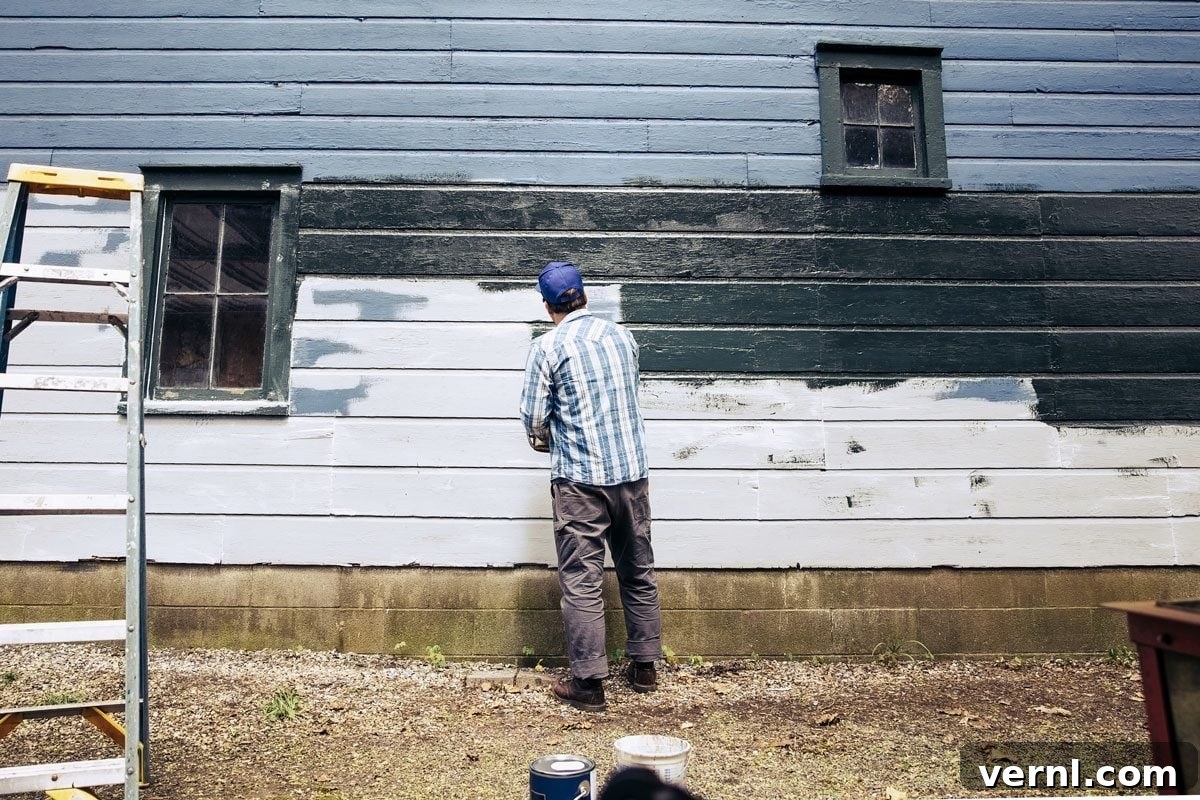
The vibrant, brightly colored homes of Scandinavia—from cheerful reds and blues to verdant greens and oranges—offer a delightful contrast to the stark winter landscape. Their aesthetic charm is undeniable, and it’s this inspiration that led us to choose a deep green for our own home. What we initially considered a stylistic choice, however, soon revealed an unexpected benefit: painting a house a dark color isn’t merely about curb appeal; it can significantly influence its internal temperature.
In our case, residing in a colder climate, the dark exterior’s tendency to raise internal temperatures was a welcome advantage, contributing to a cozier indoor environment. But the thermal properties of paint are a critical consideration for any homeowner contemplating a color change. Whether you’re drawn to the elegance of charcoal gray, the drama of navy blue, or the natural appeal of forest green, understanding the science behind dark paint colors is essential. This comprehensive guide will explore the intricate relationship between exterior paint color and home energy efficiency, offering insights into heat absorption, effective cooling strategies for warmer regions, and practical tips for making an informed decision that balances aesthetics with performance.
The Allure of Dark Exterior Paint: Style Meets Science
Dark exterior paint colors have surged in popularity, offering a sophisticated, modern, and often dramatic aesthetic that can truly make a home stand out. Beyond their visual appeal, these deep hues possess distinct thermal properties that can either be a boon or a challenge, depending on your geographic location and specific home design. Understanding these characteristics is key to leveraging the benefits of a dark palette while mitigating potential drawbacks. Let’s delve into how dark paint interacts with solar energy and its subsequent impact on your living spaces.
Understanding the Thermal Impact: Do Dark Colors Really Heat Up Your Home?
The short answer is yes, dark colors typically make your home warmer. This phenomenon is rooted in basic physics: darker surfaces absorb more radiant heat from the sun compared to lighter surfaces, which tend to reflect it. This principle, often referred to as the “albedo effect,” means that a deep charcoal or navy exterior will absorb a greater percentage of solar radiation, converting that light energy into heat that can then transfer into your home’s structure. Conversely, lighter shades like white or pastels reflect more sunlight, helping to keep the surface and, by extension, the interior cooler.
However, the extent to which your house heats up isn’t solely determined by paint color. It’s a complex interplay of several factors, including:
- Quality of Insulation: Superior wall and attic insulation acts as a barrier, slowing the transfer of heat from the exterior into the interior. A well-insulated home will be less susceptible to external temperature fluctuations, regardless of paint color.
- Effective Ventilation: Proper attic and roof ventilation systems are crucial for expelling trapped hot air before it can radiate downwards into your living spaces. Without adequate airflow, heat can build up significantly.
- Home Design and Orientation: The architectural style of your home, the number and size of windows, and its orientation relative to the sun’s path all play a role. Homes with large, west-facing windows, for instance, may experience more solar gain.
- Building Materials: Different materials react to heat differently. Metal siding or roofing heats up rapidly, while brick retains heat for longer periods. Wood and fiber cement have their own thermal properties that influence heat absorption and dissipation.
“I want to stress that color absolutely plays a role in energy efficiency, but it’s only one piece of that puzzle,” emphasizes Jim Marino, CEO at Pinnacle Home Improvements. He advises that “The right color for your home is one that balances style, fits into the HOA’s color scheme, works with your climate, and has the potential to endure year after year of varying types of weather.” This holistic perspective underscores the importance of considering your home’s entire energy system, not just the paint on its walls.
Finding Your Shade: How Dark is Too Dark for Your Home?
Determining the ideal “darkness” for your exterior paint is a multifaceted decision that weighs aesthetic preferences against practical considerations. There’s no universal answer, as the optimal choice hinges on your home’s unique characteristics and environment:
- Climate: The most significant factor. The amount of radiant heat you aim to collect will vary dramatically between a sweltering Florida summer and a frosty Alaskan winter.
- Home Design & Sunlight Exposure: A home with ample natural shading from trees or large eaves might tolerate a darker color better than one fully exposed to direct sunlight all day.
- Building Materials: As discussed, different materials absorb and retain heat uniquely.
- Personal Aesthetic: Ultimately, you need to love the color you choose.
Understanding Solar Reflectance Index (SRI)
For a more scientific approach, consider the Solar Reflectance Index (SRI). This metric measures a surface’s ability to reflect solar heat and emit absorbed heat. A higher SRI value indicates greater reflectance and less heat absorption. George Carrillo, co-founder of the Hispanic Construction Council, recommends the following:
- For Maximum Heat Absorption (Cold Climates): Choose colors with an SRI under 50, such as deep brown, navy, or charcoal. These hues are designed to absorb more heat, potentially reducing heating costs.
- For Moderate Heat Absorption (Transitional Climates): Aim for semi-dark shades with an SRI of 50 to 60, like muted blues, taupes, and medium grays. These offer a balance, limiting excessive heat gain while still providing a richer color.
The Psychological Impact of Dark Colors
Beyond thermal performance, color significantly influences mood and perception. “For mood, those same semi-dark shades tend to feel more neutral and grounding,” says Carrillo. He cautions, however, that “darker tones like deep grays or blues, while elegant, can sometimes evoke feelings of sadness or heaviness if overused. Black, though sophisticated, may make a space feel confined or overwhelming.” To maintain an uplifting atmosphere, Carrillo suggests pairing darker shades with abundant natural light or strategically placed lighter accents to create visual harmony. “This way, you can enjoy a beautiful, understated look without sacrificing comfort or energy efficiency,” he advises.
Paint Technology and Finish
The type of paint and its finish also play a role. Matte finishes, due to their less reflective surface, tend to absorb more heat than satin or semi-gloss finishes. Modern paint advancements offer solutions like “cool-pigment” or “heat-reflective” technologies. These paints incorporate specialized pigments that reflect infrared radiation, even in dark colors, thereby reducing surface temperature and mitigating the overall thermal impact. “Using paints with heat-reflective technology can also help mitigate the temperature impact while still allowing you to choose richer colors,” explains Alex Filipuk, founder of Ideal Siding.
A Crucial Warning: Dark Paint on Vinyl Siding
Filipuk issues a strong caution regarding vinyl siding: “We strongly recommend against painting vinyl siding, especially in darker colors. We’ve experienced cases where siding on the exposed areas just melted after that.” This is because vinyl siding is engineered to expand and contract within a specific temperature range. Dark colors cause vinyl to absorb significantly more heat, leading to excessive thermal expansion, warping, buckling, or even melting. If you have vinyl siding and desire a dark aesthetic, consult with siding professionals for vinyl-safe paint options or consider alternative siding materials.
The Roof Overhead: The Significant Role of Dark Roofing Materials
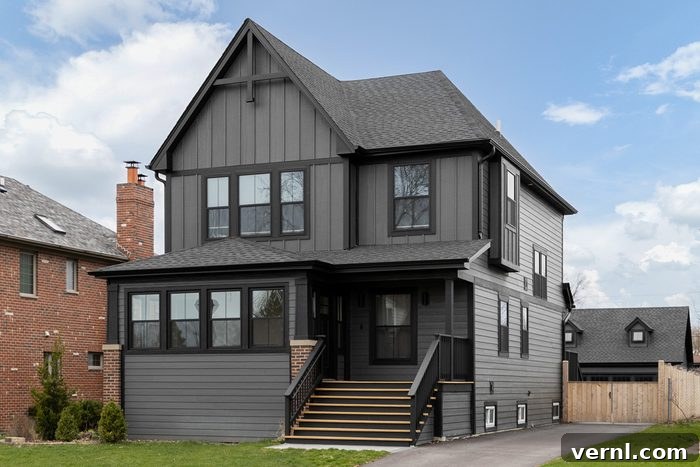
Just like exterior walls, your roof’s color is a major determinant of your home’s thermal performance. And yes, a black roof will undeniably make your house warmer. This effect is particularly pronounced if your home lacks sufficient insulation or ventilation.
“It absorbs a lot of solar energy, which transfers into the attic and can push the overall indoor temperature up,” explains home improvement expert Myles Robinson. The attic, often the hottest part of a home, acts as a heat reservoir. A dark roof intensifies this effect, causing attic temperatures to soar, which then radiates downwards into the living spaces, significantly increasing cooling loads.
Robinson further notes, “In general, black roofs aren’t the best idea for hot climates unless you’re doing something specific to manage that heat, like adding radiant barriers or extra insulation.” Radiant barriers, typically reflective foil-like materials installed in the attic, block radiant heat transfer. Coupled with enhanced insulation and robust attic ventilation (e.g., ridge vents and soffit vents working in tandem), the impact of a dark roof in hot climates can be substantially reduced.
Conversely, for homes in cold climates, a black roof can be an asset. By absorbing solar energy, it contributes to passive solar heating, which can help keep your energy bills down during the winter months. Moreover, advancements in roofing materials now include “cool roof” technologies, which incorporate reflective coatings or specially designed granules. These newer generations of roofing can minimize heat absorption even in darker shades, offering a blend of aesthetic appeal and improved thermal performance.
Mastering Climate Control: Strategies for a Cooler Dark-Colored Home
If you’ve opted for a dark exterior and reside in a warm climate, or simply want to optimize your home’s energy efficiency, a multi-pronged approach is essential to keep indoor temperatures comfortable. Aidan Charron, Associate Director of Global Earth Day, emphasizes a foundational principle: “The most obvious factors are prioritizing insulation in the walls, the attic, and basements, which are all important for reducing heat transfer back into the house.”
Beyond robust insulation, here are comprehensive strategies to keep a dark-colored house cool:
- Install Proper Ventilation: Crucial for the attic and roof areas. Ridge vents, soffit vents, and even gable vents work together to create a continuous airflow, expelling hot air that accumulates under the roof and preventing it from radiating into your living spaces.
- Choose Heat-Reflective Paints: When repainting, opt for exterior paints formulated with cool-pigment technology. These paints are designed to reflect infrared light, keeping the surface cooler even with dark colors.
- Add Exterior Shading Elements:
- Awnings: Install awnings over windows and doors, especially those facing east, south, or west, to block direct sunlight.
- Shutters: Functional shutters can be closed during the hottest parts of the day to reduce solar gain through windows.
- Strategically Placed Trees and Shrubs: Planting deciduous trees on the south and west sides of your home provides shade in the summer and allows sunlight through in the winter. Evergreen shrubs can also help shield walls.
- Optimize Window Performance:
- Keep Shades Closed: Simple yet effective. Close light-colored blinds, curtains, or drapes on windows exposed to direct sunlight.
- Upgrade to Energy-Efficient Windows: Install windows with Low-E (low-emissivity) coatings, which reflect heat while allowing light in.
- Install Reflective Window Film: A more cost-effective alternative to new windows, reflective films can significantly reduce solar heat gain.
- Seal Air Leaks: Cracks and gaps around windows, doors, and utility penetrations can allow hot air to infiltrate your home. Sealing these leaks with caulk and weatherstripping improves overall thermal performance.
- Use Lighter Trims and Accents: While your main body color might be dark, lighter trim colors, soffits, and fascias can help reflect some sunlight and provide a visual break, reducing the overall heat absorption of the exterior.
- Consider Your Roof:
- Replace with Lighter Color or Reflective Shingles: If your roof needs replacing, opt for lighter-colored shingles or those specifically designed with cool roof technology (high SRI).
- Add Solar Panels: “That is the best way to harness the energy hitting your roof every day,” says Charron. Solar panels not only generate clean electricity but also create a shaded air gap over your roof, effectively acting as a radiant barrier that reduces heat transfer into your attic. This dual benefit lowers energy bills and increases home value.
- Embrace Landscaping as a “Living Heat Shield”: Charron also strongly recommends planting bushes and shrubbery around your home, as leaf cover can hugely diminish heat absorption. “It is why many urban spaces are planting trees and shrubbery coverage,” he notes. “Think of it as a living heat shield that creates a microclimate around your home. Plus, it is good for the planet!” Strategically placed greenery can cool surrounding air through evapotranspiration, reducing the ambient temperature around your house.
Frequently Asked Questions About Exterior Paint Colors and Climate
Is a Light Exterior Color Always Best for Hot Climates?
In general, yes, light colors are highly recommended for hot climates. Shades like white, beige, light gray, and pastels excel at reflecting sunlight, which can keep your home significantly cooler—potentially up to 20 degrees Fahrenheit less on the exterior surface, translating to a 10 to 20% reduction in cooling costs, according to George Carrillo. He adds, “Plus, these colors provide a fresh, bright look that’s perfect for warm climates.”
However, it’s important to consider maintenance. Carrillo points out, “light colors show dirt faster, while dark ones can fade more quickly in intense sunlight, so factor maintenance into your decision.” Furthermore, relying solely on paint color for cooling is insufficient. As Jim Marino advises, “Even if you have a free choice of colors for your home’s exterior, you shouldn’t just focus on the paint to keep it cool. Make sure you take your insulation, ventilation, and landscape shading into equal consideration.” If community regulations or personal preference prevent you from choosing a light exterior, these other cooling methods become even more critical.
Can Dark Exterior Paint Be Advantageous in Cold Climates?
Absolutely, painting a house a dark color can be highly beneficial in cold climates, if it aligns with your aesthetic and HOA guidelines. Darker colors are superior at absorbing sunlight, which translates into passive solar heating for your home. “Rich tones like charcoal, navy, or even forest green can help keep heat in, making your home cozier and slightly reducing heating costs during cold months,” explains Carrillo.
Nonetheless, the effectiveness of this solar gain can be limited in regions experiencing long, gray winters with scarce sunlight. In such conditions, the primary heat source remains your heating system, making top-notch insulation paramount regardless of your exterior color choice. Myles Robinson emphasizes that whether to choose a darker color also depends heavily on your home’s material composition, as “brick, stucco, wood, and fiber cement all absorb and radiate heat differently. So factor that into your decision.”
Robinson encourages homeowners to think of color as just one component of a larger “whole energy system.” He states, “Shade, insulation, roofing, and windows all play a role, too. Choose a color you love, but make sure the rest of the house is working with it, not against it.” He also offers a practical warning: “And remember that a dark paint job will show dirt, dust, and sun fade more quickly, so expect a bit more upkeep.” Ultimately, as Alex Filipuk concludes, “Dark exteriors can beautifully complement snowy landscapes and create a cozy, striking aesthetic,” adding significant visual appeal to cold-weather settings.
Meet Our Home Improvement & Energy Efficiency Experts
- Aidan Charron is Associate Director of Global Earth Day at Earthday.org.
- Myles Robinson is a home improvement and remodeling expert, and founder of UK Composite Doors.
- Jim Marino is CEO at Pinnacle Home Improvements, serving Alabama, Georgia, North Carolina, and Tennessee.
- Alex Filipuk is founder and CEO of Ideal Siding, North America’s largest siding renovation company.
- George Carrillo is CEO and co-founder of the Hispanic Construction Council (HCC).