Master Your Home’s Water Flow: The Essential Guide to Ball Valves and Shutoff Systems
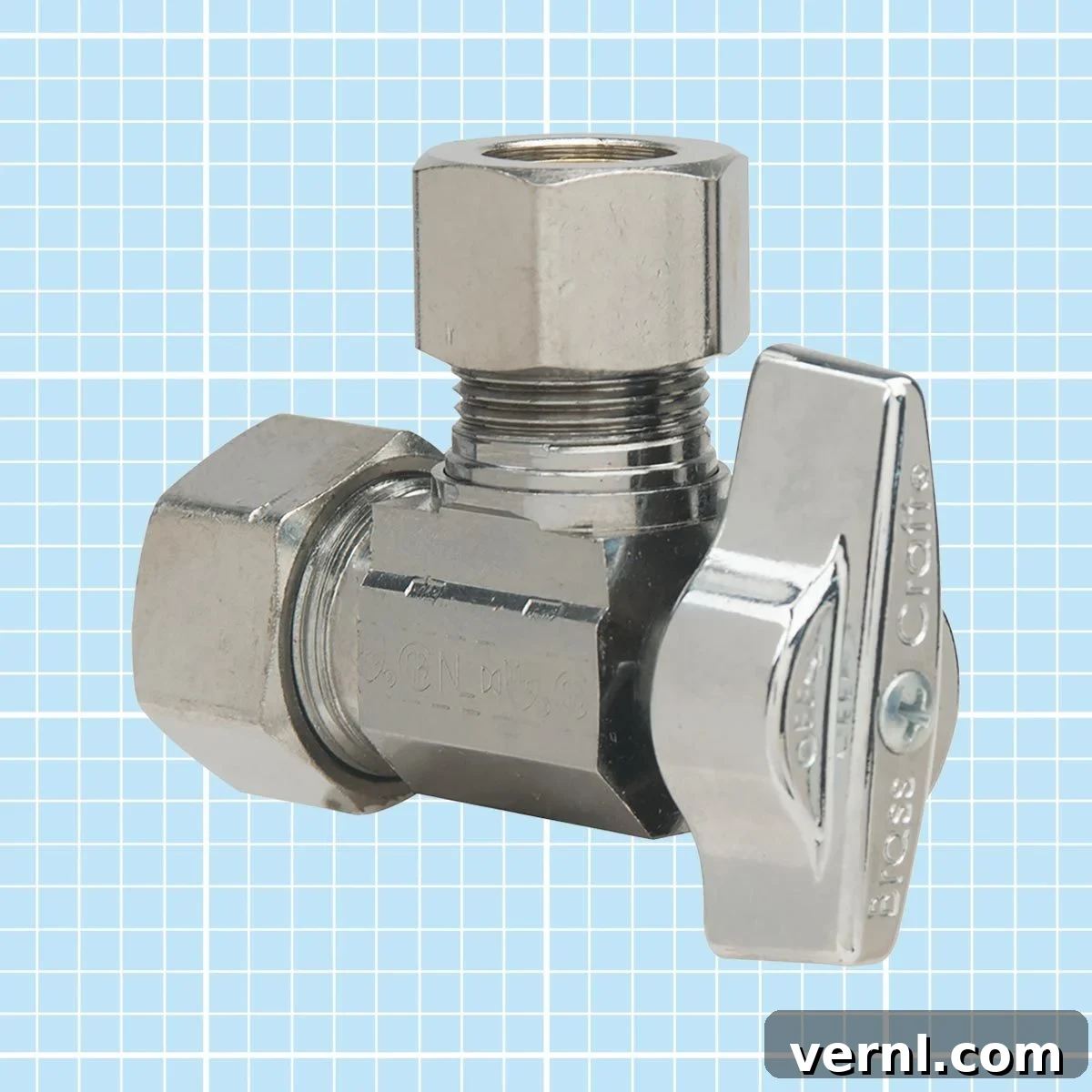
Imagine a nightmare scenario: a burst pipe under your sink, water gushing everywhere, and no immediate way to stop it without rushing to the basement or outside to turn off the main water supply to your entire home. The sheer inconvenience, potential for massive water damage, and ensuing panic are precisely why individual shutoff valves at each plumbing fixture are not just a luxury, but a fundamental necessity. In fact, they are a core requirement of virtually every plumbing code, ensuring that you have immediate control over water flow where you need it most. These crucial components, often referred to as angle stop valves, provide localized control, transforming potential catastrophes into manageable incidents.
As a homeowner, especially one with an older property, I’ve gradually undertaken the task of upgrading my plumbing infrastructure. A key part of this ongoing renovation involves replacing antiquated gate valves at various fixtures with modern, efficient quarter-turn valves – more commonly known as ball valves. This simple do-it-yourself upgrade dramatically simplifies plumbing maintenance and offers a level of convenience and safety that older systems simply cannot match. The ease of operating a ball valve means that anyone in the household can quickly and effectively respond to a plumbing emergency, providing invaluable peace of mind.
My preference for ball valves at faucets and toilets stems from this vital sense of security. Should a fixture unexpectedly fail and begin to leak or flood while I’m away from home, my family members – be it my wife or my children – can instantly halt the water flow with a simple flick of the wrist. This immediate control is not only about preventing extensive water damage but also about empowering everyone in the home to handle unforeseen plumbing issues with confidence and ease.
What Is a Ball Valve? A Simple Yet Powerful Mechanism
At its core, a ball valve is an ingenious mechanical device equipped with a handle, designed to precisely control the flow of water or other fluids through a pipe. Its widespread use in both residential and industrial settings is a testament to its reliability and straightforward functionality.
The internal architecture of a ball valve features a meticulously engineered sphere, or “ball,” situated within the valve’s body. This sphere has a bore, or a hole, drilled straight through its center. The handle on the exterior of the valve body is directly connected to this sphere, allowing for its rotation. Crucially, the ball rests on specialized valve seats, typically made from materials like Teflon or other durable polymers. These seats are designed to create a perfect, watertight seal against the sides of the sphere, preventing any leakage when the valve is in the closed position.
When you align the handle with the direction of the pipe, the bore through the sphere also aligns, creating an unobstructed pathway for water to flow through. Conversely, when you turn the handle 90 degrees – a quarter turn – the solid, undrilled portion of the sphere rotates to block the flow entirely. This simple quarter-turn action is the defining characteristic of a ball valve, offering quick and definitive control.
The Mechanics Behind the Flow: How a Ball Valve Works
The operational simplicity of a ball valve is one of its most compelling features. Its function is governed by the direct manipulation of the lever on the outside of the valve body, which in turn controls the position of the internal spherical component.
When the lever handle is positioned in line with the tubing of your plumbing system, it signals that the internal ball is rotated such that its central hole aligns perfectly with the pipe. This open configuration allows water to pass through freely, maintaining the flow. The visual cue of the handle being parallel to the pipe offers an instant indication that the valve is fully open.
However, when the handle is turned 90 degrees, moving it perpendicular to the direction of the tubing, the solid, undrilled part of the ball rotates to block the pipe’s opening completely. In this position, water cannot flow through the valve, effectively shutting off the supply. This clear visual distinction between the open and closed states eliminates guesswork, providing immediate assurance of the valve’s status. The direct, quarter-turn action ensures that the valve can be fully opened or closed swiftly and decisively, a critical advantage in emergency situations where every second counts.
Ball Valve vs. Gate Valve: A Crucial Comparison for Homeowners
For decades, the traditional shut-off valve commonly found at household fixtures was typically a gate valve. Understanding the fundamental differences between gate valves and ball valves is essential for any homeowner considering plumbing upgrades or seeking to improve their home’s water control system.
Decoding the Gate Valve: Traditional but Troublesome
A gate valve operates exactly as its name suggests: it utilizes a gate-like mechanism that slides up and down within the valve body. When you turn a knob on the valve, a threaded stem connected to the gate either lifts it out of the water path or lowers it to block the flow. To fully close a gate valve, you typically need to turn the knob several times, often requiring multiple rotations to move the gate from a fully open to a fully closed position.
While gate valves are relatively simple in design and historically inexpensive to manufacture, they come with significant drawbacks, particularly in a residential context. Their primary inconvenience lies in their slow operation; the need for multiple turns means that shutting off water takes time – a precious commodity during a sudden leak or burst pipe. Furthermore, gate valves are notorious for sticking if they haven’t been operated frequently. Over time, sediment and corrosion can accumulate, making the gate difficult or even impossible to move. This unreliability in a critical moment, when you urgently need to shut off water to prevent additional damage, renders gate valves less than ideal for modern homes.
The Ball Valve Advantage: Speed, Reliability, and Peace of Mind
A ball valve, on the other hand, offers a superior solution in virtually every aspect. Its quarter-turn mechanism ensures instantaneous shut-off or full open functionality, making it incredibly responsive. This rapid action is invaluable during a plumbing emergency, allowing you to quickly isolate a problem area and minimize water damage.
Beyond speed, ball valves are renowned for their enduring reliability. Their robust design, with a rotating ball rather than a sliding gate, is far less prone to sticking or failure, even after long periods of inactivity. This means you can count on your ball valves to perform when you need them most. The simple, intuitive operation also makes them incredibly user-friendly for every member of the family, as I noted earlier. Anyone can understand and execute the quarter-turn action, fostering a safer home environment.
While extremely durable, it is important to ensure that ball valves are either fully open or fully closed. A common misconception is that a partially open ball valve can regulate flow effectively, but this practice can actually shorten the life of the valve’s sealing seats. When partially open, the high-velocity water flow can erode the exposed parts of the ball and seats, leading to leaks over time. Thankfully, the clear 90-degree turn makes it effortless to confirm whether the valve is completely open or securely closed, encouraging proper usage and maximizing its lifespan.
Installing and Maintaining Ball Valves: A DIY-Friendly Upgrade
Installing a ball valve is a relatively straightforward process, making it an excellent DIY project for homeowners with basic plumbing skills. While professional installation is always an option, many find the task manageable, offering a rewarding sense of accomplishment and significant savings on labor costs.
Before beginning any installation, meticulous preparation is key. The most critical step is to accurately determine the correct size of the inlet and outlet pipes at your fixture. Valves come in various sizes and connection types (e.g., compression, soldered, PEX), so purchasing the appropriate valve is paramount for a successful and leak-free installation. Always double-check specifications and measure your existing pipes to ensure compatibility.
Of course, the absolute prerequisite for any shutoff valve replacement is to completely shut off the main water supply to your entire house. This crucial step prevents accidental flooding and ensures a safe working environment. Once the main water is off and the old valve has been removed, installing the new ball valve typically involves preparing the pipe ends, applying sealant or Teflon tape (depending on the connection type), and securing the new valve in place. While the exact steps may vary slightly based on the valve type and your plumbing system, the overall process is generally quick and efficient, culminating in a superior, more reliable shutoff mechanism.
Beyond installation, minimal maintenance is required for ball valves. Their robust design inherently reduces the need for frequent intervention. However, to ensure they remain functional and easy to operate, it’s a good practice to fully open and close them a few times a year. This helps to prevent any mineral buildup or slight seizing that might occur with prolonged inactivity, ensuring they are always ready for immediate action when an emergency arises.
Diverse Applications of Ball Valves in Modern Homes and Beyond
The versatility and reliability of ball valves extend far beyond individual fixture shut-offs. Their robust design makes them suitable for a wide range of applications, from advanced home plumbing systems to demanding industrial environments.
Fixture-Level Control: The Everyday Essential
In modern homes, ball valves are the standard for fixture-level control, serving as the immediate point of shut-off for sinks, toilets, washing machines, dishwashers, and other water-consuming appliances. Their quick-action handle provides instant control, making routine maintenance, such as replacing a faucet or repairing a toilet, significantly easier without disrupting water service to the rest of the house. This localized control is invaluable for preventing minor leaks from escalating into major water damage, giving homeowners peace of mind.
Whole-Room & Zonal Control: The PEX Manifold System
For newer homes, particularly those plumbed with PEX plastic tubing instead of traditional copper supply lines, you’ll often find ball valves employed in a more extensive capacity. PEX plumbing systems frequently incorporate a manifold, usually located in a basement, utility room, or dedicated plumbing closet near the main water supply inlet. This manifold acts as a central distribution hub, with individual PEX lines running directly to each fixture or zone in the house.
Each line branching off the manifold is typically equipped with its own ball valve. This advanced setup allows homeowners to shut off the water supply to an entire room, a specific section of the house, or even individual fixtures directly from the manifold. The benefit is profound: during renovations or significant repairs in one area, water can be isolated to that specific zone, leaving the rest of the house with an uninterrupted water supply. This level of zonal control is a significant upgrade in convenience and efficiency compared to older systems that often require shutting off water to the entire home for any plumbing work.
Industrial and Specialized Uses
The applications of ball valves are not limited to residential plumbing. Due to their reliability, low maintenance requirements, and cost-effectiveness, they are widely utilized in various industrial settings. From manufacturing plants and chemical processing facilities to oil and gas pipelines, ball valves are trusted for their ability to handle demanding conditions and provide consistent, leak-free performance.
Furthermore, ball valves are not exclusively for water. Their design can be adapted to control a multitude of substances, including industrial chemicals, gases, and slurries. The key factor in these specialized applications is material compatibility. Manufacturers produce ball valves from a diverse range of materials – including brass, stainless steel, PVC, and specialized plastics – ensuring they can safely and effectively interact with whatever fluid or gas is plumbed into the system without corroding or degrading.
The Verdict: Why Ball Valves are the Superior Choice for Home Plumbing
In conclusion, the evolution from traditional gate valves to modern ball valves represents a significant advancement in residential plumbing safety, convenience, and efficiency. The benefits of choosing ball valves are compelling: they offer unparalleled speed and ease of operation, critical during unexpected emergencies; their robust design ensures long-term reliability and minimal maintenance; and their clear visual indicator provides instant confirmation of the valve’s status. Beyond individual fixture control, their integration into advanced systems like PEX manifolds further highlights their pivotal role in contemporary home plumbing.
For any homeowner contemplating plumbing upgrades or simply seeking to enhance the safety and functionality of their water system, investing in high-quality ball valves is a decision that pays dividends in peace of mind and protection against potential water damage. Embrace the quarter-turn revolution and gain superior control over your home’s most essential utility.