
The Ultimate Guide: What NOT to Flush Down Your Toilet & How to Prevent Costly Plumbing Emergencies
It’s easy to believe that once something disappears down the toilet, it’s out of sight, out of mind. However, this common misconception can lead to severe and costly consequences. Flushing inappropriate items down your toilet doesn’t just make them vanish; it can trigger emergency plumbing situations, massive blockages, and expensive repairs. I’ve personally experienced the unsettling dread of watching dirty water rise and overflow from a backed-up toilet – a moment that often culminates in a frantic call to a plumber.
Plumbing experts are unanimous: only the “Three P’s” should ever be flushed down a toilet: pee, poop, and (toilet) paper. Yet, despite this clear guidance, a surprising number of people harbor their own ideas about what can safely be disposed of via flushing. Unfortunately, the harsh reality of their incorrect beliefs often doesn’t become apparent until a plumbing crisis is already underway. A comprehensive survey by Guardian Service, updated in 2025, starkly reveals that “clogged toilets” have been the most frequently searched plumbing issue over the past two years, underscoring the widespread nature of this preventable problem.
Understanding precisely what should and should not enter your toilet’s drainage system is paramount to avoiding plumbing disasters. In this comprehensive guide, we’ll expose the truth about the items Americans most frequently flush, delve into the financial burden of toilet-related emergency repairs, and provide clear, actionable advice on how to properly dispose of items that should never, under any circumstances, go down the toilet. Safeguarding your plumbing means protecting your home and your wallet from unexpected and inconvenient emergencies.
Common Culprits: What Items Are Most Frequently Flushed Down Toilets?
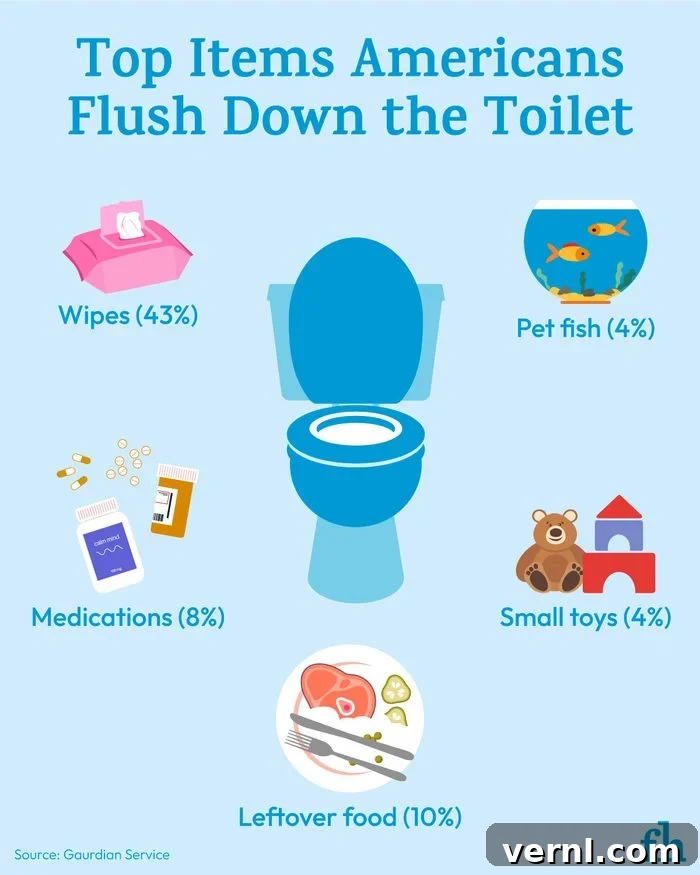
While individual habits vary, the types of items frequently flushed down toilets by American households are remarkably consistent. These seemingly innocuous items can accumulate over time, forming stubborn blockages deep within your pipes or even municipal sewer lines. Let’s explore the most common non-flushable items that regularly cause significant plumbing headaches.
Wipes of All Kinds (43%)
Wipes, in their various forms, stand out as the most common non-flushable item mistakenly sent down toilets. From baby wipes and cleaning wipes to makeup remover wipes, many people routinely flush them. The confusion is compounded by the marketing of so-called “flushable wipes,” which explicitly claim to be safe for toilet disposal. The Guardian Service survey highlighted this pervasive misunderstanding, reporting that 24 percent of Americans were unsure about the safety of flushing “flushable” wipes, while another 14 percent firmly believed they were safe to flush.
Let’s be unequivocally clear: it is never a good idea to flush any type of wipe, including those labeled “flushable.” Despite their misleading labels, these wipes are engineered differently from toilet paper. They are designed for strength and durability, meaning they do not disintegrate quickly or thoroughly enough in water. Instead, they retain their structure, accumulating in pipes and forming formidable clogs, particularly at bends and angles in the plumbing system. This persistent material can easily snag on pipe imperfections, combining with grease and other debris to create severe blockages known as “fatbergs” in larger sewer systems. Such blockages inevitably lead to backups and trigger expensive, inconvenient plumbing emergencies that can disrupt your household. Always remember: used wipes of any kind belong in a trash can, never in the toilet.
Feminine Hygiene Products (16%)
The temptation to discreetly dispose of feminine hygiene products by flushing them is strong for many, yet it is a practice strongly discouraged by plumbing professionals. Tampons and sanitary pads are specifically engineered with highly absorbent materials designed to swell significantly when they come into contact with liquid. While this feature is essential for their intended use, it becomes a major liability when these products enter your plumbing system. Once saturated, they expand dramatically, easily snagging on pipes and creating substantial obstructions that prevent water flow. These blockages can lead to severe backups and costly repairs. To avoid these preventable issues, ensure every bathroom in your home is equipped with a trash can, preferably one with a lid for discretion, providing a proper and hygienic disposal method for all feminine hygiene products.
Medications (8%)
The disposal of unused or expired medications is a nuanced issue, often sparking concerns about environmental impact. While some people flush medications to keep them out of landfills, this can introduce active pharmaceutical ingredients into water systems, potentially harming aquatic life. However, as FDA environmental assessment expert Raanan Bloom, Ph.D., explains in “Where and How to Dispose of Unused Medicines,” the primary way drug residues enter water systems is through human and animal bodies naturally passing them after consumption.
It’s important to note that only a very select few medications, due to their potential for immediate harm to humans or animals if left accessible, are recommended for flushing by the FDA. This applies exclusively to medications found on the FDA’s specific “flush list” – and this list is extremely limited. For all other medications, flushing is generally discouraged. Instead, seek out designated drug take-back locations, which are often available at pharmacies or community events. If a take-back program isn’t an option, safely dispose of most medications by mixing them with undesirable substances like dirt, used coffee grounds, or kitty litter. This mixture should then be sealed in a plastic bag (e.g., a resealable plastic bag) to prevent leakage and deter pets or children from finding them, before being discarded in your household trash.
Cotton Products (7%)
Cotton products, including cotton swabs, cotton balls, and makeup pads, are frequently mistaken for items that will readily break down in water. Despite their soft and seemingly dissolvable nature, these products are surprisingly resilient. Unlike toilet paper, which is designed to quickly disintegrate upon contact with water, cotton products retain their fibrous structure. They can easily clump together, snag on existing debris in your pipes, and contribute to significant blockages over time. These seemingly small items collectively account for 7% of commonly flushed non-toilet paper items. To prevent unnecessary plumbing issues and maintain clear drains, always dispose of cotton products in a waste bin rather than flushing them.
Other Items Commonly Flushed (That Shouldn’t Be)
The list of inappropriate items finding their way into toilets extends beyond the major categories. Here are several other common culprits that contribute to household plumbing woes:
- Facial Tissues (34%): While seemingly similar to toilet paper, facial tissues are engineered to be stronger and more absorbent, designed to hold up when wet (think of blowing your nose). This strength means they do not break down as easily as toilet paper in water, making them prime candidates for pipe clogs. Always use a trash can for used facial tissues.
- Paper Towels (24%): Even more robust than facial tissues, paper towels are built for superior absorbency and tear resistance. Flushing them is akin to flushing a small cloth; they will not disintegrate and are almost guaranteed to cause significant blockages in your plumbing system.
- Leftover Food (10%): While it might seem convenient to flush small bits of food, this practice can lead to major problems. Food scraps, especially those containing fats, oils, and grease (FOG), can congeal and stick to pipe walls, forming sticky blockages that trap other debris. Even seemingly harmless items like rice or pasta can swell with water and create obstructions. Dispose of food waste in the trash or compost, not the toilet.
- Condoms (4%): Made from latex or polyurethane, condoms are explicitly designed to be non-biodegradable and durable. They do not break down in water and can easily snag in pipes, causing blockages and contributing to sewer system overflows. Always wrap used condoms and dispose of them in the trash.
- Small Toys (4%): Children are naturally curious, and sometimes their small toys find an unexpected journey down the toilet. Even tiny plastic toys will never dissolve and can quickly lodge in toilet traps or pipes, causing immediate and stubborn clogs that often require professional intervention.
- Pet Fish (4%): While a ceremonial flushing of a deceased pet fish might seem like a respectful send-off, it’s problematic for plumbing. The fish itself won’t dissolve, and its body can easily block pipes. Furthermore, if the fish isn’t deceased, introducing non-native species into local waterways through the sewer system can have severe ecological consequences. Dispose of deceased pets respectfully in the trash or by burial.
The Hidden Costs: Understanding Plumbing Repair Expenses
The financial burden of plumbing repairs can be a significant shock to homeowners. According to the Guardian Service survey, a staggering 57 percent of homeowners have, at some point, been “shocked by the cost of a plumbing repair.” The sobering reality, and the silver lining depending on your perspective, is that a substantial portion of these expenses stems from issues directly related to improper flushing – highlighting their entirely preventable nature.
A remarkable two out of five homeowners have faced emergency plumbing repairs directly attributable to flushing non-flushable items. The average out-of-pocket cost for these types of urgent repairs stands at an alarming $671. However, for one in twelve homeowners, the situation escalates dramatically, with costs soaring over $2000 for emergency sewer line repairs. While many homeowners are fortunate enough to cover these unexpected expenses using their savings, a considerable number resort to credit cards or personal loans, incurring additional interest and debt. A crucial takeaway from these statistics is the profound regret many homeowners expressed about not having adequate homeowners or specific plumbing insurance to cover these unforeseen, expensive events.
Beyond the immediate financial outlay, the cost of plumbing issues extends into other valuable areas of a homeowner’s life: time and peace of mind. Dealing with a clogged or overflowing toilet is not just an inconvenience; it’s a source of considerable frustration and stress. The process involves more than just paying the bill; it consumes valuable time. Homeowners must dedicate time to researching and contacting plumbers, scheduling appointments that fit into their busy lives, ensuring they are present when the repair professional arrives, and then overseeing the repair process itself. While many routine repairs might take a few hours, more complex blockages or sewer line issues can easily consume an entire day or even longer, disrupting daily routines and plans. The cumulative effect of financial strain, lost time, and emotional stress underscores the importance of proactive plumbing care.
Prevention Is Key: Best Practices for Toilet Usage
Avoiding costly and inconvenient plumbing emergencies is largely within your control. By adopting a few simple best practices, you can significantly prolong the life of your plumbing system and save yourself a great deal of stress and money.
- Strictly Adhere to the “Three P’s”: This is the golden rule of toilet use. Only pee, poop, and toilet paper should ever be flushed. Toilet paper is specifically designed to break down rapidly in water, preventing clogs. Anything else, regardless of how small or “flushable” it claims to be, poses a risk.
- Strategically Place Trash Cans: Ensure every bathroom in your home has an easily accessible trash can, preferably with a lid for hygiene and discretion. This simple addition provides an immediate and convenient alternative for disposing of wipes, feminine hygiene products, cotton products, dental floss, hair, and any other non-flushable waste.
- Educate Everyone in Your Household: Make sure all family members, especially children and guests, understand what can and cannot be flushed. Gentle reminders and clear instructions can go a long way in preventing accidental flushing of toys or other inappropriate items.
- Properly Dispose of Fats, Oils, and Grease (FOG): Never pour cooking fats, oils, or grease down any drain, including the toilet. These substances solidify in pipes, creating sticky blockages that are extremely difficult and expensive to remove. Collect FOG in a disposable container and throw it in the trash once cooled.
- Regular Maintenance Checks: While this article focuses on prevention, it’s also wise to be proactive with plumbing maintenance. Keep an eye out for slow drains, gurgling noises, or frequent minor clogs, which can be early warning signs of a larger issue brewing. Addressing these promptly can prevent emergency situations.
Frequently Asked Questions (FAQ) About Toilet Clogs and Plumbing
How much are major plumbing repairs on average?
The cost of plumbing repairs can vary significantly based on the severity of the issue, your location, and the specific plumber you hire. According to the Guardian Service survey, Americans spend an average of $671 for emergency sewer repairs. For specific toilet repairs, resources like Angi estimate the average cost to be between $200 and $1200. More extensive issues, like a complete sewer line replacement, can easily run into thousands of dollars. While these costs can be substantial, it’s crucial to remember that many emergency repairs caused by improper flushing are entirely avoidable. Adhering strictly to the “Three P’s” can save you from these unexpected and significant expenses.
Why are “flushable” wipes called flushable if they’re not actually safe to flush?
The term “flushable” on wipe packaging is unfortunately misleading and largely unregulated. Currently, there is no universally adopted, legally binding definition or standard for what constitutes a truly “flushable” product that will safely disintegrate in household and municipal plumbing systems without causing blockages. Manufacturers often conduct their own tests using internal criteria, which typically don’t replicate the real-world conditions of diverse plumbing systems, pipe angles, or the slower flow rates found in many homes. As a result, wipes that fail to break down adequately are still labeled “flushable” for marketing purposes, creating widespread consumer confusion. Due to this lack of stringent regulation and the significant risk of clogs, plumbing professionals overwhelmingly advise against flushing any type of wipe, regardless of its label.
What are the warning signs of a clogged toilet?
Recognizing the early warning signs of a clog can help you address the problem before it escalates into an emergency. Key indicators include: water draining very slowly after flushing, needing to flush multiple times to clear the bowl, water rising higher than usual in the bowl (sometimes almost overflowing) before slowly receding, gurgling sounds coming from the toilet or other drains after flushing, and a foul odor emanating from the toilet or drain. If you notice any of these symptoms, it’s best to act promptly, possibly by using a plunger carefully, or calling a plumber if the issue persists.
Can I use chemical drain cleaners for a clogged toilet?
While chemical drain cleaners are readily available, they are generally not recommended for clogged toilets. These harsh chemicals are highly corrosive and can damage your toilet’s porcelain finish, deteriorate rubber seals, and even weaken PVC pipes over time. More importantly, they often fail to fully clear severe blockages caused by non-flushable items, instead forming a dangerous, caustic pool in your toilet or pipes. If the clog isn’t resolved, a plumber will then have to deal with hazardous chemicals, making the repair process more difficult and potentially more expensive. For toilet clogs, a plunger is usually the safest first step. If that doesn’t work, it’s always best to call a professional plumber.
Protect Your Pipes: A Final Word on Responsible Flushing
The seemingly innocent act of flushing an inappropriate item down the toilet can trigger a cascade of problems, from inconvenient backups to financially crippling emergency repairs. The evidence is clear: the vast majority of toilet clogs and related plumbing emergencies are entirely preventable. By understanding what truly belongs in your toilet – the “Three P’s” – and diligently disposing of all other waste in a trash can, you take a powerful step towards protecting your home’s plumbing system. This simple habit not only safeguards your pipes but also saves you valuable time, reduces stress, and, most importantly, protects your hard-earned money from unexpected plumbing bills. Be vigilant, educate your household, and make responsible flushing a cornerstone of your home maintenance routine.
Sources
- “Orange Water and Sewer Authority: Down the Drain: Yes, to the 3 Ps”
- “Guardian Service: America’s Biggest Plumbing Problems: What Homeowners Are Flushing, Fixing, and Googling” (2025)
- “Power Plumbing Services: 5 “Flushable” Things That You Should Never Actually Flush” (2021)
- “Santa Monica Water District: What to flush?”
- “International Water Services Flushability Group: Criteria for Recognition as a Flushable Product”
- “US Food & Drug Administration: Where and How to Dispose of Unused Medicines”
- “US Food & Drug Administration: Drug Disposal: FDA’s Flush List for Certain Medicines”
- “Angi: How Much Does Plumbing Repair Cost?”
RELATED:
- The Real Reason Aluminum Foil Has a Shiny Side and a Dull Side
- Think Adirondack Chairs Are Uncomfortable? You’re Using Them Wrong
- Why You Shouldn’t Crush Aluminum Cans Before Recycling