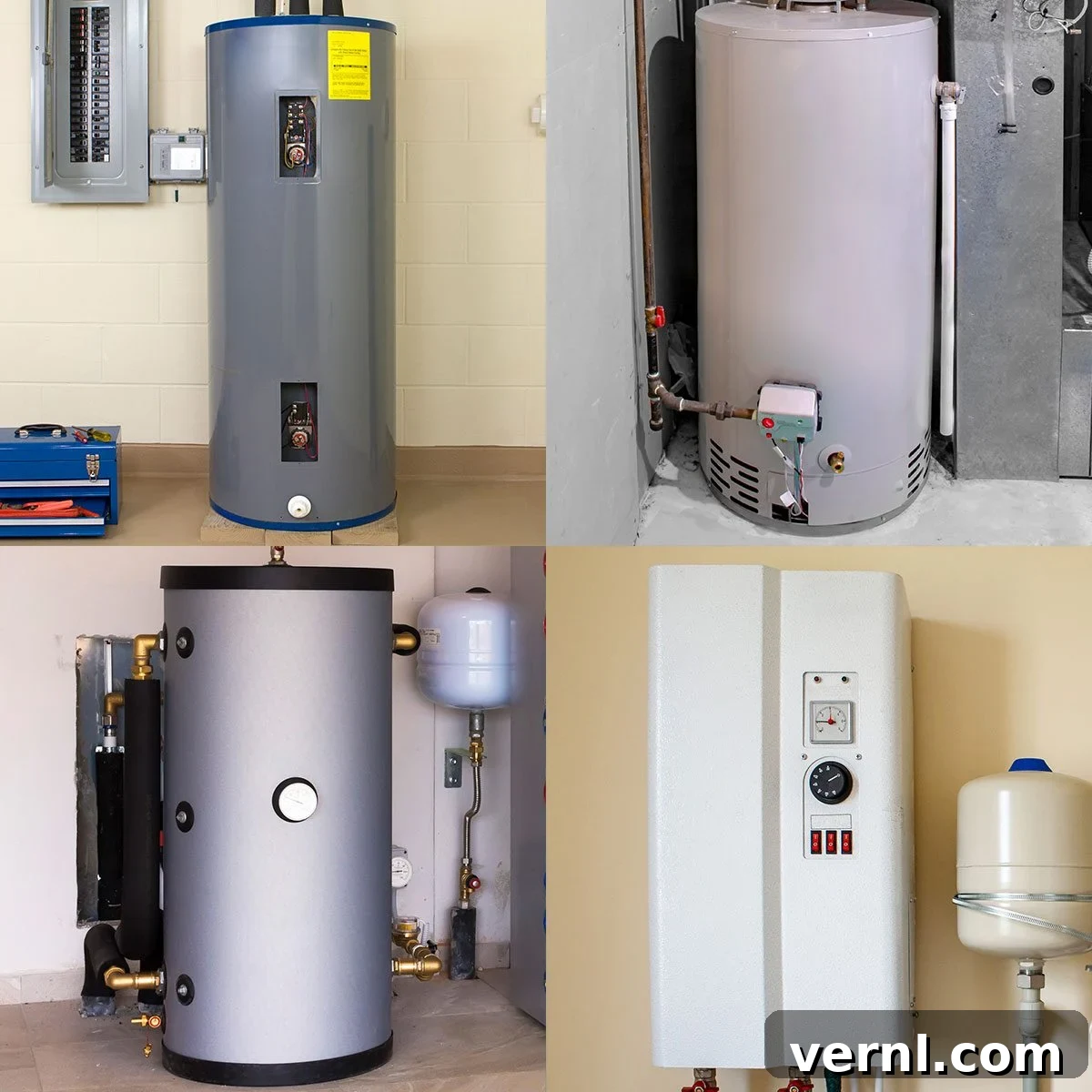
A water heater is an indispensable appliance in any modern home, transforming cold water into a readily available supply of hot water for essential daily tasks. From invigorating showers to efficient dishwashing and laundry cycles, the convenience and comfort provided by a reliable hot water system cannot be overstated.
Today’s modern water heaters are engineered to deliver superior performance and energy efficiency compared to older models. With an average lifespan ranging from 10 to 15 years, if you’re settling into a new home, there’s a good chance the existing unit might be nearing the end of its operational life. This presents a prime opportunity to select a new, upgraded water heater that perfectly aligns with your household’s needs and modern efficiency standards.
Beyond its comfort-enhancing role, a water heater is a significant energy consumer in your home. According to EnergyStar.gov, it typically ranks second only to the furnace in terms of household energy usage. This makes energy efficiency a critical factor in your purchasing decision, impacting both your utility bills and environmental footprint. Whether you’re replacing an aging unit or outfitting a newly constructed property, understanding the various types and features available will empower you to make an informed and economical choice.
Choosing the right water heater involves balancing initial cost, operating expenses, environmental impact, and your family’s hot water demands. This comprehensive guide will walk you through the essential considerations, helping you navigate the options to find the perfect system for your home.
Types of Water Heaters
While historical methods of water heating might have included wood fires for rustic settings, contemporary water heaters exclusively rely on either natural gas or electricity as their primary fuel source. Historically, natural gas has often been more affordable than electricity in many regions, making gas water heaters a more economical choice in the long run. However, advancements in technology, particularly the emergence of hybrid models, are continually reshaping the landscape of water heating efficiency and cost-effectiveness.
Conventional Gas Water Heaters
A conventional gas water heater operates by burning natural gas or propane to heat water stored in a tank. These units are characterized by a large, cylindrical, glass-lined metal tank, with a powerful gas burner positioned beneath it. This burner ignites, much like a gas stove, heating the water directly within the tank. A crucial component of gas water heaters is their exhaust system, which safely vents combustion gases, such as carbon monoxide, to the outdoors, ensuring indoor air quality.
Modern gas water heaters typically feature an automatic ignition system, which requires a small amount of electricity to operate. Older models, or some entry-level units, might utilize a standing pilot light. A standing pilot light burns continuously and must be manually ignited with a match or an electronic igniter if it goes out. Gas water heaters are known for their ability to heat water quickly and are often preferred in homes with existing gas lines due to the typically lower cost of natural gas compared to electricity.
Conventional Electric Water Heaters
Mirroring the tank design of their gas counterparts, conventional electric water heaters also utilize a cylindrical, glass-lined tank to store hot water. The key difference lies in their heating mechanism: instead of a gas burner, these units employ two resistive heating elements, typically inserted through the side of the tank. These elements are designed to glow red-hot when activated by the thermostat, consuming a significant amount of electricity, often around 4,000 watts per element.
Due to the excellent insulation surrounding the tank, these heating elements usually don’t need to operate continuously for extended periods, helping to maintain water temperature efficiently. A notable advantage of electric water heaters is that they produce no combustion emissions, making them a cleaner option from an indoor air quality perspective. They are also often simpler and less expensive to install in homes without existing gas lines, although their operating costs can be higher depending on local electricity rates.
Hybrid (Heat Pump) Water Heaters
Representing a significant leap in energy efficiency, the innovative hybrid water heater, also known as a heat pump water heater, operates on a fundamentally different principle. Unlike conventional units that generate heat directly, hybrid models leverage a heat pump system to transfer heat from the surrounding air into the water. This process involves a refrigeration system where a specialized refrigerant circulates through copper coils located at the top of the unit. As the refrigerant evaporates, it efficiently draws heat from the ambient air.
The heated refrigerant then moves into another coil immersed within the water heater tank. Here, a compressor pressurizes the refrigerant, causing it to release its absorbed heat directly into the water. To ensure an adequate supply of hot water during periods of high demand or very cold ambient temperatures, hybrid units are typically equipped with backup resistive heating elements, similar to those found in conventional electric models. The remarkable efficiency of hybrid water heaters means they use far less electricity than conventional electric water heaters—often consuming about the same amount of power as a refrigerator. This makes them exceptionally cost-effective to operate, frequently proving even cheaper to run than conventional gas models.
The financial benefits are substantial; annual energy savings can easily exceed $400 or more, which quickly offsets their higher initial purchase price, which typically starts around $1,700, compared to $600-$900 for conventional gas or electric units. Beyond their economic advantages, hybrid water heaters also provide a subtle cooling effect to the space where they are installed, as they actively draw heat out of the air. However, this unique operational principle necessitates specific installation requirements: they are generally taller than conventional tank water heaters and demand a minimum air space (typically at least 1,000 cubic feet) to operate efficiently. These spatial requirements can limit their installation locations within a home.
Tankless (On-Demand) Gas or Electric Water Heaters
Also known as on-demand water heaters, tankless water heaters represent a highly efficient approach to hot water delivery. These innovative units only activate when a hot water faucet is opened, initiating the heating process. As soon as the faucet is closed, the unit shuts off. This “on-demand” operation eliminates the standby heat loss associated with tank-style water heaters, which continuously reheat stored water, leading to significant fuel savings.
Tankless units are lauded for their energy efficiency because they heat water directly as it flows through, preventing the constant energy consumption of keeping a large tank of water hot. However, they do have specific operational considerations. Their performance can be affected by low or fluctuating water pressure, as their internal sensors require a minimum flow rate to activate the heating elements. If the flow drops below this threshold, the unit may not switch on or may cycle erratically.
Despite this potential drawback, a properly sized tankless water heater generally offers superior energy efficiency compared to any tank-style unit, assuming stable and adequate water pressure. Their compact design also saves valuable floor space. The San Jose Mercury News has reported that new homeowners in California frequently incorporate tankless water heaters into their plumbing designs, aiding in the achievement of state-mandated energy-saving goals. For those considering this option, exploring the best tankless water heaters of the year can provide valuable insights.
Sizing Your Water Heater
Once you’ve decided on the type of water heater, selecting the correct size is paramount, especially for tank-style models. A larger tank provides a more generous supply of hot water, which is ideal for larger households or homes with high hot water demand. However, it’s important to remember that heating extra water comes with increased monthly operating costs. Striking the right balance ensures you have enough hot water without unnecessary expenses. Here’s a rough sizing guide for tank-style water heaters:
- 30 to 40 gallons: Generally suitable for one or two people, ideal for smaller apartments or single-person homes with minimal hot water usage.
- 40 to 50 gallons: A good choice for households of two to three people, accommodating typical daily needs including showers and occasional appliance use.
- 50 to 60 gallons: Recommended for three to four people, providing sufficient hot water for multiple showers and concurrent use of laundry or dishwashing machines.
- 60 to 80 gallons: Best for five or more people, or homes with extensive hot water demands such as multiple bathrooms, large families, or frequent use of hot tubs.
Sizing a tankless water heater, on the other hand, is a more nuanced process, as it doesn’t involve a storage tank. Instead, sizing focuses on the unit’s ability to deliver hot water at a specific flow rate (gallons per minute, GPM) and temperature rise simultaneously. This calculation depends on several critical factors:
- Number of Hot Water Fixtures and Appliances: How many showers, sinks, dishwashers, and washing machines will potentially be using hot water?
- Simultaneous Usage: How many of these fixtures and appliances are expected to be in use at the same time during peak demand?
- Average Groundwater Temperature: The incoming water temperature varies significantly by climate. A colder incoming water temperature requires the water heater to work harder and raise the temperature more, necessitating a higher-capacity unit.
For example, a single-bathroom house in central Minnesota, with average groundwater temperatures often quite low, might require a tankless unit capable of increasing water temperature by approximately 78°F at a maximum flow rate of 9.7 gallons per minute to meet simultaneous hot water needs for a shower and a dishwasher. Conversely, the same house in central Texas, benefiting from warmer groundwater, might only need to raise the temperature by about 53°F, allowing for a smaller, less powerful unit. Understanding your specific temperature rise requirements is crucial. You can also learn how to adjust your water heater’s temperature for optimal comfort and efficiency.
To accurately determine the appropriate size for a tankless water heater, it is highly recommended to use an online calculator, such as the one provided by PlumbingSupply.com, or consult with a qualified plumbing professional. These tools and experts can help analyze your specific hot water demands and climate conditions to recommend a model that will reliably meet your household’s needs without over- or under-sizing.
Basic Water Heater Maintenance
Just like any other vital appliance in your home, your water heater needs regular maintenance to ensure its longevity, efficiency, and safe operation. Adhering to a simple maintenance schedule can significantly extend the service life of your water heater, potentially yielding 12 to 15 years or more of reliable hot water. Proactive care not only prevents costly breakdowns but also maintains optimal energy efficiency, saving you money on utility bills.
Maintenance for Tank Water Heaters
- Drain Sediments from the Tank Periodically: Hard water contains minerals like calcium and magnesium, which, along with rust deposits from the tank itself, can accumulate at the bottom of the tank. This sediment buildup reduces the tank’s heating efficiency, causes premature wear, and can shorten its overall lifespan. To remove these deposits, drain two to three gallons of water from the tank annually or semi-annually. Place a bucket under the drain plug, open the plug slowly (remember the water will be hot), and allow the water to run until it flows clear and free of sediment. This simple procedure helps maintain efficiency and prevents corrosion.
- Test the Temperature and Pressure Relief (TPR) Valve: The TPR valve is a crucial safety device designed to automatically open and relieve excess pressure and temperature within the tank, preventing a potentially dangerous explosion. It’s essential to test this valve annually to ensure it’s functioning correctly. To test, carefully lift the lever on the TPR valve and catch the small amount of water that spills out in a bucket. If the valve does not release water, or if the lever does not properly reset to its closed position, the valve is faulty and needs immediate replacement. Fortunately, TPR valves are inexpensive and easy to replace for a DIY enthusiast or a plumber.
- Replace the Anode Rod: Often referred to as the “sacrificial rod,” the anode rod is designed to protect the inside of your tank from corrosion. Made of magnesium, aluminum, or zinc, it actively attracts corrosive ions in the water, effectively sacrificing itself to prevent these ions from attacking the tank’s steel liner. If the anode rod is doing its job, it will gradually disintegrate over time and typically needs to be inspected and replaced every five years, or more frequently in areas with particularly hard water. Neglecting this replacement can lead to premature tank failure due to corrosion. Here’s how to replace it, a task that can significantly extend the life of your water heater.
Maintenance for Tankless Water Heaters
- Descale Your Tankless Water Heater: Just like tank-style units, tankless water heaters are susceptible to hard water deposits. However, instead of accumulating at the bottom of a tank, these mineral deposits can build up inside the intricate heat exchanger coils, leading to reduced efficiency, diminished hot water flow, and eventual clogging. You can effectively remove this scale by flushing your water heater with a mild acidic solution, such as vinegar. To perform this annual maintenance, fill a bucket with a 50/50 vinegar/water solution. Turn off the power and cold water supply to the unit. Connect a small submersible pump to the flush valves on the water heater and circulate the vinegar solution through the system for about an hour and a half. This process will dissolve the mineral buildup. This descaling should be done annually, especially if your home has water with a high mineral content, to ensure optimal performance and longevity.
Additionally, learn how to prevent common issues and save your hot water heater with a new thermocouple, a critical safety component in gas models.
How to Choose the Perfect Water Heater
Selecting the ideal water heater for your home is a significant decision that impacts your daily comfort, energy bills, and environmental footprint. With a range of options from traditional tank-style models to advanced tankless and hybrid systems, our expert tips are designed to guide you through the process, ensuring you find the right unit that fits your home’s unique requirements and your budget. Consider the following factors carefully:
- Fuel Type Availability and Cost: Determine whether natural gas, propane, or electricity is readily available in your home and analyze the current and projected costs of each fuel type in your region. This will significantly influence your long-term operating expenses.
- Household Hot Water Demand: Accurately assess your family’s peak hot water needs. How many people live in your home? How many showers are taken simultaneously? Do you frequently run the dishwasher and washing machine at the same time? This will inform your sizing decision, especially for tankless units based on GPM, and tank units based on gallon capacity.
- Budget (Initial vs. Operating): Factor in both the upfront purchase and installation costs, as well as the ongoing operating expenses. A more expensive, highly efficient model (like a hybrid or tankless) might have a higher initial cost but could save you significantly more money over its lifespan through lower energy bills.
- Space Availability: Tank-style water heaters require a dedicated space for their large tanks, while tankless units are compact and wall-mounted. Hybrid models, however, need specific air volume around them to operate efficiently. Measure your available space carefully.
- Energy Efficiency Goals: If reducing your carbon footprint and saving on energy bills are priorities, explore models with high Energy Factor (EF) or Uniform Energy Factor (UEF) ratings. Hybrid and tankless options generally offer superior efficiency.
- Local Climate: As discussed in the sizing section, the temperature of your incoming water varies with your climate, directly impacting the required capacity of your water heater, especially for tankless models.
- Installation Complexity: Consider the potential complexities of installation. Switching from electric to gas, or installing a tankless unit, may require significant plumbing or electrical upgrades.
- Warranty: Always review the warranty period and coverage for both the tank/heat exchanger and components. A longer warranty often signifies a manufacturer’s confidence in their product’s durability.
By carefully weighing these factors and consulting with qualified professionals, you can confidently choose a water heater that provides reliable hot water, operates efficiently, and serves your home for years to come. For further detailed information and expert recommendations, explore these valuable resources:
- How to Choose a New Water Heater: A Comprehensive Guide
- Most Recommended Electric, Gas, and Tankless Water Heaters, According to Experts
- Best Under-Sink Water Heaters for Targeted Hot Water Needs
- Top-Rated Tankless Water Heaters: Our Expert Picks
- Why You Should Invest in a Tankless Water Heater: Long-Term Benefits
- The Pros and Cons of Tankless Water Heaters: A Balanced View
- Good Water Heater Brands: Reputable Manufacturers for Your Home