
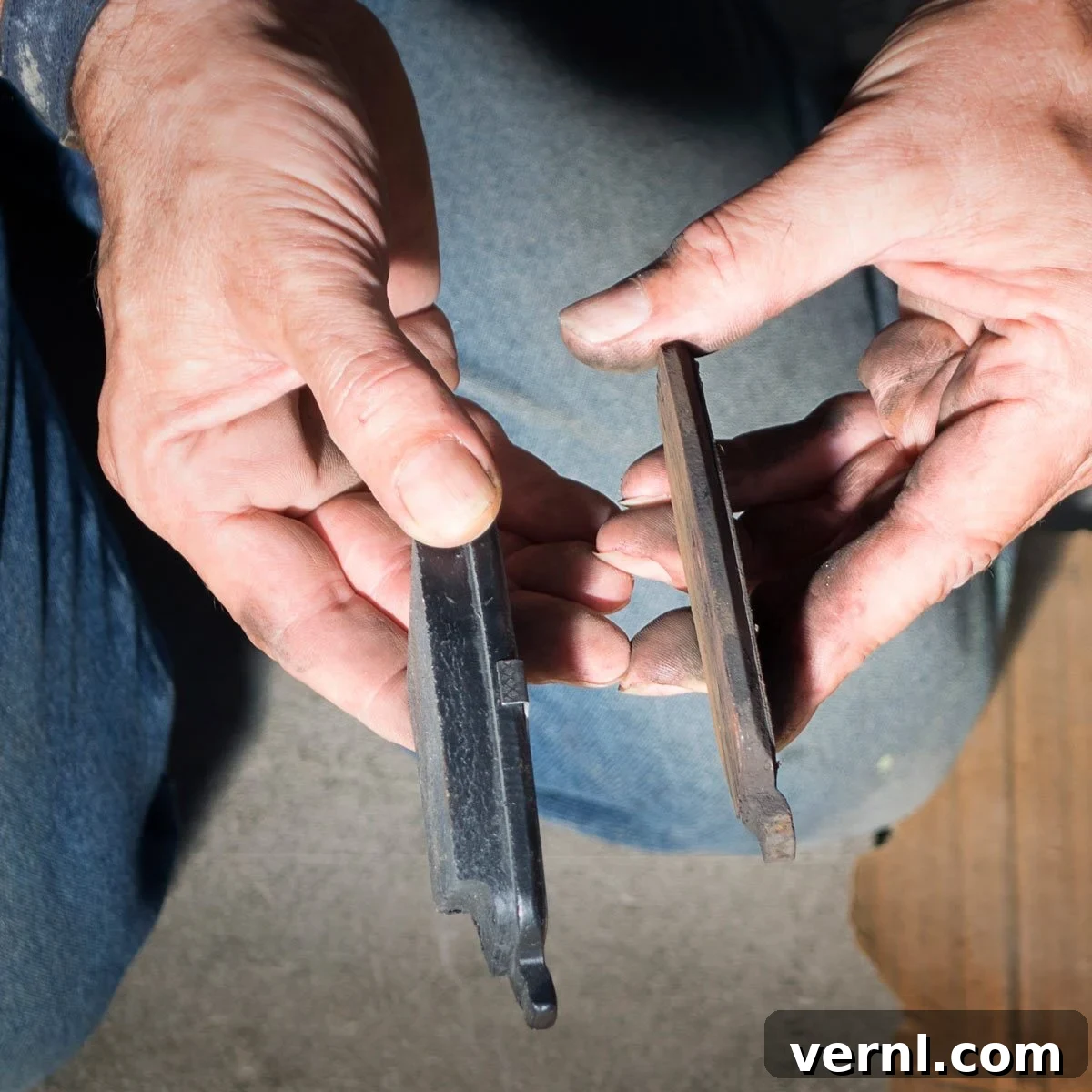
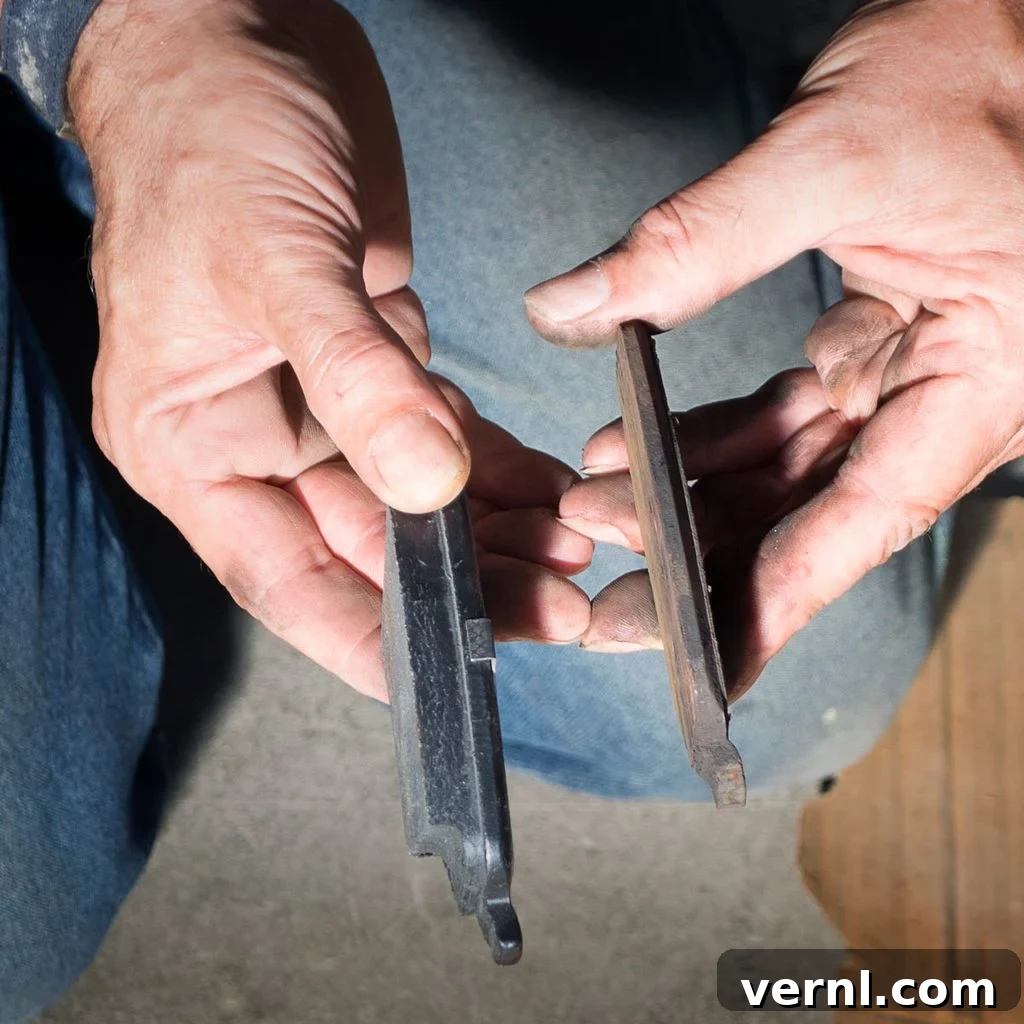
Some responsibilities in life can safely be postponed, perhaps even indefinitely. However, the maintenance of your vehicle’s braking system is unequivocally not one of them. The ability to bring your car to a safe and controlled stop is paramount to road safety, not just for you but for everyone around you. Often, when brake pads require attention, the signs can be quite obvious, such as a distinct squealing noise during braking. At other times, the symptoms might be more subtle, making it less clear if the brake pads are indeed the source of your braking troubles. Understanding how to properly inspect your brake pads, even without removing the wheel, can be incredibly beneficial for any car owner.
One common pitfall is that many drivers might ignore initial warning signs, fearing that they need a complete overhaul of their entire braking system. In reality, as Duane “Doc” Watson, a seasoned technical trainer at Bosch Mobility Aftermarket, highlights, “Many of the more common issues are indicative that they just need a brake pad replacement.” Watson further emphasizes the critical nature of timely replacement: “If ignored, worn-out brake pads will result in greater damage to the whole system and cost more down the line.” Procrastination here doesn’t save money; it significantly increases future repair costs and compromises safety.
So, the crucial question arises: how often should you change your brake pads? The answer isn’t a simple, one-size-fits-all number. It’s a dynamic interplay between the specific characteristics of your vehicle, the typical driving conditions and terrain you navigate, and the individual driving habits of those who regularly operate the car. From aggressive driving styles to heavy loads, numerous factors influence the lifespan of your brake pads. Delve deeper with us to understand the telltale signs and best practices for maintaining this vital safety component.
Recognizing the Signs: When Is It Time to Change Your Brake Pads?
According to automotive professionals, the universal indicator for brake pad replacement is when the friction lining reaches the 3 mm to 4 mm thickness range. To put this into perspective, a brand-new brake pad typically boasts a robust thickness of around 12 mm. The initial phase of your brake pads’ life, spanning the first 6 mm of wear, is generally trouble-free. However, as the pads wear past this halfway point and approach the critical 3 mm mark, it becomes imperative to pay close attention to your vehicle’s braking performance and any new sounds it might make.
A key design feature in most modern brake pads is the incorporation of a small, metallic wear indicator – often referred to as a “burr” or “squealer tab.” When the brake pad wears down to approximately 3 mm, this metal tab comes into contact with the brake rotor, producing a distinct, high-pitched squealing sound. This noise is intentionally designed to be irritating, serving as an unmistakable auditory warning that it’s time to service your brakes. This squeal is not merely an annoyance; it’s a vital safety alert that should never be disregarded.
Ignoring this critical warning can lead to a cascade of expensive and dangerous consequences. Initially, the continued metal-on-metal contact will begin to score or groove the brake rotors, creating an uneven surface. Prolonged neglect will cause the rotors to overheat, and in severe cases, even warp, compromising their ability to dissipate heat and provide consistent stopping power. As the pads wear down to nothing, you will likely begin to hear a much nastier, more abrasive grinding noise. Chris “Moose” Pyle, an esteemed auto expert with JustAnswer.com, starkly describes this scenario: “It is now metal to metal as the brake rotor is being eaten up by the steel backing plate on your pads. Now you need new pads, new rotors and possibly new calipers.” This significantly escalates the repair cost from a simple pad replacement to a much more extensive and costly brake system overhaul.
However, auditory cues aren’t the only indicators of worn brake pads. Even before they start to emit noise, you might notice subtle yet telltale signs that your brakes are becoming less effective. Worn brake pads inherently provide less friction, meaning it takes longer for your vehicle to slow down, significantly increasing your stopping distance. As Watson points out, “Braking may also feel different.” This altered sensation can manifest in several ways: “If the pedal is sinking down too far or vibrating when you push it, it’s likely time to take a deeper look at the state of your brake pads.” A spongy or soft brake pedal could indicate worn pads or even air in the brake lines, while a vibrating pedal often points to warped rotors, which can be a direct result of severely worn pads. Any deviation from the normal feel of your brake pedal warrants immediate investigation.
It’s also important to differentiate between issues directly related to pad wear and other brake system problems. If your car shakes when braking, while sometimes linked to warped rotors (a consequence of worn pads), it can also indicate problems with suspension components or steering. Similarly, smoking brakes usually signal severe overheating, possibly due to a stuck caliper or aggressive driving, rather than just worn pads themselves. While these are distinct issues, they often underscore the need for a comprehensive brake system check.
Proactive Maintenance: How to Monitor Your Brake Pads Effectively
Regular monitoring of your brake pads is a cornerstone of preventative maintenance and paramount for ensuring ongoing road safety. A widely recommended practice is to check the brake pad lining thickness every time you have your oil changed. This routine check is often integrated into standard service appointments at most automotive shops, as it allows them to assess the overall condition of your braking system and recommend any necessary services. However, understanding how to check them yourself empowers you to stay informed and proactive.
To visually inspect your brake pads, you typically don’t need to remove the wheels, though doing so provides the clearest view. For a quick check, you can often look through the spokes of your wheels with a flashlight. You’ll be looking for the pad material nestled between the caliper and the rotor. Compare the remaining thickness to the steel backing plate. If the friction material appears thinner than a quarter inch, or about 3-4 mm, it’s a strong indication that replacement is imminent. It’s crucial to check both the inner and outer pads on each wheel, as wear can sometimes be uneven. Once your pads are observed to be in the critical 3 mm to 4 mm range, that distinct squeal isn’t far behind. At this point, it’s highly advisable to schedule an appointment to get them replaced, or if you’re comfortable with automotive repairs, you can replace them yourself.
Consider a real-life scenario: the ceramic brake pad linings on my SUV were measured after approximately 11 months of use, covering around 23,000 miles per year. The assessment revealed 7 mm of lining remaining. While this still falls comfortably within the “good” range – signifying that less than half of the pad’s useful life has been consumed – it serves as a valuable benchmark. This information allows me to keep a much closer eye on these particular pads as they progress through the latter half of their expected lifespan, ensuring I’m prepared for their eventual replacement.
Deciphering Brake Pad Lifespan: How Long Do They Really Last?
The longevity of your brake pads is not a fixed metric but rather a variable that hinges on a multitude of factors. These include your personal driving habits, the curb weight and typical load of your vehicle, the quality and type of the brake pads themselves, the terrain you frequently drive on, and whether you regularly tow heavy loads. While there’s a wide spectrum, Watson notes that the typical lifespan for most brake pads falls somewhere between 30,000 and 70,000 miles. However, it’s not uncommon for some pads to last significantly longer or shorter depending on the conditions.
Driving habits are arguably the most influential factor. As Watson elaborates, “It all depends on how much you’re driving and how much stress the brakes are under as you go.” For instance, a driver who navigates a daily commute through heavy, stop-and-go urban traffic will likely experience faster brake pad wear compared to someone who enjoys leisurely drives on open highways with minimal braking. Aggressive driving, characterized by frequent speeding and abrupt, last-second braking, places immense stress on the braking system, drastically shortening pad life. Conversely, smooth, gradual braking techniques maximize pad longevity. Additionally, driving in mountainous regions, where constant downhill braking is necessary to maintain control and prevent runaway situations, significantly adds to the wear and tear on your brake pads.
Understanding Brake Pad Materials: A Key to Lifespan and Performance
The material composition of your brake pads also plays a critical role in their lifespan and performance characteristics. Generally, there are three primary types:
- Organic (NAO – Non-Asbestos Organic): These pads are typically made from a blend of fibers (like glass, carbon, rubber) and resins. They are generally quieter and softer on rotors, making them popular for everyday driving and older vehicles. However, organic pads tend to wear down faster, especially under heavy braking or high temperatures, requiring more frequent replacement. They also produce more brake dust.
- Metallic (Semi-Metallic): Comprising anywhere from 30% to 70% metals (copper, iron, steel, brass) along with organic fillers and graphite, metallic pads offer excellent braking performance across a wide range of temperatures. They are durable and dissipate heat effectively, making them suitable for heavier vehicles and more aggressive driving. The trade-off is that they tend to be noisier, can produce more brake dust, and are harder on brake rotors, potentially causing faster rotor wear.
- Ceramic: These pads are made from ceramic fibers, fillers, and bonding agents. Ceramic pads are celebrated for their clean operation, producing very little brake dust, and their quiet performance. They offer consistent stopping power in various temperatures and are generally softer on rotors than metallics, contributing to longer rotor life. Ceramics combine many of the best aspects of organic and metallic pads, but they typically come with a higher initial cost.
While this information might not help you once your current pads are worn, understanding these material differences can greatly inform your decision when choosing replacement pads, allowing you to select a type that best suits your vehicle, driving style, and budget, ultimately influencing brake replacement costs and long-term satisfaction.
Related: The Danger of Glazed Brake Pads
Beyond normal wear, brake pads can also become damaged through overheating, leading to a condition known as “glazing.” Glazed brake pads provide very little friction for stopping the brake rotors and become dangerously ineffective. This often occurs during instances of severe, prolonged braking, such as “riding the brakes” down a long, steep hill, or during repeated rapid braking in an emergency situation or on a race track. The excessive heat causes the resin in the pad material to crystallize, creating a smooth, hardened, and often shiny or “glazed” surface that dramatically reduces their ability to grip the rotor.
Visually, glazed pads will have an unnaturally smooth or glossy appearance, sometimes even showing evidence of crystallization. Functionally, the most critical symptom you’ll notice is a significant increase in your vehicle’s stopping distance – often alarmingly so. The brake pedal might feel harder, or you might experience a noticeable lack of bite when you apply the brakes. Regardless of their physical thickness, if your brake pads are glazed, their effectiveness is severely compromised, rendering them unsafe. In such cases, immediate replacement is not just recommended, but absolutely essential for your safety and the safety of others on the road.
About the Experts
- Duane “Doc” Watson is a highly respected technical trainer at Bosch Mobility Aftermarket. With over 45 years of invaluable experience in automotive repair, Doc has dedicated his career to training thousands of technicians across the industry. His expertise and commitment have earned him numerous prestigious awards, including the distinguished Chevrolet Technician of the Year and Buick Service Master of the Year.
- Chris “Moose” Pyle is an esteemed master-certified technician boasting more than 20 years of hands-on automotive experience. Since 2006, he has served as a trusted expert for JustAnswer.com, where he diligently answers hundreds of complex car maintenance and repair questions every single day, providing invaluable guidance to countless vehicle owners.