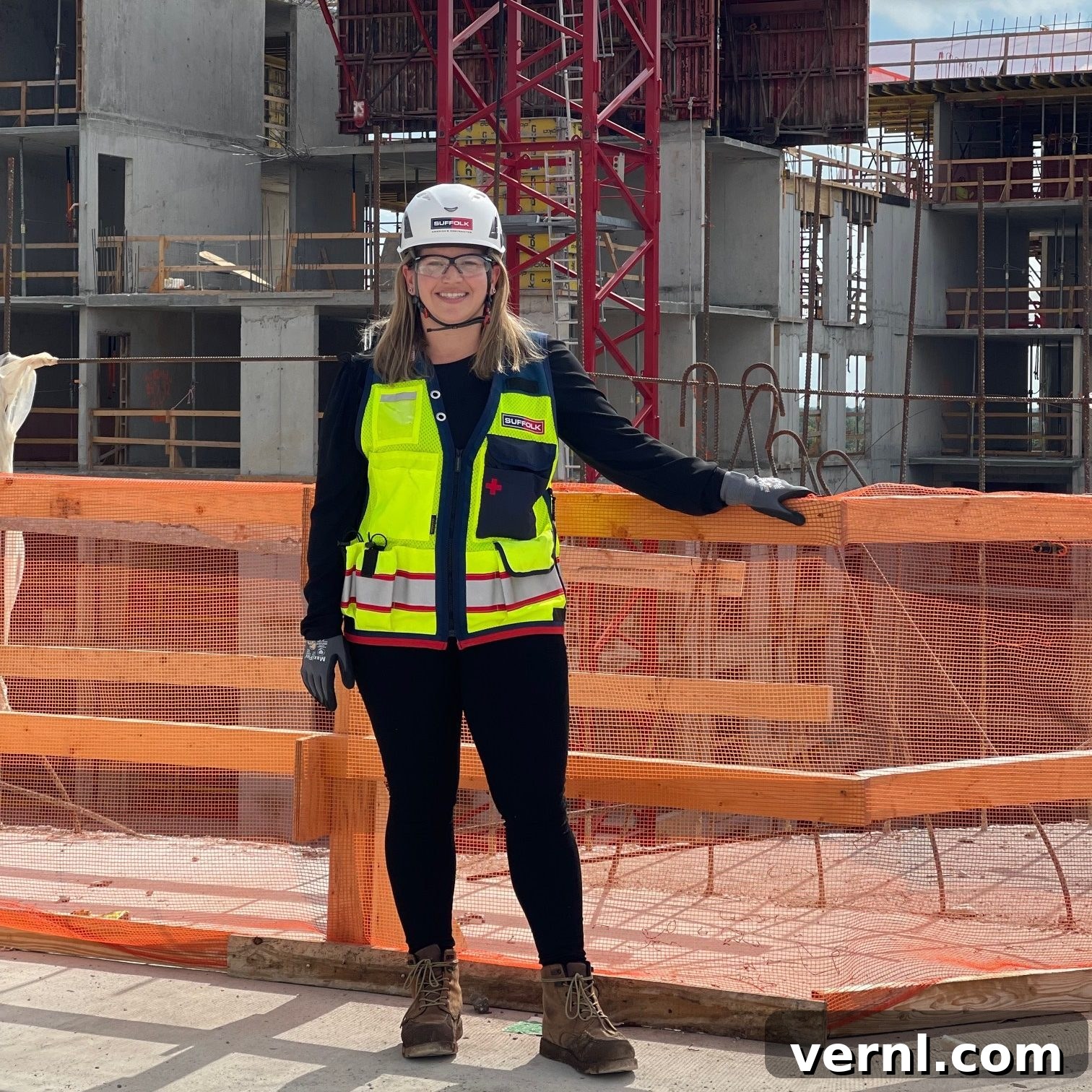
Samira Kraziem’s career journey took an unexpected turn while she was pursuing a master’s degree in speech pathology. A seemingly routine job as a receptionist for a general contractor unexpectedly sparked a profound fascination with the construction industry. It wasn’t the administrative duties that captivated her, but rather the dynamic and multifaceted nature of building itself.
“The allure of construction was so compelling that I ultimately left my master’s program to dive into this field full-time,” Kraziem shares. “It’s a decision I’ve never regretted.”
Today, Samira Kraziem is a Senior Project Manager at Florida-based Suffolk Construction, a company she joined in 2015 as a project administrator. Her dedication and innate talent propelled her through the ranks, demonstrating a remarkable ascent within the competitive world of construction management. Kraziem thrives on the diverse challenges of her role, splitting her time strategically between active job sites and office-based responsibilities, ensuring her work remains both engaging and intellectually stimulating.
In a recent interview, we connected with Samira to delve into her professional growth, her insights into the evolving role of artificial intelligence (AI) within construction, and her perspectives on navigating a predominantly male industry.
How Did You Cultivate the Essential Skills for Advancement in Construction?
A: Lacking a traditional technical background, my initial approach was to immerse myself fully in the field. I was determined to absorb every piece of knowledge I could from the skilled tradespeople who are the backbone of our buildings. This wasn’t merely observational learning; it was an active pursuit of understanding.
I quickly recognized that grasping the intricacies of their daily operations was paramount to my own professional development. This commitment meant arriving early, staying late, and even returning to job sites during off-hours if a critical process or interesting development was underway. For the first few years, it truly felt like “drinking from a fire hose” – an overwhelming but incredibly enriching experience where I functioned like a sponge, soaking up as much practical insight as possible. This intensive hands-on learning paved my path from project coordinator to project engineer, and subsequently into the managerial roles I now hold.
Accumulating this comprehensive technical knowledge across all the specialized trades proved indispensable for my journey to Senior Project Manager. My responsibilities frequently involve leading trade partner meetings with diverse specialists such as electricians, plumbers, masons, and concrete finishers. Effective coordination and proactive problem-solving in these settings demand a deep understanding of each trade’s specific scope, as well as how their individual contributions seamlessly integrate and collaborate within the larger construction ecosystem. This holistic perspective allows me to anticipate challenges, mitigate risks, and foster efficient project execution.
Could You Share an Example of a Challenging Project You’ve Successfully Managed?
A: A prominent project we recently brought to completion is the Asher building, situated in the heart of downtown Tampa. This impressive 22-story structure exemplifies modern mixed-use development, featuring vibrant retail spaces at its base and luxurious residential units occupying the floors above.
The project presented significant complexities, notably a major design revision mid-way through construction. This change involved incorporating a hotel component, which fundamentally reclassified the building type and triggered an entirely new set of code requirements. Navigating this shift was a considerable challenge; it demanded rapid adaptation, meticulous implementation of updated regulations, rigorous schedule preservation, and a constant vigilance over the owner’s budget to prevent cost overruns. Our team’s ability to pivot efficiently while maintaining quality and financial discipline was critical.
Further adding to the project’s intricate nature, we commenced ground-breaking just as the global COVID-19 pandemic began. At its peak, the Asher job site was home to nearly 400 dedicated workers daily. Ensuring the health and safety of such a large workforce under unprecedented circumstances became an additional, paramount challenge, requiring innovative protocols and stringent adherence to evolving guidelines.
On a personal level, this project held immense significance for me. Tampa has experienced a remarkable surge in growth and revitalization over recent years, and as a downtown resident myself, contributing to its transformation was profoundly rewarding. Witnessing its evolution from a once-tranquil city center into a vibrant exemplar of a “live-work-play” environment – where residents can seamlessly integrate their professional lives, leisure activities, and home life – was truly a remarkable experience. It reinforced the tangible impact our work has on urban landscapes and communities.
What Unique Challenges Do Women Face in the Construction Industry?
A: While there’s a discernible and positive shift in how women are perceived and integrated into various professional sectors, the construction industry still presents unique hurdles. Women, unfortunately, continue to often find themselves in an “underdog” position. Learning to adeptly navigate this landscape has been, and remains, a significant part of my professional journey.
While many male colleagues have embraced evolving workplace dynamics and demonstrate genuine respect, some still struggle to fully acknowledge and respect women in leadership roles at the same level they would their male counterparts. In these instances, establishing my authority and ensuring my expectations are met often requires a delicate balance of persistence and assertiveness. The key, I’ve found, is to convey these expectations firmly yet in a non-confrontational manner, which ultimately encourages a recalibration of their behavior or attitude.
The turning point typically occurs when individuals recognize that my objective is to collaborate, facilitate their work, and offer support rather than undermine or dictate. Once this understanding is established, the dynamic usually transforms, paving the way for a foundation of mutual respect and more effective teamwork. This ongoing process of demonstrating competence and commitment is vital for fostering an inclusive environment.
How Has the Current Market Landscape Impacted the Construction Sector?
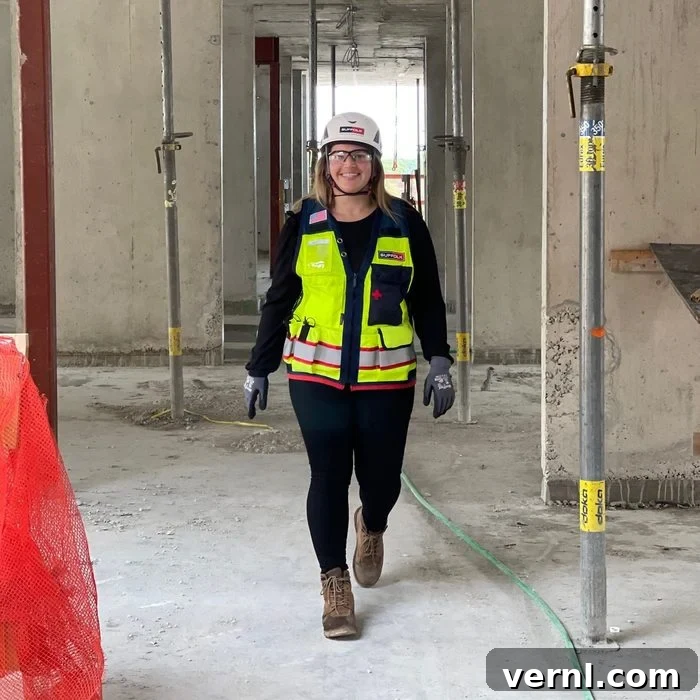
A: The construction industry is currently navigating a complex set of market challenges, with two prominent issues being a significant labor shortage and escalating project costs. The scarcity of skilled labor is compelling companies to fundamentally rethink their strategies for attracting and retaining talent, particularly younger professionals entering the workforce. This means moving beyond traditional incentives to cultivate truly positive and supportive working environments. At Suffolk, this commitment translates into comprehensive benefit packages, flexible time-off policies, and a deeply ingrained caring culture that prioritizes employee well-being and growth.
Concurrently, we’ve witnessed a substantial surge in the overall cost of construction, driven by factors such as material price volatility and supply chain disruptions. Addressing this challenge effectively necessitates a dual approach: embracing greater innovation and aggressively implementing advanced technologies. These tools are becoming indispensable for optimizing processes, enhancing efficiency, and ultimately mitigating financial pressures across all project phases.
Which Technologies, Particularly AI, Are Transforming the Construction Landscape?
A: Artificial intelligence stands out as a particularly promising frontier for the construction industry, offering transformative potential across various operational domains. AI is poised to significantly enhance capabilities in risk management, facilitate meticulous data collection, and streamline complex processes, ultimately leading to greater efficiency and foresight.
At Suffolk, we’re actively pioneering these advancements. One key initiative is our “Plan + Control” design collaboration process, supported by a dedicated in-house team of 25 data analysts. These experts meticulously collect and analyze vast quantities of project data, uncovering critical patterns and identifying actionable insights to continuously refine and improve future construction methodologies. Furthermore, we’ve adopted OpenSpace, an innovative 360-degree AI-powered photo technology. This system generates immersive virtual job site walk-throughs, offering unparalleled visibility and real-time project status insights to our internal teams, clients, and external partners. The commitment to cutting-edge automation even extends to some Suffolk job sites, where we’ve deployed Boston Dynamics’ “Spot the Robot Dog” to assist with data capture and inspection tasks, further enhancing efficiency and safety.
Beyond AI, we are also observing a robust and accelerating trend towards green building practices. Sustainability is no longer a niche concept but a core principle in modern construction. The Asher building, for instance, proudly achieved LEED Gold certification – a testament to its environmentally responsible design and construction. Our commitment extends to our own infrastructure; Suffolk’s Tampa office is located within the city’s first building to earn WELL Gold certification, highlighting a focus on human health and well-being. Notably, Tampa itself holds the distinction of being the first city globally to boast a WELL-certified city district, underscoring a broader urban commitment to healthy environments. Understanding the various green building certifications is increasingly vital for sustainable development.
What Initiatives Does Suffolk Construction Have in Place to Support Women in the Workforce?
A: At Suffolk Construction, we are proud to significantly exceed the national average for female representation in the construction sector, with approximately 28% of our workforce identifying as women. This strong foundation has motivated us to set even more ambitious goals. In 2021, we launched a powerful initiative called “Rebuild the Ratio,” with the clear objective of increasing our female employee representation to 38% – a targeted 10% increase over a decade.
To achieve this ambitious goal, we’ve implemented several strategic programs. Central to our efforts is the internal “Women Who Build” business resource group. This vibrant community offers a multifaceted support system, including a robust mentoring and coaching program, regular networking events, and various opportunities for team bonding. As a mentor myself, I meet with my mentee weekly to discuss her challenges, strategize solutions, and share insights on excelling in our roles. This reciprocal relationship has proven incredibly beneficial for both of us.
Beyond internal support, Suffolk is actively engaged in inspiring the next generation. We created an engaging activity and coloring book titled “Building Together,” which features authentic illustrations of women from Suffolk actively working on diverse job sites. These books are distributed at community engagements and local schools, serving as a powerful tool to ignite excitement and curiosity about the construction industry among young minds.
Furthermore, in a meaningful partnership with the Girl Scouts of Eastern Massachusetts – where our national headquarters is located in Boston – we developed a specialized “Construction 101” curriculum. This program allows Scouts to explore the fundamentals of the industry and earn a dedicated badge. Reflecting on my own youth, the idea of a career in construction never even crossed my mind. Therefore, I believe initiatives like these, which proactively inspire younger girls to envision themselves in these roles, are not just “pretty cool” but absolutely essential for shaping a more diverse future for construction.
Which Professional Tools and Technologies Are Indispensable in Your Role?
A: Unlike traditional tradespeople, my role as a project manager means my “tool bag” contains fewer tangible items and more sophisticated digital solutions. These advanced tools are crucial for managing the complex logistics and oversight inherent in large-scale construction projects.
On a daily basis, I heavily rely on specialized software such as Voyage Control. This platform is instrumental in efficiently managing the intricate schedule of daily deliveries to our job sites. It’s an absolutely critical component for mitigating the potential chaos and delays that can arise from inadequate logistical coordination, ensuring materials arrive precisely when and where they’re needed. Additionally, I frequently utilize OpenSpace, a technology that allows us to seamlessly map captured photos directly onto floor plans. This capability significantly streamlines our quality control checks, provides clear visual documentation of ongoing progress, and offers invaluable data for project stakeholders.
Regarding more traditional, albeit innovated, tangible tools, Suffolk recently upgraded our standard personal protective equipment. We transitioned from conventional construction hardhats to advanced Kask safety helmets. This switch represents a significant enhancement in worker safety, offering an added layer of protection due to their superior design and proven increased durability compared to older models. This demonstrates our commitment to leveraging technology not just for efficiency but also for the utmost safety of our teams.
About Samira Kraziem
Hailing from Miami, Samira Kraziem initially pursued a bachelor’s degree in psychology at Florida International University. Her academic path took a pivotal turn towards the construction industry, where she found her true calling. Joining Suffolk Construction in 2015, a prominent national enterprise known for its building, innovation, and investment prowess, Kraziem began her journey as a project administrator. Her impressive ascent through the ranks saw her promoted to project coordinator, then project engineer, assistant project manager, and ultimately to her current esteemed position as Senior Project Manager, operating from Suffolk’s Tampa office.
About the Author: Karuna Eberl
Karuna Eberl is a seasoned freelance journalist and filmmaker, contributing regularly to Family Handyman. With over 25 years of experience, she specializes in crafting compelling narratives spanning diverse subjects, including human interest, nature, travel, science, and historical accounts. Eberl’s distinguished career is marked by numerous accolades for her acclaimed writing, her comprehensive Florida Keys Travel Guide, and her impactful documentary, The Guerrero Project.
[cf]skyword_tracking_tag[/cf]