
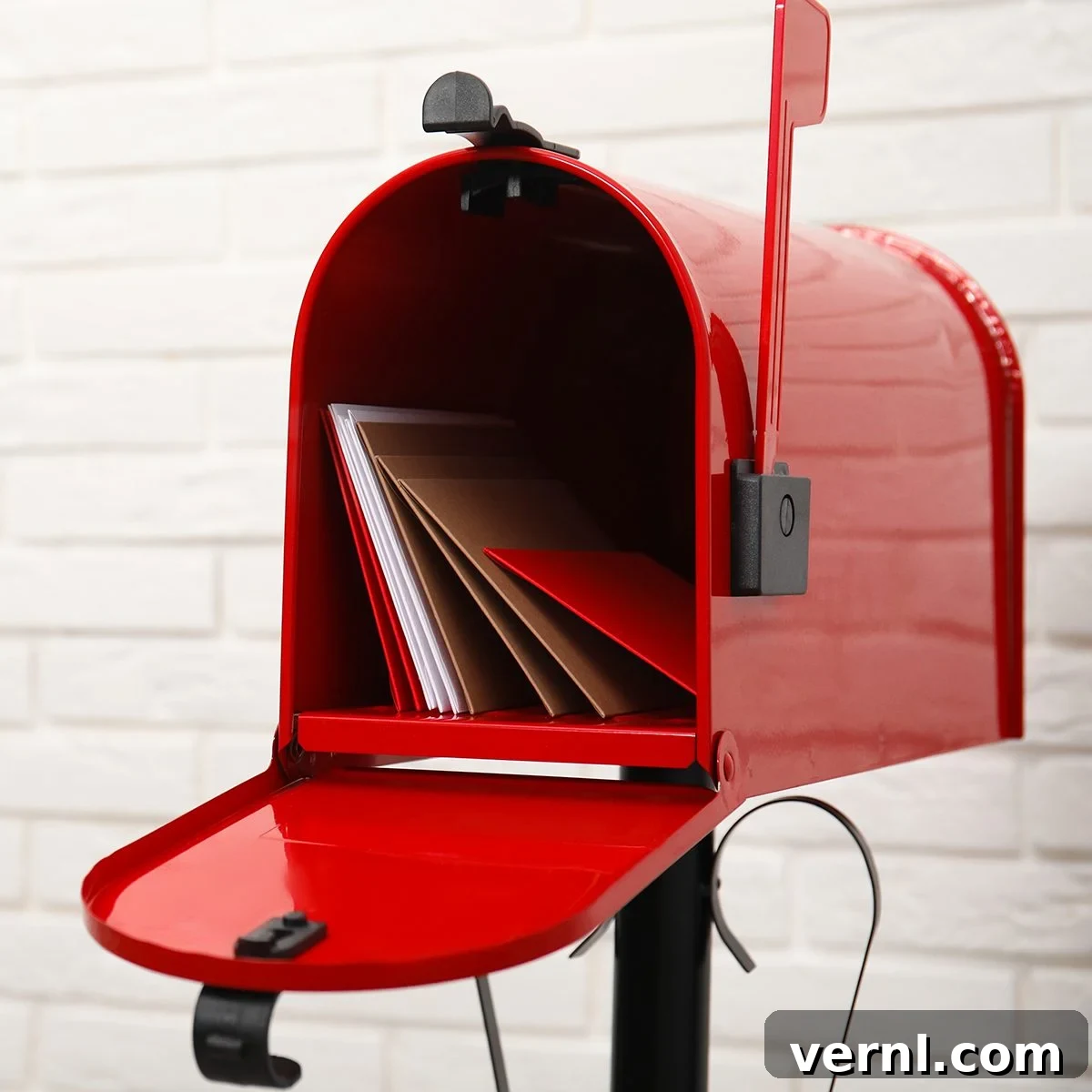
Finding a buzzing hive of bees inside your mailbox can be an unwelcome surprise for both homeowners and mail carriers. A vacant mailbox, with its sheltered, often warm, and undisturbed interior, can seem like an ideal location for a queen bee to establish a new colony. It offers protection from the elements and potential predators, making it a cozy, temporary home until human activity disrupts their peaceful occupation.
When you’re faced with this situation, whether you’re the property owner or the postal worker, your primary goal is likely to encourage these industrious insects to relocate. However, as pest control expert Brad Guerrera wisely advises, “Bees are vital to our ecosystem, so it’s important to handle situations like this carefully and humanely.” The objective isn’t to harm the bees, but rather to gently persuade them to find a more suitable, less-trafficked nesting spot.
This leads many to wonder about safe and effective methods for keeping bees away from mailboxes. One popular, often debated, remedy involves the humble dryer sheet. But does this common household item truly serve as a deterrent? Let’s delve into the buzz surrounding dryer sheets and explore other reliable strategies.
Why Do People Suggest Putting a Dryer Sheet in Your Mailbox?
The idea of using dryer sheets to deter bees, and even wasps, from mailboxes isn’t new. Mitch Coluzzi, who oversees construction for a company specializing in abandoned properties, frequently encounters pest issues in old structures, including mailboxes. He shares a long-standing tip: “An old mailman’s trick is to stick dryer sheets with linalool in vacant mailboxes to ward off bees/wasps.”
Coluzzi explains that this method gained a reputation as an “old wives’ tale” when people would use any random dryer sheet, regardless of its composition. However, he emphasizes the importance of a specific ingredient: linalool. “If you use sheets that contain linalool, which is a natural deterrent to bees and wasps, it works,” he asserts. Linalool is a naturally occurring alcohol found in many flowers and spice plants, often associated with a floral, citrusy scent, making it a common additive in scented products like dryer sheets. The theory is that this particular compound, or the strong, artificial scent profile it contributes to, might disorient or repel insects, making the mailbox less appealing for nesting.
Do Dryer Sheets in Mailboxes Actually Deter Bees? Unpacking the Evidence
While the concept of using dryer sheets as an insect repellent has some anecdotal support, its effectiveness remains a subject of ongoing discussion and mixed results. Pest control expert Brad Guerrera remains skeptical about their long-term viability. “In my experience,” he notes, “dryer sheets might provide a temporary fix, but they’re far from reliable.” He suggests that any immediate effect is likely fleeting, and bees may eventually acclimate to the scent or simply find a more persistent attraction.
Conversely, Mitch Coluzzi expresses greater confidence in the practice, particularly given the low cost and the desired outcome. “We send and receive a lot of mail, so at a cost of just 12 cents a sheet, keeping the mailman happy and safe feels well worth it!” For those managing multiple properties or seeking an inexpensive, immediate solution, the perceived benefit often outweighs the scientific uncertainty.
Independent fact-checking resources like Snopes have investigated the claim that dryer sheets deter stinging insects from mailboxes, classifying it as “unproven.” This designation means there isn’t sufficient scientific evidence to definitively confirm or deny its effectiveness. For an curious homeowner, this often translates to a “try it and see” approach. If you decide to experiment, Guerrera suggests that sheets with a very strong scent are more likely to yield results. He elaborates on the underlying principle: “Bees rely heavily on their sense of smell for navigation and communication, so overpowering scents can disrupt them and make certain areas less attractive for nesting.” The theory here is that an intense, unfamiliar odor could interfere with a bee’s natural sensory inputs, making the mailbox seem less hospitable or even confusing.
Understanding this sensory disruption is key. Bees use pheromones and floral scents to communicate, locate food sources, and identify their hives. A strong, synthetic fragrance, especially one not found in nature, could potentially overwhelm these delicate systems, making the mailbox an undesirable location. The temporary nature of this deterrent, however, highlights the need for more robust, long-term solutions if the problem persists.
How Do Dryer Sheets Allegedly Deter Bees? A Closer Look at the Mechanism
It’s important to clarify that dryer sheets are not designed to kill bees; rather, they are believed to act as a deterrent. Nicole Carpenter, another seasoned pest control expert, echoes Guerrera’s sentiment that strong scents are the critical factor. “The chemical compounds that neutralize static and soften fabrics emit strong, synthetic scents that can confuse bees’ sensitive olfactory systems,” she explains. This confusion is central to the proposed mechanism.
The potent mixture of fragrances and fabric softeners found in dryer sheets is thought to mask the natural pheromones that bees use for communication and navigation. By obscuring these vital chemical signals, the mailbox environment becomes “less attractive” to bees. They might struggle to identify it as a safe or suitable nesting site, or even to distinguish it from a non-habitat. This disruption of their finely tuned sensory perception is the primary way dryer sheets are thought to work.
But what about linalool, the specific ingredient Mitch Coluzzi highlighted? According to Science Direct, linalool is indeed a common “floral volatile” present in over 200 plant species, including popular choices like lavender – a scent frequently used in dryer sheets. This dual nature presents an interesting paradox: while some sources suggest linalool can be a repellent, its presence in many fragrant flowers means it could just as easily attract bees. Bees are naturally drawn to many floral scents as indicators of nectar and pollen sources. Therefore, if dryer sheets do function as a deterrent, it’s likely not solely due to linalool but rather the complex interplay of linalool with other synthetic chemicals and strong, unfamiliar fragrances that create an overwhelming and confusing olfactory experience for the bees. The combination effectively creates an artificial “no-fly zone” by disrupting their natural sensory cues.
Effective Alternatives to Dryer Sheets for Deterring Bees from Your Mailbox
While dryer sheets offer a simple, low-cost experiment, their reliability for long-term bee deterrence in mailboxes is questionable. For more consistent and effective prevention, a multi-faceted approach is often best. The goal remains humane deterrence, encouraging bees to find natural, undisturbed habitats elsewhere.
Regular Inspection and Sealing Potential Entry Points
Brad Guerrera emphasizes proactive measures: “For long-term prevention, I always recommend inspecting mailboxes and other outdoor structures regularly and sealing potential entry points. This not only deters bees but also helps prevent other insects from setting up shop.”
- Inspect Thoroughly: Routinely check your mailbox, especially during spring and early summer when bees are most active in establishing new colonies. Look for small cracks, gaps, or loose seams that could serve as an entry point.
- Seal Cracks and Gaps: Use exterior-grade caulk, wood filler, or weatherstripping to seal any openings. Pay close attention to the area around the flag, the door hinge, and any ventilation holes.
- Consider a Mesh Screen: For mailboxes with larger ventilation openings that cannot be completely sealed, consider installing a fine mesh screen (e.g., hardware cloth or window screen material) over the opening. Ensure the mesh is fine enough to prevent insect entry but still allows for air circulation.
- Keep the Door Closed: While seemingly obvious, ensuring the mailbox door is securely closed when not in use can significantly reduce opportunities for bees to enter and explore.
Utilizing Strong-Smelling Essential Oils
Nature offers a range of potent scents that bees and other insects tend to avoid. Essential oils, known for their concentrated aromas, can be a more natural alternative to synthetic dryer sheet fragrances. Some oils commonly cited as bee repellents include:
- Neem Oil: A powerful natural insecticide and repellent, neem oil has a strong, bitter scent.
- Peppermint Oil: Bees, like many insects, dislike the strong, pungent aroma of peppermint.
- Citronella Oil: Widely known for repelling mosquitoes, citronella can also deter bees and wasps.
- Eucalyptus Oil: Its strong, camphoraceous scent is generally unpleasant to insects.
- Clove Oil: The spicy, intense aroma of clove oil can act as a deterrent.
- Lemongrass Oil: Similar to citronella, it offers a strong citrusy scent that bees often avoid.
Application Method: You can apply these oils by saturating a cotton ball or a small piece of fabric with a few drops and placing it inside the mailbox. Alternatively, create a spray by mixing 10-15 drops of essential oil with water in a small spray bottle and misting the interior of the mailbox. Reapply every few days or after heavy rain, as the scents will dissipate over time. Always keep the mailbox closed after application to concentrate the scent.
Important Note: As Nicole Carpenter cautions, “There are different bee species, and some bees might like or dislike specific chemicals.” What repels one species might have less effect on another. Experimentation with different oils might be necessary to find the most effective one for your local bee population.
Other Natural Deterrents and Strategies
- Planting Repellent Herbs Nearby: While not a direct mailbox solution, planting bee-repelling herbs like mint, citronella grass, or even marigolds near your mailbox post might create a less inviting environment in the general vicinity.
- White Vinegar: A diluted solution of white vinegar can also be sprayed inside the mailbox. Bees generally dislike the acidic smell. Be mindful that vinegar can be corrosive to certain metals over time, so use it sparingly and ensure the mailbox is well-ventilated after application.
- Consider a Different Mailbox Material: While often impractical, some materials might be less attractive. Metal mailboxes, for instance, can heat up considerably in the sun, which might be less appealing for certain bee species seeking a cooler, more stable environment.
When to Call a Professional
If you discover an established bee hive or a large swarm in your mailbox, especially if it appears to be aggressive or causing concern, it’s always best to contact a professional. Look for pest control services that specialize in humane bee removal or local beekeepers who are often willing to safely relocate a hive. They have the expertise and equipment to remove the bees without harming them, ensuring both your safety and the bees’ continued contribution to the ecosystem. Attempting to remove a large, established colony yourself can be dangerous and harmful to the bees.
Ultimately, keeping bees out of your mailbox requires a blend of vigilance, understanding bee behavior, and employing humane deterrents. While the dryer sheet method offers a simple, low-risk trial, more reliable long-term solutions often involve physical exclusion and the strategic use of strong, natural scents. Remember, the goal is always to coexist peacefully with these essential pollinators.
About the Experts
- Mitch Coluzzi is the head of construction for SoldFast, a nationwide home restoration company.
- Brad Guerrera is the owner of Houston-based Expert Pest Control and is a leading authority in humane wildlife removal and eco-friendly pest management.
- Nicole Carpenter has been working in pest control since she was in high school. She is the President of Black Pest Prevention, which serves North and South Carolina.
Sources
- Snopes: Do Dryer Sheets Repel Wasps From Mailboxes?; (2021)
- Science Direct: Linalool; (2021)