
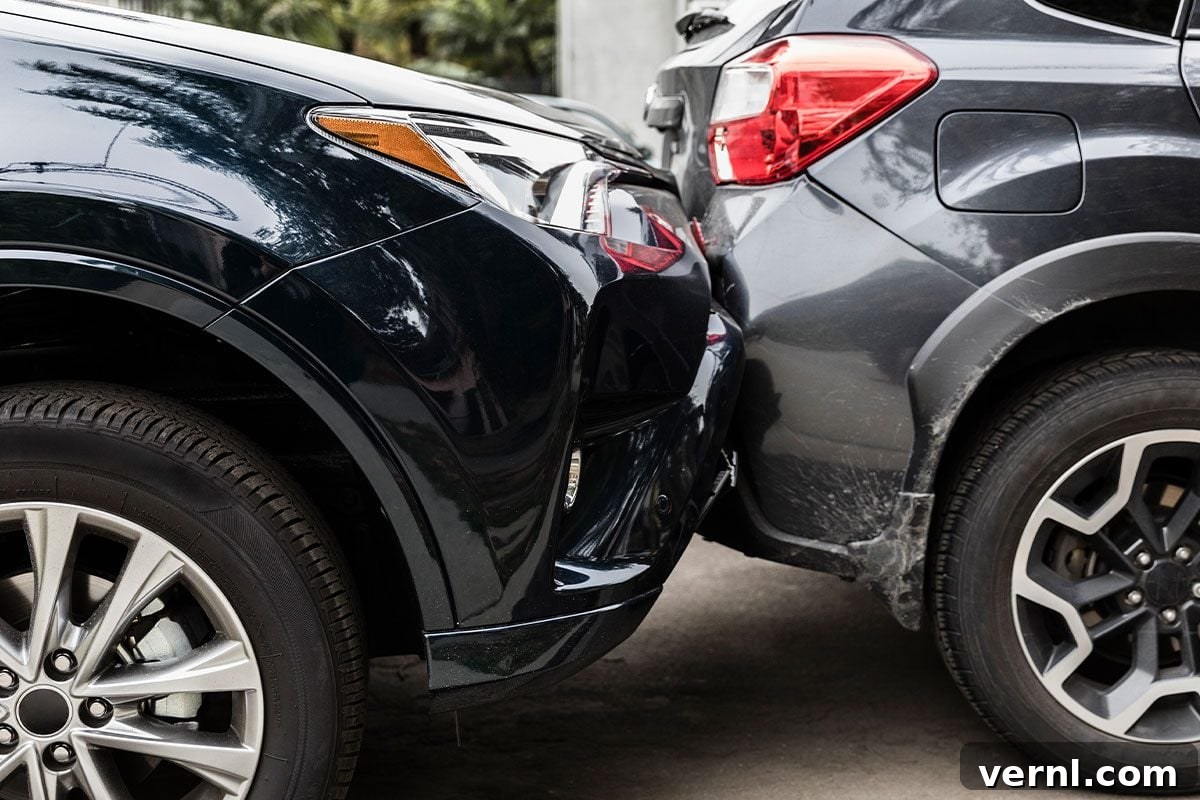
Navigating the aftermath of a car collision is already a stressful experience, but the situation becomes significantly more complex when the at-fault driver lacks proper car insurance. This scenario, unfortunately, is far more prevalent than many realize. When an uninsured driver causes a crash, the mechanics of an insurance claim diverge sharply from standard procedures, often leaving accident victims surprised about who ultimately bears the financial burden for damages and lost time.
Without adequate coverage tailored for such circumstances, you could face substantial out-of-pocket expenses for an accident that wasn’t your fault. The reassuring news is that most reputable insurance policies either include or offer Uninsured Motorist (UM) and Underinsured Motorist (UIM) coverage. Uninsured Motorist insurance is specifically designed to provide a crucial safety net, covering costs such as medical payments, vehicle collision repairs, and even potential loss of income (up to your policy limits) when the responsible party has no insurance.
A comprehensive understanding of how these specialized coverages function, alongside knowing the critical steps to take immediately following an accident and the correct procedure for filing a claim, can proactively help you circumvent potential delays, legal complications, and significant financial distress. Join us as a seasoned insurance expert and a respected injury lawyer delineate the potential ramifications of being involved in a collision with an uninsured driver and provide actionable strategies to ensure your financial protection when the other party is unable to compensate for the damages they’ve caused.
The Pervasive Issue of Uninsured Drivers
The presence of uninsured drivers on our roads is a growing concern, posing a substantial risk to everyone. A sobering 2023 report from the Insurance Research Council (IRC) revealed that over one in seven drivers across the United States—specifically 15.4 percent—were operating vehicles without insurance. Further data from the IRC indicates an even more alarming trend: “one in three drivers are either uninsured or underinsured” nationwide, marking a staggering ten percentage point increase since 2017. This means a significant portion of motorists lack the necessary financial backing to cover damages in an accident.
Melanie Musson, an esteemed auto industry expert at Clearsurance.com, further elaborated on this issue, stating, “In some areas, uninsured drivers make up a quarter of all drivers.” Reflecting on these stark statistics, she posed a thought-provoking question: “How many uninsured motorists do you think you pass on a trip to the grocery store?” These figures underscore the critical importance for every driver to be prepared for an encounter with an uninsured motorist, as the likelihood is higher than many assume.
Immediate Steps Following an Accident with an Uninsured Driver
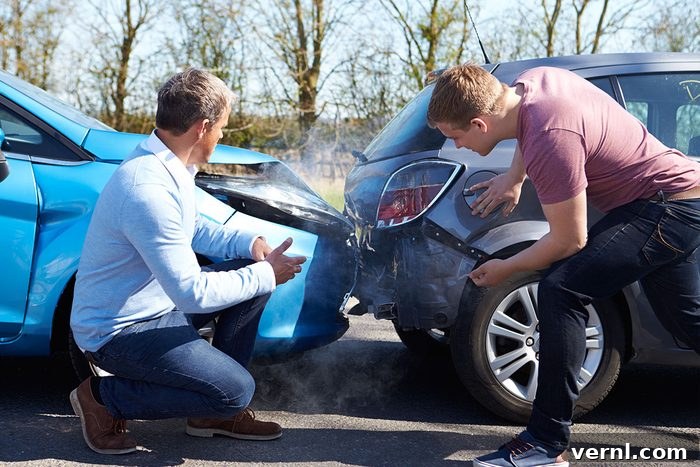
The moments immediately following a car accident are often chaotic and stressful, but taking the right steps is paramount, especially when an uninsured driver is involved. Your first priority should always be the safety and well-being of all individuals. Promptly assess if anyone requires urgent medical attention and, if so, call emergency services without delay.
Once immediate safety is addressed, contact law enforcement. Getting the police involved is crucial as it ensures an official accident report is filed. This report serves as an impartial, third-party account of the incident, which is invaluable for your insurance claim, particularly when one of the drivers lacks insurance. Chad Watwood, Attorney at LawBike Motorcycle Injury Lawyers, emphasizes the necessity of documenting everything. As Melanie Musson advises, “All involved parties need to exchange information —driver’s licenses, license plate numbers and names on the registration, and insurance information, even if the other party doesn’t have insurance.” Gather their name, contact details, and vehicle information. Even if they admit to being uninsured, documenting this is vital.
Proceed to carefully and methodically document the accident scene. Use your smartphone to take numerous photos and videos from various angles. Capture the position of the vehicles, any visible damage, skid marks, road conditions, traffic signs, and the surrounding environment. Note the exact location, time of day, and prevailing weather conditions. If any witnesses come forward, obtain their names and contact information. This comprehensive documentation provides undeniable evidence supporting your claim. Afterward, contact your own insurance company right away. “They can help you understand your next steps,” states Watwood. Finally, request a copy of the official police report as soon as it’s available, as it will explicitly indicate whether the at-fault driver had insurance coverage. Depending on your jurisdiction, “the uninsured driver will likely be cited,” for violating mandatory insurance laws, Watwood adds, which further solidifies the official record of the incident.
Understanding Who Pays for Damages
The question of “who pays” becomes central when an uninsured driver is at fault. While Melanie Musson correctly states, “They should still pay for the damages,” the practical reality is often challenging. This is precisely where your own insurance policy becomes your primary line of defense, assuming you have adequately invested in Uninsured Motorist (UM) and Underinsured Motorist (UIM) coverage.
Uninsured Motorist Bodily Injury (UM-BI) and Uninsured Motorist Property Damage (UM-PD) insurance are critical components, often packaged together. UM-BI is either mandatory or highly recommended by nearly every state and is designed to cover a range of expenses stemming from injuries you sustain when an uninsured driver is at fault. This typically includes:
- Medical Bills: Covering emergency care, hospital stays, doctor visits, medication, and rehabilitation therapies.
- Lost Wages: Reimbursing you for income lost due to time off work for recovery or medical appointments.
- Pain and Suffering: Providing compensation for physical discomfort, emotional distress, and reduced quality of life caused by your injuries.
- Long-Term Disability: Offering benefits if your injuries result in permanent impairment or a long-term inability to work.
- Funeral Expenses: Covering costs in the tragic event of a fatality.
Uninsured Motorist Property Damage (UM-PD) is the counterpart that addresses the physical damage to your vehicle. This coverage pays for your car’s repairs or replacement if the at-fault driver is uninsured and lacks the financial capacity to cover the costs themselves. It’s important to note that UM-PD is not available in all states; some states rely on your collision insurance to cover vehicle repairs. If you have collision insurance, it will cover the repairs to your car, though you will typically be responsible for your deductible. However, if UM-PD is available and you carry it, it can often help waive or reduce your deductible in an uninsured motorist claim.
Your UIM-BI and UM-PD coverages are specifically designed to fill the critical “gap” between what the other driver’s insurance *would have* paid (if they had any) and the actual, often much higher, cost of your damages. As Chad Watwood explains, “UIM-BI and UM-PD usually cover medical payments, collision repairs or even health insurance.” This highlights why it is absolutely critical for every driver to carefully check, thoroughly read, and fully understand their automobile insurance policy, paying close attention to the types of coverage they possess and their specific coverage limits.
The Practicalities of Suing an Uninsured Driver
While the legal right to sue an uninsured driver for damages absolutely exists, both Musson and Watwood generally concur that pursuing such a lawsuit is frequently not a practical or financially rewarding endeavor. “Uninsured drivers often have little or no assets, so collecting money for damages becomes difficult,” Musson explains. This presents a significant challenge: even if a court awards you a judgment, if the defendant has no substantial income, savings, or property, you may find yourself with a legal victory that yields no actual financial compensation. Watwood echoes this sentiment, adding, “It depends on the assets or income that the person [you are suing] possesses. If they have no assets, any settlement probably won’t be much [financial compensation].”
The process of suing someone can be lengthy, expensive, and emotionally draining, involving attorney fees, court costs, and a significant investment of your time. Given the high probability of an uninsured driver having minimal assets, the return on this investment is often negligible. For these compelling reasons, relying on your Uninsured Motorist coverage is almost always a more efficient, less stressful, and financially secure path to recovery. It offers a direct way to receive compensation for your damages without the uncertainty and burden of protracted legal battles against a potentially judgment-proof individual.
The Impact of State Lines on Your Claim
Understanding the role of state lines in car insurance claims is crucial, as requirements and regulations can vary significantly from one state to another. “State lines impact insurance requirements, as well as the UM/UIM structure,” confirms Watwood. If your accident occurs in a state different from where your policy was issued, the laws of the state where the crash happened often dictate how fault is determined and how claims are processed. This can have substantial implications for your coverage and compensation.
Consider this illustrative example provided by Melanie Musson: “If you have minimum liability coverage in your state but cause an accident in a different state that has higher minimum requirements, your policy automatically adjusts to meet that state’s minimum requirements, and cover [if necessary] the higher limits required in the state where the accident happened.” This feature, known as “out-of-state coverage” or “broadening clause,” is designed to prevent drivers from being underinsured when traveling. However, it’s important to remember that this usually applies to liability coverage, protecting others, not necessarily expanding your own UM/UIM or comprehensive coverage limits.
Furthermore, some states operate under a Personal Injury Protection (PIP) system, often referred to as “no-fault” insurance. In these states, you do not have to prove who was at fault to receive benefits for your medical expenses and certain other costs. PIP coverage is designed to expedite medical treatment and reduce the number of lawsuits, ensuring that your auto insurance policy pays for your injuries and specific expenses following a crash, irrespective of who caused the accident. This can be a stark contrast to “at-fault” states, where proving the other driver’s negligence is paramount to recovering damages. Being aware of the specific insurance laws of states you frequently travel through is an essential part of being a well-prepared motorist.
Frequently Asked Questions About Uninsured Drivers
Is Car Insurance Required Everywhere in the United States?
The vast majority of states and their jurisdictions mandate some form of liability insurance or require proof of financial responsibility. “Most states and their jurisdictions mandate liability insurance, or some financial responsibility bonds,” states Chad Watwood. This is to ensure that drivers can cover at least basic damages they might cause to others. However, there are exceptions. Melanie Musson highlights an interesting anomaly: “Interestingly, in New Hampshire, where car insurance is not required, the rate of uninsured drivers is lower than the US average.” While not legally required to carry insurance, New Hampshire law does require residents to demonstrate proof of financial responsibility if they are deemed liable for someone else’s injuries or property damage. This means that even without mandatory insurance, drivers still have a legal obligation to cover damages.
Historically, there have been other unique systems. For example, up until 2024, drivers in Virginia could legally operate a vehicle without auto insurance by paying an annual $500 uninsured motor vehicle fee. However, this option has been eliminated; now, when you apply for or renew your vehicle registration in Virginia, you are legally obliged to provide proof that your vehicle carries at least the minimum required liability insurance coverage. In my home state of Pennsylvania, for instance, drivers must carry a minimum of $5,000 in no-fault medical coverage and present their PA Financial Responsibility Identification Card before their vehicle can pass the state safety inspection and emissions test. Even in states where insurance isn’t strictly mandated, the overwhelming majority of drivers choose to carry it, recognizing the invaluable protection it offers against unforeseen financial liabilities.
What Are Minimum Coverage Limits?
Minimum limits of liability refer to the lowest amounts of insurance coverage a driver is legally required to carry under state law. These minimums are not uniform across the United States; each state sets its own distinct requirements, which can vary significantly. Understanding these minimums is crucial, not just for compliance but also for appreciating the potential gaps in protection. For instance, in New Hampshire, the Uninsured/Underinsured Motorist (UM/UIM) bodily injury auto insurance minimums are set at $25,000 per person and $50,000 per accident, while medical payment coverage is $1,000 per accident. Contrast this with Virginia, where the UM/UIM bodily injury minimum amount is the same ($25,000 per person and $50,000 per accident), yet there is no specific state requirement for medical payment coverage.
In no-fault states like Pennsylvania, the structure is different. Pennsylvania mandates a minimum of $15,000 per person and $30,000 of bodily injury liability coverage, along with First-Party Benefits (which cover your medical costs due to an accident, regardless of who is at fault) of $5,000. Additionally, the state requires a UM/UIM bodily injury amount of $15,000 per person. These varied minimums highlight a critical point: while meeting state minimums ensures legal compliance, they often provide only very basic protection. Many insurance experts recommend carrying coverage limits significantly higher than the state minimums to ensure comprehensive financial protection against the substantial costs associated with serious accidents, especially those involving uninsured or underinsured motorists.
Experts
- Charles (Chuck) Watwood Jr. founded Lawbike Motorcycle Injury Lawyers in 1996 after graduating from Atlanta’s John Marshall Law School. (Email interview Feb 19, 2026.)
- Melanie Musson, a published insurance and finance expert, is the fourth generation in her family to work in the insurance industry. Over the past two decades, Melanie has gained in-depth knowledge of and specializes in state-specific insurance laws and how insurance fits into every person’s life, from budgets to coverage levels at Clearsurance. (Email interview Feb 20, 2026.)
Resources
- Insurance Research Council: “One in Three Drivers are Either Uninsured or Underinsured in the U.S, Exposing Themselves and Other Drivers to Significant Financial Risk, New IRC Study Shows”
- Kelly Blue Book: “In Some States, 1 in 5 Drivers Are Uninsured”
- LegalClarity: “Are You Required to Have Car Insurance in Virginia?”
- National Association of Insurance Commissioners: “Auto Insurance”
- Insurance Research Council: “One in Eight Drivers Uninsured”
- Insurance Information Institute: “Facts and Statistics: Uninsured motorists”
- Progressive: “At-Fault vs. No-Fault Accidents”
- Progressive: “Car insurance requirements by state”
Related Articles
- Do You Know What That Little Button on Your Seat Belt Is For?
- What Those Lines on Your Backup Camera Really Tell You
- Here’s What The Small Panel On Your Car’s Front Bumper Is For