
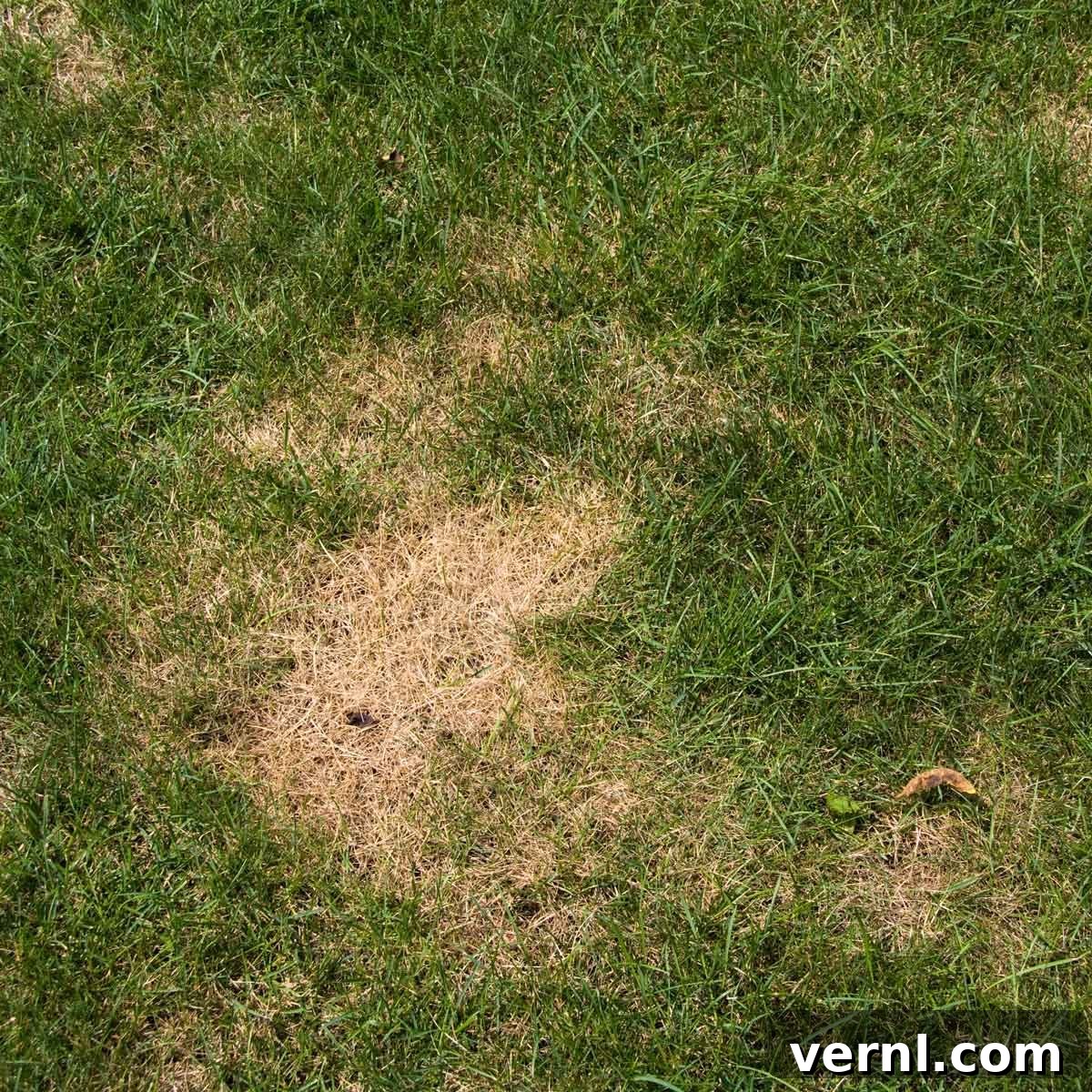
Each of those brown spots in your lawn tells a unique story, often indicating underlying issues that can affect the overall health and beauty of your turf. Understanding the specific causes behind these discolored patches is the first step toward effective diagnosis and treatment. From common household occurrences to more complex biological challenges, a variety of factors can contribute to the appearance of unsightly brown areas in an otherwise vibrant green lawn.
Decoding Brown Grass: What Does it Look Like and What Does it Mean?
Brown grass can manifest in a spectrum of shades, shapes, and sizes, but generally, it signifies distress or death. While some patches may indeed be comprised of completely dead grass, many times the grass is merely dormant – a temporary state of suspended growth in response to adverse conditions. Dormant grass often retains some flexibility and a less brittle appearance than truly dead grass, which will easily snap and feel dry. Distinguishing between dormant and dead grass is crucial, as dormant grass can often recover with a bit of tender loving care and improved conditions, whereas dead grass requires reseeding or patching. Understanding these visual cues is the foundation for effective lawn recovery, preventing minor issues from escalating into widespread damage. Early identification allows for targeted interventions, saving both time and resources in the long run.
Common Culprits: Why Do Brown Spots Show Up in Your Grass?
Brown spots on your lawn are not just an aesthetic concern; they are indicators of various stressors affecting your turf’s vitality. Pinpointing the exact cause requires a bit of detective work, observing the shape, size, and location of the spots, as well as considering recent activities and environmental conditions. Here, we delve into the most frequent reasons behind these unwelcome patches and provide comprehensive strategies for their resolution and prevention.
Dog Spots: The Nitrogen Burn
Dog urine is a frequent cause of brown spots, especially evident in areas where pets frequently relieve themselves. The high concentration of nitrogen salts in dog urine acts like an over-dose of fertilizer, effectively “burning” the grass at the point of contact. These spots often appear as distinct circular patches, sometimes with a darker green ring around the perimeter where the urine has been diluted enough to act as a mild fertilizer.
To mitigate dog spots, begin by thoroughly scratching up the affected area to remove the dead grass and thatch. Treating the spot with gypsum can help neutralize the urine salts. Immediately after, flush the area generously with water to dilute and move the remaining urine salts deeper into the soil, away from the grass roots. For prevention, encourage your dog to use a specific area of the yard, or train them to urinate in non-lawn areas. Watering down the spot immediately after your dog urinates can also help dilute the salts before they cause damage. Once the area is prepared, reseed the spot with a durable grass variety, covering lightly with topsoil and keeping the area consistently moist until the new seedlings are well-established. Consistent hydration of your pet can also help dilute their urine, making it less potent.
Soil Compaction: The Root’s Nemesis
If you find it challenging to push a screwdriver into a brown patch, and water tends to sit on the surface rather than soaking in, you likely have a soil compaction problem. Compacted soil starves grass roots of essential oxygen, water, and nutrients by making the soil too dense for them to penetrate and thrive. This condition is often caused by heavy foot traffic, vehicle movement, or inherent heavy clay soils.
Addressing soil compaction is vital for long-term lawn health. Renting a core aerator for half a day is an excellent solution, as it removes small plugs of soil, creating channels for air, water, and nutrients to reach the roots. Aerating your entire lawn periodically can provide immense benefits. If only a few areas are compacted, a pitchfork can be used to punch multiple holes into the affected zones. The best time to aerate is when the ground is slightly soft after rain or irrigation, making the process easier and more effective. Incorporating organic matter, such as compost, into the soil after aeration can also improve soil structure and reduce future compaction. Regular aeration every one to three years, depending on soil type and traffic, can significantly enhance your lawn’s vigor.
Dry Soil & Drought Stress: The Thirst for Life
Like all living plants, grass depends on a consistent supply of water to survive and flourish. When rainfall is scarce, or irrigation is insufficient, grass quickly succumbs to dry soil and drought stress. Extended periods of dryness cause the grass to first turn dull green, then yellow, and eventually a straw-like brown as it enters dormancy or dies. While dormant grass can often revive with adequate watering, severe or prolonged drought can lead to widespread death, resulting in prominent dead brown patches.
Most healthy lawns require approximately one inch of water per week, either from rain or irrigation, to maintain their lush green color and robust health. This water should be applied deeply and infrequently to encourage deep root growth. When natural precipitation is insufficient, hand-watering, using lawn sprinklers, or relying on in-ground irrigation systems are crucial for preventing dry grass. Observing your lawn for early signs of wilting or a grayish tint can help you respond promptly to its hydration needs. Consider installing a rain gauge to accurately measure natural rainfall and adjust your watering schedule accordingly. For long-term drought resilience, consider planting more drought-tolerant grass varieties or incorporating water-retaining amendments into your soil.
Chemical, Fertilizer, or Gasoline Spills: Accidental Toxicity
Mysterious and rapidly appearing brown spots can often be attributed to accidental spills of chemicals, excessive fertilizer, or petroleum products. Over-application of fertilizers, especially those high in nitrogen, can “burn” the grass, similar to dog urine, due to salt concentration. Herbicides or other garden chemicals, if misapplied or spilled, can also cause localized death.
Dead grass from fertilizer and chemical spills can sometimes be flushed with copious amounts of water, much like managing dog spots. This dilutes the harmful substances and moves them away from the root zone. However, gasoline, oil, or other petroleum spills are far more problematic. These substances cannot be simply flushed through the soil as they contaminate it more thoroughly. In such cases, the best course of action is to carefully dig out the contaminated soil, ensuring all affected material is removed, and dispose of it properly according to local regulations. Replace the excavated area with fresh, healthy topsoil before reseeding these spots. Always store chemicals and fuels securely, and exercise extreme caution during application or use near your lawn to prevent future contamination.
Disease Activity: Fungal Foes
Lawn diseases, predominantly caused by various fungi, can manifest as discolored or unhealthy-looking grass patches. Common culprits include dollar spot, brown patch, and necrotic ring spot, each presenting with unique characteristics. Dollar spot typically appears as small, circular, straw-colored spots, while brown patch creates larger, irregular areas with a distinctive “smoke ring” appearance, especially in humid conditions. Necrotic ring spot forms distinct ring patterns that expand over time, killing the grass within the ring.
Sometimes, a simple change in weather conditions, such as decreased humidity or temperature fluctuations, can alleviate disease pressure. Other times, however, you may need to modify your lawn care practices. This could involve altering your fertilization schedule (avoiding high nitrogen during hot, humid periods), adjusting your watering routine (watering early in the morning to allow grass to dry), or improving overall lawn maintenance, such as aeration and dethatching to improve air circulation. For persistent or severe outbreaks, fungicide treatments, like BioAdvanced Fungus Control for Lawns and Syngenta Headway G, can be effective. However, it’s highly recommended to consult a lawn care professional for positive disease identification, as misdiagnosis can lead to ineffective treatment. Always read and follow safety precautions and application instructions when using any lawn chemicals.
Insect Damage: The Hidden Eaters
Damage from lawn insects can often mimic other problems, particularly drought stress, making diagnosis tricky. Two prominent types of insect damage are those caused by grubs and surface-feeding insects like chinch bugs. Grubs are the larvae of beetles that feed on grass roots just below the soil surface. This root damage prevents the grass from absorbing water and nutrients, causing it to yellow and brown in irregular patches. A telltale sign of grub damage is the ability to easily pull up patches of grass, much like lifting a loose toupee, because the roots have been chewed away. Secondary damage from animals like raccoons or skunks digging for grubs can also indicate their presence.
Chinch bugs, on the other hand, are tiny insects that cause damage above ground. They use piercing-sucking mouthparts to extract moisture and vital fluids from grass blades, injecting a toxin that causes the grass to turn yellow, then brown. Chinch bug damage often appears in irregular patches, frequently near heat-reflecting surfaces like driveways or sidewalks, and can quickly spread during hot, dry weather.
For grub control, products containing chlorantraniliprole, such as Scotts GrubEX, are effective and considered pollinator friendly. These products work best when applied preventatively in early summer to stop grubs from developing. For surface feeders like chinch bugs, Talstar is a highly effective product that controls a broad spectrum of surface-feeding insects. Identifying the specific pest is crucial for effective treatment; a simple way to check for chinch bugs is to remove both ends from a coffee can, insert one end into the soil in an affected area, and fill it with water. Chinch bugs will float to the surface within minutes. A healthy, well-maintained lawn is less susceptible to severe insect infestations, making good cultural practices your first line of defense.
General Lawn Care Tips for a Resilient Lawn
Maintaining a healthy lawn is the best preventative measure against most brown spot issues. Consistent, proper lawn care practices can significantly reduce the likelihood of disease, pest infestations, and environmental stress.
- **Proper Mowing Height:** Mowing at the correct height (typically 2.5 to 3 inches for most cool-season grasses) encourages deeper root growth and shades the soil, reducing water evaporation and weed growth.
- **Strategic Watering:** Water deeply and infrequently, encouraging roots to grow deeper in search of moisture. The best time to water is early morning to minimize evaporation and allow grass blades to dry before nightfall, which reduces the risk of fungal diseases.
- **Balanced Fertilization:** Apply fertilizer according to your lawn’s specific needs, ideally based on a soil test. Over-fertilization, especially with nitrogen, can burn the grass or make it more susceptible to disease.
- **Aeration and Dethatching:** Regularly aerate to combat soil compaction and dethatch to remove excessive thatch buildup, ensuring better air, water, and nutrient penetration to the roots.
- **Weed Control:** Manage weeds proactively, as they compete with grass for vital resources and can sometimes harbor pests or diseases.
When to Call a Professional
While many brown spot issues can be resolved with DIY efforts, there are times when professional help is invaluable. If you’ve tried various solutions without success, if the problem is widespread, or if you suspect a complex issue like a stubborn disease or a severe pest infestation that you cannot identify, it’s wise to consult a lawn care professional. They have the expertise, specialized equipment, and access to more potent treatments for accurate diagnosis and effective solutions, ensuring your lawn returns to its vibrant best.
Conclusion: Your Lawn’s Health in Your Hands
Each brown spot on your lawn is a message, providing clues about its health and needs. By learning to interpret these signs and applying the appropriate remedies, you can transform your lawn from struggling to thriving. Whether it’s a simple case of dog urine or a more intricate problem like a fungal disease or insect infestation, understanding the cause is key to recovery. Regular observation, timely intervention, and consistent good lawn care practices are your best tools for maintaining a lush, green, and resilient lawn for years to come. Embrace the detective work, and enjoy the satisfaction of a healthy, beautiful outdoor space.